 Send
Send Share
Share
 Details

 Download
 Similars
 Diaporama
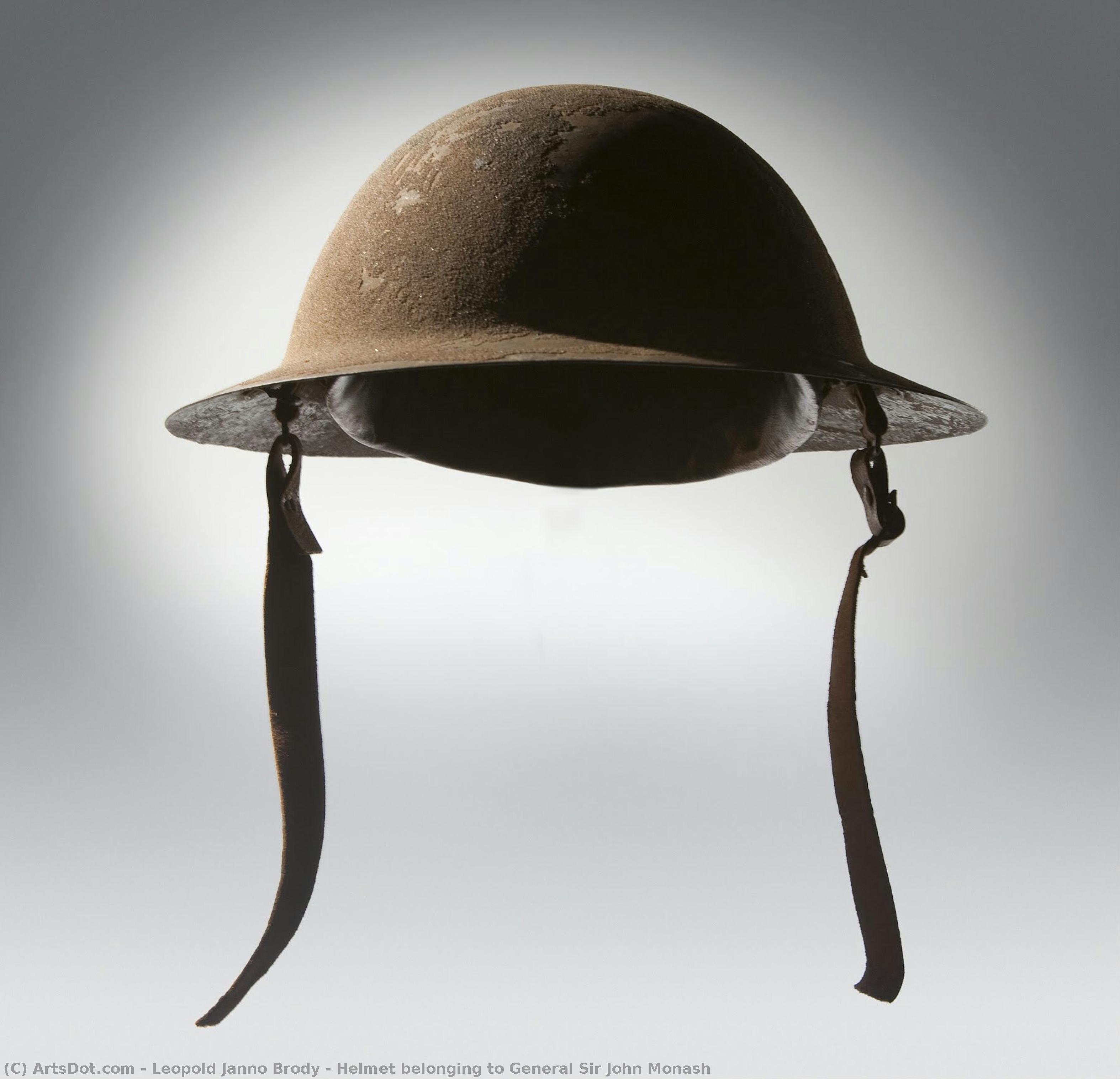
Helmet belonging to General Sir John Monash
 Giclée Print
- Digital
- Contemporary Realism
 1916
1916 11.0 x 29.0 cm
 Shrine of Remembrance
 Read More
Hand Made Oil Reproduction
Hand-painted oil on canvas in your size and frame, made to order by our artists. ( Buy Print Buy Image)




































Pick from our preset sizes that match the artwork's original proportions.

You may enter your own dimensions to fit a specific frame or space. If your selected size does not match the original image's proportions, we will either crop the artwork or extend the painting with additional hand-painted elements. A digital mockup will be sent for your approval before production begins.
Please note that the on-screen preview does not reflect the actual cropping or extension. Only the mockup will accurately show the final composition.
While custom sizes are available, we recommend selecting a dimension from the predefined list to preserve the original proportions.
After order, ArtsDot.com team will email client for instructions and provide a mockup preview
Worldwide Delivery () in 3/4 weeks instead of standard 5 weeks. (3 September). No compromise on quality.

Free Worldwide Express Shipping

High-Quality Linen Canvas

Full Shipping Insurance

Customs Tax Refund Guarantee

True Color Matching Guarantee

60-Day Return Policy (Defects Only)

100% Money-Back Guarantee

Bulk Discount Offer
 Glass option is only available in size under 110 CM

Helmet belonging to General Sir John Monash
Reproduction Medium
Reproduction Size
-


Total Price
$ 263
A Testament to Sacrifice: The ANZAC Helmet by Leopold Janno Brody
- This meticulously crafted hand-painted reproduction captures the poignant essence of "The ANZAC," a photograph of General Sir John Monash's helmet, a powerful symbol of Australia and New Zealand’s contribution to World War I. Created by skilled artisans following the techniques of Leopold Janno Brody, this artwork transcends mere representation; it embodies the weight of history, the spirit of resilience, and the enduring legacy of conflict.
- The original photograph, taken in 1916, reveals a weathered military helmet – likely from World War I or II – presented with dramatic lighting that emphasizes its textures and imperfections. The reproduction faithfully recreates this effect, showcasing the metal’s aged surface, worn leather straps, and subtle discoloration, offering a tangible connection to the past.
The Visionary: Leopold Janno Brody and His Revolutionary Design
- Leopold Janno Brody (1873-1945), born in Riga, Latvia, was an unlikely figure to become a pivotal influence on British military design. Initially an engineer and entrepreneur involved in the South African goldfields, his inventive spirit led him to revolutionize military optics with the creation of the “Brody Helmet.” This wasn't simply about providing head protection; it represented a fundamental rethinking of protective device construction.
- Brody’s genius lay in anticipating the urgent need for improved headgear during World War I. His helmet design, characterized by its robust construction and innovative features, quickly gained recognition within British military circles. The meticulous detail captured in this reproduction reflects Brody's commitment to functionality and durability – qualities that would define his legacy.
Technique and Symbolism: A Study in Texture and Remembrance
- The hand-painted reproduction employs a realistic photographic style, meticulously recreating the original’s dramatic lighting and textural emphasis. The artist skillfully utilizes browns and blacks to evoke a sense of age, wear, and solemnity, mirroring the helmet's journey through conflict.
- Beyond its physical form, the helmet itself is laden with symbolic meaning. It represents sacrifice, duty, and the passage of time – themes deeply resonant within the context of World War I. The geometric shapes—circles, triangles, and rectangles—are not merely aesthetic choices but subtly reinforce the structure’s strength and purpose.
Dimensions and Impact: A Statement Piece for Any Collection
- This artwork is presented in a substantial 11 x 29 cm format, ensuring it commands attention within any setting. Its evocative imagery and historical significance make it an ideal addition to art collections, military memorabilia displays, or as a thoughtful decorative piece for interior design.
- The reproduction’s enduring appeal lies not only in its technical accuracy but also in the profound emotional impact it conveys – a reminder of those who served and sacrificed during one of history's most challenging conflicts. A truly unique investment, this artwork offers both aesthetic pleasure and a connection to a pivotal moment in global history.
Related Artworks

Artist Biography
Leopold Janno Brody: Engineer of Steel, Visionary of Form
The story of Leopold Janno Brody is a fascinating paradox – a man who began his career as an entrepreneur and inventor in the burgeoning goldfields of South Africa, yet ultimately left behind a legacy inextricably linked to British military design and Austrian artistic circles. Born in Riga, Latvia, in 1873, Brody’s early life was marked by entrepreneurial spirit and a keen eye for innovation. He swiftly established himself as a successful figure in the diamond trade before relocating to London, where he channeled his inventive drive into a project that would forever alter the landscape of military optics: the revolutionary helmet design now recognized as the “Brody Helmet.”
Brody’s genius lay not merely in recognizing a need – the urgent demand for improved head protection during the First World War – but in fundamentally rethinking the construction of a protective device. Unlike existing helmets, which were often cumbersome and prone to collapse, Brody conceived of a monolithic design, forged from a single, thick steel plate. This innovative approach dramatically increased resistance to shrapnel and impact while simultaneously simplifying production through its robust, unified structure. The resulting helmet was not simply more durable; it represented a shift in engineering philosophy – a move towards streamlined efficiency and structural integrity. His designs were quickly adopted by the British Army, becoming a critical component of their war effort.
The Helmets and Their Context
The impact of Brody’s helmet is profoundly evident in the photographic portrait taken in 1916 by Leopold Janno Brody himself, depicting General Sir John Monash wearing one. This image, now housed within ArtsDot's database, captures not just a military figure but also the weight of history and sacrifice. The dramatic lighting and realistic detail highlight the helmet’s imposing presence – a symbol of protection and resilience against the horrors of war. It’s a testament to Brody’s ability to translate engineering principles into a powerful visual statement.
Interestingly, Brody's work extended beyond purely military applications. His understanding of form and material led him to explore decorative metalwork as well. This connection is subtly reflected in his later association with Secessionist art circles in Vienna, particularly through the influence of artists like Egon Schiele. The Leopold Museum, a cornerstone of Austrian modernism, houses a collection that speaks to this broader artistic engagement – showcasing the interplay between industrial innovation and aesthetic sensibility.
A Bridge Between Disciplines
Brody’s journey is remarkable for its confluence of seemingly disparate fields. His early ventures in South Africa instilled a pragmatic approach to problem-solving, while his later work with military helmets demanded an understanding of structural mechanics and material science. Yet, it was his engagement with the artistic currents of Vienna that truly solidified his legacy. The Secessionist movement, characterized by its embrace of geometric abstraction and a rejection of traditional academic styles, provided a fertile ground for Brody’s innovative spirit. His helmet design, with its clean lines and functional form, shares a visual kinship with the bold geometries favored by artists like Klimt.
The National Trust for Scotland's Brodie Castle houses a collection that further illuminates this connection. The castle itself is a testament to Scottish architectural history, but within its walls, visitors can find examples of decorative metalwork – hinting at Brody’s continued exploration of form and material beyond the realm of military engineering.
Legacy and Historical Significance
Leopold Janno Brody died in 1945, leaving behind a relatively understated yet profoundly impactful legacy. While he may not be a household name, his helmet design fundamentally altered military practices and contributed significantly to British war efforts during the First World War. His work stands as a compelling example of how innovation can emerge from unexpected sources – a testament to an individual’s ability to bridge disparate disciplines and shape the course of history. ArtsDot is proud to preserve and showcase Brody's story, offering collectors access to reproductions that celebrate both his engineering prowess and the broader artistic context in which he operated.
leopold janno brody
1873 - 1945 , Latvia
Quick Facts
- Artistic Movement Or Style: Military optics design
- Artists Or Movements Influenced By This Artist: ['Secession Art']
- Date Of Birth: 1873 Riga, Latvia
- Date Of Death: 1945
- Full Name: John Leopold Brodie
- Nationality: Austrian/British
- Notable Artworks: ['Helmet (General Monash)']
- Place Of Birth: Riga, Latvia
Related Articles

Beyond the Lens: Photography's Enduring Influence on Modern & Contemporary Art
Explore photography's pivotal role in shaping modern & contemporary art. Discover key movements, influential artists like Stieglitz, and expert collecting advice from ArtsDot.

Monochrome Visions: Exploring the Aesthetic & Historical Significance of Black & White Photography
Explore the rich history & artistic power of black and white photography. From early techniques to iconic masters like Ansel Adams, discover why monochrome continues to captivate art lovers today. Expert insights for collectors.
Witnessing History Through Lens & Light: Documentary Photography's Enduring Legacy
Explore the powerful history of documentary photography – from its origins to contemporary masters like Gordon Parks & W. Eugene Smith. Discover how this art form shapes our understanding of society and witness pivotal moments in time.

Pictorialism: A Search for Artistic Photography's Soul – Aesthetics, Techniques & Legacy
Explore the captivating world of Pictorialism – a pivotal movement that transformed photography into fine art. Discover key artists like Stieglitz & Käsebier, techniques, and collecting tips from experts.
Documentary Photography's Defining Moments: 10 Masterpieces for Your Home |
Explore 10 defining documentary photography masterpieces – from Dorothea Lange to Robert Capa. Discover powerful stories, iconic images & timeless art for your home. Museum-quality prints at .