 Preview
 Send
Send Share
Share
 Details

 Download
 Similars
 X-Ray
X-Ray Diaporama
Poster for Madama Butterfly by Giacomo Puccini


 Read More
Giclée / Art Print
Museum-quality giclée or canvas print with fast production and flexible finish options. ( Buy Hand Made Painting Buy Image)




P118B $10

P118H $10

P118W $10

P438Z $10

P508JH $12

P508YH $12

P805H $10

P805Z $10

P919BZ $10

P919G $10

P919XJ $10

P959ZH $10

P968JZ $12

W106C $8

W218G $10

W218JH $8

W218Y $10

W307PJ $10

W316G $10

W316PJ $8

W316Y $10

W398PJ $8

W4111J $10

W500HY $15

W500JH $15

W692G $12

W849H $8

W940BG $15

W953PJ $8




Pick from our preset sizes that match the artwork's original proportions.

You may enter your own dimensions to fit a specific frame or space. If your selected size does not match the original image's proportions, we will either crop the artwork or extend the image with a mirrored or solid-fill edge. A digital mockup will be sent for your approval before production begins.
Please note that the on-screen preview does not reflect the actual cropping or extension. Only the mockup will accurately show the final composition.
While custom sizes are available, we recommend selecting a dimension from the predefined list to preserve the original proportions.
Worldwide Delivery () in 2 weeks instead of standard 4/5 weeks. (31 August)

Free Worldwide Express Shipping

High-Quality Linen Canvas

Full Shipping Insurance

Customs Tax Refund Guarantee

True Color Matching Guarantee

60-Day Return Policy (Defects Only)

100% Money-Back Guarantee

Bulk Discount Offer
 Glass option is only available in size under 110 CM

Poster for Madama Butterfly by Giacomo Puccini
Giclée / Art Print
Reproduction Size
-


Total Price
$ 63
A Window into Melancholy: The Soul of Madama Butterfly
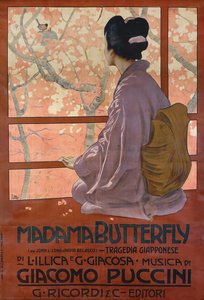
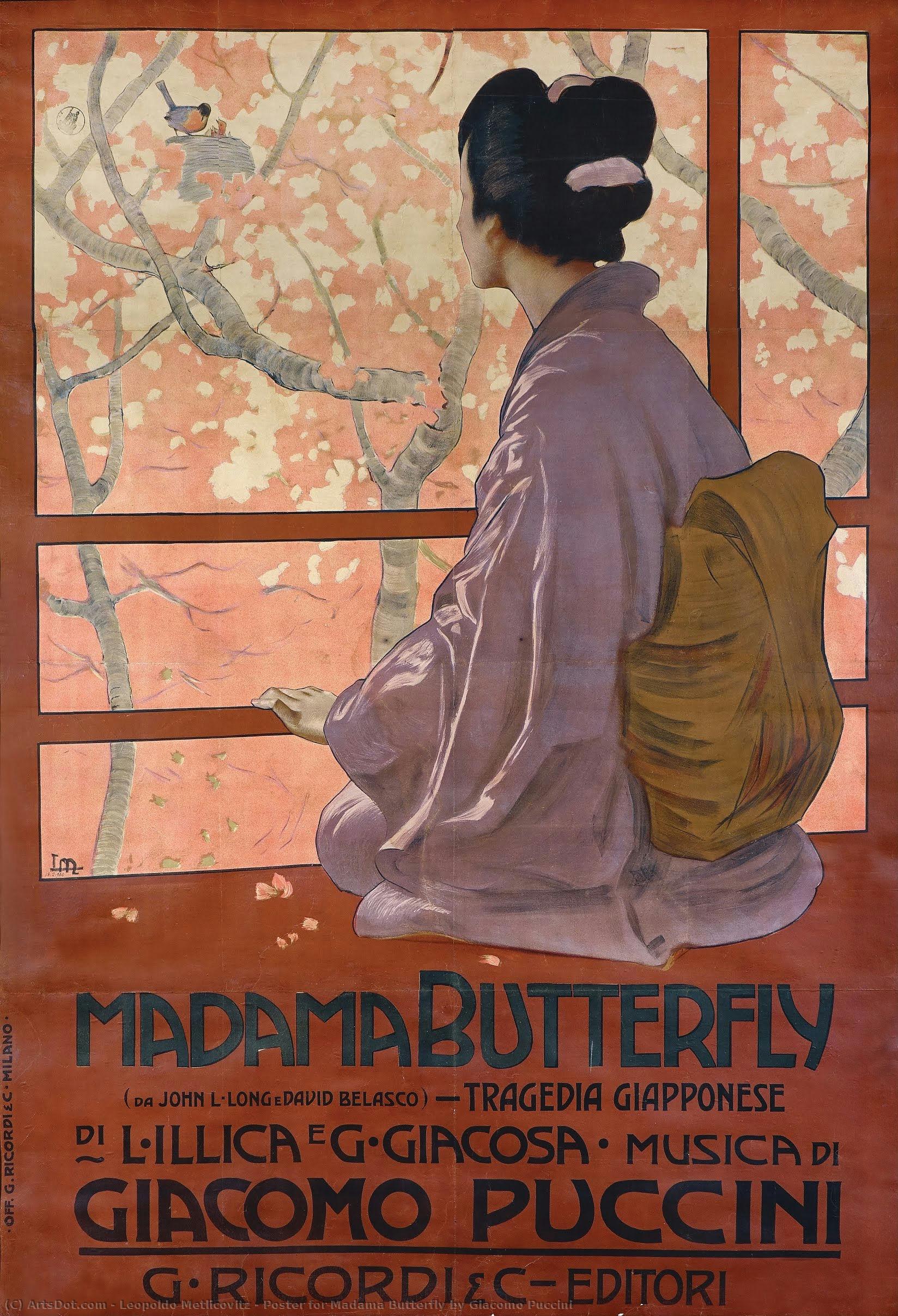
In the delicate intersection of graphic design and operatic tragedy lies Leopoldo Metlicovitz’s 1904 masterpiece, Poster for Madama Butterfly by Giacomo Puccini. This evocative work serves as more than a mere advertisement; it is a visual poem that captures the very essence of longing and cultural collision. The scene presents a woman, draped in the elegant folds of a traditional kimono, seated before a window with her back turned to the viewer. This choice of perspective is profoundly intentional, inviting us not to observe her face, but to share in her gaze. As she looks out toward a world that feels both intimate and distant, we are drawn into a moment of profound introspection. The composition is anchored by the quiet presence of nature—a slender tree branch reaching into the frame, a solitary bird perched in silent companionship—elements that mirror the fragile beauty of the protagonist herself.
The artistry of Metlicovitz shines through his masterful use of the Art Nouveau aesthetic, a style defined by its organic fluidity and rhythmic lines. The painting breathes with a warm, earthy palette, utilizing tones of amber, deep ochre, and soft shadows to create an atmosphere of cozy yet heavy nostalgia. Every element within the room—from the delicate vase to the steady presence of a clock on the wall—contributes to a sense of stillness, as if time itself has paused to witness her contemplation. The subtle inclusion of a handbag and a distant, smaller figure adds layers of narrative depth, suggesting a life lived between the private sanctuary of the home and the unfolding drama of the outside world.
The Architect of Italian Emotion
To understand this piece is to understand the genius of Leopoldo Metlicovitz, a pioneer who helped birth the golden age of Italian poster art. Working during the Belle Époque, Metlicovitz possessed the rare ability to translate the grand, sweeping emotions of Italian opera into the concise, striking language of graphic design. In this poster, he does not merely depict a character; he evokes the tragic arc of Puccini’s most famous heroine. The symbolism is layered with meaning: the window acts as a threshold between her sheltered existence and the harsh reality of betrayal, while the bird serves as a metaphor for the fleeting nature of happiness. For the collector or interior designer, this work offers a sophisticated touch of historical grandeur, bringing a sense of theatrical elegance and narrative weight to any curated space.
For those seeking to adorn their homes with art that speaks, this reproduction offers an unparalleled opportunity to possess a fragment of musical and visual history. The painting’s ability to evoke warmth through its color temperature makes it a versatile centerpiece, capable of anchoring a room with its quiet strength. Whether placed in a study filled with books or a contemporary living space seeking a touch of classical soul, the Poster for Madama Butterfly remains a timeless testament to the power of visual storytelling, reminding us that even in moments of solitude, there is a profound beauty to be found.
Related Artworks
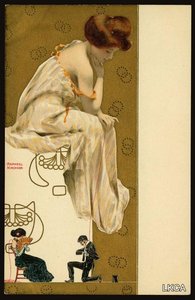
Artist Biography
The Architect of Italian Opera Poster Art
Leopoldo Metlicovitz stands as a monumental figure in the annals of Italian art history, specifically recognized for his transformative contribution to opera poster design and Art Nouveau illustration. Born in Trieste, Italy, in 1868, he emerged during the fervent artistic experimentation of the Belle Époque. He swiftly established himself as one of the foremost practitioners of graphic arts alongside luminaries like Leonetto Cappiello and Marcello Dudovich. Together, these visionaries spearheaded a burgeoning movement that would redefine visual communication in Italy, cementing their legacy as the fathers of modern Italian poster art.
Metlicovitz’s artistic journey began with a grounding in traditional painting techniques, absorbing the subtle nuances of Impressionism and Symbolism. However, it was his embrace of Art Nouveau—characterized by flowing lines, organic motifs, and opulent ornamentation—that truly propelled him to prominence. This stylistic preference resonated deeply within the cultural landscape of his time, mirroring Italy’s fascination with beauty and craftsmanship. His illustrations for prestigious publications like La Domenica Illustrata showcased a masterful command of color and composition, demonstrating an unwavering commitment to artistic innovation that bridged the gap between fine art and commercial appeal.
A Master of Light, Shadow, and the Ricordi Legacy
The trajectory of Metlicovitz’s career ascended dramatically when he joined Ricordi, Milan's prestigious publishing house. This collaboration became one of the most significant partnerships in the history of graphic design. As he rose to become a technical director at the Officine Grafiche Ricordi, he developed an original approach to light and shadow that breathed life into static images. His work was not merely about decoration; it was about capturing the very soul of the subject matter through meticulous lithography.
His role at Ricordi allowed him to shape the visual identity of the world's most famous opera productions. Metlicovitz’s collaborations with composers like Giacomo Puccini yielded iconic posters for Madama Butterfly, arguably his most celebrated achievement. These posters were meticulously crafted artworks that captured the emotional essence of the opera—the tragic romance, the exotic setting, and the palpable tension between characters. His ability to translate complex musical narratives into a single, striking visual moment remains unparalleled.
The Pioneer of Advertising and Visual Narrative
Beyond the grand stages of the opera house, Metlicovitz was a true pioneer of advertising, utilizing his talent to elevate commercial products to the realm of high art. His portfolio expanded to include:
- Commercial Lithographs: Memorable designs for industrial and consumer products, including the famous "Mele" designs.
- Exhibition Art: Capturing the grandeur of major international events, such as the 1906 Milan International Exposition.
- Cinematic Illustration: Creating evocative imagery for the silent era of film, most notably for the historic epic Cabiria.
His work served as a bridge between the industrial revolution and the aesthetic sensibilities of the early 20th century. By applying the elegance of fine art to posters for champagne, fashion, and trade, he helped create a visual language that defined an era of prosperity and glamour. Even as his style evolved, his commitment to the "art of desire" remained constant, ensuring that every poster he touched functioned as both a persuasive advertisement and a timeless masterpiece.
Leopoldo Metlicovitz passed away in 1944, leaving behind a legacy that continues to inspire graphic designers and art historians alike. His ability to synthesize the organic beauty of Art Nouveau with the structural demands of modern advertising ensures his place as a cornerstone of Italian cultural heritage. Today, his works are celebrated not just as relics of a bygone era, but as foundational pillars of the modern visual identity of Italy.
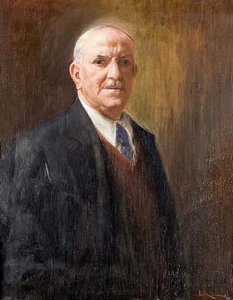
leopoldo metlicovitz
1868 - 1944 , Italy
Quick Facts
- Artistic Movement Or Style: Art Nouveau
- Artists Or Movements Influenced By This Artist: ['Giuseppe Giacosa']
- Date Of Birth: 1868
- Full Name: Leopoldo Metlicovitz
- Nationality: Italian
- Notable Artworks: ['Madama Butterfly poster']
- Place Of Birth: Trieste, Italy
Related Articles
Art Nouveau's Golden Age: 10 Masterpieces for Your Home |
Journey into Art Nouveau's golden age! Explore 10 masterpieces by Klimt, Mucha & more. Discover captivating stories behind iconic paintings, floral motifs & flowing lines. Find museum-quality art reproductions for your home at .
Alphonse Mucha: A Comprehensive Exploration of Art Nouveau's Master of Decorative Symbolism
Explore the life & art of Alphonse Mucha, master of Art Nouveau! Discover his iconic posters, stunning illustrations, and the monumental Slav Epic. A comprehensive guide for collectors & enthusiasts.
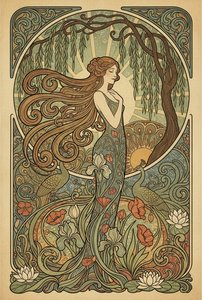
The Flowing Line & Flourishing Form: Exploring Art Nouveau's Aesthetic Legacy
Explore the captivating world of Art Nouveau! Discover its origins, key artists like Horta & Mucha, regional styles, innovative techniques, and lasting influence on architecture & design. A comprehensive guide for art enthusiasts.
Copper Hues & Masterpieces: 10 Iconic Paintings for Timeless Home Decor
Explore 10 iconic paintings bathed in rich copper tones! From Rembrandt to Klimt, discover the stories behind these masterpieces & their warm color palettes. Find museum-quality art reproductions for your home at ArtsDot.com.
F.A.Q.: Poster Prints – Durability, Comparison to Canvas, & Sizes for Elite Collectors
provides elite collectors with detailed insights into our poster print quality, comparing durability & materials to canvas. Explore sizing options and discover museum-quality art reproductions for lasting investment value.