 Preview
 Send
Send Share
Share
 Details

 Download
 Similars
 X-Ray
X-Ray Diaporama
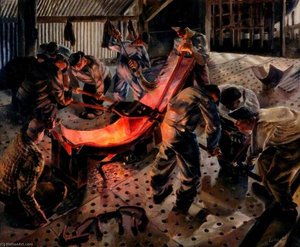
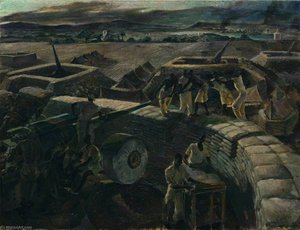
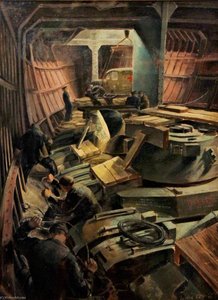
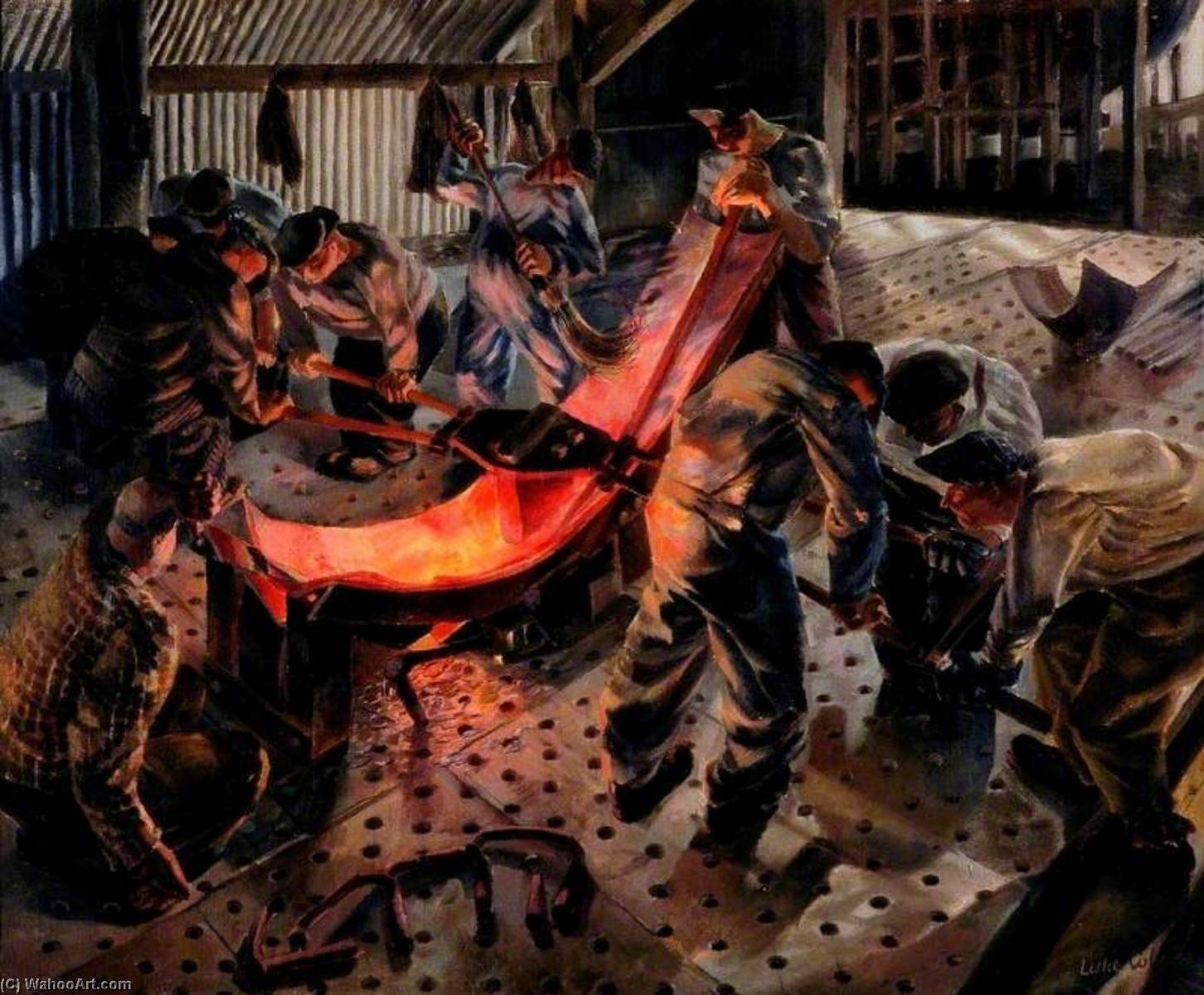
The Shaping of the Keel Plate of a Corvette
 Acrylic On Canvas
- WallArt
- Contemporary Realism
 1942
1942 51.0 x 64.0 cm
 Laing Art Gallery
 Read More
Hand Made Oil Reproduction
Hand-painted oil on canvas in your size and frame, made to order by our artists. ( Buy Print Buy Image)




P118B $10

P118H $10

P118W $10

P438Z $10

P508JH $12

P508YH $12

P805H $10

P805Z $10

P919BZ $10

P919G $10

P919XJ $10

P959ZH $10

P968JZ $12

W106C $8

W218G $10

W218JH $8

W218Y $10

W307PJ $10

W316G $10

W316PJ $8

W316Y $10

W398PJ $8

W4111J $10

W500HY $15

W500JH $15

W692G $12

W849H $8

W940BG $15

W953PJ $8




Pick from our preset sizes that match the artwork's original proportions.

You may enter your own dimensions to fit a specific frame or space. If your selected size does not match the original image's proportions, we will either crop the artwork or extend the painting with additional hand-painted elements. A digital mockup will be sent for your approval before production begins.
Please note that the on-screen preview does not reflect the actual cropping or extension. Only the mockup will accurately show the final composition.
While custom sizes are available, we recommend selecting a dimension from the predefined list to preserve the original proportions.
After order, ArtsDot.com team will email client for instructions and provide a mockup preview
Worldwide Delivery () in 3/4 weeks instead of standard 5 weeks. (31 August). No compromise on quality.

Free Worldwide Express Shipping

High-Quality Linen Canvas

Full Shipping Insurance

Customs Tax Refund Guarantee

True Color Matching Guarantee

60-Day Return Policy (Defects Only)

100% Money-Back Guarantee

Bulk Discount Offer
 Glass option is only available in size under 110 CM

The Shaping of the Keel Plate of a Corvette
Reproduction Medium
Reproduction Size
-


Total Price
$ 263
A Snapshot of Wartime Industry: Leslie Cole’s “The Shaping of the Keel Plate of a Corvette”
Leslie Cole's "The Shaping of the Keel Plate of a Corvette" isn’t merely a depiction of shipbuilding; it’s a poignant emblem of resilience and collaborative effort during World War II. Painted in 1942, this monochrome masterpiece captures a moment frozen in time – a factory floor buzzing with activity as skilled craftsmen meticulously assemble a corvette hull. The photograph accompanying the artwork reveals a scene brimming with purposeful concentration: men positioned strategically around the central umbrella, their faces illuminated by the diffused light of the workshop, embodying the spirit of collective determination.- Subject Matter & Composition: Cole’s focus is sharply defined on the practical task at hand – constructing naval vessels during a period of intense national mobilization. The composition utilizes geometric lines to guide the viewer's eye across the canvas, emphasizing the precision and methodical nature of industrial production.
- Style & Technique: Cole’s style leans heavily into realism, prioritizing accuracy in portraying the textures and forms of the workers and their tools. Employing a masterful technique of mural decoration—a skill honed during his studies at the Royal College of Art—he achieves remarkable tonal gradation, subtly conveying depth and atmosphere within the confined space of the factory.
- Symbolism: Beyond its literal representation, Cole’s painting transcends mere documentation. It embodies the ethos of wartime Britain—a nation united in purpose, bolstered by ingenuity and unwavering resolve. The meticulous detail underscores the importance of every contribution towards achieving a common goal.
Related Artworks

Artist Biography
A Witness to History: The Life and Art of Leslie Cole
Leslie James Cole, born in Swindon, United Kingdom, in 1910, was an artist whose life became inextricably linked with the tumultuous events of the Second World War. Though his name may not be as instantly recognizable as some of his contemporaries, Cole’s contribution to documenting the realities of conflict – and its devastating aftermath – is profoundly significant. His work stands as a powerful testament to human resilience in the face of unimaginable horror, offering a visual record that continues to resonate with viewers today. Cole's artistic journey began with formal training at Swindon Art School from 1927 to 1932, followed by studies at Birmingham College of Art and culminating in a diploma from the Royal College of Art in 1937, where he specialized in mural decoration, fabric painting, and lithography. This diverse foundation equipped him with a versatile skillset that would prove invaluable during his time as an official war artist. Even before the outbreak of war, Cole demonstrated a commitment to both artistic practice and education, beginning his teaching career at Hull College of Art – a dedication he would continue throughout his life.From Coastal Minesweepers to Bergen-Belsen: A War Artist’s Path
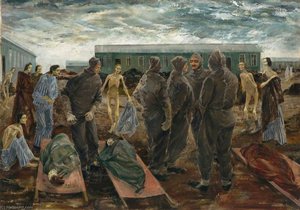
The onset of World War II dramatically altered the course of Cole's artistic endeavors. Initially, despite joining the RAF, medical reasons led to his discharge, but this setback did not deter him from seeking a role in documenting the conflict. Facing initial rejection by Sir Kenneth Clark and the War Artists’ Advisory Committee (WAAC), Cole proactively demonstrated his capabilities, embarking on independent missions accompanying trawlers involved in minesweeping and serving aboard destroyers. These self-initiated projects, showcasing his dedication and talent, ultimately impressed the WAAC, leading to a full-time commission in 1943. This marked the beginning of an extraordinary period where Cole traveled extensively across Europe and Asia, capturing scenes from Malta during the final stages of its siege, Normandy alongside the Royal Marines, Cairo, Greece amidst inter-factional violence following German withdrawal, and further afield to Singapore, Burma, Borneo, and Java. However, it was his assignment to document the liberation of Bergen-Belsen concentration camp that would define his artistic legacy. His panoramic oil paintings depicting the scenes of unimaginable suffering – survivors, British troops, and captured German guards – stand as unflinching portrayals of one of history’s darkest chapters.Style and Substance: Realism Tempered with Emotion
Cole's artistic style is characterized by a compelling realism, an ability to convey both the physical and emotional weight of his subjects. He wasn’t afraid to confront difficult truths, depicting violence and death with honesty and directness – qualities specifically recognized by the WAAC as essential for documenting wartime experiences. His earlier training in lithography proved particularly useful in capturing the immediacy of events, allowing him to create powerful images that conveyed a sense of urgency and authenticity. While his work demonstrates technical skill, it is the emotional depth that truly sets it apart. He possessed a remarkable capacity to portray not only what he saw but also the human cost of conflict, imbuing his paintings with a palpable sense of sorrow, resilience, and quiet dignity. This sensitivity, combined with his meticulous attention to detail, resulted in works that are both historically significant and deeply moving.Legacy and Remembrance: Ensuring Cole’s Vision Endures
Following the war, Leslie Cole established a studio in Fulham, London, continuing to teach at institutions such as the Central School of Art and Brighton College of Art. While his post-war work didn't quite reach the same intensity as his wartime pieces, he remained an active figure in the art world. Renewed interest in his contributions emerged in 1985 with an exhibition titled "To the Front Line" at the Imperial War Museum, and again in 2009 when two of his paintings appeared on Antiques Roadshow. Today, Cole’s works are held by the Imperial War Museum and numerous other public collections across Britain, ensuring that his powerful depictions of wartime experiences continue to be seen and appreciated by future generations. His art serves as a vital reminder of the sacrifices made during World War II and the importance of bearing witness to history's most challenging moments. Leslie Cole’s legacy is not merely one of artistic skill but of courageous documentation, offering a poignant and enduring tribute to those affected by conflict.Key Works & Collections
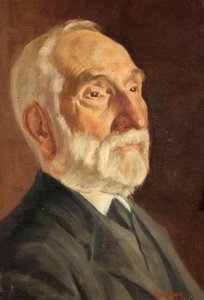
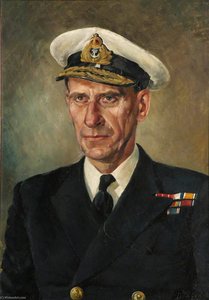
- Brigadier Ivan de la Bere, OBE, in Charge of Troops during the Siege of Malta (1943): A detailed oil painting capturing wartime resilience and dignity.
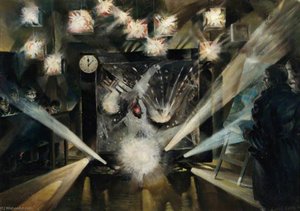
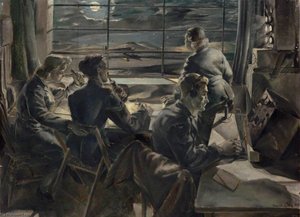
- Night Scene in a Watch Office (1942): A dramatic WWII oil painting conveying vigilance and communication through realist-impressionistic style.
- Subedar Major Musank Khan (1945): A dignified portrait of a soldier, rendered with realistic detail and textured impasto.
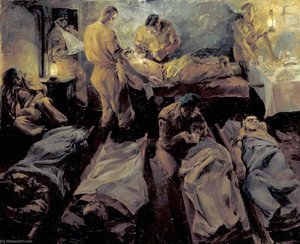
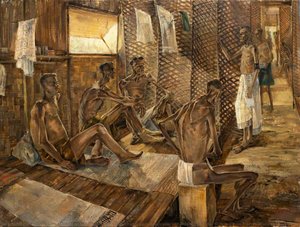
- Bergen-Belsen Series: Panoramic oil paintings documenting the harrowing aftermath of liberation, held in significant collections like the Imperial War Museum.
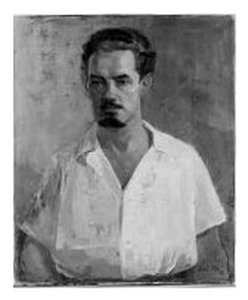
Leslie Cole
1910 - 1976 , United Kingdom
Quick Facts
- Artistic Movement Or Style: Realism
- Date Of Birth: 1910
- Date Of Death: 1976
- Full Name: Leslie James Cole
- Nationality: British
- Notable Artworks:
- Brigadier Ivan de la Bere
- Night Scene in a Watch Office
- Subedar Major Musank Khan
- Place Of Birth: Swindon, UK
Related Articles

William Owen: A Poetic Vision of War & Landscape in British Modernism
Explore the poignant war poetry of Wilfred Owen, a key figure in British Modernism. Discover his innovative style, themes of loss & camaraderie, and lasting impact on 20th-century literature. Analysis & historical context included.
Industrial Revolution on Canvas: 10 Artworks That Define a Modern Aesthetic
Explore 10 iconic artworks capturing the Industrial Revolution’s grit & beauty. From Monet to Manet, discover realism, impressionism & powerful scenes of urban life. Find museum-quality reproductions for your home at ArtsDot.com.

The Gritty Muse: Industrial Vibe as Defining Aesthetic in Modern Artwork
Explore the captivating world of industrial aesthetics in modern art. Discover key movements, influential artists & collecting insights at ArtsDot.com – your source for museum-quality reproductions and expert art guidance.
C.R.W. Nevinson: A Vorticist Vision of War & Modernity
Explore the powerful art of C.R.W. Nevinson, a key British Vorticist painter. Discover his impactful depictions of WWI and evolution beyond Futurism. Expert analysis & high-quality reproductions at ArtsDot.

Stephen Bone: A Reassessment of Colour, Form & the British Neo-Romantic Landscape Tradition
Explore the vibrant world of Stephen Bone (1904-1958), a key figure in British Neo-Romanticism. Discover his captivating landscapes, impactful war art & unique artistic style. Learn about his life, influences & legacy.