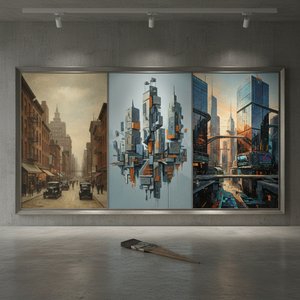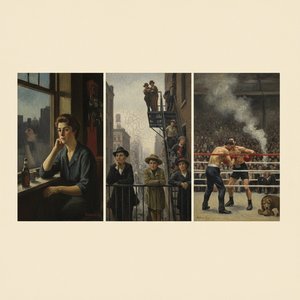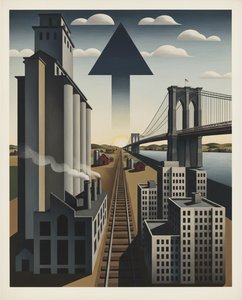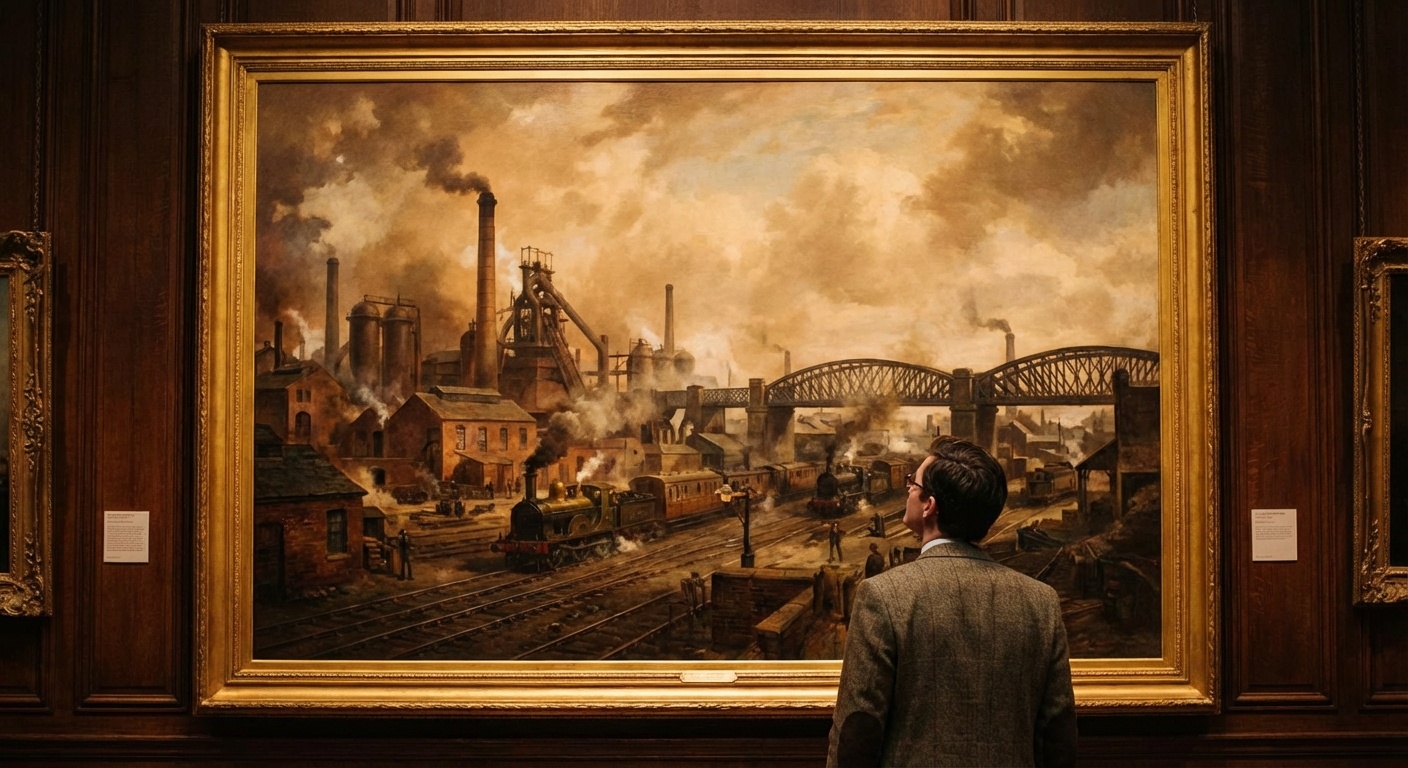

Introduction
The clang of metal, the hiss of steam, the relentless rhythm of machinery – these are the sounds and sensations that define the Industrial Age, a period of transformative upheaval that reshaped not only our landscapes but also our very perceptions. But how do we capture this era on canvas, in sculpture, or through other artistic mediums? The artworks selected for this collection aren’t simply depictions of factories and foundries; they are explorations of the human condition within a rapidly changing world, reflections on progress and alienation, power and vulnerability.
The Industrial Revolution, beginning in the late 18th century and accelerating throughout the 19th and early 20th centuries, fundamentally altered societal structures. The rise of mass production, urbanization, and new technologies created both unprecedented opportunities and profound social challenges. Artists responded to this seismic shift with a diverse range of approaches – from Romantic critiques of industrial encroachment on nature, to Realist portrayals of working-class life, to the avant-garde’s embrace of machine aesthetics. The cultural impact was immense; it birthed new philosophies, literary movements, and ultimately, a modern sensibility.
These ten artworks represent pivotal moments in this artistic dialogue. They offer glimpses into the lives of those who powered the revolution – the laborers, the innovators, the observers – and grapple with the complex legacy of industrialization. They continue to resonate today because they speak to universal themes: our relationship to technology, the search for meaning in a world dominated by forces beyond our control, and the enduring power of human resilience.
Prepare to journey through a landscape of smoke-filled factories, towering structures, and the faces that bear witness to an age defined by both innovation and upheaval. Each piece tells a story, invites contemplation, and reminds us that the echoes of the Industrial Revolution continue to shape our present.
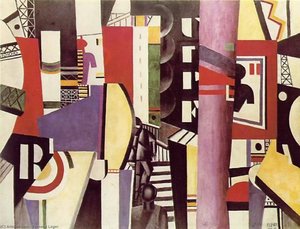
The City - Fernand Léger
 The City - Fernand Léger
Imagine standing on a bustling city street, not quite overwhelmed but acutely aware of the relentless energy surrounding you – the hum of electricity, the distant clang of metal, the sheer weight of structures reaching for the sky. This is the feeling Fernand Léger distills in The City (1919), a monumental canvas that isn’t merely a representation of an urban landscape but a vibrant hymn to modernity itself.
Léger, a pioneer of Cubism and his unique “Tubism,” breaks down the cityscape into its essential geometric forms. Buildings become stacks of cylinders and rectangles, imbued with a powerful sense of dynamism. This isn’t about photographic realism; it's about revealing the underlying structure – the machine aesthetic – that defines the industrial age. The bold colors and fragmented planes evoke both the optimism of post-war progress and a subtle undercurrent of alienation.
What elevates The City to our Top 10 is its ability to capture this complex duality. It’s a celebration of human ingenuity, yet it also hints at the potential for detachment within an increasingly mechanized world. The painting reminds us that art can be more than just decorative; it can serve as a mirror reflecting our evolving relationship with technology and the environments we create. Bringing a piece inspired by Léger's vision into your space – whether through color palettes, geometric forms, or abstract compositions – invites a similar contemplation on the beauty and complexity of modern life.
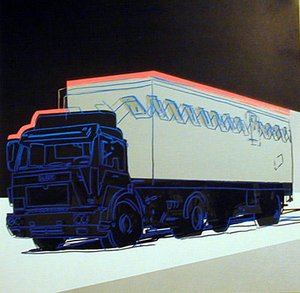
Truck Announcement - Andy Warhol
 Truck Announcement - Andy Warhol
Consider a moment of quiet anticipation – the kind you feel when something significant is about to be revealed, a message delivered. This feeling resonates within Andy Warhol’s Truck Announcement (1985), a deceptively simple painting that encapsulates the spirit of American commerce and communication. More than just an image of a vehicle, it's a stark declaration, a mobile billboard against the darkness.
Warhol, the master of Pop Art, elevates the mundane to iconic status. The truck, rendered in cool blues and whites with his signature silkscreen technique, becomes a symbol of relentless movement, economic power, and the very fabric of American industry. The addition of “Announcement” transforms it into something more – a vessel not just carrying goods but broadcasting an unspoken message.
Its inclusion in our Top 10 stems from its ability to capture this potent duality: the beauty found within the everyday, and the underlying currents of consumer culture. Warhol doesn’t critique; he observes with cool detachment, forcing us to confront the visual impact of these symbols. Bringing a piece inspired by Warhol's vision into your space – whether through bold color blocking or iconic imagery – invites that same sense of contemplation on the power of communication and the landscapes of modern life.
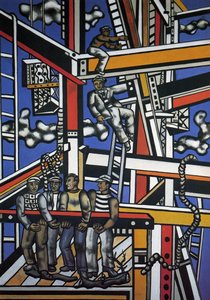
Manufacturers - Fernand Léger
 Manufacturers - Fernand Léger
Imagine the rhythmic clang of metal, the purposeful stride of workers, a sense of collective energy building beneath a vast, open sky. This is the atmosphere Fernand Léger captures in Manufacturers (1950), a monumental canvas that isn’t simply a depiction of a construction site but a bold celebration of human labor and the transformative power of industry.
Léger, a pioneer of Cubism and his distinctive “Tubism,” strips away stylistic complexities, favoring simplified geometric forms and vibrant hues to convey raw emotion. The interlocking beams, ladders, and stylized figures pulsate with energy, creating an illusion of depth through rhythmic repetition. This isn’t about realistic representation; it's about revealing the underlying structure – the very bones – of modern life.
What elevates Manufacturers to our Top 10 is its humanist core. Léger doesn’t merely observe workers; he celebrates their strength and dignity, imbuing them with a sense of purpose within the industrial landscape. The bold blue and red palette evokes both the coolness of the sky and the heat of exertion, creating a dynamic tension that resonates deeply. Bringing a piece inspired by Léger's vision into your space – through geometric forms or vibrant color palettes – invites a similar contemplation on the beauty found in everyday work and the enduring spirit of human ingenuity.
Chocolate Grinder No.2 - Marcel Duchamp
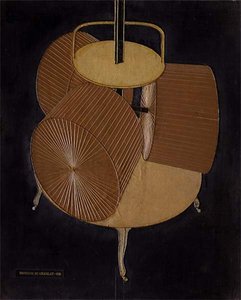 Chocolate Grinder No.2 - Marcel Duchamp
Imagine a quiet rebellion – a questioning glance at the everyday objects that surround us, a subtle shift in perspective that transforms the mundane into something profound. This is the spirit of Marcel Duchamp’s Chocolate Grinder No.2 (1914), a cornerstone of Dada and Conceptual Art that continues to challenge our very definition of beauty.
Duchamp didn't simply depict a chocolate grinder; he elevated it – mounted upside down on a wooden stool – into an artistic statement through deliberate selection. This radical gesture, known as the “readymade,” disrupts established hierarchies and forces us to reconsider our assumptions about originality and value. The geometric precision of the composition, echoing Cubist fragmentation yet prioritizing structural clarity, mirrors the aesthetic sensibilities of industrial design.
Its inclusion in our Top 10 stems from its enduring power to provoke thought and redefine artistic boundaries. At ArtsDot, we believe that great art should be accessible – a living presence within your home or office. A piece inspired by Duchamp’s vision invites that same spirit of contemplation, encouraging you to find beauty in the unexpected and question the world around you.
untitled (216) - Fernand Léger
 untitled (216) - Fernand Léger
Unveiling Untitled (216) by Fernand Léger is to encounter a rare distillation of modern energy – a vibrant tableau that captures the spirit of leisure and observation with striking geometric precision.
This artwork, while seemingly simple in its depiction of figures on a beach, embodies Léger’s unique “Tubism,” reducing forms to simplified cylinders and cubes. This isn't merely stylistic; it reflects his fascination with machinery and the changing urban landscape, imbuing even idyllic scenes with an industrial aesthetic.
Its inclusion in our Top 10 stems from its ability to balance dynamism with a sense of detachment – a quality that resonates deeply within modern interiors. A piece inspired by Léger’s vision brings a sophisticated energy to any space, inviting contemplation on the beauty found in constructed forms and the enduring legacy of early 20th-century innovation.
In Advance of the Broken Arm - Marcel Duchamp
 In Advance of the Broken Arm - Marcel Duchamp
Imagine a moment of quiet defiance – an object stripped bare of its utility, presented not as a tool but as a question. This is the essence of Marcel Duchamp’s In Advance of the Broken Arm (1915), a photograph that embodies the core tenets of Dadaism and fundamentally challenged our understanding of art.
This seemingly simple image – a shovel attached to a wooden pole – isn't about craftsmanship or aesthetic beauty; it’s about Duchamp’s radical assertion that the artist’s choice is what defines art. The muted yellows and silvery grays evoke a sense of weathered practicality, while the stark geometry of the composition emphasizes its industrial origins.
Its inclusion in our Top 10 stems from this revolutionary concept – the “readymade” – which moved the focus from skill to thought. A piece inspired by Duchamp’s vision invites that same spirit of contemplation, encouraging you to question assumptions and find beauty in the unexpected within your own space.
Komposition - Fernand Léger
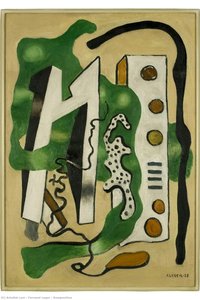 Komposition - Fernand Léger
Imagine a world vibrating with energy – a sense of forward momentum and boundless possibility. This is the feeling Fernand Léger captures in Komposition , a striking canvas that embodies the spirit of the machine age.
Léger doesn’t simply depict factories or gears; he distills their essence into pure abstract form, demonstrating that even seemingly cold objects can inspire profound artistic expression. Bold circles pulsate against a backdrop of vibrant color – emerald green, sunny yellow, fiery red – creating a dynamic rhythm that suggests movement and innovation.
Its inclusion in our Top 10 stems from this ability to capture the underlying philosophical implications of modernity. At ArtsDot, we believe that great art should be accessible. A piece inspired by Léger’s vision brings that same sense of energy and optimism into your space – a faithful reproduction preserving the emotion and texture of the original.
Head constructor - Fernand Léger
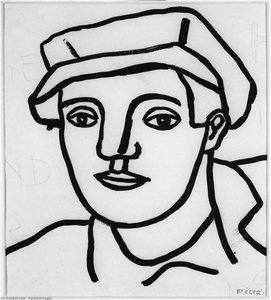 Head constructor - Fernand Léger
Imagine a world built not of flesh and blood but of steel and angles – a sense of purposeful construction, where even the human form is reduced to its essential geometric components. This is the spirit of Fernand Léger’s Head Constructor (1950), a striking monochrome work that embodies the dynamism of the machine age.
Léger doesn't simply depict a face; he distills it into a series of interlocking squares and rectangles, a bold assertion of geometric abstraction. The stark contrast between black lines and white space emphasizes this structure, creating an image that feels less like a portrait and more like a blueprint for a new kind of human being.
Its inclusion in our Top 10 stems from its ability to capture the underlying philosophy of modernity – the belief in progress through rational design. At ArtsDot, we believe that great art should be accessible. A piece inspired by Léger’s vision brings that same sense of energy and precision into your space – a faithful reproduction preserving the emotion and texture of the original.
Stalingrad - Fernand Léger
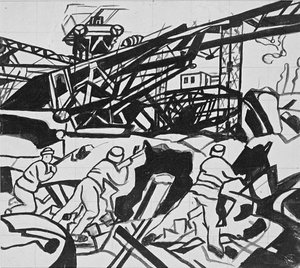 Stalingrad - Fernand Léger
Imagine a landscape reshaped by conflict – not just physical devastation but also a profound shift in human perspective. This is the essence of Fernand Léger’s Stalingrad (1924), a monumental canvas that transcends mere representation to become a powerful symbol of industrial resilience.
Léger doesn't depict the horrors of war directly; instead, he dismantles the scene into fragmented cubes and planes, layering them upon one another to create a dynamic visual illusion. The colossal excavators and cranes – rendered in shades of gray and black – aren’t simply present; they are actively reshaping the landscape, echoing his belief that technology fundamentally alters human experience.
Its inclusion in our Top 10 stems from this ability to synthesize abstraction with observation, capturing not just what is seen but how it *feels*. A piece inspired by Léger’s vision brings a sense of quiet determination and enduring strength into your space – a faithful reproduction preserving the emotion and texture of the original.
People framework (Manufacturers) - Fernand Léger
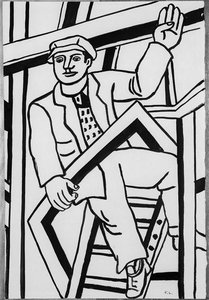 People framework (Manufacturers) - Fernand Léger
Imagine a world humming with activity – a sense of relentless progress and the raw energy of human endeavor. This is the spirit captured in Fernand Léger’s People Framework (Manufacturers) , a striking black and white work that embodies the dynamism of early 20th-century industrial life.
Léger doesn't simply depict factory workers; he distills them into fragmented forms, layering angular shapes to create a powerfully abstract visual language. Bold lines dominate, outlining every figure and architectural element with sharp precision, mirroring the very structures he’s depicting. The flattened perspective forces us to actively engage in constructing a sense of depth and space.
Its inclusion in our Top 10 stems from this ability to synthesize abstraction with observation, capturing not just what is seen but how it *feels*. A piece inspired by Léger’s vision brings that same sense of energy and precision into your space – a faithful reproduction preserving the emotion and texture of the original.
Conclusion
As we conclude our journey through these ten remarkable artworks, it’s clear that their power extends far beyond historical significance. They are not simply paintings; they are living presences – echoes of a transformative era that continue to resonate with the human spirit.
Each canvas—from Léger’s geometric abstractions to Hopper’s haunting realism—offers a unique window into the complexities of modernity, inviting us to contemplate our relationship with technology, labor, and the ever-changing urban landscape. These are works that speak not just to the eye but to the soul, stirring emotions and igniting imagination.
At ArtsDot, we believe in making such beauty accessible—transforming spaces into artistic statements through museum-quality reproductions. We partner with interior designers and architects to curate bespoke collections for hotels, villas, and refined interiors, offering custom art mockups and ensuring every project reflects a unique vision.
Whether you seek the bold energy of Cubism or the quiet introspection of American Realism, we invite you to explore our full collection and discover how these timeless masterpieces can enrich your world. Let us help you bring a piece of this enduring legacy into your home—a faithful reproduction preserving the emotion, texture, and profound beauty of the original.