

 Preview
 Send
Send Share
Share
 Details

 Download
 Similars
 X-Ray
X-Ray Diaporama
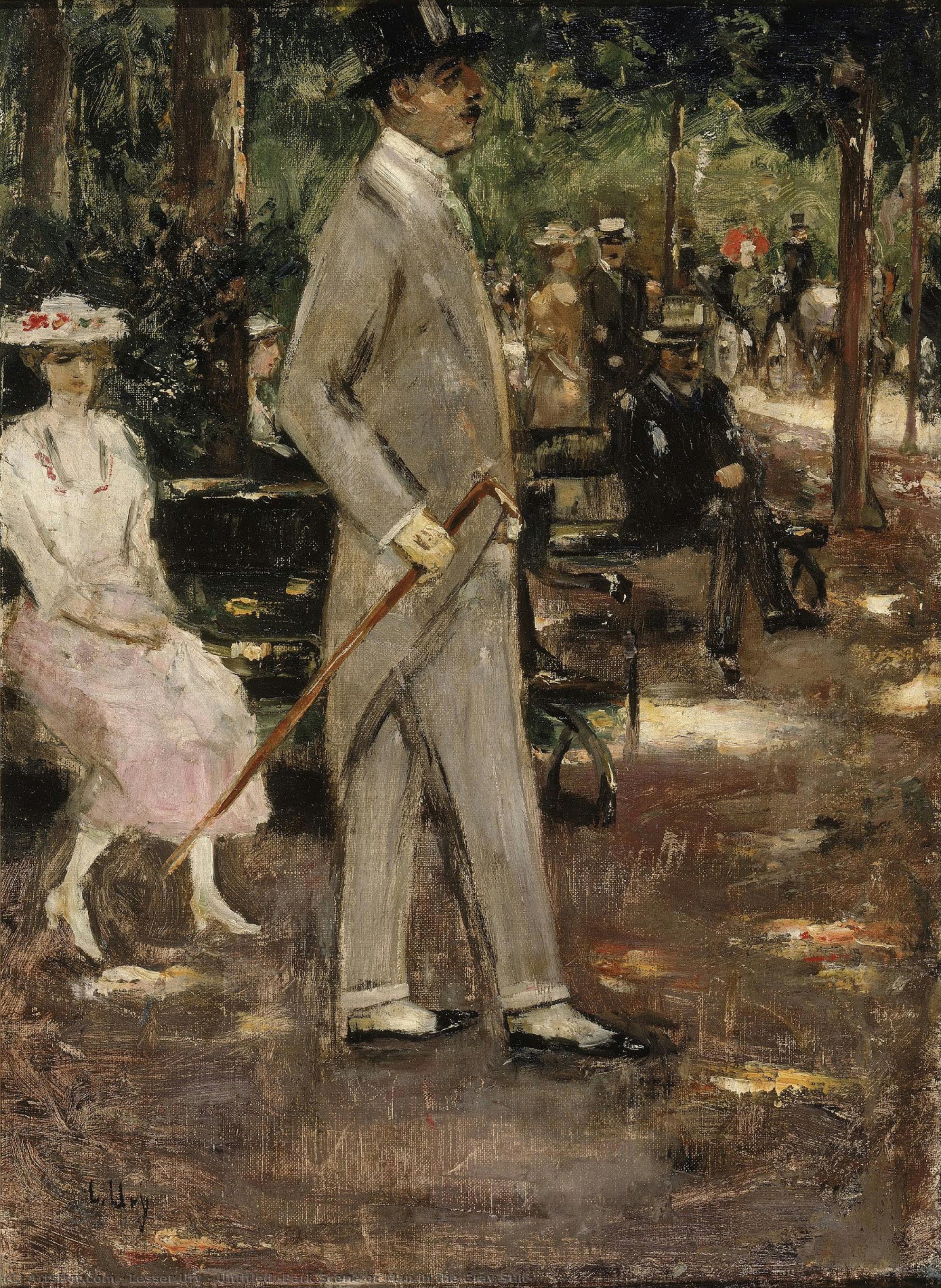
Untitled (Park Scene or Man in the Gray Suit)
 Acrylic On Canvas
- WallArt
- German Impressionism
 1913
1913 52.0 x 38.0 cm
 The Jewish Museum
 Read More
Purchase a high-resolution, enhanced digital image, far superior to the online preview.
Each file is meticulously prepared by our in-house specialists using advanced tools and expert manual retouching. We ensure every image has exceptional clarity, precise color accuracy, and fine detail.
The final file is delivered via email within 72 hours, optimized for immediate use in professional, editorial, and print environments. This is the same quality trusted by top-tier design studios, publishers, and galleries.
Digital Image
Download a high-resolution file for personal display, printing, and creative projects. ( Buy Print Buy Hand Made Painting)
Included in Every Digital Image Order
Expert Digital Delivery, Guaranteed
When you choose ArtsDot.com, you're not just getting an image - you're receiving a professionally enhanced digital artwork, crafted with precision and backed by a satisfaction guarantee. Here's everything that comes with your order, automatically:

Fast Email Delivery
Your high-resolution digital image file will be emailed to you within 72 hours of ordering - ready for immediate use.

AI-Enhanced Digital File
Your artwork is professionally optimized using advanced AI tools and manual editing, ensuring maximum detail, clarity, and color accuracy.

Free Lifetime Re-Delivery
Accidentally deleted or lost your file? No worries - we'll resend it to you anytime, free of charge.

No Import Fees - Ever
Enjoy your artwork instantly with zero customs, duties, or delivery fees - digital downloads are always tax-free.

Color Accuracy Guarantee
We ensure your digital image reflects the original colors as closely as possible using professional tools and color management.

60-Day Satisfaction Guarantee
If you're not satisfied with your digital image, we'll revise it or refund 100% within 60 days - no questions asked.

100% Money-Back Guarantee
Not satisfied? Get a full refund within 60 days of receiving your digital file - no questions asked.

Bulk Order Discounts
Buy 3 images, save 10% - Buy 5, save 15% - Buy 10+, save 20%. Great for creative projects, galleries, and agencies.
Collectible Description
A Moment Frozen in Time: Lesser Ury’s “Untitled (Park Scene or Man in the Gray Suit)”
Lesser Ury's "Untitled (Park Scene or Man in the Gray Suit)" is not merely a depiction of a park; it’s a poignant meditation on urban isolation and the quiet dignity of everyday life. Painted in 1913, this monochrome masterpiece captures a fleeting moment within a bustling Berlin cityscape – a scene imbued with a subtle melancholy that speaks volumes about the anxieties of modernity. Ury, a relatively obscure figure within the vibrant landscape of early 20th-century German art, nevertheless possessed a remarkable ability to distill complex emotions into deceptively simple compositions. His work, deeply rooted in the Düsseldorf School of Painting’s emphasis on tonal realism and atmospheric perspective, offers a window into the soul of a rapidly changing world.
The painting's strength lies not in dramatic action or vibrant color – rather, it resides in its carefully constructed atmosphere. Ury masterfully employs a restricted palette of grays and browns, creating an almost photographic quality that emphasizes the textures of the park’s surfaces: the weathered benches, the worn cobblestones, the muted tones of the figures themselves. The brushwork is loose and expressive, suggesting movement and capturing the diffused light characteristic of Impressionism. Notice how he uses subtle gradations to define form, avoiding sharp outlines and instead relying on the interplay of light and shadow to create a sense of depth and volume.
The Artist’s Biography: A Life Shaped by Displacement
Born in Birnbaum, Prussia (now Międzychód, Poland) in 1861, Leo Lesser Ury's life was profoundly shaped by loss and relocation. The untimely death of his father at a young age forced the family to move to Berlin, an experience that undoubtedly fostered within him a sensitivity to urban alienation – a theme that consistently appears throughout his oeuvre. His early apprenticeship as a tradesman provided a grounding in practical skills, but it was his innate artistic talent that ultimately guided his path. Ury’s travels through Europe—Brussels, Paris, Munich, and beyond—exposed him to diverse artistic influences, yet he retained a distinctly German sensibility, characterized by a quiet introspection and an acute awareness of the human condition.
Despite facing challenges as a Jewish artist in late 19th and early 20th-century Germany, Ury persevered, establishing himself as a respected figure within the Berlin art scene. His work often explored themes of urban life, social commentary, and personal reflection—subjects that resonated deeply with the anxieties and uncertainties of his time. His biography reveals a man who navigated a complex world with both resilience and artistic vision.
Decoding the Scene: Symbolism and Narrative
The central figure – a man in a suit, leaning on a cane – immediately draws the viewer’s attention. While his face is largely obscured, his posture conveys a sense of quiet contemplation, perhaps even weariness. He represents not just an individual but also embodies the archetype of the modern urbanite: detached, solitary, and burdened by the complexities of city life. The other figures in the park – strolling couples, children playing – offer glimpses into a more communal existence, yet they remain distant and somewhat anonymous. The benches themselves become symbols of isolation, inviting reflection but offering no immediate connection.
It’s tempting to interpret this scene as a commentary on the alienation of modern life—a feeling that resonated powerfully during the period. However, Ury's work resists easy categorization. There is a certain beauty and dignity in the man with the cane, suggesting not despair but rather a quiet acceptance of his place within the urban landscape. The painting invites us to contemplate our own relationship to the city and to consider the human cost of progress.
A Timeless Reflection: Reproduction and Artistic Legacy
"Untitled (Park Scene or Man in the Gray Suit)" is a remarkably evocative work that continues to resonate with viewers today. Reproductions, meticulously crafted by hand, capture the painting’s atmospheric depth and nuanced details, offering an accessible way to experience Ury's artistic vision. The piece would be equally at home adorning a contemporary apartment or gracing the walls of a museum—its timeless themes and understated beauty ensuring its continued relevance for generations to come. Consider it not just as a decorative object but as a poignant reminder of the complexities of human existence within the ever-evolving urban environment.
Related Artworks
Artist Biography
A Life Painted in Light: The World of Leo Lesser Ury
Leo Lesser Ury, a name perhaps less instantly recognizable than some of his Impressionist contemporaries, nevertheless occupies a vital and evocative space within the narrative of German painting. Born on November 7, 1861, in Birnbaum, Prussia – now Międzychód, Poland – Ury’s journey was one marked by both artistic triumph and personal hardship. His early life was shadowed by loss; the death of his father, a baker, in 1872 forced a relocation to Berlin with his mother. This displacement instilled within him, perhaps, a lifelong sensitivity to urban landscapes and the transient nature of modern existence. Initially apprenticed to a tradesman, Ury’s artistic calling proved too strong to ignore, leading him to the Kunstakademie Düsseldorf in 1879. It was the beginning of an extended period of European exploration – Brussels, Paris, Munich, Stuttgart, Karlsruhe – each city contributing to the evolving palette and perspective that would define his unique style. These travels weren’t merely geographical; they were immersive studies in light, atmosphere, and the burgeoning energy of modern life.Embracing Impressionism and Capturing a City's Soul
Ury’s artistic development was deeply intertwined with the currents of late 19th-century art. While initially met with resistance – his first exhibition in 1889 eliciting a hostile response – he found a champion in the esteemed Adolph Menzel, whose support opened doors within the Berlin Academy. This recognition proved pivotal, allowing Ury to further refine his technique and vision. His embrace of Impressionism wasn’t merely stylistic; it was a means of capturing the fleeting moments of modern urban life. He joined the Munich Secession in 1893, aligning himself with a group of artists who challenged academic conventions and sought new modes of expression. Ury's canvases began to shimmer with lively brushstrokes, impasto application creating texture and depth, and an acute sensitivity to light’s transformative power. His primary subjects crystallized around this time: landscapes imbued with atmosphere, intimate interior settings, but most notably, the vibrant, often nocturnal scenes of city life. He wasn’t simply *depicting* Berlin; he was capturing its very essence – the glow of gas lamps on rain-slicked streets, the bustling energy of cafes, the quiet solitude of shadowed corners.Recognition and a Complex Legacy
The early years of the 20th century saw Ury return to Berlin, where he quickly became a prominent figure in the city’s art scene. His participation in exhibitions with the Berlin Secession from 1915 onwards steadily increased his recognition. A landmark exhibition in 1922, showcasing 150 of his paintings and pastels, cemented his reputation; the mayor of Berlin hailed him as “the artistic glorifier of the capital.” This period marked a high point in Ury’s career, fueled by both critical acclaim and commercial success. He became particularly renowned for his mastery of pastel, utilizing the medium to create works of exceptional delicacy and atmospheric depth. However, this success was shadowed by a complex aspect of his practice. To meet growing demand, Ury began repeating compositions, producing numerous copies – some of lesser quality – that unfortunately diluted his artistic standing in the eyes of some critics. This pragmatic approach, while financially beneficial, ultimately contributed to a somewhat ambivalent assessment of his oeuvre.A Lasting Impression: Historical Significance and Enduring Appeal
Leo Lesser Ury’s historical significance extends beyond his technical skill and aesthetic sensibilities. He is remembered as a keen observer and evocative portrayer of modern urban life, particularly the nocturnal landscapes of Berlin that resonated with audiences seeking to understand their rapidly changing world. His work offers a glimpse into a specific time and place – a city on the cusp of modernity, grappling with industrialization, social change, and the anxieties of a new era. Furthermore, as a Jewish artist navigating German society, Ury’s life and work reflect aspects of Jewish cultural identity and experience within a complex socio-political landscape. His paintings, while not overtly political, subtly convey a sense of belonging and alienation, offering a unique perspective on the challenges faced by Jewish communities in Germany during this period. Though he died in Berlin on October 18, 1931, and is buried in the Jewish Cemetery in Berlin-Weissensee, his influence continues to be felt today. His distinctive style paved the way for subsequent generations of artists, and his evocative depictions of urban life continue to captivate viewers with their beauty, atmosphere, and poignant sense of time and place. Ury’s legacy is a testament to the power of art to capture not just what we see, but how it feels to be alive in a particular moment.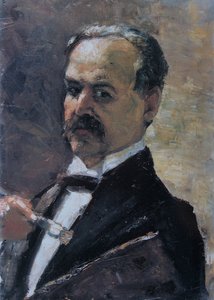
lesser ury
1861 - 1931 , Poland
Quick Facts
- Artistic Movement Or Style: Impressionism
- Artists Or Movements Influenced By This Artist: Later artists
- Artists Who Influenced This Artist: ['Adolph Menzel']
- Date Of Birth: November 7, 1861
- Date Of Death: October 18, 1931
- Full Name: Leo Lesser Ury
- Nationality: German
- Notable Artworks:
- Praying Jew
- On Lake Garda
- The Fence
- Place Of Birth (City And Country): Birnbaum, Poland

