 Preview
 Send
Send Share
Share
 Details

 Download
 Similars
 X-Ray
X-Ray Diaporama
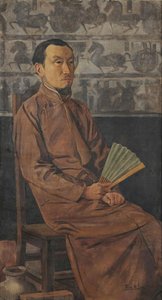
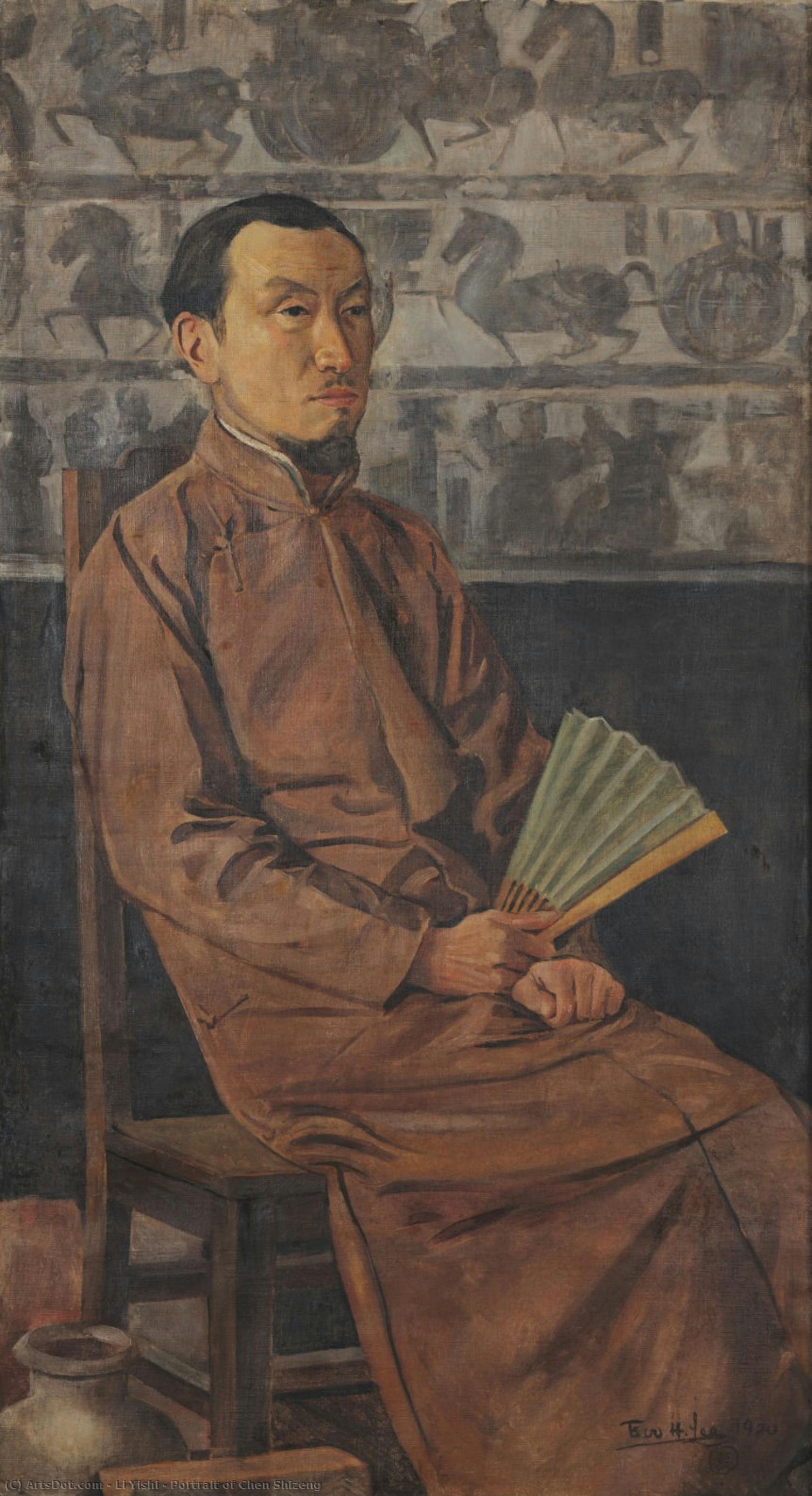
Portrait of Chen Shizeng
 Oil
Oil- WallArt
- Western Academic
 1920
1920 130.0 x 70.0 cm
 CAFA Art Museum
 Read More
Hand Made Oil Reproduction
Hand-painted oil on canvas in your size and frame, made to order by our artists. ( Buy Print Buy Image)




P118B $10

P118H $10

P118W $10

P438Z $10

P508JH $12

P508YH $12

P805H $10

P805Z $10

P919BZ $10

P919G $10

P919XJ $10

P959ZH $10

P968JZ $12

W106C $8

W218G $10

W218JH $8

W218Y $10

W307PJ $10

W316G $10

W316PJ $8

W316Y $10

W398PJ $8

W4111J $10

W500HY $15

W500JH $15

W692G $12

W849H $8

W940BG $15

W953PJ $8




Pick from our preset sizes that match the artwork's original proportions.

You may enter your own dimensions to fit a specific frame or space. If your selected size does not match the original image's proportions, we will either crop the artwork or extend the painting with additional hand-painted elements. A digital mockup will be sent for your approval before production begins.
Please note that the on-screen preview does not reflect the actual cropping or extension. Only the mockup will accurately show the final composition.
While custom sizes are available, we recommend selecting a dimension from the predefined list to preserve the original proportions.
After order, ArtsDot.com team will email client for instructions and provide a mockup preview
Worldwide Delivery () in 3/4 weeks instead of standard 5 weeks. (17 August). No compromise on quality.

Free Worldwide Express Shipping

High-Quality Linen Canvas

Full Shipping Insurance

Customs Tax Refund Guarantee

True Color Matching Guarantee

60-Day Return Policy (Defects Only)

100% Money-Back Guarantee

Bulk Discount Offer
 Glass option is only available in size under 110 CM

Portrait of Chen Shizeng
Reproduction Medium
Reproduction Size
-


Total Price
$ 263
Artwork Description
A Quiet Moment in Early Republic China
This exquisite oil portrait, capturing Chen Shizeng in 1920, transports the viewer into an intimate tableau of intellectual contemplation during a period of profound transition for China. The subject, Chen Shizeng, was not merely a painter but a pillar of Beijing's artistic community in the early Republic—a man whose very presence suggests the confluence of deep tradition and burgeoning modernity. Li Yishi, the masterful hand behind this work, has gifted us more than just a likeness; he has preserved a moment of serene scholarly engagement.
The composition centers around the figure seated before the gentle warmth emanating from the fireplace. He is depicted in a posture of absorbed concentration, one hand delicately holding an open book as if pausing mid-thought. The robe he wears speaks to a certain dignified formality, while his mustache adds a touch of distinguished character. It is a portrait that whispers tales of study, reflection, and the enduring value of knowledge amidst societal upheaval.
Mastery in Technique and Atmosphere
Li Yishi’s technique here is a remarkable testament to his unique artistic synthesis—the seamless marriage of Western oil painting techniques with the inherent grace of Chinese aesthetic sensibilities. The handling of light is particularly noteworthy; the glow from the fireplace casts a warm, inviting luminescence across Chen Shizeng's face and hands, drawing the eye immediately into the quiet drama of reading. Observe the background details: the symmetry provided by the two vases flanking the hearth anchors the scene, while the subtle placement of three birds—one high in the corner, another near the bottom right, and a third hovering above the man’s head—adds an ethereal layer of life to the domestic setting.
The overall atmosphere is one of profound coziness, a sanctuary carved out against the backdrop of a rapidly changing world. The richness of the oil paint allows for deep tonal variations, giving the scene a palpable sense of depth and lived history.
Symbolism of Study and Tranquility
In art historical terms, this portrait is rich with symbolism. The book itself represents the enduring pursuit of wisdom and culture, suggesting that even amidst political or social turbulence, the inner life sustained by learning remains paramount. The fireplace symbolizes both domestic comfort and the passage of time—a steady, reliable warmth against the chill of uncertainty. Furthermore, the inclusion of birds often carries connotations of freedom, spirit, and good fortune in East Asian art. Together, these elements create a visual poem about finding peace within oneself.
A Statement Piece for the Modern Collector
For the discerning collector or interior designer, this reproduction offers more than mere decoration; it offers narrative depth. Imagine this piece gracing a library, a study, or an elegant drawing-room. It speaks to an appreciation for history, intellectual pursuits, and masterful craftsmanship. Owning this work is to curate a corner of your space that feels both deeply rooted in cultural heritage and beautifully illuminated by the sophisticated techniques of early 20th-century art.
Related Artworks
Artist Biography
A Pioneer Bridging East and West: The Life and Art of Li Yishi
Li Yishi (1886-1942) occupies a unique position in the history of Chinese art, a figure who dedicated his life to synthesizing Western painting techniques with traditional Chinese aesthetics. Born into a scholarly family in Suzhou, Jiangsu province, he embarked on an extraordinary journey that took him from the ancient cultural heartland of China to the burgeoning art scene of Glasgow, Scotland, and back again – ultimately shaping a new generation of Chinese artists. His story is not merely one of artistic development but also reflects the broader currents of modernization and national identity sweeping through early 20th-century China. Li’s initial training in art occurred within his own family circle, laying a foundation in traditional brushwork before he boldly ventured abroad to pursue formal studies at Qiushi Academy in Zhejiang. This early exposure instilled in him a deep appreciation for the nuances of Chinese painting, an understanding that would prove crucial as he navigated the complexities of Western artistic principles.Glasgow and the Foundations of a Hybrid Style
In 1907, Li Yishi arrived in Glasgow, a pivotal moment that irrevocably altered his artistic trajectory. He enrolled at the prestigious Glasgow School of Art (GSA), immersing himself in oil and watercolour painting, drawing, anatomy, and costume history under the guidance of influential figures like Frances H Newbery and Maurice Greiffenhagen. Becoming the first Chinese student to graduate with a Fine Arts degree from a British institution was a remarkable achievement, signifying not only his personal dedication but also opening doors for future cultural exchange. However, Li’s intellectual curiosity extended beyond purely artistic pursuits; he continued his education at the University of Glasgow, delving into mathematics, physics, and chemistry. This seemingly unconventional pairing of art and science profoundly influenced his approach to painting. He believed that beauty was fundamentally rooted in scientific principles – a discipline governed by precise elements and optical laws. He articulated this belief, stating that true artistic representation required understanding “the movements of the optic nerves, the movements of the subject, and the implication of meanings revealed through constant viewing.” This analytical perspective distinguished his work and foreshadowed his later efforts to bridge Eastern philosophy with Western techniques.Returning Home: Promoting Western Art in a Changing China
Li Yishi’s return to China in 1915 coincided with a period of intense social and political upheaval, marked by the May Fourth Movement and a growing desire for modernization. He initially took up a teaching position at the Beijing School of Engineering but soon found his true calling as an instructor in the Painting Research Society in Beijing. He became a tireless advocate for Western art education, believing that it could enrich Chinese artistic traditions without supplanting them. Over the following decades, he held positions at various institutions – the Beijing Professional College of Art, Shanghai Academy of Fine Arts, and Nanjing Central University – consistently championing oil painting as a viable medium for expressing contemporary Chinese life. His dedication extended beyond teaching; in 1920, he created one of his most celebrated works, a life-size portrait of fellow painter Chen Shizeng, now held at the Museum of Chinese Academy of Fine Arts in Beijing. This portrait exemplifies his mastery of realistic oil painting techniques combined with a sensitivity to character and form reminiscent of traditional Chinese portraiture. Furthermore, Li was instrumental in founding the Apollo Art Research Institute in 1922, alongside Wang Yuezhi, Wang Ziyun, and Wu Fading – an organization dedicated to promoting Western art and fostering artistic innovation.The *Song of Everlasting Sorrow* Series and Lasting Legacy
Perhaps Li Yishi’s most ambitious undertaking was the *Song of Everlasting Sorrow* series (1926-29), a collection of paintings inspired by Bai Juyi's famous poem of the same name. This work showcased his ability to synthesize Western realism with Chinese narrative traditions, creating images that were both visually striking and emotionally resonant. The series was exhibited at the First National Exhibition in Shanghai in 1929, garnering critical acclaim and solidifying his reputation as a leading figure in modern Chinese art. Li Yishi’s influence extended far beyond his own artistic output. He trained numerous students who went on to become prominent artists in their own right, carrying forward his vision of a harmonious blend of Eastern and Western aesthetics. His emphasis on scientific principles, combined with his deep understanding of both Chinese and Western traditions, left an indelible mark on the development of modern Chinese painting. While relatively unknown outside of China, Li Yishi’s contributions are increasingly recognized as pivotal in shaping the artistic landscape of the 20th century – a testament to his unwavering dedication to bridging cultures and forging a new path for Chinese art.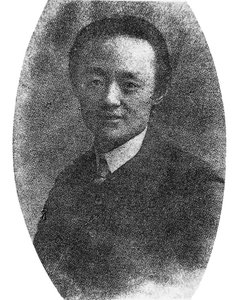
Li Yishi
1886 - 1942 , China
Quick Facts
- Artistic Movement Or Style: Post-Impressionism
- Artists Or Movements Influenced By This Artist: ['Expressionism']
- Artists Who Influenced This Artist:
- Monet
- Degas
- Date Of Birth: March 30, 1853
- Date Of Death: July 29, 1890
- Full Name: Vincent van Gogh
- Nationality: Dutch
- Notable Artworks:
- Sunflowers
- Bedroom in Arles
- The Starry Night
- Wheatfield with Crows
- Place Of Birth: Ghent, Belgium
Related Articles

The Enduring Legacy of Oil on Canvas: Technique, History & Aesthetic Impact
Explore the rich history & techniques of oil painting – from Renaissance masters to Impressionism. Discover pigments, layering methods, and why this timeless medium endures. Expert insights for artists & art enthusiasts.
Peter Graham Li: Capturing Light & Narrative in Contemporary Oil Painting
Discover the captivating oil paintings of Peter Graham Li – a contemporary artist celebrated for his masterful use of light, color, and impasto technique. Explore investment potential & curated selections at ArtsDot.

Oil on Canvas: A Historical & Technical Exploration of a Timeless Artistic Medium
Explore the rich history & enduring techniques of oil painting on canvas. Discover the science behind its longevity, conservation practices, and contemporary relevance. Expert insights for art enthusiasts.

The Enduring Power of Painting: A Historical & Contemporary Exploration of Form and Emotion
Explore the rich history & enduring techniques of oil painting with ArtsDot. Discover masterpieces, learn about art collecting, and find authentic handmade reproductions crafted by skilled artists.

The Enduring Legacy of Oil on Canvas: Technique, History & Contemporary Practice
Explore the rich history & enduring techniques of oil painting on canvas. Discover the science behind its longevity, conservation practices, and contemporary relevance. Expert insights for art enthusiasts.