 Preview
 Send
Send Share
Share
 Details

 Download
 Similars
 X-Ray
X-Ray Diaporama
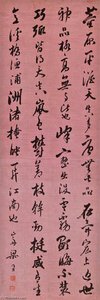
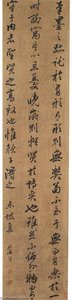
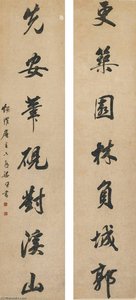
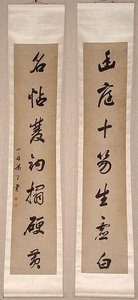
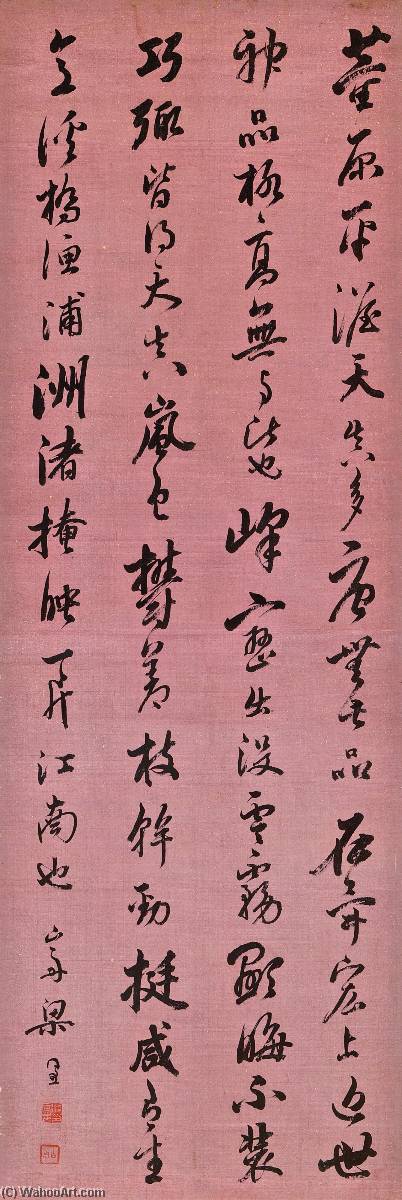
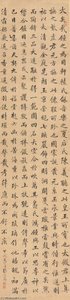
CALLIGRAPHY IN XINGSHU
 Other
Other 125.0 x 42.0 cm
 Read More
Giclée / Art Print
Museum-quality giclée or canvas print with fast production and flexible finish options. ( Buy Hand Made Painting Buy Image)




P118B $10

P118H $10

P118W $10

P438Z $10

P508JH $12

P508YH $12

P805H $10

P805Z $10

P919BZ $10

P919G $10

P919XJ $10

P959ZH $10

P968JZ $12

W106C $8

W218G $10

W218JH $8

W218Y $10

W307PJ $10

W316G $10

W316PJ $8

W316Y $10

W398PJ $8

W4111J $10

W500HY $15

W500JH $15

W692G $12

W849H $8

W940BG $15

W953PJ $8




Pick from our preset sizes that match the artwork's original proportions.

You may enter your own dimensions to fit a specific frame or space. If your selected size does not match the original image's proportions, we will either crop the artwork or extend the image with a mirrored or solid-fill edge. A digital mockup will be sent for your approval before production begins.
Please note that the on-screen preview does not reflect the actual cropping or extension. Only the mockup will accurately show the final composition.
While custom sizes are available, we recommend selecting a dimension from the predefined list to preserve the original proportions.
Worldwide Delivery () in 2 weeks instead of standard 4/5 weeks. (27 August)

Free Worldwide Express Shipping

High-Quality Linen Canvas

Full Shipping Insurance

Customs Tax Refund Guarantee

True Color Matching Guarantee

60-Day Return Policy (Defects Only)

100% Money-Back Guarantee

Bulk Discount Offer
 Glass option is only available in size under 110 CM

CALLIGRAPHY IN XINGSHU
Giclée / Art Print
Reproduction Size
-


Total Price
$ 63
Related Artworks
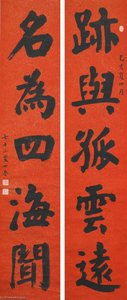
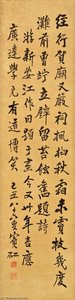
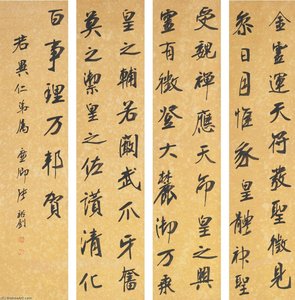
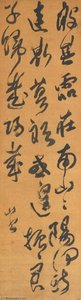
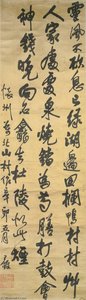
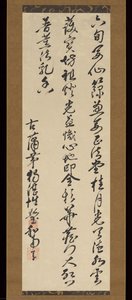

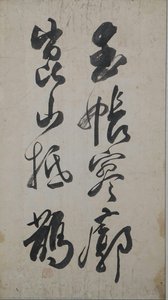
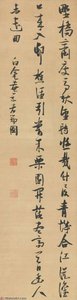
Artist Biography
The Elegance of Running Script and Poetic Reflection
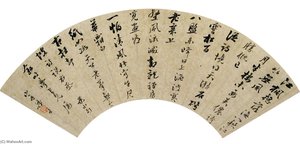
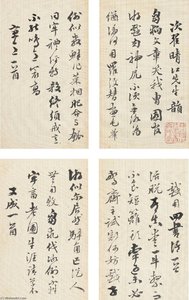
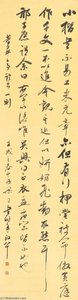
Liang Tongshu (1723–1815) stands as a luminous figure within the storied annals of Qing Dynasty calligraphy, a master whose brush captured the very pulse of an era. Recognized as one of the “Four Great Calligraphers” during the Qianjia reign, his artistry represents a pinnacle of intellectual and aesthetic refinement. His legacy is not merely found in the technical precision of his strokes, but in the profound emotional resonance and literary depth embedded within every character. To study Liang’s work is to witness a seamless marriage between the rhythmic vitality of Running Script (Xingshu) and the contemplative grace of classical Chinese poetry.
The foundations of Liang’s distinctive style were laid in his native Shandong Province, where he underwent rigorous artistic training under the guidance of the renowned calligrapher Zhu Daqi. This mentorship was transformative; Zhu Daqi championed the principles of simplicity and naturalness, values that would become the heartbeat of Liang’s creative vision. From this early instruction, Liang inherited an unwavering dedication to capturing the essence of the natural world through the medium of ink. He learned to prioritize harmony and balance over mere ornamentation, a philosophy that allowed his later works to breathe with an organic, unforced vitality.
The Mastery of Fluidity and Form
While many calligraphers of his era sought prestige through the rigid structures of Seal or Clerical scripts, Liang Tongshu found his true voice in the more expressive realms of Running Script and Cursive Script (Caoshu). These styles, characterized by their spontaneity and dynamism, provided him with the perfect vessel to convey subtle nuances of human emotion. His approach was deeply rooted in a meticulous observation of nature—the winding path of a river, the rugged silhouette of a mountain, or the swaying of bamboo. He possessed the rare ability to translate these visual rhythms into graceful curves and flowing lines that mirrored the movement of life itself.
In his most celebrated works, such as his various poems and couplets, one can observe a rhythmic composition that feels almost musical. His brushwork often exhibits:
- Dynamic Energy: A sense of motion where characters seem to dance across the paper, connected by invisible threads of momentum.
- Structural Balance: An expert command over the weight and density of ink, ensuring that even the most free-flowing strokes maintain a sense of structural integrity.
- Literary Symbiosis: A profound connection between the written word and the visual form, where the aesthetic beauty of the calligraphy enhances the poetic meaning of the text.
Historical Significance and Lasting Legacy
The historical importance of Liang Tongshu extends far beyond his technical achievements. As a scholar-artist, he embodied the ideal of the literati, for whom calligraphy was an extension of moral character and intellectual cultivation. His ability to infuse Xingshu with such profound poetic reflection helped define the aesthetic standards of the late Qing period. Even today, his works are held in high esteem by global institutions, such as the Tokyo National Museum, serving as vital touchstones for understanding the evolution of Asian calligraphy.
Liang’s contribution to the art world lies in his ability to bridge the gap between the disciplined tradition of his predecessors and a more personal, expressive form of artistry. By embracing the fluidity of the cursive styles, he ensured that the art of calligraphy remained a living, breathing medium capable of expressing the deepest complexities of the human spirit. His life’s work remains a testament to the enduring power of the brush to capture both the permanence of history and the fleeting beauty of a single, perfect moment.
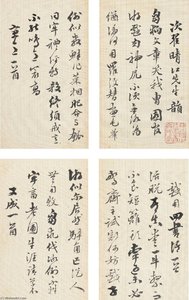
liang tongshu
1723 - 1815
Quick Facts
- Artistic Movement Or Style: Xingshu & Running Script
- Date Of Birth: 1723
- Date Of Death: 1815
- Full Name: Liang Tongshu
- Nationality: Chinese
- Notable Artworks: ['Running-script Calligraphic Couplet']
- Place Of Birth: China
Related Articles
Blush & Brilliance: 10 Iconic Paintings Dominated by Light Pink Tones |
Explore 10 iconic paintings bathed in captivating light pink tones! From Monet's Impressionism to Renoir’s romance, discover the stories behind these blush-hued masterpieces. Find museum-quality art reproductions & decor inspiration at .

Crimson Threads of Narrative: Exploring Symbolism & Representation in Artworks Featuring the Red Dress
Explore the rich symbolism of the red dress in art history! From ancient power displays to iconic portraits like Cézanne’s 'Madame Cezanne', discover the cultural and artistic significance behind this captivating color. Expert analysis & insights.
Xie Zhiliu: A Legacy of Ink Wash Painting & Modern Chinese Literati Tradition
Explore the legacy of Xie Zhiliu, a master of Chinese ink wash painting & prominent figure in modern art. Discover his techniques, influences, and contributions to literati tradition. A guide for discerning collectors.
Alfred East: Pioneering Plein Air & Evoking Atmospheric Landscapes
Explore the life & work of Alfred East, a pioneer of British plein air painting. Discover his techniques for capturing atmospheric landscapes, Barbizon influences, and lasting legacy. Learn more at ArtsDot.
Mark Rothko's Masterpieces: 25 Paintings That Define Abstract Expressionism | ArtsDot
Explore 25 iconic Mark Rothko paintings that define Abstract Expressionism. Discover the stories, colors & emotions behind these masterpieces. Find museum-quality art reproductions and curated decor ideas at ArtsDot.com.