

 Preview
 Send
Send Share
Share
 Details

 Download
 Similars
 X-Ray
X-Ray Diaporama
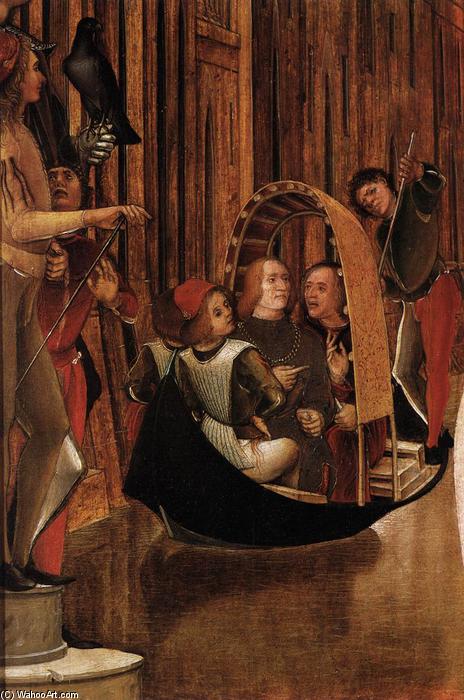
St Sebastian (detail)


 Read More
Purchase a high-resolution, enhanced digital image, far superior to the online preview.
Each file is meticulously prepared by our in-house specialists using advanced tools and expert manual retouching. We ensure every image has exceptional clarity, precise color accuracy, and fine detail.
The final file is delivered via email within 72 hours, optimized for immediate use in professional, editorial, and print environments. This is the same quality trusted by top-tier design studios, publishers, and galleries.
Digital Image
Download a high-resolution file for personal display, printing, and creative projects. ( Buy Print Buy Hand Made Painting)
Included in Every Digital Image Order
Expert Digital Delivery, Guaranteed
When you choose ArtsDot.com, you're not just getting an image - you're receiving a professionally enhanced digital artwork, crafted with precision and backed by a satisfaction guarantee. Here's everything that comes with your order, automatically:

Fast Email Delivery
Your high-resolution digital image file will be emailed to you within 72 hours of ordering - ready for immediate use.

AI-Enhanced Digital File
Your artwork is professionally optimized using advanced AI tools and manual editing, ensuring maximum detail, clarity, and color accuracy.

Free Lifetime Re-Delivery
Accidentally deleted or lost your file? No worries - we'll resend it to you anytime, free of charge.

No Import Fees - Ever
Enjoy your artwork instantly with zero customs, duties, or delivery fees - digital downloads are always tax-free.

Color Accuracy Guarantee
We ensure your digital image reflects the original colors as closely as possible using professional tools and color management.

60-Day Satisfaction Guarantee
If you're not satisfied with your digital image, we'll revise it or refund 100% within 60 days - no questions asked.

100% Money-Back Guarantee
Not satisfied? Get a full refund within 60 days of receiving your digital file - no questions asked.

Bulk Order Discounts
Buy 3 images, save 10% - Buy 5, save 15% - Buy 10+, save 20%. Great for creative projects, galleries, and agencies.
Collectible Description
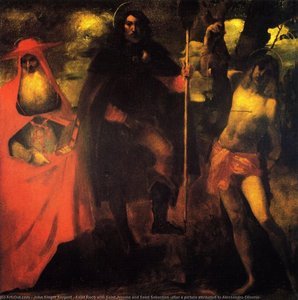
Liberale da Verona’s St Sebastian: A Testament to Renaissance Faith
Liberale da Verona’s “St Sebastian,” housed in the Pinacoteca di Brera, Milan, stands as a poignant emblem of the High Renaissance’s preoccupation with religious iconography and humanist ideals. Painted circa 1470-72, this oil on poplar panel exemplifies Veronese's mastery of perspective and meticulous detail—characteristics deeply rooted in the artistic traditions championed by Andrea Mantegna and Jacopo Bellini.
- Subject Matter: The painting depicts St. Sebastian, martyred for his unwavering Christian faith during Diocletian’s persecution. His body is pierced with arrows – a symbol of suffering endured for righteousness—a motif prevalent in Renaissance art reflecting the era's spiritual fervor.
- Style & Technique: Veronese employed a technique characterized by smooth glazing and subtle tonal gradations, achieving remarkable realism while maintaining an idealized aesthetic. The artist’s careful attention to anatomical accuracy underscores the humanist influence of his time, mirroring advancements in scientific observation.
- Composition & Setting: The scene unfolds within an arched structure reminiscent of Romanesque churches—a deliberate choice that evokes grandeur and solemnity. Figures flanking St. Sebastian contribute to a narrative framework emphasizing piety and devotion. Notably, on the left, individuals engage in conversation or contemplation, while those on the right interact with palpable emotion.
- Color Palette: Dominated by earthy hues – ochre, umber, and Sienna—the painting’s palette conveys warmth and melancholy, mirroring the contemplative mood of Renaissance spirituality. The absence of explicit textual annotations reinforces the artwork's visual impact as a conduit for spiritual contemplation.
Giorgio Vasari’s *Lives of the Most Excellent Painters* acknowledges Veronese’s significance within the artistic canon, cementing his reputation as a master of illusionistic painting and humanist representation. His stylistic evolution—incorporating Mantegna's rigor and Bellini’s luminosity—reflects the broader intellectual currents shaping Renaissance Italy.
Beyond its formal qualities, “St Sebastian” resonates with profound symbolic meaning. The arrows piercing St. Sebastian’s body symbolize martyrdom and purification – themes central to Christian theology. Furthermore, Veronese's depiction of St. Sebastian as a youthful figure embodies the humanist ideal of beauty and virtue—a testament to the Renaissance fascination with classical antiquity and human potential.
The painting’s enduring appeal lies in its ability to convey spiritual contemplation and evoke empathy for suffering endured in defense of faith. It serves as an exemplar of Renaissance artistic achievement, demonstrating Veronese's unparalleled skill in capturing both physical realism and emotional depth—a legacy that continues to inspire artists and collectors alike.
Further research into Liberale da Verona reveals his involvement in significant projects beyond “St Sebastian,” including the altar of San Vincenzo Ferrer in Siena Cathedral and monumental frescoes adorning the Palazzo Piccolomini. These commissions underscore Veronese’s prolific output and solidify his position as one of the foremost painters of his era.
The Museo del Petit Palais houses a remarkable collection of Renaissance art, offering visitors an opportunity to immerse themselves in the artistic splendor of this transformative period. Examining “St Sebastian” alongside other masterpieces—such as Federico Barocci’s preparatory drawing for the Crucifixion altarpiece—provides invaluable insight into the stylistic innovations and intellectual preoccupations that defined the High Renaissance.
The Pinacoteca di Brera's meticulous preservation of Veronese’s “St Sebastian” ensures its accessibility to scholars and enthusiasts alike. Its luminous colors and masterful composition continue to captivate audiences, reaffirming the painting’s enduring artistic merit and its significance as a symbol of Renaissance faith.
Related Artworks
Artist Biography
Liberale da Verona: A Renaissance Master
Life and Origins
- Born in Verona, Italy, around 1441, Liberale da Verona was a prominent painter of the Italian Renaissance.
- He passed away in 1529, leaving behind a legacy of exquisite frescoes, panel paintings, and illuminated manuscripts.
- Early Training: Liberale began his artistic journey as a pupil of Vincenzo di Stefano, laying the foundation for his future style.
Influences and Artistic Development
- While trained by di Stefano, Liberale was profoundly influenced by the works of Andrea Mantegna and Jacopo Bellini. This influence is evident in his attention to detail, perspective, and dramatic compositions.
- Giorgio Vasari’s Account: He is notably mentioned in Giorgio Vasari's *Lives of the Most Excellent Painters, Sculptors, and Architects*, solidifying his place within the canon of Renaissance artists.
- His style evolved to incorporate elements of both Mantegna’s rigorous draftsmanship and Bellini’s refined color palettes.
Major Works and Achievements
- Veronese Commissions: In Verona, Liberale completed significant commissions such as the *Adoration of the Magi* in the Duomo (Cathedral) and another version for a chapel within the Bishopric.
- He also decorated the chapel of the Company of the Maddalena in the church of San Bernardino with paintings depicting the *Birth and Assumption of the Virgin*.
- Brera Gallery: A notable work, *St. Stephen*, is housed in the Brera Gallery, showcasing his skill in portraying religious figures.
- Illuminated Manuscripts: Liberale’s talent extended to illuminated books, with examples found in the Cathedral of Chiusi.
- *St. Sebastian* (attributed) at Princeton University Art Museum demonstrates his mastery of anatomical detail and emotional expression.
- Monte Oliveto Abbey: He traveled to Siena to work at the Abbey of Monte Oliveto, where he illuminated numerous manuscripts.
Pupils and Legacy
- Liberale da Verona played a crucial role in training the next generation of Veronese painters.
- Notable Students: Among his pupils were Giovanni and Giovanni Francesco Caroto, Francesco Torbido (also known as Il Moro), and Paolo Cavazzola. These artists continued to develop and disseminate his artistic principles.
Historical Significance
- Renaissance Contribution: Liberale da Verona contributed significantly to the flourishing of Renaissance art in Verona, bridging the gap between earlier styles and the emerging Mannerism.
- Cultural Impact: His works continue to be studied and admired for their technical skill, expressive power, and historical importance. He even appeared as a subject of forgery within popular culture – specifically, in an episode of the British TV series *Inspector Morse* titled “The Death of the Self.”
- His art provides valuable insights into the religious, cultural, and artistic climate of 15th and 16th-century Italy.
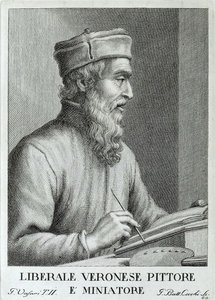
Liberale da Verona
1441 - 1529 , Italy
Quick Facts
- Birth Date: 1441
- Birth Place: Verona, Italy
- Death Date: 1529
- Influenced:
- Giovanni Caroto
- Giovanni Francesco Caroto
- Francesco Torbido
- Paolo Cavazzola
- Influenced By:
- Andrea Mantegna
- Jacopo Bellini
- Vincenzo di Stefano
- Movement: Renaissance
- Name: Liberale da Verona
- Nationality: Italian
- Notable Works:
- Adoration of the Magi
- St. Sebastian
- The Miniscalchi Altarpiece

