 Preview
 Send
Send Share
Share
 Details

 Download
 Similars
 X-Ray
X-Ray Diaporama
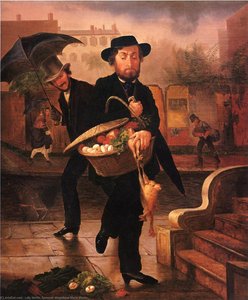
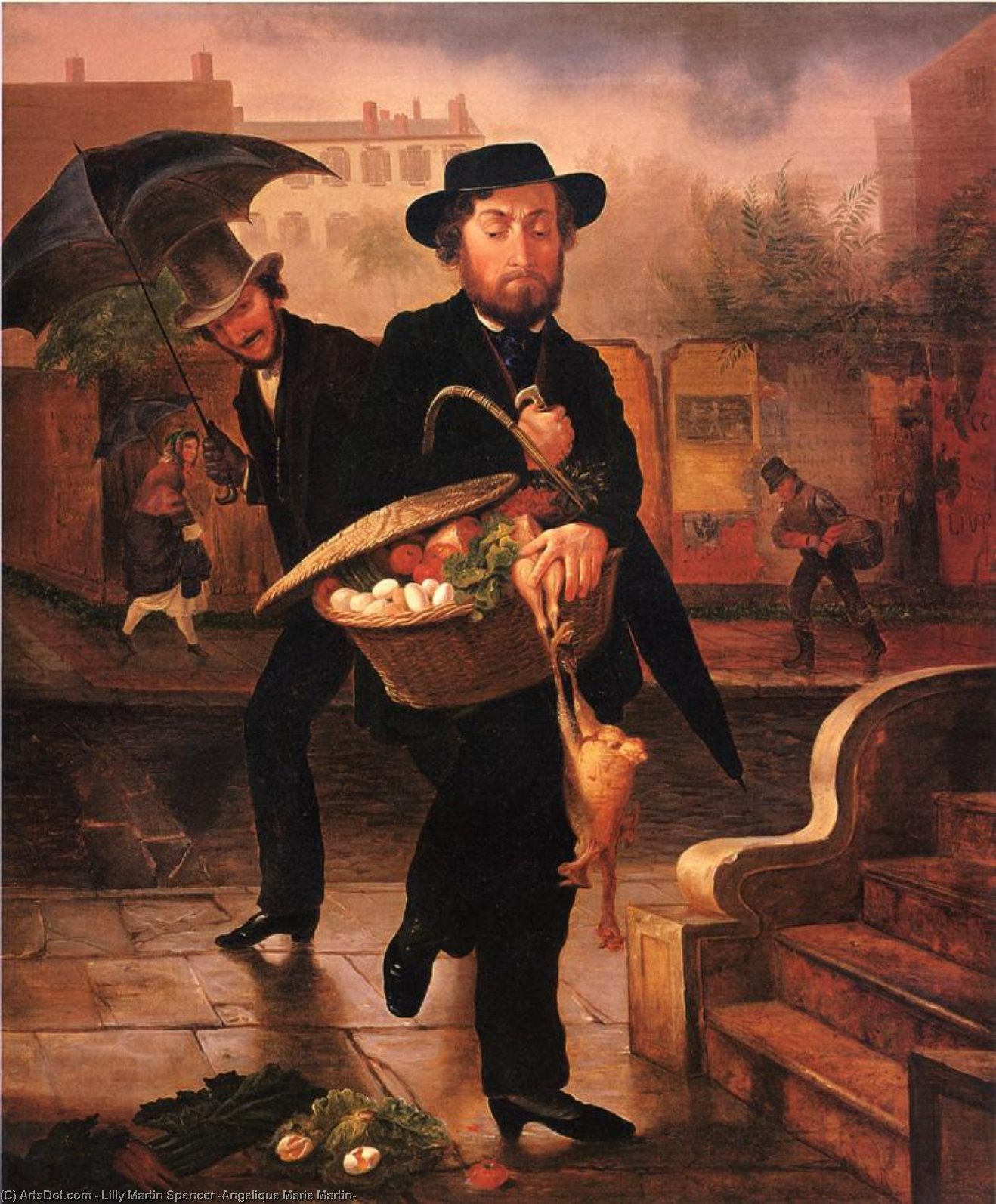
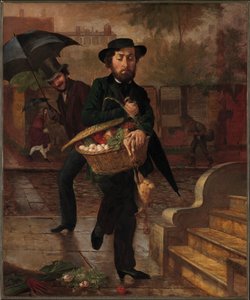
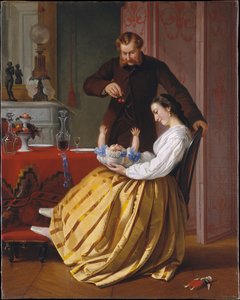
The Young Husband, First Marketing


 Read More
Hand Made Oil Reproduction
Hand-painted oil on canvas in your size and frame, made to order by our artists. ( Buy Print Buy Image)




































Pick from our preset sizes that match the artwork's original proportions.

You may enter your own dimensions to fit a specific frame or space. If your selected size does not match the original image's proportions, we will either crop the artwork or extend the painting with additional hand-painted elements. A digital mockup will be sent for your approval before production begins.
Please note that the on-screen preview does not reflect the actual cropping or extension. Only the mockup will accurately show the final composition.
While custom sizes are available, we recommend selecting a dimension from the predefined list to preserve the original proportions.
After order, ArtsDot.com team will email client for instructions and provide a mockup preview
Worldwide Delivery () in 3/4 weeks instead of standard 5 weeks. (29 August). No compromise on quality.

Free Worldwide Express Shipping

High-Quality Linen Canvas

Full Shipping Insurance

Customs Tax Refund Guarantee

True Color Matching Guarantee

60-Day Return Policy (Defects Only)

100% Money-Back Guarantee

Bulk Discount Offer
 Glass option is only available in size under 110 CM

The Young Husband, First Marketing
Reproduction Medium
Reproduction Size
-


Total Price
$ 288
Artistic Significance
The The Young Husband, First Marketing painting is a significant work in the American art scene, highlighting the daily struggles and joys of ordinary people. The artist's use of oil on canvas brings depth and richness to the scene, inviting the viewer to step into the world of the young husband as he navigates his first marketing experience. The painting's attention to detail, from the eggs in the basket to the umbrella held by the companion, demonstrates Spencer's commitment to capturing the essence of everyday life.- The painting measures oil on canvas, a medium that allows for intricate details and textures.
- The scene is set in a bustling street, with several people visible in the background, adding to the sense of energy and activity.
- A dog is present in the bottom right corner, adding a touch of warmth and humanity to the scene.
The Hunter Museum of American Art is a renowned institution dedicated to preserving and promoting American art. With a vast collection of artworks, including pieces by George Caleb Bingham and Philip Evergood, the museum is a must-visit destination for art enthusiasts. Visit Hunter Museum of American Art to learn more about their collections and exhibitions.
Related Artworks

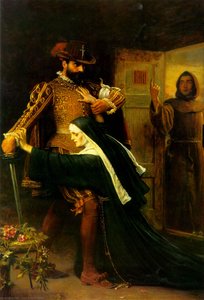
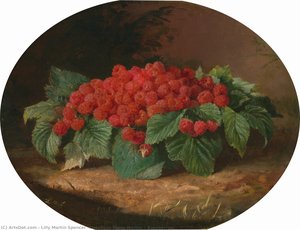
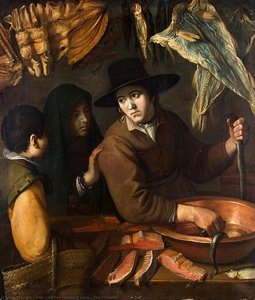
Artist Biography
Rosa Bonheur: A Pioneer of Animal Painting
Rosa Bonheur, born Marie-Rosalie Bonheur in Bordeaux in 1822, stands as a monumental figure in the history of art – a woman who not only achieved remarkable success as an artist but also challenged societal expectations and redefined what was considered acceptable for female creatives during her time. Her life story is one of relentless dedication, profound observation, and a deep connection to the natural world, particularly its animal inhabitants. From humble beginnings assisting her father, a minor landscape painter, Bonheur’s artistic journey led her to become arguably the most celebrated animal painter of the 19th century, leaving behind a legacy of powerful, emotionally resonant works that continue to captivate audiences today.Early Life and Artistic Training
Bonheur's early years were marked by an unusual upbringing for a young girl aspiring to be an artist. Her father, Oscar-Raymond Bonheur, was a landscape painter who encouraged her artistic inclinations, recognizing her talent at a remarkably young age. Despite the prevailing societal norms that limited women’s access to formal art education, Rosa received instruction from her father and later from other artists in Bordeaux. Crucially, she benefited from a family environment steeped in artistic tradition; her grandfather was a stonecutter, and her uncle was also an artist, providing a unique insight into the craft of sculpture. This familial connection fostered a deep appreciation for materials and techniques that would inform her distinctive style. Notably, Bonheur’s family adhered to Saint-Simonianism, a Christian socialist movement emphasizing education for women alongside men – a progressive stance that undoubtedly contributed to her artistic freedom and ambition.The Rise of an Animalière
Bonheur's career truly blossomed in Paris, where she moved with her family in 1829. She initially worked as a model for several prominent artists, honing her observational skills and developing a keen understanding of anatomy – particularly crucial when depicting animals with such realism. This period was invaluable, allowing her to study the nuances of form, movement, and expression firsthand. Her breakthrough came with *Ploughing in the Nivernais* (1848-1850), an enormous painting exhibited at the Salon of 1848. The work, depicting a rural scene of farmers working their fields, immediately garnered attention for its dynamic composition, meticulous detail, and palpable sense of life. It established Bonheur’s reputation as a master of animal painting and marked the beginning of her international acclaim. Subsequent successes followed, including *The Horse Fair* (1853-1855), a monumental canvas capturing the bustling atmosphere of a horse market – a work that Queen Victoria herself admired so greatly that she commissioned a miniature replica for her own collection.Technique and Style
Bonheur’s artistic approach was characterized by intense observation, tireless sketching, and an unwavering commitment to realism. She spent countless hours studying animals in their natural habitats, meticulously documenting their movements, postures, and expressions. Her preparatory sketches are a testament to this dedication, revealing the depth of her understanding of animal anatomy and behavior. Unlike many artists who relied on idealized representations, Bonheur depicted animals with unflinching honesty – capturing both their beauty and their inherent wildness. She employed a technique of layering paint in thin glazes, building up color gradually to achieve remarkable luminosity and texture. Her brushwork was often loose and expressive, conveying the energy and vitality of her subjects. Her sculptures, too, reflected this commitment to realism, showcasing an extraordinary ability to capture the essence of animal form.Legacy and Historical Significance
Rosa Bonheur’s impact on art history extends far beyond her individual achievements. She shattered gender barriers in a male-dominated field, becoming one of the most successful female artists of her era. Her success challenged prevailing societal assumptions about women's roles and capabilities, paving the way for future generations of female artists. Furthermore, Bonheur’s focus on animal subjects – often overlooked by mainstream art—brought attention to the beauty and complexity of the natural world. Her paintings and sculptures continue to be admired for their technical skill, emotional resonance, and profound connection to the animal kingdom. She remains a powerful symbol of artistic determination, innovation, and the enduring power of observation. Despite persistent rumors surrounding her personal life – fueled by speculation about her relationships with women – Bonheur remained steadfast in her dedication to her art, leaving behind a body of work that stands as a testament to her extraordinary talent and unwavering spirit.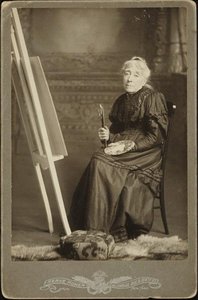
lilly martin spencer (angelique marie martin)
1822 - 1902 , United Kingdom
Quick Facts
- Artistic Movement Or Style: Animalière painting & sculpture
- Artists Or Movements Influenced By This Artist: ['Neoclassical']
- Artists Who Influenced This Artist: ['Oscar-Raymond Bonheur']
- Date Of Birth: 16 March 1822
- Date Of Death: 25 May 1899
- Full Name: Rosa Bonheur
- Nationality: French
- Notable Artworks:
- Ploughing in the Nivernais
- The Horse Fair
- Place Of Birth: Bordeaux, France
Related Articles
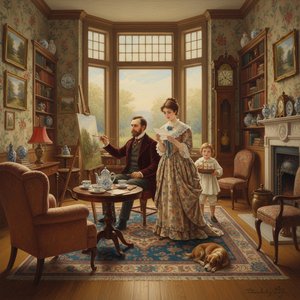
Robert Lillie: A Study in Victorian Genre Painting and Domestic Narrative
Explore the captivating Victorian genre paintings of Robert Lillie (1867-1949). Discover his serene Scottish landscapes and intimate domestic scenes, reflecting a unique artistic vision. Learn about his life, style & legacy.
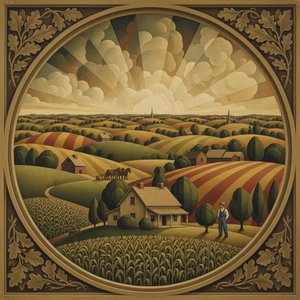
Grant Wood & American Regionalism: Identity, Myth & the Rural Landscape
Explore the world of Grant Wood & American Regionalism with ArtsDot. Discover the symbolism behind 'American Gothic', recurring themes, and the movement's lasting impact on art history. High-quality reproductions available.
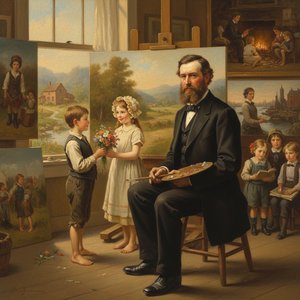
John George Brown: Capturing American Life & Sentiment in 19th-Century Genre Painting
Explore the captivating genre paintings of John George Brown, celebrated for his realistic depictions of 19th-century American life. Discover his legacy & find museum-quality reproductions at ArtsDot.
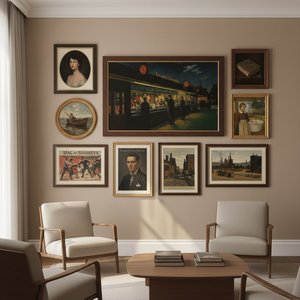
American Realism's Defining Works: 10 Masterpieces for Your Home
Explore 10 defining American Realism masterpieces – Hopper, Homer & more. Discover the stories behind these iconic paintings and bring timeless art to your home with ArtsDot's museum-quality reproductions. Explore the full collection online.
Thomas George Webster: Navigating Genre Boundaries & American Identity in 19th-Century Landscape Painting
Explore the captivating genre scenes of Thomas George Webster, a Victorian painter bridging British traditions with American themes. Discover his style, influences & legacy in 19th-century art history.