 Preview
 Send
Send Share
Share
 Details

 Download
 Similars
 X-Ray
X-Ray Diaporama
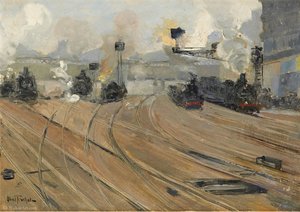
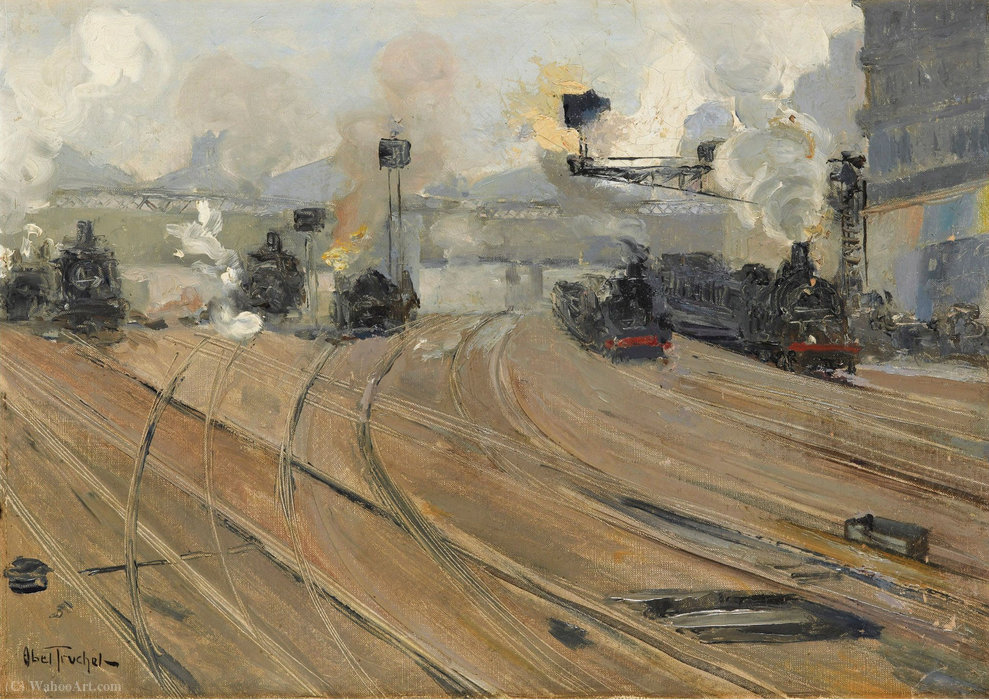
The Station of Saint-Lazar
 Read More
Giclée / Art Print
Museum-quality giclée or canvas print with fast production and flexible finish options. ( Buy Hand Made Painting Buy Image)




































Pick from our preset sizes that match the artwork's original proportions.

You may enter your own dimensions to fit a specific frame or space. If your selected size does not match the original image's proportions, we will either crop the artwork or extend the image with a mirrored or solid-fill edge. A digital mockup will be sent for your approval before production begins.
Please note that the on-screen preview does not reflect the actual cropping or extension. Only the mockup will accurately show the final composition.
While custom sizes are available, we recommend selecting a dimension from the predefined list to preserve the original proportions.
Worldwide Delivery () in 2 weeks instead of standard 4/5 weeks. (30 August)

Free Worldwide Express Shipping

High-Quality Linen Canvas

Full Shipping Insurance

Customs Tax Refund Guarantee

True Color Matching Guarantee

60-Day Return Policy (Defects Only)

100% Money-Back Guarantee

Bulk Discount Offer
 Glass option is only available in size under 110 CM

The Station of Saint-Lazar
Giclée / Art Print
Reproduction Size
-


Total Price
$ 63
Related Artworks
Artist Biography
The Visionary of Montmartre: The Life and Art of Louis Abel-Truchet
In the vibrant, flickering light of late nineteenth-century Paris, few artists captured the dual soul of the era quite like Louis Abel-Truchet. Born in Versailles on December 29, 1857, Abel-Truchet emerged from a world of classical tradition to become a master of both serene landscape and biting social satire. His journey into the heart of the French art scene began at the prestigious Académie Julian, where he studied under the watchful eyes of Jean-Joseph Benjamin-Constant and Jules Lefebvre. This rigorous academic foundation provided him with the technical precision that would later allow him to navigate the delicate balance between Impressionistic light and the sharp, detailed lines required for his celebrated caricatures.
As his talent blossomed, Abel-Truchet became a fixture of the Parisian art world, finding deep inspiration in the bohemian energy of Montmartre. His work often acted as a window into the shifting moods of France, ranging from the tranquil beauty of sun-drenched landscapes in Venice and Monte Carlo to the bustling, nocturnal rhythms of Parisian nightlife. He possessed a rare ability to capture the luminism of a landscape—the way light dances across water or settles upon a city street—while simultaneously maintaining an eye for the human drama unfolding within those scenes. His debut at the Salon d'Automne in 1903 marked his arrival as a significant voice, showcasing a palette that was both vibrant and meticulously composed.
Satire, Society, and the Spirit of Humor
Beyond the canvas of traditional landscapes, Abel-Truchet’s creative spirit found a unique outlet in the realm of social critique. He was not merely an observer of life but an active participant in its cultural festivities. In 1907, alongside Louis Vallet, he co-founded the Société des Humoristes, a venture that solidified his reputation as an artist who used wit as a tool for commentary. This period of his life was defined by a playful yet pointed engagement with contemporary society, seen most notably in his satirical designs for theatrical productions and the legendary Vachalcades of 1896 and 1897. His posters for the Cabaret des Quat'z'Arts became iconic, blending the aesthetic elegance of the era with a mischievous, subversive edge that resonated with the Parisian public.
This mastery of design extended into the ephemeral world of public festivities, where he designed floats and celebrated the joy of the streets. His ability to weave humor into visual form allowed him to connect with a much broader audience than the traditional gallery-goer, making him a true chronicler of the French zeitgeist. Whether through a delicate watercolor or a bold, satirical poster, his work always carried an unmistakable sense of character and movement.
A Legacy Forged in Service and Sacrifice
The trajectory of Abel-Truchet’s life was irrevocably altered by the onset of World War I. Demonstrating profound courage, he volunteered for service, attaining the rank of Lieutenant in the 1er régiment du génie (Engineering). It was during this tumultuous period that his artistic ingenuity met a practical, even vital, necessity. Appointed as an assistant to Guirand de Scevola, the head of the newly formed Camouflage Division, Abel-Truchet applied his painterly understanding of texture and color to the art of concealment. His skills in rendering natural patterns were repurposed for the survival of soldiers, marking a poignant intersection between fine art and military science.
Tragically, the war that called upon his talents also claimed his life. Wounded in combat, he passed away in a military hospital in Auxerre on September 9, 1918, shortly before the conflict reached its conclusion. His death marked the end of a brilliant era, yet his influence endured. In 1919, a moving tribute was paid to him at the Salon d'Automne, where his works were exhibited alongside those of fellow artists lost to the war. Today, his legacy is preserved in the halls of major institutions such as the Musée de Grenoble and the Musée Carnavalet, serving as a testament to an artist who could find beauty in a landscape, humor in a crowd, and even purpose in the shadows of war.
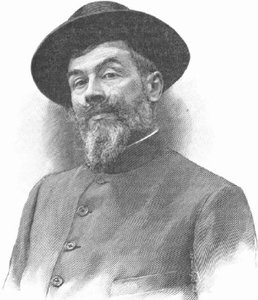
louis abel-truchet
1857 - 1918
Quick Facts
- Artistic Movement Or Style: Post-Impressionism
- Artists Or Movements Influenced By This Artist: ['Impressionism']
- Artists Who Influenced This Artist:
- Jean-Joseph Benjamin-Constant
- Jules Lefebvre
- Date Of Birth: December 29, 1857
- Date Of Death: September 9, 1918
- Full Name: Louis Abel-Truchet
- Nationality: French
- Notable Artworks:
- The Station of Saint-Lazar
- Underground Railway, Liverpool
- Place Of Birth: Versailles, France