 Preview
 Send
Send Share
Share
 Details

 Download
 Similars
 X-Ray
X-Ray Diaporama
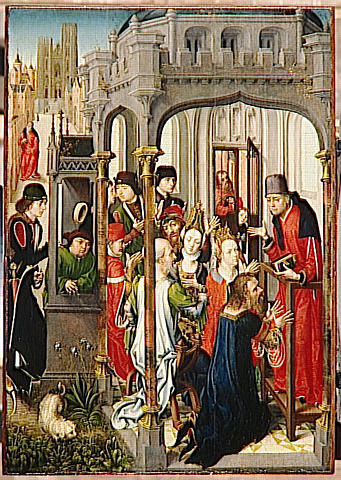
PREDICATION DE SAINT GERY ( ) DIT AUSSI L'INSTRUCTION PASTORALE


 Read More
Hand Made Oil Reproduction
Hand-painted oil on canvas in your size and frame, made to order by our artists. ( Buy Print Buy Image)




P118B $10

P118H $10

P118W $10

P438Z $10

P508JH $12

P508YH $12

P805H $10

P805Z $10

P919BZ $10

P919G $10

P919XJ $10

P959ZH $10

P968JZ $12

W106C $8

W218G $10

W218JH $8

W218Y $10

W307PJ $10

W316G $10

W316PJ $8

W316Y $10

W398PJ $8

W4111J $10

W500HY $15

W500JH $15

W692G $12

W849H $8

W940BG $15

W953PJ $8




Pick from our preset sizes that match the artwork's original proportions.

You may enter your own dimensions to fit a specific frame or space. If your selected size does not match the original image's proportions, we will either crop the artwork or extend the painting with additional hand-painted elements. A digital mockup will be sent for your approval before production begins.
Please note that the on-screen preview does not reflect the actual cropping or extension. Only the mockup will accurately show the final composition.
While custom sizes are available, we recommend selecting a dimension from the predefined list to preserve the original proportions.
After order, ArtsDot.com team will email client for instructions and provide a mockup preview
Worldwide Delivery () in 3/4 weeks instead of standard 5 weeks. (16 August). No compromise on quality.

Free Worldwide Express Shipping

High-Quality Linen Canvas

Full Shipping Insurance

Customs Tax Refund Guarantee

True Color Matching Guarantee

60-Day Return Policy (Defects Only)

100% Money-Back Guarantee

Bulk Discount Offer
 Glass option is only available in size under 110 CM

PREDICATION DE SAINT GERY ( ) DIT AUSSI L'INSTRUCTION PASTORALE
Reproduction Medium
Reproduction Size
-


Total Price
$ 413
Artwork Description
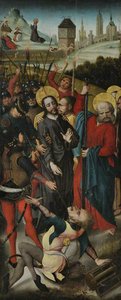
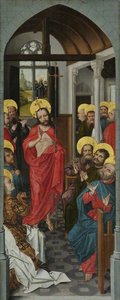
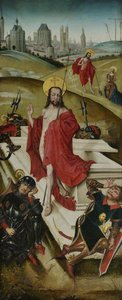
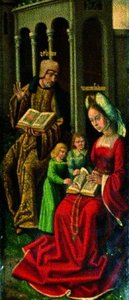
Predication de Saint Gery ( ) dit aussi L'Instruction Pastorale – A Window into Gothic Brussels
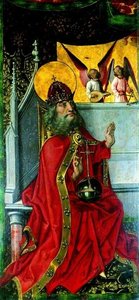
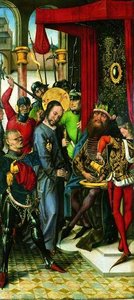
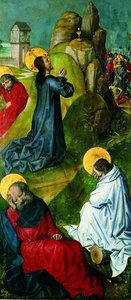
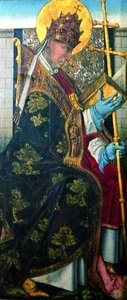
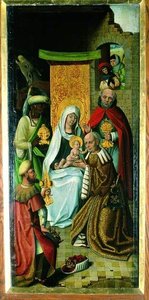
The “Predication de Saint Gery,” attributed to the enigmatic Master of the View of Saint Gudula, stands as a testament to the artistic fervor of late fifteenth-century Brussels—a city pulsating with burgeoning civic pride and religious devotion. This monumental panel painting offers more than just a depiction of biblical narrative; it embodies the stylistic hallmarks of its era and invites contemplation on themes of authority, piety, and urban grandeur. Examining this artwork reveals layers of meaning accessible to both seasoned art historians and those simply drawn to exquisite craftsmanship and evocative imagery.A Gothic Vision: Composition and Style
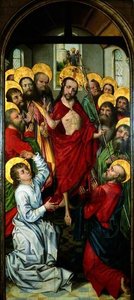
The painting’s visual impact is immediately striking due to its densely populated composition. Dominating the scene is Saint Gery himself, elevated upon a platform—a deliberate gesture signifying his role as spiritual leader—facing a congregation comprised of clergy, nobles, and ordinary citizens. The artist skillfully employs linear perspective, albeit flattened compared to later Renaissance styles, prioritizing clarity and conveying the solemn atmosphere of a pastoral sermon. Architectural elements – columns adorned with Corinthian capitals and arched doorways – frame the figures, reinforcing the impression of formality and divine presence. Characteristic of Gothic art is the stylized depiction of human forms: elongated limbs convey grace and nobility, mirroring the spiritual ideals prevalent during this period. The overall aesthetic leans heavily into geometric precision combined with expressive dynamism—a hallmark of the Master’s distinctive approach.Technique and Materials – Tempera on Wood
The execution of “Predication de Saint Gery” demonstrates remarkable technical prowess. Employing tempera paint on a wooden panel, the artist meticulously layered pigments—likely incorporating gold leaf for highlights—creating textures that capture the nuances of drapery folds and facial expressions. Egg yolk or similar binders were utilized to achieve optimal adhesion and luminosity, reflecting the established practices of Flemish painting workshops. The painstaking detail evident in rendering clothing and conveying subtle gestures speaks volumes about the artist’s dedication to realism within a stylized framework. Careful observation reveals evidence of glazing techniques—thin translucent layers applied over underlying colors—enhancing depth and vibrancy. This meticulous process underscores the importance placed on craftsmanship and artistic excellence during the Gothic period.Symbolism: Faith, Hierarchy, and Urban Reflection
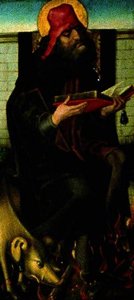
Beyond its formal beauty lies a rich tapestry of symbolic representation. The architectural setting symbolizes divine authority and spiritual guidance, mirroring the theological concerns of the time. Clothing denotes social status—the robes of nobility contrasting with simpler garments worn by commoners—emphasizing the hierarchical structure of medieval society. Furthermore, the inclusion of Saint Gudule’s cathedral subtly references Brussels's prominent role as a religious center. The presence of a dog at the bottom left corner may symbolize loyalty and guardianship – themes frequently explored in Gothic iconography. These elements coalesce to convey not merely a biblical narrative but also a broader commentary on faith, social order, and the visual representation of urban life.Emotional Resonance: A Moment of Spiritual Contemplation
“Predication de Saint Gery” transcends mere visual spectacle; it evokes a profound sense of solemn contemplation. The artist’s masterful use of chiaroscuro—the dramatic interplay between light and shadow—intensifies the emotional impact, drawing viewers into the scene's contemplative mood. The faces of the figures convey expressions of earnest attention and reverence, inviting us to consider the spiritual significance of the depicted event. Ultimately, this artwork serves as a captivating window into the artistic sensibilities and cultural values of fifteenth-century Brussels – an enduring masterpiece that continues to inspire admiration for its beauty and intellectual depth.Related Artworks
Artist Biography
The Enigmatic Master of the View of Saint Gudula: A Brussels Visionary
The identity of the “Master of the View of Saint Gudula,” a pivotal figure in 15th-century Flemish painting, remains tantalizingly elusive. Active primarily in Brussels between 1480 and 1499, this artist’s work—characterized by intimate portraits, serene religious scenes, and subtly integrated urban landscapes—has captivated scholars for centuries. While definitively pinning down his name or precise origins has proven difficult, a compelling body of evidence suggests he was a highly skilled painter deeply rooted in the artistic traditions of both Bruges and Antwerp, yet possessing a distinctly individual style.
Early speculation often linked him to Aert van den Bossche, due to stylistic similarities and a shared signature—“Harnoult van den Boske”—registered with the Bruges Guild of St. Luke in 1505. However, closer examination reveals subtle but crucial differences in palette, composition, and brushwork, leading many art historians to believe he represents a separate, albeit related, artistic lineage. Max J. Friedländer’s seminal work, “Early Netherlandish Painting,” played a significant role in establishing the Master of Saint Gudula as a distinct figure, grouping several works together based on stylistic coherence and identifying key influences – notably the meticulous realism and emotional depth of Rogier van der Weyden, alongside the refined elegance of Hans Memling.
A Portraitist of Prominence and Religious Devotion
The Master’s oeuvre is remarkably diverse, encompassing a range of subjects. He excelled in portraiture, producing exquisitely rendered depictions of prominent church patrons – individuals who commissioned works to secure their legacy and demonstrate piety. These portraits are not merely likenesses; they convey a sense of personality, social standing, and spiritual depth. His subjects often engage in contemplative gestures or hold symbolic objects, subtly reinforcing the themes of faith and virtue.
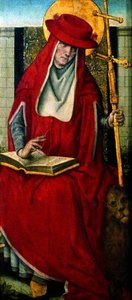
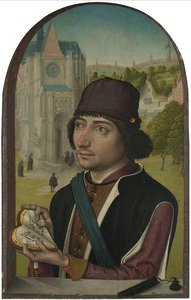
Alongside his portraiture, the Master created numerous religious paintings. These works frequently feature scenes from the lives of saints—particularly Saint Jerome, a favorite subject among Flemish artists—and biblical narratives. His depictions are characterized by a remarkable attention to detail, particularly in rendering fabrics, textures, and facial expressions. A notable example is “Young Man Holding a Book,” currently housed at The Metropolitan Museum of Art, which exemplifies his mastery of capturing psychological nuance and conveying a sense of quiet contemplation.
The Urban Canvas: Landscapes Woven into Religious Scenes
Perhaps the most distinctive aspect of the Master’s work is his incorporation of urban landscapes—specifically, the view of Saint Gudula's cathedral in Brussels—into his religious compositions. This seemingly minor detail elevates his paintings beyond mere devotional images; they become windows onto a specific time and place, offering glimpses into the daily life and architectural beauty of 15th-century Brussels. The precise construction of the belfry, visible in many of his works, provides a chronological marker, allowing scholars to date his activity with increasing accuracy.
The inclusion of these urban vistas suggests a deep connection between the artist and his city—a sense of belonging and an appreciation for its visual richness. It’s hypothesized that he may have trained with artists who specialized in landscape painting, or perhaps developed this technique independently, recognizing its potential to enrich and contextualize his religious subjects.
Influences and Legacy
The Master of the View of Saint Gudula stands as a crucial link between the more rigid conventions of Early Netherlandish art and the burgeoning naturalism that would characterize later generations. He absorbed influences from masters like Hans Memling, whose meticulous detail and refined elegance are evident in his work, while simultaneously forging his own unique artistic voice. His subtle use of color, his nuanced portrayal of human emotion, and his innovative integration of urban landscapes have left a lasting impact on Flemish painting.
Despite the ongoing debate surrounding his identity, the Master of the View of Saint Gudula remains an important figure in the history of art. His paintings offer a valuable insight into the cultural and artistic landscape of 15th-century Brussels—a testament to the skill, creativity, and enduring mystery of this enigmatic artist.
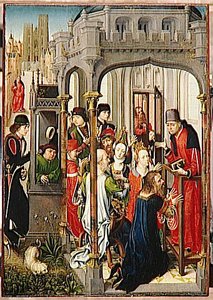
master of the view of saint gudule
1480 - 1499
Quick Facts
- Artistic Movement Or Style: Early Netherlandish
- Artists Or Movements Influenced By This Artist: ['Flemish Primitives']
- Artists Who Influenced This Artist: ['Rogier van der Weyden']
- Date Of Birth: 1480
- Date Of Death: 1499
- Full Name: Master of the View of Saint Gudula
- Nationality: Netherlandish
- Notable Artworks:
- Young Man Holding a Book
- Legend of Saint Barbara
- Place Of Birth: Brussels, Belgium
Related Articles
High Medieval Art: 10 Masterpieces That Shaped an Era | ArtsDot
Journey through High Medieval Art! Explore 10 iconic masterpieces – from Giotto's frescoes to stunning Gothic cathedrals. Discover the stories behind these timeless paintings, sculptures & illuminated manuscripts. Find museum-quality art reproductions at ArtsDot.com.

Late Medieval Masterpieces: 10 Artworks That Defined an Era | ArtsDot
Journey through 10 defining Late Medieval masterpieces – from Giotto's frescoes to Jan van Eyck’s realism. Explore the stories, techniques & vibrant colors of Gothic art. Find museum-quality reproductions and elevate your home decor with ArtsDot.com! Discover all masterpieces on ArtsDot.com
Timeless Elegance: How to Integrate High Medieval Art into Your Modern Interior Design
Discover how to infuse your modern home with the divine light of High Medieval art. From gilded illuminated manuscripts to Gothic-inspired textures, learn expert tips for integrating timeless elegance and historical grandeur into contemporary interior design.
The Radiant Dusk of Medieval Vision: Exploring Late Gothic Art's Synthesis of Faith, Form & Emotionality (c. 1300-1500)
Explore the exquisite beauty & spiritual depth of Late Gothic art (c. 1300-1500). Discover key artists, symbolism, and its lasting influence on the Renaissance. Expert insights at ArtsDot.
The Shadow of Faith: Exploring Gothic Art's Spiritual Intensity & Architectural Innovation
Explore the spiritual intensity & architectural innovation of Gothic art! Discover the symbolism behind cathedrals, stained glass & master artists like Giotto and Monet. A deep dive into medieval history & artistic expression.