 Preview
 Send
Send Share
Share
 Details

 Download
 Similars
 X-Ray
X-Ray Diaporama
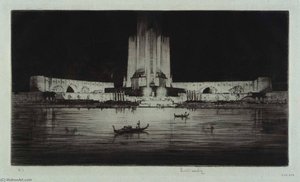
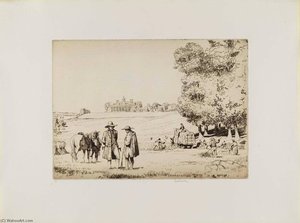
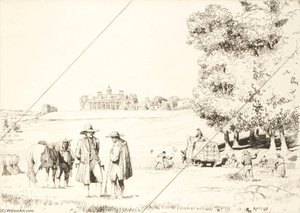
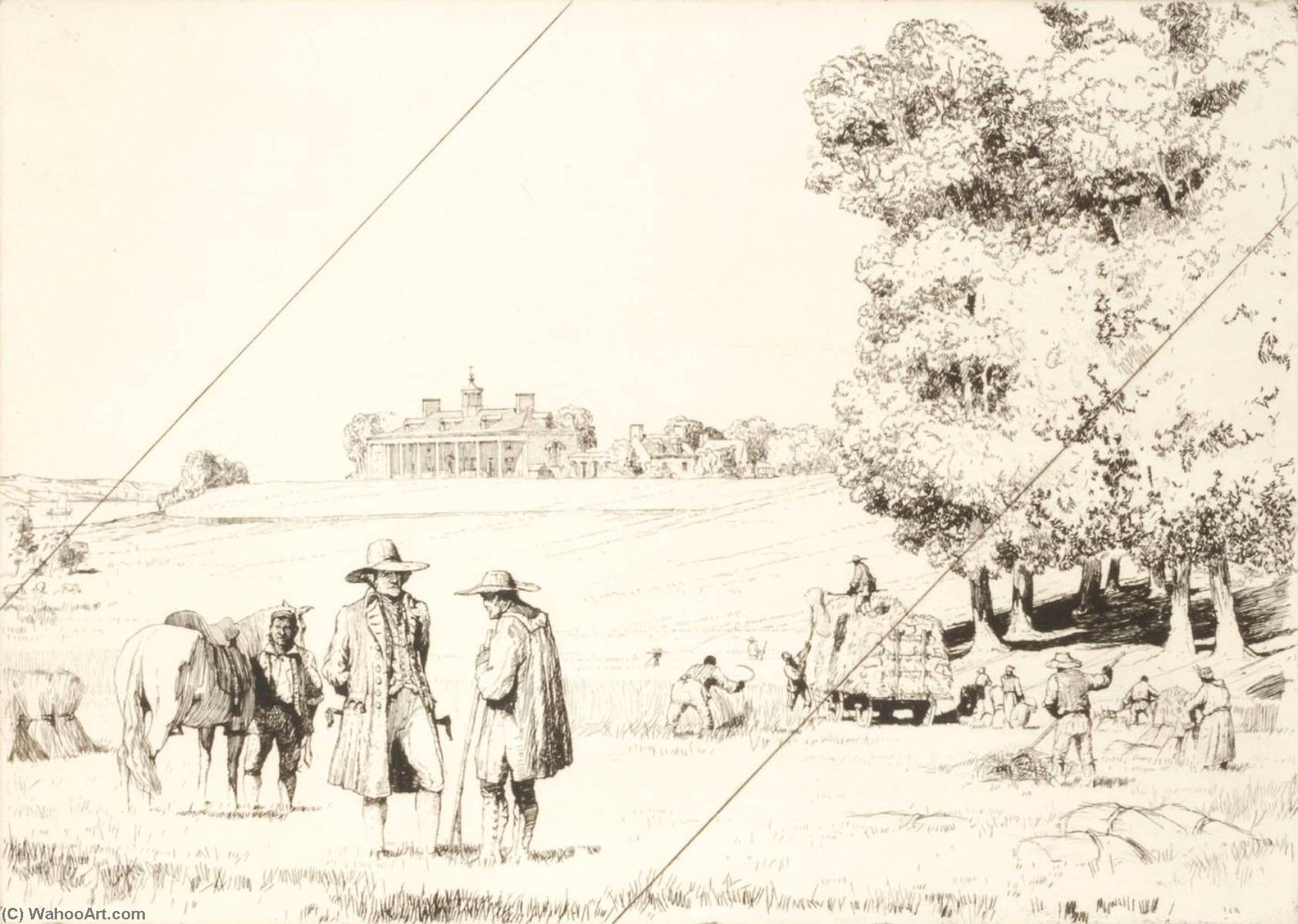
Washington, the Planter (cancelled plate from the portfolio The Bicentennial Pageant of George Washington )
 1932
1932 38.0 x 50.0 cm
 Read More
Giclée / Art Print
Museum-quality giclée or canvas print with fast production and flexible finish options. ( Buy Hand Made Painting Buy Image)




































Pick from our preset sizes that match the artwork's original proportions.

You may enter your own dimensions to fit a specific frame or space. If your selected size does not match the original image's proportions, we will either crop the artwork or extend the image with a mirrored or solid-fill edge. A digital mockup will be sent for your approval before production begins.
Please note that the on-screen preview does not reflect the actual cropping or extension. Only the mockup will accurately show the final composition.
While custom sizes are available, we recommend selecting a dimension from the predefined list to preserve the original proportions.
Worldwide Delivery () in 2 weeks instead of standard 4/5 weeks. (23 August)

Free Worldwide Express Shipping

High-Quality Linen Canvas

Full Shipping Insurance

Customs Tax Refund Guarantee

True Color Matching Guarantee

60-Day Return Policy (Defects Only)

100% Money-Back Guarantee

Bulk Discount Offer
 Glass option is only available in size under 110 CM

Washington, the Planter (cancelled plate from the portfolio The Bicentennial Pageant of George Washington )
Giclée / Art Print
Reproduction Size
-


Total Price
$ 63
Related Artworks
Artist Biography
Louis Conrad Rosenberg: A Pioneer of Architectural Observation
Louis Conrad Rosenberg (1890–1983) remains a quietly significant figure in the history of American art, a master observer and meticulous recorder whose work offers a unique window into the architecture and culture of Europe and North Africa during the early 20th century. Often overshadowed by more flamboyant contemporaries, Rosenberg’s dedication to precise observation and detailed rendering—particularly his celebrated etchings from the 1920s—established him as a vital link between European artistic traditions and the burgeoning American interest in architectural documentation.
Born in Portland, Oregon, in 1890, Rosenberg's early life was marked by an innate artistic sensibility. From a young age, he demonstrated a remarkable aptitude for drawing, nurtured initially through apprenticeship with a local architect, T. Chapell Brown. This foundational experience instilled in him a deep appreciation for the intricacies of design and construction—a passion that would profoundly shape his later career. His mother’s encouragement and subsequent scholarship to the Massachusetts Institute of Technology provided him with formal training in architecture, further honing his technical skills and laying the groundwork for his distinctive artistic approach.
The American Expeditionary Force and a New Perspective
Rosenberg's trajectory shifted dramatically during World War I. Following graduation from MIT, he enlisted in the U.S. Army and was assigned to the Camouflage Corps, serving with the 40th Engineers under Aymar Embury. This experience proved transformative, placing him at the heart of a remarkable artistic unit tasked with documenting the war’s impact on European landscapes and buildings. Working alongside Jules Andre Smith, Rosenberg's meticulous sketches and etchings captured not only the physical realities of the conflict but also the emotional weight of displacement and destruction. The project, overseen by Robert Fulton Logan, exposed him to the techniques of etching—a skill he would master with exceptional precision.
The two years spent in Europe during this period were particularly crucial. Rosenberg embarked on a prolonged journey throughout Southern Europe, North Africa, and the Levant, diligently recording his observations through countless sketches and studies. He was deeply influenced by William Walcot, an architect and illustrator at The American Academy in Rome, whose fantastical recreations of historical sites sparked a fascination with architectural history and storytelling. This immersion in European artistic traditions—particularly the work of masters like Jacques-Louis David—would inform his own approach to depicting buildings and urban spaces.
The Rise of Architectural Etchings
Upon returning to the United States, Rosenberg found employment with the firm of York and Sawyer in New York City. Here, he began to specialize in architectural renderings, a skill that allowed him to combine his artistic talent with his technical expertise. It was during this time that he received an invitation from Muirhead Bone, a British artist and acquaintance of Phillip Sawyer, to study etching at the Royal College of Art in London. This opportunity proved invaluable, providing Rosenberg with access to advanced printing techniques and further refining his artistic vision.
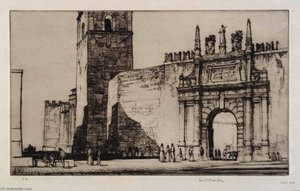
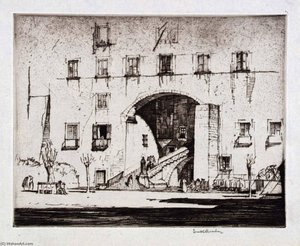
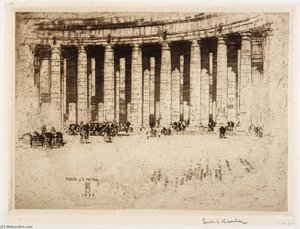
Rosenberg’s most celebrated work—the “Rome Series”—emerged from this period of intensive training and exploration. These meticulously rendered etchings, depicting iconic landmarks such as St. Peter's Colonnade and the Moorish Archway in Toledo, showcased his remarkable ability to capture both the grandeur and the subtle details of architectural forms. His work was recognized with awards from prestigious organizations like the California Printmakers Society and the Chicago Society of Etchers, solidifying his reputation as a leading figure in the field of architectural etching.
A Legacy of Observation
Rosenberg’s legacy extends beyond his individual artworks. He played a crucial role in bridging the gap between European artistic traditions and American interest in architecture, documenting significant buildings and urban spaces with unparalleled precision and artistry. His work at the Cleveland Union Terminal—a monumental civic project—provides a particularly compelling example of his ability to capture the dynamism and scale of modern construction. Louis Conrad Rosenberg’s dedication to observation, combined with his technical skill and artistic sensibility, ensures that his contributions to American art history will continue to be appreciated for generations to come.
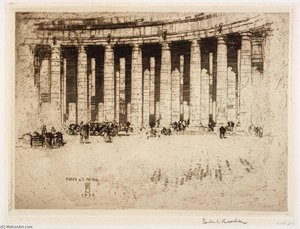
louis c rosenberg
1890 - 1983
Quick Facts
- Artistic Movement Or Style: Architectural realism
- Artists Or Movements Influenced By This Artist: ['Jacques-Louis David']
- Artists Who Influenced This Artist:
- Ellis Fuller Lawrence
- Robert Fulton Logan
- William Walcot
- Date Of Birth: May 6, 1890
- Date Of Death: 1983
- Full Name: Louis Conrad Rosenberg
- Nationality: American
- Notable Artworks:
- St. Peter's Colonnade
- Station from the West
- Place Of Birth: Portland, Oregon, USA