 Preview
 Send
Send Share
Share
 Details

 Download
 Similars
 X-Ray
X-Ray Diaporama
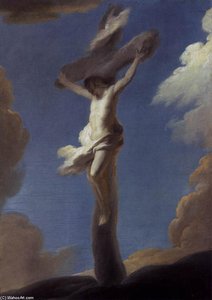
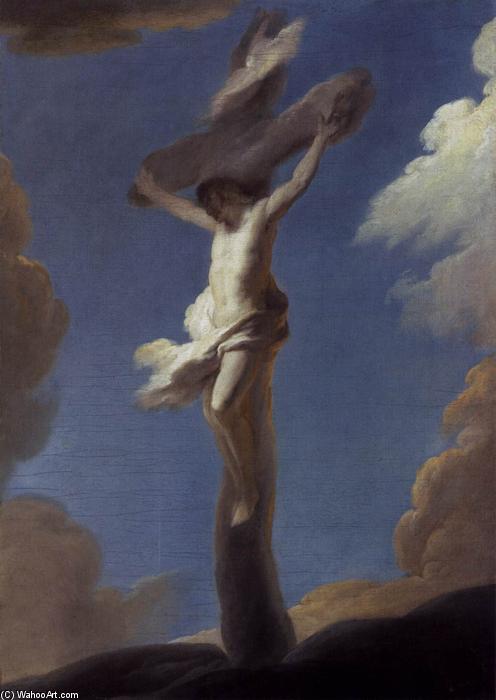
Christ on the Cross Formed by Clouds
 Oil On Canvas
- WallArt
- Baroque Aesthetic
 1734
1734 73.0 x 52.0 cm
 Gemäldegalerie
 Read More
Hand Made Oil Reproduction
Hand-painted oil on canvas in your size and frame, made to order by our artists. ( Buy Print Buy Image)




P118B $10

P118H $10

P118W $10

P438Z $10

P508JH $12

P508YH $12

P805H $10

P805Z $10

P919BZ $10

P919G $10

P919XJ $10

P959ZH $10

P968JZ $12

W106C $8

W218G $10

W218JH $8

W218Y $10

W307PJ $10

W316G $10

W316PJ $8

W316Y $10

W398PJ $8

W4111J $10

W500HY $15

W500JH $15

W692G $12

W849H $8

W940BG $15

W953PJ $8




Pick from our preset sizes that match the artwork's original proportions.

You may enter your own dimensions to fit a specific frame or space. If your selected size does not match the original image's proportions, we will either crop the artwork or extend the painting with additional hand-painted elements. A digital mockup will be sent for your approval before production begins.
Please note that the on-screen preview does not reflect the actual cropping or extension. Only the mockup will accurately show the final composition.
While custom sizes are available, we recommend selecting a dimension from the predefined list to preserve the original proportions.
After order, ArtsDot.com team will email client for instructions and provide a mockup preview
Worldwide Delivery () in 3/4 weeks instead of standard 5 weeks. (22 August). No compromise on quality.

Free Worldwide Express Shipping

High-Quality Linen Canvas

Full Shipping Insurance

Customs Tax Refund Guarantee

True Color Matching Guarantee

60-Day Return Policy (Defects Only)

100% Money-Back Guarantee

Bulk Discount Offer
 Glass option is only available in size under 110 CM

Christ on the Cross Formed by Clouds
Reproduction Medium
Reproduction Size
-


Total Price
$ 263
Artwork Description
A Vision of Transcendence: Louis de Silvestre’s “Christ on the Cross Formed by Clouds”
Louis de Silvestre's "Christ on the Cross Formed by Clouds," completed in 1734, transcends mere depiction; it embodies a profound meditation on faith and divine majesty. Executed during the twilight years of the Baroque era and foreshadowing the stylistic shifts toward Rococo, this monumental canvas—measuring approximately 291 cm × 205 cm—represents Silvestre’s masterful synthesis of classical ideals with the burgeoning emotional currents of his time. It resides within Dresden’s Gemäldegalerie Alte Meister, a testament to its enduring artistic merit and historical significance.- Subject Matter & Context: The painting portrays Jesus Christ crucified against a backdrop of swirling clouds—a deliberate departure from traditional depictions emphasizing solemn piety. Commissioned by Augustus II, King of Poland, Silvestre’s work reflects the monarch's fervent Catholicism and served as a visual embodiment of spiritual aspiration within the Habsburg court. This commission underscores the importance of religious iconography during the period, where artists sought to convey moral virtue and divine grace.
- Style & Technique: Silvestre adheres to Baroque principles—particularly dramatic lighting—to illuminate Christ’s figure with an ethereal glow. The artist employs a meticulous blending technique, utilizing oil paints on canvas to achieve velvety textures and subtle gradations of color. Brushstrokes are deliberately softened, prioritizing atmospheric perspective and conveying the grandeur of the celestial realm.
- Color Palette: Dominating hues are shades of azure and ivory—representing heaven’s expanse—contrasted by muted greys and beige in Christ's form. The careful orchestration of color contributes to the painting’s contemplative mood, fostering a sense of serenity and spiritual contemplation.
- Composition & Perspective: Silvestre arranges the scene vertically, centering Christ’s crucified body amidst billowing clouds. This compositional choice emphasizes upward movement—symbolizing ascension—and reinforces the image's overarching theme of divine transcendence. The flattened perspective minimizes spatial depth, directing the viewer’s gaze toward the central figure and amplifying its emotional impact.
Related Artworks
Artist Biography
Louis de Silvestre: The Painter of Royal Grace
Louis de Silvestre, a name perhaps less familiar than those of his contemporaries, nevertheless stands as a pivotal figure in the late Baroque and early Rococo art world of France. Born in Sceaux, just south of Paris, in 1675, he wasn’t simply a painter; he was a meticulous craftsman, a courtier’s confidant, and an artist deeply influenced by both classical tradition and the burgeoning spirit of his time. His career spanned over eight decades, marked by a consistent elegance and a remarkable ability to capture the nuances of aristocratic life, earning him positions of considerable prestige – first as court painter to Augustus II, King of Poland, and later as director of the Royal Academy of Arts in Dresden.
Silvestre’s early artistic development was shaped by his father, Israel Silvestre, a renowned engraver and drawing master who served as tutor to Louis XIV's Grand Dauphin. This foundational training instilled in young Louis a rigorous approach to draughtsmanship and an appreciation for the detailed observation of form. He then benefited from instruction under Charles Le Brun and Bon Boullogne, established masters of the French court style. However, it was his time in Rome that truly cemented his artistic vision. There, he encountered Carlo Maratta, whose dynamic compositions and masterful use of light profoundly impacted Silvestre’s approach to painting. This Roman influence is particularly evident in his later works, characterized by a sense of theatrical drama and an emphasis on capturing fleeting moments of emotion.
The Polish Court and the Rise of a Master
In 1716, Louis de Silvestre embarked on a significant chapter of his career when he accepted an invitation from Augustus II to become court painter in Poland. This move proved transformative, not only for his artistic development but also for his reputation. He quickly established himself as a favorite amongst the Polish nobility, renowned for his portraits that captured both their outward grandeur and inner personalities. The King and Queen were particularly appreciative of his work, bestowing upon him numerous honors – including ennoblement in 1741 – solidifying his position at the heart of the royal court.
During his time in Poland, Silvestre’s output was prolific. He produced a vast array of portraits, many depicting members of the royal family and other prominent figures. However, he also undertook ambitious decorative projects for the royal palaces, notably frescos within the Dresden palace itself. These works demonstrate his versatility as an artist, moving beyond individual portraits to create large-scale murals that adorned ceremonial spaces. The subject matter often drew inspiration from Ovid’s *Metamorphoses*, a testament to Silvestre's engagement with classical literature and mythology – a theme he would continue to explore in Dresden.
Dresden: A Palace of Visions
Silvestre’s tenure as director of the Royal Academy of Arts in Dresden marked a new phase in his career. He oversaw the training of young artists, fostering a vibrant artistic community within the city. His own work during this period reached an unprecedented level of sophistication, characterized by a refined elegance and a masterful command of color and composition. The palace itself became a canvas for his creativity, with elaborate decorations adorning numerous rooms – from grand state chambers to intimate private spaces.
Amongst his most celebrated Dresden works are the frescos depicting scenes from Ovid’s *Metamorphoses*. These monumental paintings showcase Silvestre's ability to seamlessly blend classical mythology with Baroque aesthetics. The “Arion playing the Lyre” is a particularly striking example, capturing the drama and emotion of the myth in a visually stunning composition. Furthermore, his portraits of Augustus III and his family are considered masterpieces of their time, revealing an acute understanding of human psychology and a remarkable talent for conveying character through subtle gestures and expressions.
Legacy and Influence
Louis de Silvestre’s legacy extends beyond the individual works he created. He represents a crucial link between the Baroque traditions of France and the emerging Rococo style, embodying a synthesis of classical learning and aristocratic patronage. His meticulous draftsmanship, his elegant compositions, and his ability to capture the nuances of human emotion have ensured his place as one of the most important portrait painters of his era.
His influence can be seen in the work of subsequent generations of artists, particularly those who followed him at the Dresden Academy. Silvestre’s dedication to artistic excellence and his commitment to fostering a vibrant artistic community left an enduring mark on the cultural landscape of Saxony. Though often overshadowed by more flamboyant contemporaries, Louis de Silvestre deserves recognition as a skilled and influential artist whose work continues to captivate viewers today.
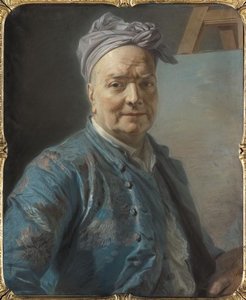
Louis de Silvestre
1675 - 1760 , France
Quick Facts
- Artistic Movement Or Style: Baroque, Rococo
- Artists Or Movements Influenced By This Artist: ['Ovidian themes']
- Artists Who Influenced This Artist:
- Carlo Maratta
- Charles Le Brun
- Date Of Birth: June 23, 1675
- Date Of Death: April 11, 1760
- Full Name: Louis de Silvestre
- Nationality: French
- Notable Artworks:
- Healing of the paralytic
- Portrait of Louis XV
- Metamorphoses frescos
- Place Of Birth: Sceaux, France
Related Articles

Goya's Masterpieces: Explore 25 Iconic Paintings & Art Prints | ArtsDot
Delve into the world of Francisco Goya with ArtsDot. Explore 25 iconic paintings – from 'The Third of May' to his haunting Black Paintings. Discover the stories, techniques & emotions behind these Spanish masterpieces. Find museum-quality art reproductions for your home at ArtsDot.com!
Simon Vouet: A Baroque Master's Journey from Italian Influence to French Classicism
Explore the life & art of Simon Vouet, a pivotal French Baroque painter who introduced Italian styles to France. Discover his masterpieces and lasting influence on 17th-century art.

The Dramatic Flourish: Exploring the Baroque Movement's Enduring Legacy in Art History
Explore the dramatic world of Baroque art! Discover iconic artists like Caravaggio & Rubens, defining techniques, and its lasting impact on art history. Expert insights for collectors & enthusiasts at ArtsDot.
Charles Le Brun: Master of French Baroque Classicism & His Enduring Legacy
Explore the life & art of Charles Le Brun, master of French Baroque Classicism. Discover his royal commissions, influence on Versailles, and enduring legacy through detailed analysis & stunning artworks.

About Us
Discover our story! We bring world-class art into your life through expert curation, personalized creations, and free previews. Trusted by individuals and businesses since 2000.