 Preview
 Send
Send Share
Share
 Details

 Download
 Similars
 X-Ray
X-Ray Diaporama
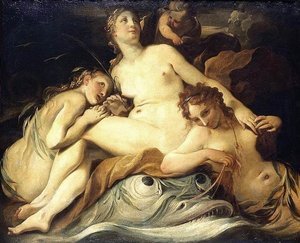
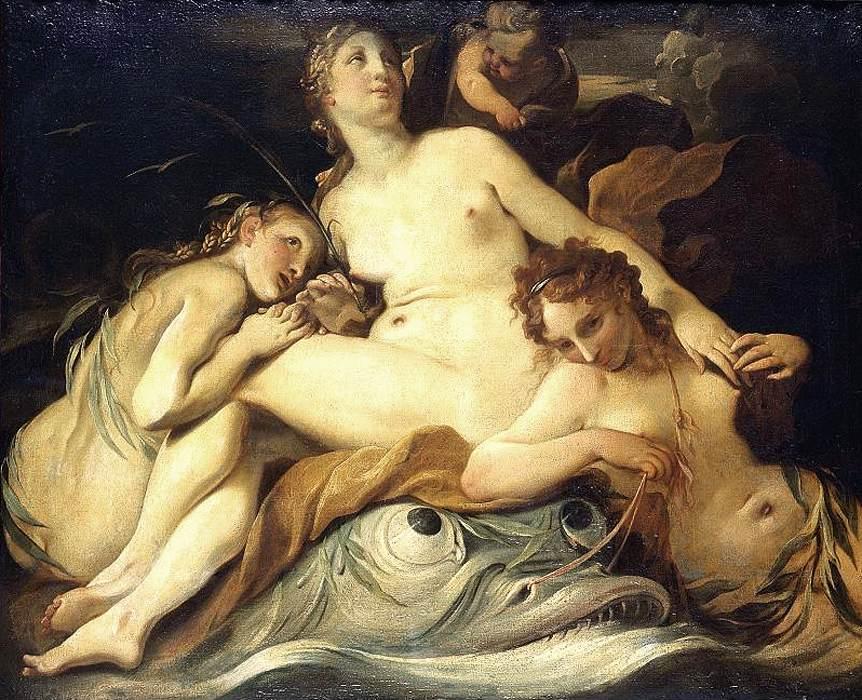
Galatea
 146.0 x 118.0 cm
 Read More
Giclée / Art Print
Museum-quality giclée or canvas print with fast production and flexible finish options. ( Buy Hand Made Painting Buy Image)




































Pick from our preset sizes that match the artwork's original proportions.

You may enter your own dimensions to fit a specific frame or space. If your selected size does not match the original image's proportions, we will either crop the artwork or extend the image with a mirrored or solid-fill edge. A digital mockup will be sent for your approval before production begins.
Please note that the on-screen preview does not reflect the actual cropping or extension. Only the mockup will accurately show the final composition.
While custom sizes are available, we recommend selecting a dimension from the predefined list to preserve the original proportions.
Worldwide Delivery () in 2 weeks instead of standard 4/5 weeks. (21 August)

Free Worldwide Express Shipping

High-Quality Linen Canvas

Full Shipping Insurance

Customs Tax Refund Guarantee

True Color Matching Guarantee

60-Day Return Policy (Defects Only)

100% Money-Back Guarantee

Bulk Discount Offer
 Glass option is only available in size under 110 CM

Galatea
Giclée / Art Print
Reproduction Size
-


Total Price
$ 63
Related Artworks
Artist Biography
The Architect of Light and Grandeur
Louis Dorigny, often known by his Italianized name Ludovico, was a master of the Baroque era whose brushwork bridged the elegance of Paris with the dramatic splendor of Italy. Born in 1654 into a lineage of profound artistic significance, Dorigny was more than just a painter; he was a chronicler of architectural majesty and classical myth. As the grandson of the celebrated Simon Vouet and the son of the skilled engraver Michel Dorigny, his very existence was woven into the fabric of the French art establishment. His early years in Paris provided him with a foundation of meticulous craftsmanship, yet it was his movement toward the Italian peninsula that would ultimately transform his style from the refined traditions of his homeland into a sweeping, theatrical mastery of fresco and light.
The trajectory of Dorigny’s life was marked by an extraordinary early promise. Having apprenticed under the legendary Charles Le Brun, the titan of French classical painting, Dorigny was immersed in the rigorous standards of the Grand Siècle. This training instilled in him a profound respect for proportion and the ability to command large-scale compositions. By his teenage years, his talent had already caught the eyes of the highest echelons of French power, earning him commissions that served the interests of Cardinal Richelieu and Louis XIV himself. These early encounters with royal patronage demanded a level of sophistication and scale that would become the hallmark of his later, more expansive works in Italy.
A Journey Through the Italian Baroque
In 1671, at the tender age of seventeen, Dorigny embarked on a transformative journey to Italy, a move that would redefine his artistic identity. While he traveled frequently between France and Italy for several years, his heart and career eventually found a permanent home in the vibrant landscapes of the Italian peninsula. Settling first in Venice, he became a sought-after decorator for the nobility, breathing life into the city's palatial interiors. It was during this period that he adopted the name Ludovico, signaling a deeper integration into the Italian artistic tradition. His work in Venice, including significant contributions to the Chiesa degli Scalzi and the San Silvestro, showcased an evolving ability to manipulate perspective and light to create immersive, celestial environments.
The later years of his life were centered in Verona, where he remained for over five decades until his death in 1742. This prolonged residency allowed him to refine a style that blended the structural clarity of French classicism with the emotive, swirling energy of the Italian Baroque. His mastery was particularly evident in his large-scale frescoes, such as those found in the ballroom of Palazzo Zenobio and the Villa Allegri Arvedi. In these works, Dorigny did not merely paint surfaces; he expanded them, using architectural illusions to dissolve the boundaries between the physical room and the mythological heavens. His ability to render complex figures—such as those in his Celebration of the Myth of Apollo—with both anatomical precision and dramatic movement remains a testament to his technical virtuosity.
Legacy of an International Master
The historical significance of Louis Dorigny lies in his role as a cultural conduit. He was an artist who could navigate the rigid hierarchies of the French court and the exuberant, decorative demands of Italian aristocracy with equal grace. His oeuvre serves as a vital record of the architectural and social grandeur of the late 17th and early 18th centuries. Through his detailed renderings of interiors and his sweeping ceiling frescoes, he captured the very essence of an era defined by opulence and classical revival.
To study Dorigny’s work is to witness a lifelong dialogue between two great European traditions. His legacy is preserved in several key artistic achievements:
- Architectural Mastery: His unparalleled ability to use linear perspective to create the illusion of infinite space within confined interiors.
- Mythological Narrative: The seamless integration of complex classical myths into architectural settings, elevating secular spaces through divine storytelling.
- Technical Versatility: A rare command over both the delicate precision of engraving and the monumental scale of fresco painting.
- Cultural Synthesis: The creation of a unique aesthetic that merged French structural elegance with Italian Baroque dynamism.
Ultimately, Dorigny remains a pivotal figure for anyone seeking to understand the transition of European art from the structured classical ideals of the mid-17th century toward the more emotive and theatrical expressions of the coming age.
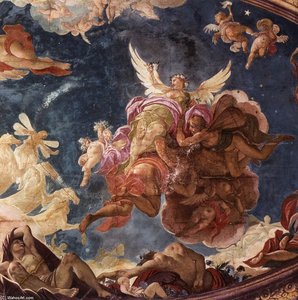
louis dorigny (ludovico dorigny)
1654 - 1742 , France
Quick Facts
- Artistic Movement Or Style: Baroque
- Artists Or Movements Influenced By This Artist: ['Italian Baroque']
- Artists Who Influenced This Artist: ['Giovanni Battista Piranesi']
- Date Of Birth: 1654 Paris France
- Date Of Death: 1742 Verona Italy
- Full Name: Louis Dorigny
- Nationality: French
- Notable Artworks:
- Celebration Of The Myth Of Apollo
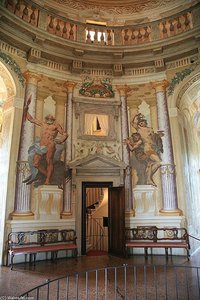
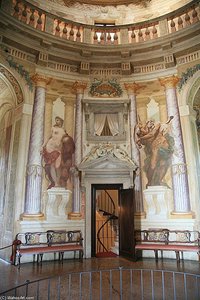
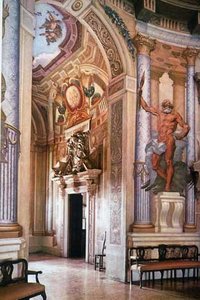
- Palladio Rotonda Interior
- Place Of Birth: Paris France