 Preview
 Send
Send Share
Share
 Details

 Download
 Similars
 X-Ray
X-Ray Diaporama
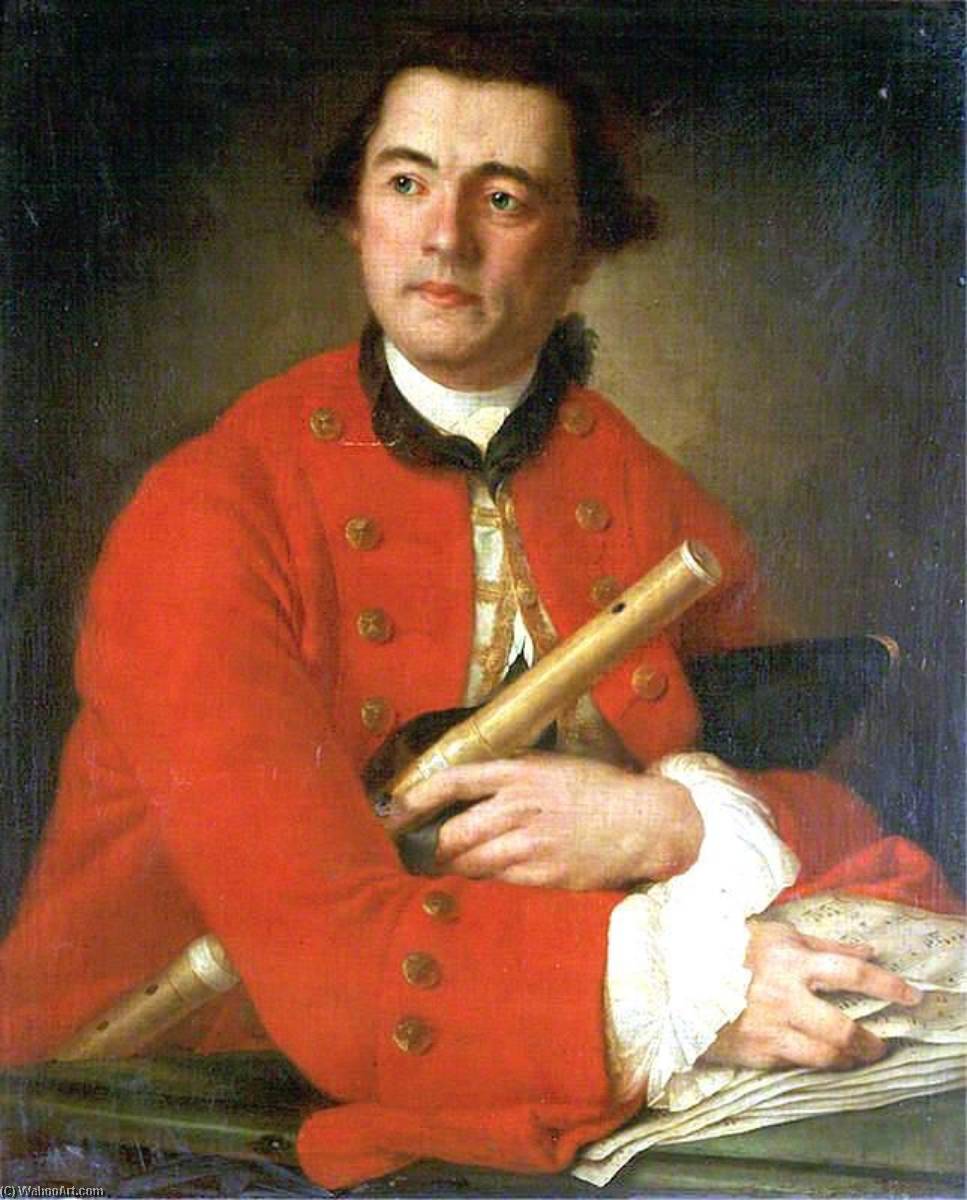
James Grant of Lettock

 Read More
Hand Made Oil Reproduction
Hand-painted oil on canvas in your size and frame, made to order by our artists. ( Buy Print Buy Image)




































Pick from our preset sizes that match the artwork's original proportions.

You may enter your own dimensions to fit a specific frame or space. If your selected size does not match the original image's proportions, we will either crop the artwork or extend the painting with additional hand-painted elements. A digital mockup will be sent for your approval before production begins.
Please note that the on-screen preview does not reflect the actual cropping or extension. Only the mockup will accurately show the final composition.
While custom sizes are available, we recommend selecting a dimension from the predefined list to preserve the original proportions.
After order, ArtsDot.com team will email client for instructions and provide a mockup preview
Worldwide Delivery () in 3/4 weeks instead of standard 5 weeks. (27 August). No compromise on quality.

Free Worldwide Express Shipping

High-Quality Linen Canvas

Full Shipping Insurance

Customs Tax Refund Guarantee

True Color Matching Guarantee

60-Day Return Policy (Defects Only)

100% Money-Back Guarantee

Bulk Discount Offer
 Glass option is only available in size under 110 CM

James Grant of Lettock
Reproduction Medium
Reproduction Size
-


Total Price
$ 263
Artwork Description
The Artist and His Style
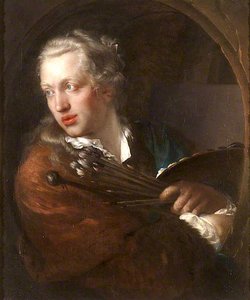
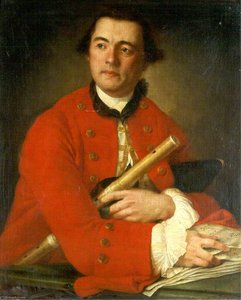
Louis Gabriel Blanchet was a French artist known for his portraits of prominent figures, including Prince Charles the Young Pretender and his brother Henry Stuart. Blanchet's style is characterized by his use of soft colors, delicate lines, and attention to detail. In James Grant of Lettock, he masterfully conveys the subject's personality and social status through his attire and accessories. Key Features of the Painting:- The subject, James Grant, is depicted holding a flute and sheets of music, highlighting his musical accomplishments.
- The painting showcases Blanchet's use of oil on canvas, demonstrating his mastery of this medium.
- The Aberdeen Art Gallery and Museums provides a fitting home for this piece, allowing art enthusiasts to appreciate its beauty and historical significance.
Acquiring a Handmade Reproduction
For those who appreciate the beauty of James Grant of Lettock, ArtsDot.com offers handmade oil painting reproductions. With a team of talented artists, ArtsDot.com creates 100% hand-made oil paintings on various subjects and styles. Visit ArtsDot.com to learn more about acquiring a handmade reproduction of this stunning painting.The Louis Gabriel Blanchet painting, James Grant of Lettock, is a remarkable example of 18th-century art, and its beauty can be appreciated by art enthusiasts around the world. Whether you visit the Aberdeen Art Gallery and Museums or acquire a handmade reproduction from ArtsDot.com, this painting is sure to leave a lasting impression.
Related Artworks

Artist Biography
The Visionary of the Enlightenment: The Life and Legacy of Louis Gabriel Blanchet
Born in the vibrant heart of Paris in 1705, Louis Gabriel Blanchet emerged as a transformative force within the French artistic landscape, bridging the gap between the theatrical grandeur of the Baroque era and the disciplined elegance of Neoclassicism. His life and career mirrored the profound intellectual shifts of the Enlightenment, as he navigated the transition from an age of emotional intensity to one of classical restraint and reason. While biographical records of his earliest years remain somewhat elusive, Blanchet’s artistic identity was forged through a rigorous foundation in the sculptural arts, a discipline that would forever inform the structural integrity and tactile richness of his later paintings.
The seeds of Blanchet's mastery were sown during his apprenticeship under the esteemed sculptor Jean-Baptiste Simeon Lefèvre. This formative period provided him with much more than mere technical instruction in the carving of marble and bronze; it instilled in him a profound reverence for classical principles and the pursuit of beauty as an expression of divine order. Through Lefèvre, Blanchet learned to appreciate the weight, volume, and anatomical precision required to breathe life into stone—qualities that would later permeate his canvases. This sculptural sensibility allowed him to approach painting not merely as a play of light, but as a construction of form, where every figure possessed a monumental presence and a palpable sense of physical reality.
A Mastery of Style: From Baroque Drama to Neoclassical Grace
Blanchet’s early creative output was deeply steeped in the Baroque tradition, characterized by a fascination with dramatic narratives and emotional depth. Drawing inspiration from masters such as Nicolas Frémiet and François Girardon, his early works often utilized dynamic compositions and vibrant, expressive brushstrokes to evoke visceral responses from the viewer. In pieces like “Saint George and the Dragon,” one can witness the artist's ability to capture theatrical grandeur, using light and shadow to heighten the tension of the struggle and the heroism of the subject.
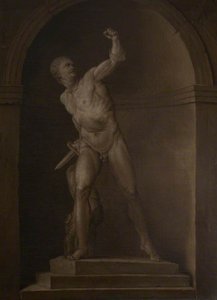
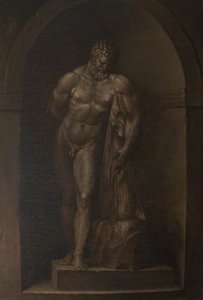
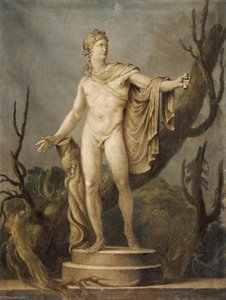
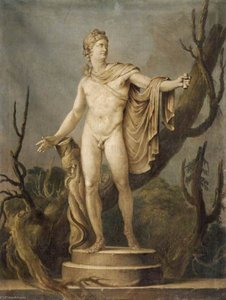
As the cultural tides of Europe shifted toward the Enlightenment, so too did Blanchet’s aesthetic. He seamlessly transitioned into the Neoclassical style, a movement that favored clarity, symmetry, and a return to the idealized forms of antiquity. This evolution is perhaps most strikingly realized in his 1765 masterpiece, “The Borghese Warrior in a Niche.” In this work, the artist demonstrates a sophisticated command of chiaroscuro, using rich contrasts to define a powerfully rendered nude figure set within an architectural framework. The painting serves as a testament to his ability to marry the dramatic lighting of his Baroque roots with the structured, disciplined composition of the Neoclassical era.
Portraiture and the Documentation of an Era
Beyond his historical and mythological endeavors, Blanchet gained significant renown as a portraitist capable of capturing the very essence of the 18th-century elite. His portraits were not merely likenesses but carefully constructed narratives of social status and personal character. He possessed a remarkable ability to utilize soft colors and delicate lines to convey the refinement of his subjects, often employing subtle details in attire and accessories to communicate their intellect and standing.
His notable achievements include:
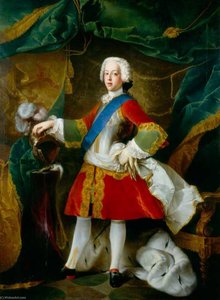
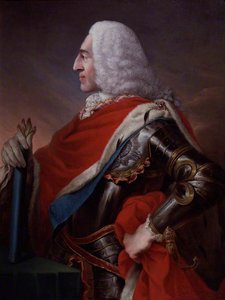
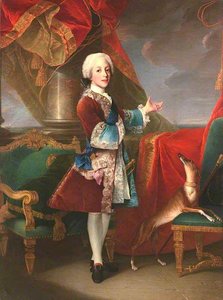
- Portraits of Royalty: His skill in capturing the dignity of prominent figures, such as Prince Charles Edward Stuart and his brother Henry Stuart, solidified his position within the upper echelons of French society.
- Character Studies: In works like “James Grant of Lettock” (1760), Blanchet moved beyond mere formal portraiture to present subjects as cultured individuals, using elements like musical notation to highlight their personal accomplishments and intellectual pursuits.
- Multidisciplinary Impact: His rare ability to move between the realms of painting, sculpture, and architectural design allowed him to contribute to a cohesive aesthetic vision that defined much of Parisian culture during his lifetime.
Ultimately, the historical significance of Louis Gabriel Blanchet lies in his role as an artistic bridge. He stood at the crossroads of two centuries, absorbing the passion of the old world and refining it through the intellectual rigor of the new. His enduring legacy is found in the strength of his compositions and a technical precision that continues to captivate art historians and enthusiasts alike, marking him as a true visionary of the Enlightenment.
louis gabriel blanchet
1705 - 1772
Quick Facts
- Artistic Movement Or Style: Neoclassical Art
- Artists Or Movements Influenced By This Artist: ['Classical Art']
- Artists Who Influenced This Artist: ['James Barry']
- Date Of Death: 1772
- Full Name: Louis Gabriel Blanchet
- Nationality: French
- Notable Artworks:
- The Death of Socrates
- Portrait of Madame Vigée Le Brun
- Place Of Birth: Paris, France