

 Preview
 Send
Send Share
Share
 Details

 Download
 Similars
 X-Ray
X-Ray Diaporama
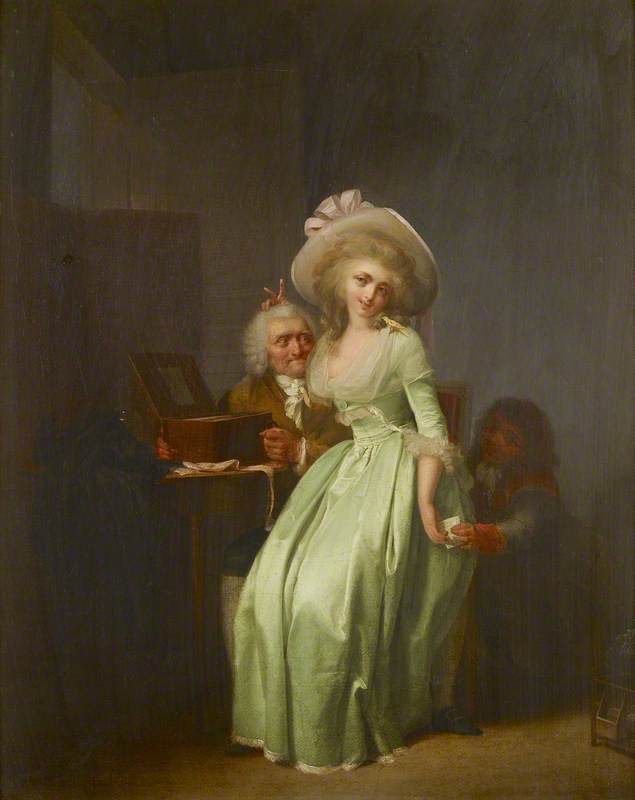
A young Woman mocking an elderly Admirer


 Read More
Purchase a high-resolution, enhanced digital image, far superior to the online preview.
Each file is meticulously prepared by our in-house specialists using advanced tools and expert manual retouching. We ensure every image has exceptional clarity, precise color accuracy, and fine detail.
The final file is delivered via email within 72 hours, optimized for immediate use in professional, editorial, and print environments. This is the same quality trusted by top-tier design studios, publishers, and galleries.
Digital Image
Download a high-resolution file for personal display, printing, and creative projects. ( Buy Print Buy Hand Made Painting)
Included in Every Digital Image Order
Expert Digital Delivery, Guaranteed
When you choose ArtsDot.com, you're not just getting an image - you're receiving a professionally enhanced digital artwork, crafted with precision and backed by a satisfaction guarantee. Here's everything that comes with your order, automatically:

Fast Email Delivery
Your high-resolution digital image file will be emailed to you within 72 hours of ordering - ready for immediate use.

AI-Enhanced Digital File
Your artwork is professionally optimized using advanced AI tools and manual editing, ensuring maximum detail, clarity, and color accuracy.

Free Lifetime Re-Delivery
Accidentally deleted or lost your file? No worries - we'll resend it to you anytime, free of charge.

No Import Fees - Ever
Enjoy your artwork instantly with zero customs, duties, or delivery fees - digital downloads are always tax-free.

Color Accuracy Guarantee
We ensure your digital image reflects the original colors as closely as possible using professional tools and color management.

60-Day Satisfaction Guarantee
If you're not satisfied with your digital image, we'll revise it or refund 100% within 60 days - no questions asked.

100% Money-Back Guarantee
Not satisfied? Get a full refund within 60 days of receiving your digital file - no questions asked.

Bulk Order Discounts
Buy 3 images, save 10% - Buy 5, save 15% - Buy 10+, save 20%. Great for creative projects, galleries, and agencies.
Collectible Description
The Enigmatic Glance: Louis Léopold Boilly’s “A Young Woman Mocking an Elderly Admirer”
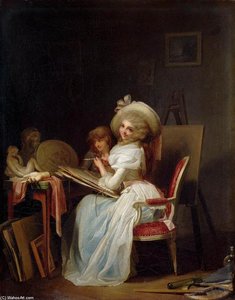
Louis Léopold Boilly's "A Young Woman Mocking an Elderly Admirer," housed within the Ashmolean Museum in Oxford, isn’t merely a painting; it’s a meticulously crafted snapshot of 19th-century Parisian life – a vibrant tableau brimming with social commentary and subtle psychological drama. Completed around 1800, this oil on canvas offers a glimpse into the bustling world of the French middle class, capturing a fleeting moment of playful defiance within a richly detailed domestic setting. The painting immediately draws the eye to its central figure: a young woman, dressed in a striking green gown adorned with a delicate white hat, who holds court with an air of confident amusement. Her gaze, direct and slightly challenging, pierces through the scene, engaging the viewer directly and hinting at a complex interplay of emotions.
The setting itself is crucial to understanding the painting’s narrative. A seated elderly gentleman, clad in a brown coat, occupies a table, seemingly engrossed in a book – an image of quiet contemplation. However, his attention is undeniably drawn to the young woman's performance, suggesting a dynamic of admiration and perhaps even gentle mockery. To the left, another figure adds further layers to the scene, their activity obscured but undoubtedly contributing to the overall atmosphere of social interaction. The dimly lit room, with its arched window offering a glimpse of an unseen exterior, creates a sense of intimacy while simultaneously emphasizing the enclosed nature of this particular moment.
Neoclassical Precision and Parisian Realism
Boilly’s artistic style is characterized by a remarkable blend of Neoclassical precision and a keen observation of everyday life. He was a master of *contre-peinture*, a technique that allowed him to create the illusion of three-dimensional objects within a flat surface – evident in the meticulously rendered details of the furniture, fabrics, and even the shadows cast across the room. This meticulous attention to detail is further enhanced by his skillful use of color, creating a harmonious yet subtly complex palette that reflects the nuances of light and atmosphere. The painting’s composition adheres closely to Neoclassical principles, with a balanced arrangement of figures and elements contributing to a sense of order and stability – a deliberate contrast to the often chaotic nature of Parisian society.
However, Boilly wasn't simply replicating reality; he was interpreting it. He possessed an astute understanding of human psychology and social dynamics, which he skillfully employed to convey subtle emotions and unspoken tensions. The young woman’s smirk, for instance, isn’t overtly aggressive but rather a playful challenge – a demonstration of her control over the situation and a subtle commentary on the expectations placed upon women in that era. The elderly gentleman's posture suggests a mixture of amusement and perhaps a touch of vulnerability, highlighting the complexities of social relationships.
Symbolism and Social Commentary
Beyond its immediate visual appeal, “A Young Woman Mocking an Elderly Admirer” offers a rich tapestry of symbolic meaning. The painting can be interpreted as a commentary on the shifting power dynamics between generations and genders in 19th-century France. The young woman’s defiance represents a rejection of traditional social constraints, while the elderly gentleman embodies the established order – a figure whose authority is subtly undermined by her playful challenge. The inclusion of the third figure adds another layer to this dynamic, suggesting the presence of an observer or perhaps a catalyst for the unfolding drama.
Furthermore, the painting reflects the broader social trends of the time – the rise of the middle class, the increasing urbanization of Paris, and the changing roles of men and women. Boilly’s meticulous depiction of Parisian life provides valuable insights into the customs, fashions, and attitudes of this era. The scene is a microcosm of society, capturing the tensions, contradictions, and complexities of everyday existence.
A Timeless Portrait of Human Interaction
“A Young Woman Mocking an Elderly Admirer” remains a captivating work of art due to its masterful execution, subtle symbolism, and enduring relevance. It’s more than just a pretty picture; it's a poignant meditation on human relationships, social dynamics, and the complexities of identity. Reproductions of this painting offer a remarkable opportunity to bring this evocative scene into your home or office, allowing you to appreciate Boilly’s artistic genius and gain a deeper understanding of 19th-century Parisian society. Consider framing it in a classic style to complement its Neoclassical aesthetic – a testament to the enduring beauty and timeless appeal of this extraordinary artwork.
Related Artworks




Artist Biography
Louis Léopold Boilly: A Life in Portraiture and Parisian Society
- Born: July 5, 1761, La Bassée, France
- Died: January 4, 1845, Paris, France
Early Life and Artistic Development
- Boilly's artistic journey began early; he produced works as young as twelve. Largely self-taught, his initial training included trompe-l’oeil painting under Dominique Doncre.
- His talent was recognized by the Augustinians of Douai in 1774, leading to an invitation from the Bishop of Arras. This period saw him create over three hundred small portrait paintings.
- Early works often featured amorous and moralizing subjects, demonstrating a developing skill in capturing likenesses and details.
Artistic Style and Key Works
- Style: Boilly's style is characterized by meticulous detail, careful coloring, and a focus on depicting everyday life within the French middle class. He skillfully blended portraiture with genre scenes.
- Evolution: After 1794, his compositions became more crowded, reflecting the bustling social scene of Paris. His portraits gained widespread acclaim, with over 5,000 painted throughout his career.
- Notable Works:
- The Suitor's Gift – An early work showcasing amorous themes and meticulous detail.
- Triumph of Marat – A patriotic piece created to avoid condemnation during the Reign of Terror.
- The Arrival of a Mail-Coach in the Courtyard of the Messageries – A vibrant depiction of Parisian life and transportation.
- Optical Illusions: Boilly was fascinated by optics, as demonstrated in works like *Un Trompe-l'œil*, which introduced the term to describe his technique of creating realistic imagery that mimics three-dimensional objects.
Recognition and Legacy
- Salon Success: Boilly received a medal from the Paris Salon in 1804, solidifying his reputation as a skilled artist.
- Honors: He was decorated as a Chevalier of the Légion d'Honneur in 1833, recognizing his contributions to French art.
- Family Influence: His son, Alphonse Boilly, became a professional engraver and apprenticed in New York with Asher Brown Durand.
- Historical Significance: Boilly’s work provides invaluable insights into the social customs, fashion, and daily life of the French middle class during a period of significant political upheaval. He is remembered as one of France's most celebrated portraitists and genre painters.
Museum Holdings
- Musée des Beaux Arts, Lille: Holds Triumph of Marat among other works.
- Louvre Museum: Features selections from Boilly’s extensive oeuvre.
- National Gallery of Art (Washington D.C.): Possesses several paintings including *Self-Portrait*, *Les Amateurs de Tableaux* and *The Public in the Salon of the Louvre, Viewing the Painting of the "Sacre"*.
- Getty Museum: Holds a collection of Boilly's works.
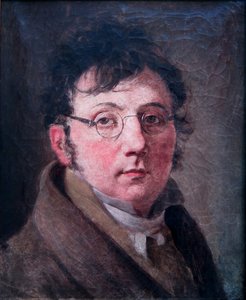
Louis Léopold Boilly
1761 - 1845 , France
Quick Facts
- Artistic Movement Or Style: Genre painting, Portraiture
- Artists Who Influenced This Artist:
- Gabriel Metsu
- Willem van Mieris
- Gerard ter Borch
- Date Of Birth: July 5, 1761
- Date Of Death: January 4, 1845
- Full Name: Louis Léopold Boilly
- Nationality: French
- Notable Artworks:
- The Suitor's Gift
- Triumph of Marat
- Arrival of a Mail-Coach
- Place Of Birth: La Bassée, France

