 Preview
 Send
Send Share
Share
 Details

 Download
 Similars
 X-Ray
X-Ray Diaporama
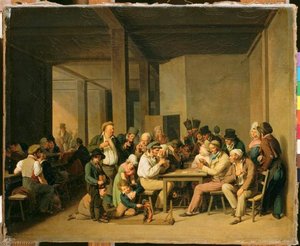
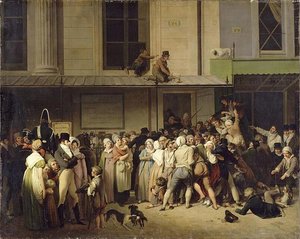
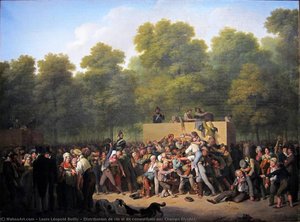
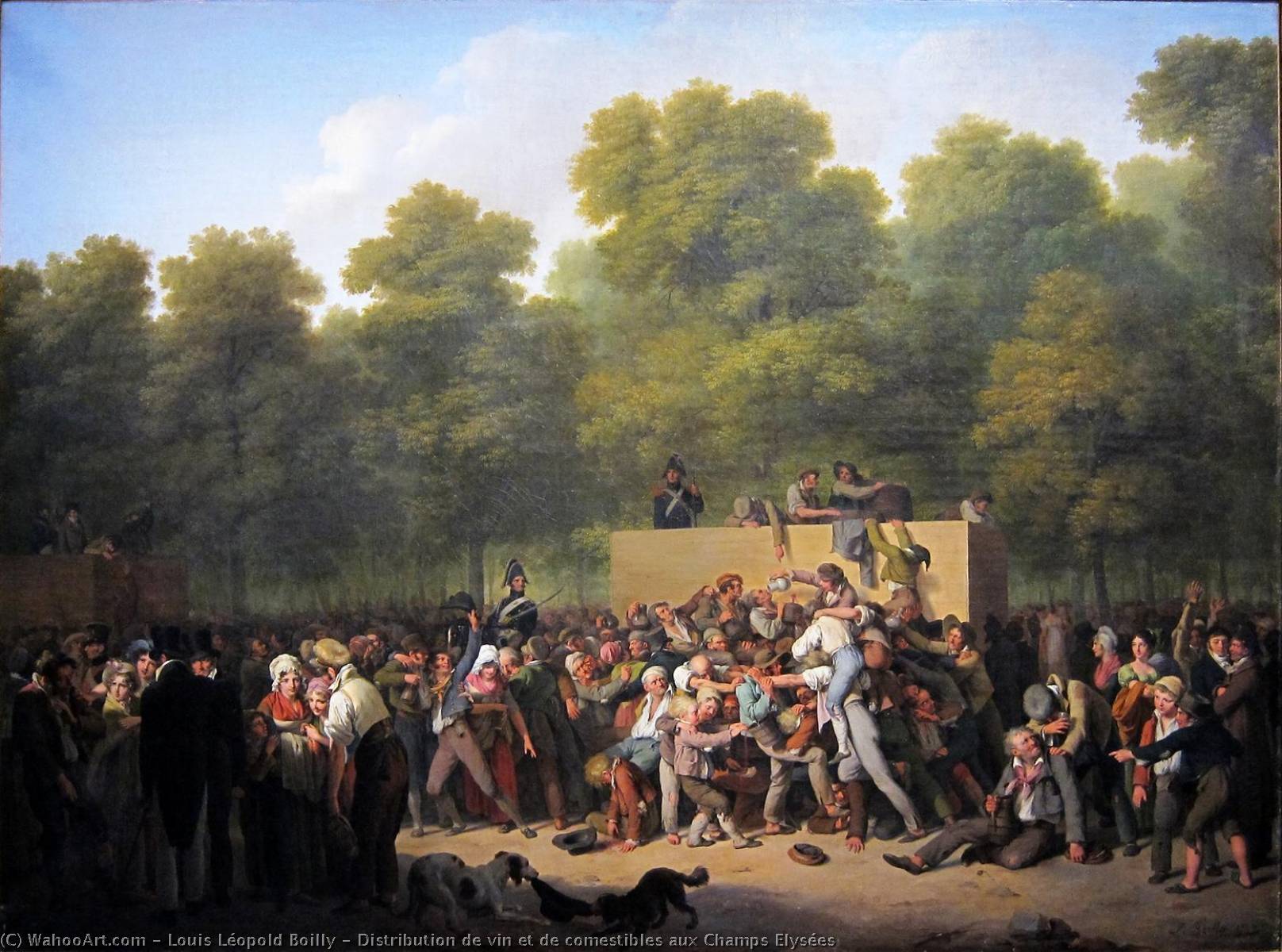
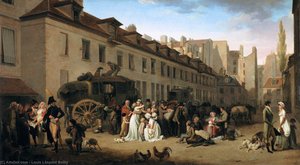
Distribution de vin et de comestibles aux Champs Elysées


 Read More
Hand Made Oil Reproduction
Hand-painted oil on canvas in your size and frame, made to order by our artists. ( Buy Print Buy Image)




P118B $10

P118H $10

P118W $10

P438Z $10

P508JH $12

P508YH $12

P805H $10

P805Z $10

P919BZ $10

P919G $10

P919XJ $10

P959ZH $10

P968JZ $12

W106C $8

W218G $10

W218JH $8

W218Y $10

W307PJ $10

W316G $10

W316PJ $8

W316Y $10

W398PJ $8

W4111J $10

W500HY $15

W500JH $15

W692G $12

W849H $8

W940BG $15

W953PJ $8




Pick from our preset sizes that match the artwork's original proportions.

You may enter your own dimensions to fit a specific frame or space. If your selected size does not match the original image's proportions, we will either crop the artwork or extend the painting with additional hand-painted elements. A digital mockup will be sent for your approval before production begins.
Please note that the on-screen preview does not reflect the actual cropping or extension. Only the mockup will accurately show the final composition.
While custom sizes are available, we recommend selecting a dimension from the predefined list to preserve the original proportions.
After order, ArtsDot.com team will email client for instructions and provide a mockup preview
Worldwide Delivery () in 3/4 weeks instead of standard 5 weeks. (17 August). No compromise on quality.

Free Worldwide Express Shipping

High-Quality Linen Canvas

Full Shipping Insurance

Customs Tax Refund Guarantee

True Color Matching Guarantee

60-Day Return Policy (Defects Only)

100% Money-Back Guarantee

Bulk Discount Offer
 Glass option is only available in size under 110 CM

Distribution de vin et de comestibles aux Champs Elysées
Reproduction Medium
Reproduction Size
-


Total Price
$ 263
Artwork Description
A Snapshot of Parisian Revelry: Boilly’s “Distribution de vin et de comestibles aux Champs Elysées”
Louis Léopold Boilly's "Distribution de vin et de comestibles aux Champs Elysées," painted in 1822, isn’t merely a depiction of a Parisian street scene; it’s a vibrant tableau vivant—a captured moment brimming with social commentary and the sheer exuberance of public spectacle. The painting transports us to the heart of early 19th-century Paris during the Fête du Roi, an annual celebration honoring Saint Louis, where the city's populace was treated to a lavish distribution of wine and food. More than just a historical record, Boilly’s work offers a compelling glimpse into the social dynamics and everyday life of a rapidly changing France.
Boilly masterfully employs the techniques characteristic of French Realism, a style that sought to portray subjects as they were without idealization or romantic embellishment. The scene unfolds with remarkable detail; observe the meticulously rendered trees lining the Champs-Élysées, their branches casting dappled shadows across the bustling street. The artist’s use of light and shadow is particularly effective, creating a sense of depth and volume within the crowded composition. He skillfully utilizes *contre-jour*, illuminating the central figure distributing goods while subtly darkening the background, drawing our eye to the focal point of the scene.
A Crowd in Motion: Composition and Social Commentary
The painting’s composition is a testament to Boilly's keen observation skills. The central figure, elevated on a platform or cart, acts as a conduit between the wealthy elite and the common people, distributing wine and food with an air of detached authority. Below him, a chaotic mass of individuals surges forward—a swirling mix of men, women, and children, all vying for their share. This isn’t a scene of orderly distribution; it's a frantic scramble, reflecting the social inequalities inherent in 19th-century Parisian society. The painting subtly critiques this disparity, highlighting the desperation and eagerness that fueled the crowd’s behavior.
Notice how Boilly captures the diverse range of social classes represented within the throng. While some individuals are dressed in relatively modest attire, others wear finer garments, suggesting a hierarchy based on wealth and status. The artist doesn't explicitly judge these distinctions but presents them as an integral part of the scene’s dynamic energy. The expressions on the faces of the onlookers—a mixture of anticipation, excitement, and even desperation—are remarkably lifelike, conveying a powerful sense of immediacy.
Symbolism and Historical Context
The Fête du Roi itself held significant symbolic weight. It was intended to be a demonstration of royal generosity and a means of appeasing the populace after years of political upheaval. However, Boilly’s painting reveals a more complex reality—a scene of uncontrolled enthusiasm and potential social unrest. The overflowing carts of food and wine represent not just abundance but also the potential for excess and inequality. The very act of distributing goods publicly underscored the power dynamics between the monarchy and its subjects.
Furthermore, the painting’s setting on the Champs-Élysées—Paris's grandest avenue—elevates the scene to a position of civic importance. The choice of location emphasizes the spectacle’s public nature and its connection to the heart of Parisian life. The inclusion of trees further reinforces this sense of grandeur, creating a visual contrast between the bustling street below and the stately backdrop.
A Timeless Portrait of Urban Life
"Distribution de vin et de comestibles aux Champs Elysées" remains a captivating work of art because it transcends its historical context. It’s not simply a record of a specific event but a universal portrayal of human behavior—the desire for sustenance, the pursuit of opportunity, and the inherent tensions within social structures. Boilly's masterful technique and insightful observation continue to resonate with viewers today, offering a poignant reminder of the complexities and contradictions of urban life.
Reproductions of this iconic painting capture its vibrant energy and historical significance, making it an ideal addition to any art collection or interior space. Its rich colors and dynamic composition will undoubtedly spark conversation and evoke a sense of nostalgia for a bygone era.
Related Artworks
Artist Biography
Louis Léopold Boilly: A Life in Portraiture and Parisian Society
- Born: July 5, 1761, La Bassée, France
- Died: January 4, 1845, Paris, France
Early Life and Artistic Development
- Boilly's artistic journey began early; he produced works as young as twelve. Largely self-taught, his initial training included trompe-l’oeil painting under Dominique Doncre.
- His talent was recognized by the Augustinians of Douai in 1774, leading to an invitation from the Bishop of Arras. This period saw him create over three hundred small portrait paintings.
- Early works often featured amorous and moralizing subjects, demonstrating a developing skill in capturing likenesses and details.
Artistic Style and Key Works
- Style: Boilly's style is characterized by meticulous detail, careful coloring, and a focus on depicting everyday life within the French middle class. He skillfully blended portraiture with genre scenes.
- Evolution: After 1794, his compositions became more crowded, reflecting the bustling social scene of Paris. His portraits gained widespread acclaim, with over 5,000 painted throughout his career.
- Notable Works:
- The Suitor's Gift – An early work showcasing amorous themes and meticulous detail.
- Triumph of Marat – A patriotic piece created to avoid condemnation during the Reign of Terror.
- The Arrival of a Mail-Coach in the Courtyard of the Messageries – A vibrant depiction of Parisian life and transportation.
- Optical Illusions: Boilly was fascinated by optics, as demonstrated in works like *Un Trompe-l'œil*, which introduced the term to describe his technique of creating realistic imagery that mimics three-dimensional objects.
Recognition and Legacy
- Salon Success: Boilly received a medal from the Paris Salon in 1804, solidifying his reputation as a skilled artist.
- Honors: He was decorated as a Chevalier of the Légion d'Honneur in 1833, recognizing his contributions to French art.
- Family Influence: His son, Alphonse Boilly, became a professional engraver and apprenticed in New York with Asher Brown Durand.
- Historical Significance: Boilly’s work provides invaluable insights into the social customs, fashion, and daily life of the French middle class during a period of significant political upheaval. He is remembered as one of France's most celebrated portraitists and genre painters.
Museum Holdings
- Musée des Beaux Arts, Lille: Holds Triumph of Marat among other works.
- Louvre Museum: Features selections from Boilly’s extensive oeuvre.
- National Gallery of Art (Washington D.C.): Possesses several paintings including *Self-Portrait*, *Les Amateurs de Tableaux* and *The Public in the Salon of the Louvre, Viewing the Painting of the "Sacre"*.
- Getty Museum: Holds a collection of Boilly's works.
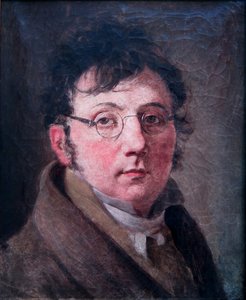
Louis Léopold Boilly
1761 - 1845 , France
Quick Facts
- Artistic Movement Or Style: Genre painting, Portraiture
- Artists Who Influenced This Artist:
- Gabriel Metsu
- Willem van Mieris
- Gerard ter Borch
- Date Of Birth: July 5, 1761
- Date Of Death: January 4, 1845
- Full Name: Louis Léopold Boilly
- Nationality: French
- Notable Artworks:
- The Suitor's Gift
- Triumph of Marat
- Arrival of a Mail-Coach
- Place Of Birth: La Bassée, France
Related Articles
Scenes of Daily Life: A Comprehensive Exploration of Genre Painting Through History
Explore the rich history of genre painting! Discover Dutch Masters & European artists who captured everyday life with stunning realism. Learn about symbolism, techniques & lasting influence.
Bernard Cathelin: A Poetic Realist's Exploration of Still Life and the French Landscape
Explore the captivating world of Bernard Cathelin, a master of French Poetic Realism. Discover his stunning still lifes & landscapes, and learn about his legacy with ArtsDot.
Charles Le Brun: Master of French Baroque Classicism & His Enduring Legacy
Explore the life & art of Charles Le Brun, master of French Baroque Classicism. Discover his royal commissions, influence on Versailles, and enduring legacy through detailed analysis & stunning artworks.
Jean-Baptiste Greuze: Morality, Sentiment & the Rise of Genre Painting
Explore the life & art of Jean-Baptiste Greuze, a pivotal French Rococo painter renowned for his emotionally resonant genre scenes and moral lessons. Discover his legacy & impact on 18th-century art history.
Simon Vouet: A Baroque Master's Journey from Italian Influence to French Classicism
Explore the life & art of Simon Vouet, a pivotal French Baroque painter who introduced Italian styles to France. Discover his masterpieces and lasting influence on 17th-century art.