 Preview
 Send
Send Share
Share
 Details

 Download
 Similars
 X-Ray
X-Ray Diaporama
antoine vincent arnault


 Read More
Hand Made Oil Reproduction
Hand-painted oil on canvas in your size and frame, made to order by our artists. ( Buy Print Buy Image)




P118B $10

P118H $10

P118W $10

P438Z $10

P508JH $12

P508YH $12

P805H $10

P805Z $10

P919BZ $10

P919G $10

P919XJ $10

P959ZH $10

P968JZ $12

W106C $8

W218G $10

W218JH $8

W218Y $10

W307PJ $10

W316G $10

W316PJ $8

W316Y $10

W398PJ $8

W4111J $10

W500HY $15

W500JH $15

W692G $12

W849H $8

W940BG $15

W953PJ $8




Pick from our preset sizes that match the artwork's original proportions.

You may enter your own dimensions to fit a specific frame or space. If your selected size does not match the original image's proportions, we will either crop the artwork or extend the painting with additional hand-painted elements. A digital mockup will be sent for your approval before production begins.
Please note that the on-screen preview does not reflect the actual cropping or extension. Only the mockup will accurately show the final composition.
While custom sizes are available, we recommend selecting a dimension from the predefined list to preserve the original proportions.
After order, ArtsDot.com team will email client for instructions and provide a mockup preview
Worldwide Delivery () in 3/4 weeks instead of standard 5 weeks. (17 August). No compromise on quality.

Free Worldwide Express Shipping

High-Quality Linen Canvas

Full Shipping Insurance

Customs Tax Refund Guarantee

True Color Matching Guarantee

60-Day Return Policy (Defects Only)

100% Money-Back Guarantee

Bulk Discount Offer
 Glass option is only available in size under 110 CM

antoine vincent arnault
Reproduction Medium
Reproduction Size
-


Total Price
$ 263
Artwork Description
The Elegance of the Bourgeoisie: Antoine Vincent Arnault’s “Antoine Vincent Arnault”
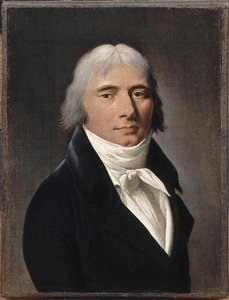
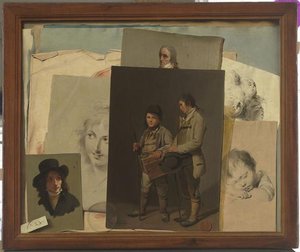
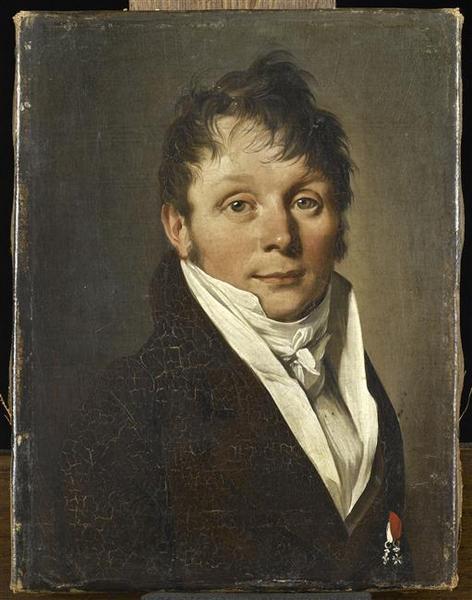
Louis Léopold Boilly's "Antoine Vincent Arnault" is more than just a portrait; it’s a meticulously crafted window into the social and artistic landscape of early 19th-century France. Painted in 1800, this work captures not merely the likeness of a man – Antoine Vincent Arnault himself, a prominent playwright and secretary to the Académie Française – but also an entire era defined by burgeoning bourgeois wealth, refined manners, and a subtle yet pervasive sense of optimism. The painting’s quiet dignity resides in its restraint; Boilly eschews dramatic lighting or extravagant gestures, instead favoring a carefully calibrated palette of browns, creams, and whites that evoke both the solidity of established status and the understated elegance of Parisian society.
The composition is deceptively simple: Arnault sits squarely within the frame, his gaze direct and engaging. He’s not posed theatrically, but rather presented with a relaxed composure, as if accustomed to being observed. The muted background – a wash of indistinct brown – serves only to highlight the subject, drawing our attention entirely to his face and attire. This deliberate lack of distraction speaks volumes about Boilly's understanding of portraiture; he wasn’t interested in creating a spectacle, but rather in capturing the essence of his sitter with remarkable accuracy and sensitivity.
A Masterclass in Neoclassical Detail
Boilly’s technique is a testament to his skill as a draftsman and colorist. He employs soft, blended brushstrokes to create a remarkably smooth surface, avoiding any harsh lines or visible texture. This meticulous approach is particularly evident in the rendering of Arnault's clothing – the crisp white shirt, the dark jacket with its subtle decorative element, and the carefully draped fabric all demonstrate an almost obsessive attention to detail. The use of light and shadow is equally masterful, subtly defining the contours of his face and creating a sense of volume that adds depth and realism to the portrait.
The painting’s color palette—dominated by earthy tones—reflects the prevailing aesthetic sensibilities of the time. Boilly was deeply influenced by Neoclassicism, an artistic movement that sought to revive the ideals of ancient Greece and Rome. This influence is evident in the painting's emphasis on order, balance, and clarity. The restrained color scheme contributes to this sense of harmony and stability, reinforcing Arnault’s position as a respected member of Parisian society.
Symbolism and the Portraiture of Status
Beyond its technical merits, “Antoine Vincent Arnault” is rich in symbolic meaning. The direct gaze of the subject establishes an immediate connection with the viewer, inviting us to share in his confidence and composure. The subtle smile suggests a quiet amusement or perhaps a sense of self-satisfaction – qualities that would have been highly valued in 19th-century France. Notably, the small red decoration on Arnault’s chest—a detail often overlooked—could be interpreted as a symbol of his status within the Académie Française, representing an order or affiliation with one of the most prestigious cultural institutions of the time.
Furthermore, the painting offers a glimpse into the social dynamics of early 19th-century Paris. Arnault’s attire—a dark jacket with decorative elements—indicates his belonging to the rising bourgeois class, a group that was rapidly gaining influence and wealth during this period. Boilly's portrait captures not just an individual, but also the broader cultural shift taking place in France as traditional aristocratic values were gradually replaced by those of commerce and social mobility.
A Timeless Reflection of Parisian Life
“Antoine Vincent Arnault” is a remarkable achievement of French portraiture—a painting that seamlessly blends technical skill, artistic sensitivity, and historical insight. It’s a testament to Boilly's ability to capture the essence of his subject while simultaneously offering a compelling glimpse into the social and cultural world of early 19th-century Paris. Reproductions of this work continue to resonate today, serving as a beautiful reminder of a bygone era and the enduring power of portraiture to reveal both individual character and collective identity.
Related Artworks
Artist Biography
Louis Léopold Boilly: A Life in Portraiture and Parisian Society
- Born: July 5, 1761, La Bassée, France
- Died: January 4, 1845, Paris, France
Early Life and Artistic Development
- Boilly's artistic journey began early; he produced works as young as twelve. Largely self-taught, his initial training included trompe-l’oeil painting under Dominique Doncre.
- His talent was recognized by the Augustinians of Douai in 1774, leading to an invitation from the Bishop of Arras. This period saw him create over three hundred small portrait paintings.
- Early works often featured amorous and moralizing subjects, demonstrating a developing skill in capturing likenesses and details.
Artistic Style and Key Works
- Style: Boilly's style is characterized by meticulous detail, careful coloring, and a focus on depicting everyday life within the French middle class. He skillfully blended portraiture with genre scenes.
- Evolution: After 1794, his compositions became more crowded, reflecting the bustling social scene of Paris. His portraits gained widespread acclaim, with over 5,000 painted throughout his career.
- Notable Works:
- The Suitor's Gift – An early work showcasing amorous themes and meticulous detail.
- Triumph of Marat – A patriotic piece created to avoid condemnation during the Reign of Terror.
- The Arrival of a Mail-Coach in the Courtyard of the Messageries – A vibrant depiction of Parisian life and transportation.
- Optical Illusions: Boilly was fascinated by optics, as demonstrated in works like *Un Trompe-l'œil*, which introduced the term to describe his technique of creating realistic imagery that mimics three-dimensional objects.
Recognition and Legacy
- Salon Success: Boilly received a medal from the Paris Salon in 1804, solidifying his reputation as a skilled artist.
- Honors: He was decorated as a Chevalier of the Légion d'Honneur in 1833, recognizing his contributions to French art.
- Family Influence: His son, Alphonse Boilly, became a professional engraver and apprenticed in New York with Asher Brown Durand.
- Historical Significance: Boilly’s work provides invaluable insights into the social customs, fashion, and daily life of the French middle class during a period of significant political upheaval. He is remembered as one of France's most celebrated portraitists and genre painters.
Museum Holdings
- Musée des Beaux Arts, Lille: Holds Triumph of Marat among other works.
- Louvre Museum: Features selections from Boilly’s extensive oeuvre.
- National Gallery of Art (Washington D.C.): Possesses several paintings including *Self-Portrait*, *Les Amateurs de Tableaux* and *The Public in the Salon of the Louvre, Viewing the Painting of the "Sacre"*.
- Getty Museum: Holds a collection of Boilly's works.
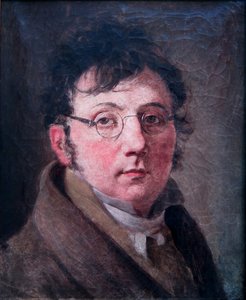
Louis Léopold Boilly
1761 - 1845 , France
Quick Facts
- Artistic Movement Or Style: Genre painting, Portraiture
- Artists Who Influenced This Artist:
- Gabriel Metsu
- Willem van Mieris
- Gerard ter Borch
- Date Of Birth: July 5, 1761
- Date Of Death: January 4, 1845
- Full Name: Louis Léopold Boilly
- Nationality: French
- Notable Artworks:
- The Suitor's Gift
- Triumph of Marat
- Arrival of a Mail-Coach
- Place Of Birth: La Bassée, France
Related Articles

The Enduring Legacy of Oil on Canvas: Technique, History & Aesthetic Impact
Explore the rich history & techniques of oil painting – from Renaissance masters to Impressionism. Discover pigments, layering methods, and why this timeless medium endures. Expert insights for artists & art enthusiasts.

Oil on Canvas: A Historical & Technical Exploration of a Timeless Artistic Medium
Explore the rich history & enduring techniques of oil painting on canvas. Discover the science behind its longevity, conservation practices, and contemporary relevance. Expert insights for art enthusiasts.

The Enduring Power of Painting: A Historical & Contemporary Exploration of Form and Emotion
Explore the rich history & enduring techniques of oil painting with ArtsDot. Discover masterpieces, learn about art collecting, and find authentic handmade reproductions crafted by skilled artists.
Jacques-Louis David: Neoclassical Ideals & Revolutionary Witness
Explore the life & art of Jacques-Louis David, leading Neoclassical painter of the French Revolution. Discover iconic works like 'The Death of Marat' and his lasting impact on art history. Expert analysis & high-quality reproductions at ArtsDot.
Anne-Louis Girodet: Bridging Neoclassicism & Romanticism with Emotional Truth
Explore the captivating world of Anne-Louis Girodet, a pivotal figure bridging Neoclassicism & Romanticism. Discover his masterpieces and unique artistic vision with ArtsDot.