

 Preview
 Send
Send Share
Share
 Details

 Download
 Similars
 X-Ray
X-Ray Diaporama
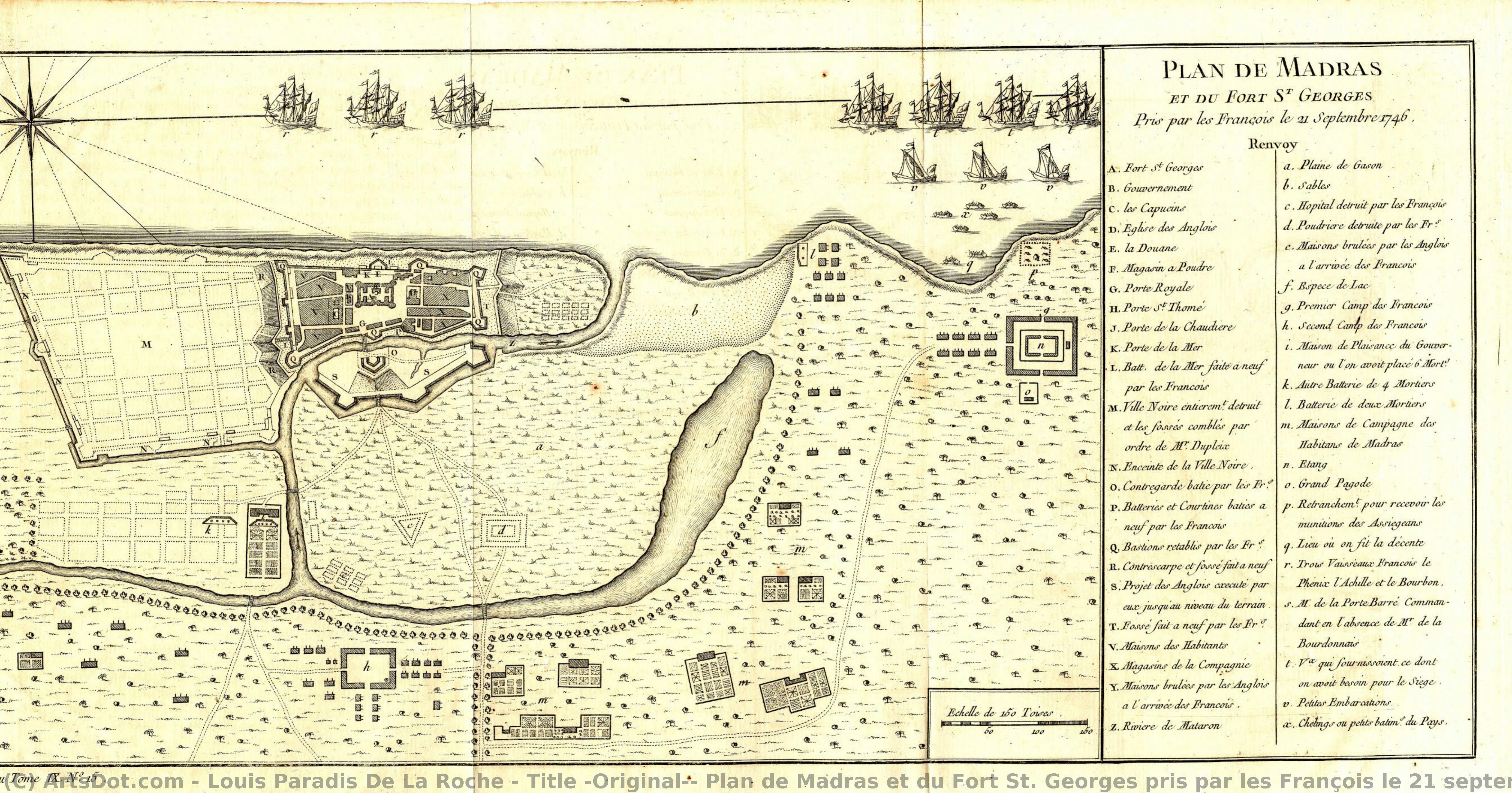
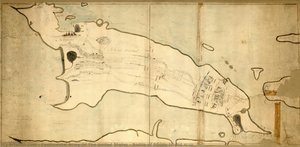
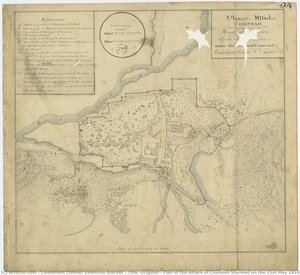
Title (Original): Plan de Madras et du Fort St. Georges pris par les François le 21 septembre 1746
 Engraving
 Early Modern
 16.0 x 32.0 cm
 Kalakriti Archives
 Read More
Purchase a high-resolution, enhanced digital image, far superior to the online preview.
Each file is meticulously prepared by our in-house specialists using advanced tools and expert manual retouching. We ensure every image has exceptional clarity, precise color accuracy, and fine detail.
The final file is delivered via email within 72 hours, optimized for immediate use in professional, editorial, and print environments. This is the same quality trusted by top-tier design studios, publishers, and galleries.
Digital Image
Download a high-resolution file for personal display, printing, and creative projects. ( Buy Print Buy Hand Made Painting)
Included in Every Digital Image Order
Expert Digital Delivery, Guaranteed
When you choose ArtsDot.com, you're not just getting an image - you're receiving a professionally enhanced digital artwork, crafted with precision and backed by a satisfaction guarantee. Here's everything that comes with your order, automatically:

Fast Email Delivery
Your high-resolution digital image file will be emailed to you within 72 hours of ordering - ready for immediate use.

AI-Enhanced Digital File
Your artwork is professionally optimized using advanced AI tools and manual editing, ensuring maximum detail, clarity, and color accuracy.

Free Lifetime Re-Delivery
Accidentally deleted or lost your file? No worries - we'll resend it to you anytime, free of charge.

No Import Fees - Ever
Enjoy your artwork instantly with zero customs, duties, or delivery fees - digital downloads are always tax-free.

Color Accuracy Guarantee
We ensure your digital image reflects the original colors as closely as possible using professional tools and color management.

60-Day Satisfaction Guarantee
If you're not satisfied with your digital image, we'll revise it or refund 100% within 60 days - no questions asked.

100% Money-Back Guarantee
Not satisfied? Get a full refund within 60 days of receiving your digital file - no questions asked.

Bulk Order Discounts
Buy 3 images, save 10% - Buy 5, save 15% - Buy 10+, save 20%. Great for creative projects, galleries, and agencies.
Collectible Description
Related Artworks

Artist Biography
Louis Paradis de la Roche: Cartographer of Colonial India
Louis Paradis de la Roche (1701-1748) stands as a fascinating figure in the annals of 18th-century French art and military history. Born in Landau in der Pfalz, France, he emerged from a lineage steeped in engineering prowess—his father served as a military engineer—a heritage that profoundly shaped his own trajectory toward a life dedicated to precision and observation. While biographical details remain scarce, evidence suggests a formative education focused on the practical arts of surveying and mapmaking, skills honed during his early career within the Compagnie française des indes orientales, France’s ambitious trading company venturing into the vast expanse of colonial India.- Early Life & Career: Paradis’s familial connection to military engineering instilled in him a disciplined mindset and an aptitude for technical pursuits. Though specifics regarding his upbringing are elusive, it is understood that he received training mirroring that of his father, preparing him for service within the Compagnie française des indes orientales.
- Service with the Compagnie Française des Indes Orientales: Joining this influential organization marked a pivotal moment in Paradis’s life. He was dispatched to India, where he undertook diverse projects—ranging from fortifications to topographical surveys—demonstrating his versatility and commitment to advancing scientific knowledge alongside military preparedness.
- The Fall of Madras: A Masterpiece of Cartographic Detail: Paradis’s most enduring legacy resides in his meticulously crafted plan of the siege of Madras, undertaken in 1746. This ambitious undertaking wasn't merely a depiction of military strategy; it was an attempt to comprehensively document the events unfolding on the battlefield. Printed alongside a manuscript map, the plan served as invaluable context for understanding the strategic considerations guiding French forces during this crucial confrontation.
Artistic Contributions & Technique
Paradis’s artistic contribution transcends mere technical skill; it embodies a commitment to conveying complex information with remarkable clarity and accuracy. His plan of Madras exemplifies his mastery of cartographic technique—a discipline characterized by meticulous measurement, precise drafting, and the skillful application of perspective to represent three-dimensional space on a two-dimensional surface. Like many artists of his era, Paradis drew inspiration from classical traditions, particularly those emphasizing geometric rigor and idealized representation. Comparisons with Karl Pavlovich Bryullov’s monumental painting “Genserich’s Invasion of Rome” illuminate shared stylistic sensibilities—a dedication to capturing the grandeur and drama of historical narratives through carefully considered composition and color palettes.- Cartographic Precision: Paradis's plan showcases a profound understanding of cartographic principles. The detailed depiction of fortifications, troop positions, and terrain features underscores his commitment to conveying factual information with unparalleled accuracy—a hallmark of the era’s finest mapmakers.
- Influence of Classical Tradition: Similar to Bryullov's artistic endeavors, Paradis’s work reflects a fascination with classical ideals of beauty and proportion. This stylistic influence contributed to the overall aesthetic quality of his maps, elevating them beyond mere functional instruments.
Museum Collections & Historical Significance
Louis Paradis de la Roche's artistic legacy continues to resonate within museum collections worldwide. Notably, his plan of Madras resides in the musée flaubert - d’histoire de la médecine in rouen, france—a testament to its enduring value as a historical artifact and visual record of military conflict. Furthermore, it graces the château de vaux-le-vicomte, a baroque masterpiece showcasing an impressive assemblage of artworks by luminaries such as Charles le Brun. Paradis's contribution to the documentation of colonial India underscores his role in shaping our understanding of European expansion during the Enlightenment—a period marked by intellectual curiosity and artistic innovation.
louis paradis de la roche
1701 - 1748 , France
Quick Facts
- Artistic Movement Or Style: Cartography
- Artists Or Movements Influenced By This Artist: ['Karl Pavlovich Bryullov']
- Date Of Birth: 1701
- Date Of Death: 1748
- Full Name: Louis Paradis de la Roche
- Nationality: French
- Notable Artworks: ['Plan of the Fall of Madras']
- Place Of Birth: Landau in der Pfalz, France

