 Preview
 Send
Send Share
Share
 Details

 Download
 Similars
 X-Ray
X-Ray Diaporama
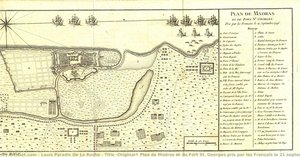
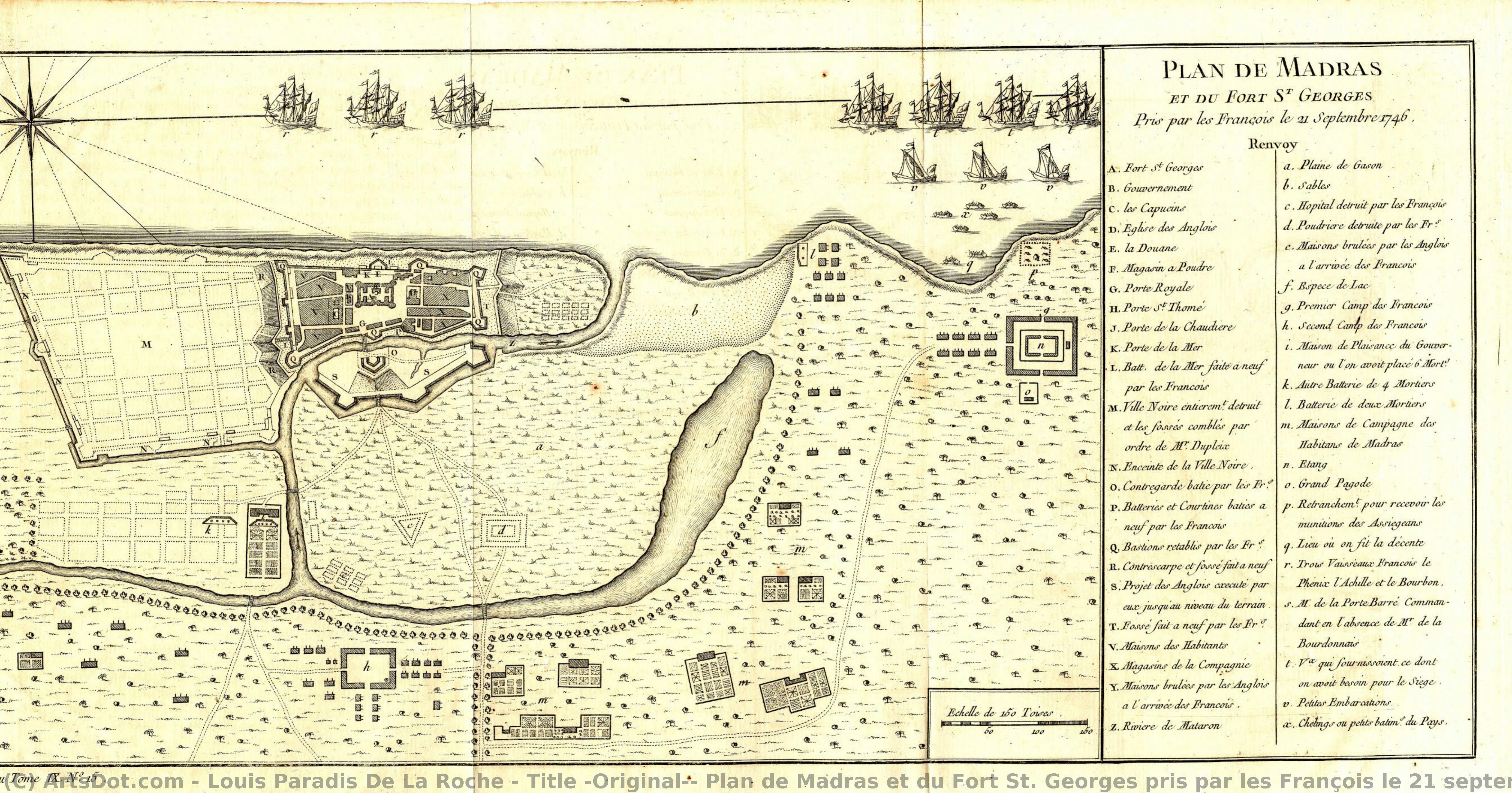
Title (Original): Plan de Madras et du Fort St. Georges pris par les François le 21 septembre 1746
 Engraving
 Early Modern
 16.0 x 32.0 cm
 Kalakriti Archives
 Read More
Hand Made Oil Reproduction
Hand-painted oil on canvas in your size and frame, made to order by our artists. ( Buy Print Buy Image)




P118B $10

P118H $10

P118W $10

P438Z $10

P508JH $12

P508YH $12

P805H $10

P805Z $10

P919BZ $10

P919G $10

P919XJ $10

P959ZH $10

P968JZ $12

W106C $8

W218G $10

W218JH $8

W218Y $10

W307PJ $10

W316G $10

W316PJ $8

W316Y $10

W398PJ $8

W4111J $10

W500HY $15

W500JH $15

W692G $12

W849H $8

W940BG $15

W953PJ $8




Pick from our preset sizes that match the artwork's original proportions.

You may enter your own dimensions to fit a specific frame or space. If your selected size does not match the original image's proportions, we will either crop the artwork or extend the painting with additional hand-painted elements. A digital mockup will be sent for your approval before production begins.
Please note that the on-screen preview does not reflect the actual cropping or extension. Only the mockup will accurately show the final composition.
While custom sizes are available, we recommend selecting a dimension from the predefined list to preserve the original proportions.
After order, ArtsDot.com team will email client for instructions and provide a mockup preview
Worldwide Delivery () in 3/4 weeks instead of standard 5 weeks. (23 August). No compromise on quality.

Free Worldwide Express Shipping

High-Quality Linen Canvas

Full Shipping Insurance

Customs Tax Refund Guarantee

True Color Matching Guarantee

60-Day Return Policy (Defects Only)

100% Money-Back Guarantee

Bulk Discount Offer
 Glass option is only available in size under 110 CM

Title (Original): Plan de Madras et du Fort St. Georges pris par les François le 21 septembre 1746
Reproduction Medium
Reproduction Size
-


Total Price
$ 263
Artwork Description
Related Artworks

Artist Biography
Louis Paradis de la Roche: Cartographer of Colonial India
Louis Paradis de la Roche (1701-1748) stands as a fascinating figure in the annals of 18th-century French art and military history. Born in Landau in der Pfalz, France, he emerged from a lineage steeped in engineering prowess—his father served as a military engineer—a heritage that profoundly shaped his own trajectory toward a life dedicated to precision and observation. While biographical details remain scarce, evidence suggests a formative education focused on the practical arts of surveying and mapmaking, skills honed during his early career within the Compagnie française des indes orientales, France’s ambitious trading company venturing into the vast expanse of colonial India.- Early Life & Career: Paradis’s familial connection to military engineering instilled in him a disciplined mindset and an aptitude for technical pursuits. Though specifics regarding his upbringing are elusive, it is understood that he received training mirroring that of his father, preparing him for service within the Compagnie française des indes orientales.
- Service with the Compagnie Française des Indes Orientales: Joining this influential organization marked a pivotal moment in Paradis’s life. He was dispatched to India, where he undertook diverse projects—ranging from fortifications to topographical surveys—demonstrating his versatility and commitment to advancing scientific knowledge alongside military preparedness.
- The Fall of Madras: A Masterpiece of Cartographic Detail: Paradis’s most enduring legacy resides in his meticulously crafted plan of the siege of Madras, undertaken in 1746. This ambitious undertaking wasn't merely a depiction of military strategy; it was an attempt to comprehensively document the events unfolding on the battlefield. Printed alongside a manuscript map, the plan served as invaluable context for understanding the strategic considerations guiding French forces during this crucial confrontation.
Artistic Contributions & Technique
Paradis’s artistic contribution transcends mere technical skill; it embodies a commitment to conveying complex information with remarkable clarity and accuracy. His plan of Madras exemplifies his mastery of cartographic technique—a discipline characterized by meticulous measurement, precise drafting, and the skillful application of perspective to represent three-dimensional space on a two-dimensional surface. Like many artists of his era, Paradis drew inspiration from classical traditions, particularly those emphasizing geometric rigor and idealized representation. Comparisons with Karl Pavlovich Bryullov’s monumental painting “Genserich’s Invasion of Rome” illuminate shared stylistic sensibilities—a dedication to capturing the grandeur and drama of historical narratives through carefully considered composition and color palettes.- Cartographic Precision: Paradis's plan showcases a profound understanding of cartographic principles. The detailed depiction of fortifications, troop positions, and terrain features underscores his commitment to conveying factual information with unparalleled accuracy—a hallmark of the era’s finest mapmakers.
- Influence of Classical Tradition: Similar to Bryullov's artistic endeavors, Paradis’s work reflects a fascination with classical ideals of beauty and proportion. This stylistic influence contributed to the overall aesthetic quality of his maps, elevating them beyond mere functional instruments.
Museum Collections & Historical Significance
Louis Paradis de la Roche's artistic legacy continues to resonate within museum collections worldwide. Notably, his plan of Madras resides in the musée flaubert - d’histoire de la médecine in rouen, france—a testament to its enduring value as a historical artifact and visual record of military conflict. Furthermore, it graces the château de vaux-le-vicomte, a baroque masterpiece showcasing an impressive assemblage of artworks by luminaries such as Charles le Brun. Paradis's contribution to the documentation of colonial India underscores his role in shaping our understanding of European expansion during the Enlightenment—a period marked by intellectual curiosity and artistic innovation.
louis paradis de la roche
1701 - 1748 , France
Quick Facts
- Artistic Movement Or Style: Cartography
- Artists Or Movements Influenced By This Artist: ['Karl Pavlovich Bryullov']
- Date Of Birth: 1701
- Date Of Death: 1748
- Full Name: Louis Paradis de la Roche
- Nationality: French
- Notable Artworks: ['Plan of the Fall of Madras']
- Place Of Birth: Landau in der Pfalz, France
Related Articles

White on Canvas: 10 Masterpieces & Timeless Elegance for Your Home Decor
Explore 10 iconic white paintings by Monet, Whistler & Rothko! Discover the stories behind these serene masterpieces and their impact on art history. Find museum-quality reproductions for your home decor at .

Dark Masterpieces: 10 Iconic Paintings Dominated by Black Tones |
Explore 10 iconic paintings dominated by black tones, from Rembrandt’s chiaroscuro to Goya's dark expressions. Discover the stories behind these masterpieces & find museum-quality art reproductions for your home at .
Engraving's Golden Age: 10 Masterpieces That Redefined Art | ArtsDot
Journey through art history with our Top 10 Legendary Engravings! Explore masterpieces by Dürer, Rembrandt & Goya. Discover the stories behind these iconic prints and find museum-quality reproductions for your home at ArtsDot.com.
Engraving: A Historical Survey of Technique, Artistic Expression & Enduring Legacy
Explore the rich history of engraving with ArtsDot. Discover techniques, iconic artists like Dürer & Callot, collecting tips, and expert guidance for preserving your art investment. Learn about intaglio printing & more!

Monochrome Visions: Exploring the Aesthetic & Historical Significance of Black & White Photography
Explore the rich history & artistic power of black and white photography. From early techniques to iconic masters like Ansel Adams, discover why monochrome continues to captivate art lovers today. Expert insights for collectors.