 Preview
 Send
Send Share
Share
 Details

 Download
 Similars
 X-Ray
X-Ray Diaporama
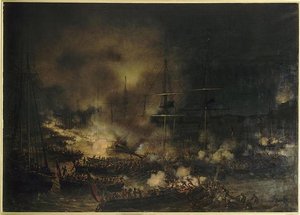
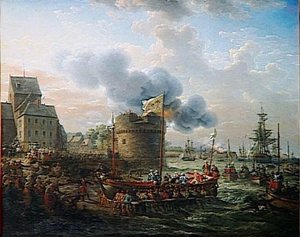
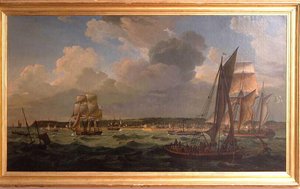
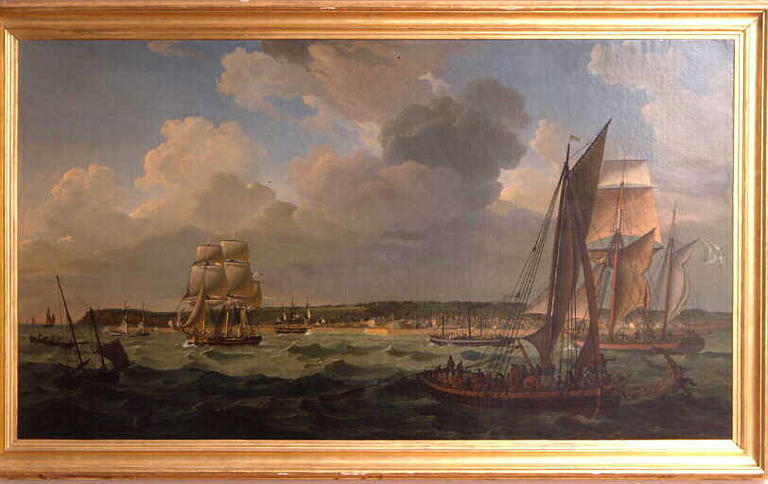
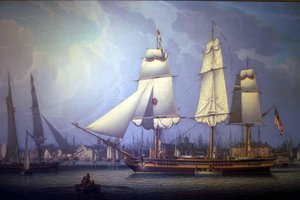
Le Havre vu de la mer

 Read More
Hand Made Oil Reproduction
Hand-painted oil on canvas in your size and frame, made to order by our artists. ( Buy Print Buy Image)




































Pick from our preset sizes that match the artwork's original proportions.

You may enter your own dimensions to fit a specific frame or space. If your selected size does not match the original image's proportions, we will either crop the artwork or extend the painting with additional hand-painted elements. A digital mockup will be sent for your approval before production begins.
Please note that the on-screen preview does not reflect the actual cropping or extension. Only the mockup will accurately show the final composition.
While custom sizes are available, we recommend selecting a dimension from the predefined list to preserve the original proportions.
After order, ArtsDot.com team will email client for instructions and provide a mockup preview
Worldwide Delivery () in 3/4 weeks instead of standard 5 weeks. (22 August). No compromise on quality.

Free Worldwide Express Shipping

High-Quality Linen Canvas

Full Shipping Insurance

Customs Tax Refund Guarantee

True Color Matching Guarantee

60-Day Return Policy (Defects Only)

100% Money-Back Guarantee

Bulk Discount Offer
 Glass option is only available in size under 110 CM

Le Havre vu de la mer
Reproduction Medium
Reproduction Size
-


Total Price
$ 313
Related Artworks
Artist Biography
Louis-Philippe Crépin: A Master of the Turbulent Sea
Louis-Philippe Crépin (1772 – 1851) stands as a pivotal figure in French marine painting, a period marked by both romantic fervor and burgeoning scientific observation. More than simply depicting ships at sea, Crépin’s canvases capture the raw power of nature, the drama of naval battles, and the psychological intensity of human experience confronting the elements. His legacy rests not only on his technical skill – meticulously rendered details combined with dynamic compositions – but also on his role as one of the first officially recognized “Peintres de la Marine,” a distinction that cemented his place within the French artistic establishment.
Born in Paris, Crépin’s early life was far removed from the world of maritime art. He began his career as a sailor, gaining invaluable experience as a helmsman and gabier – a crucial role responsible for managing the ship's sails. This practical knowledge, combined with a nascent artistic talent nurtured under the tutelage of renowned landscape painter Hubert Robert and marine artist Joseph Vernet, provided him with a unique perspective. Robert’s influence is particularly evident in Crépin’s early works, characterized by a meticulous attention to detail and a fascination with light and shadow; Vernet instilled within him an understanding of capturing the essence of the sea – its moods, textures, and relentless energy.
The Rise as a Peintre de la Marine
The appointment of Crépin as one of France’s first “Peintres de la Marine” in 1830 marked a significant turning point. This official recognition, bestowed by the Minister of the Navy and Colonies, Laurent de Gouvion Saint-Cyr, provided him with unprecedented access to naval subjects and commissions. However, this position was not without its complexities. The role of “painter to the Admiral” had already been awarded to Louis Garneray, leading to a somewhat diminished status for Crépin within the official hierarchy. Despite this setback, he persevered, securing numerous contracts to depict significant naval engagements and historical events related to France’s maritime past.
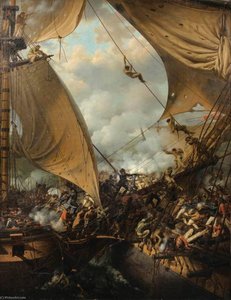
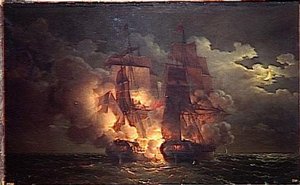
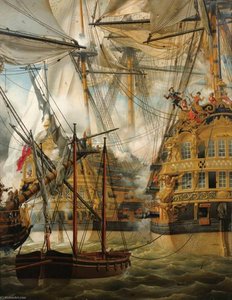
Crucially, Crépin's work during this period was deeply intertwined with the political climate of Restoration France. His paintings served as powerful propaganda tools, glorifying the Bourbon monarchy and celebrating French naval victories. The most famous example is undoubtedly “Combat de la frégate française La Bayonnaise contre la frégate anglaise l’Embuscade 14 décembre 1798,” commissioned by Napoleon himself for display at the Tuileries Palace. This dramatic depiction of a fierce naval battle, replete with billowing sails and cannon fire, became an enduring symbol of French military prowess. Later, after the restoration of Louis XVIII, the painting was moved to Versailles, further solidifying its association with the restored monarchy.
A Palette of Storms: Style and Technique
Crépin’s artistic style is characterized by a dramatic Romanticism, infused with a keen sense of realism. He eschewed idealized depictions of naval life in favor of portraying the brutal realities of combat – the splintering wood, the chaos of battle, and the vulnerability of sailors facing the unforgiving sea. His compositions are often dynamic and asymmetrical, creating a powerful sense of movement and tension. He masterfully employed chiaroscuro—the dramatic contrast between light and dark—to heighten the emotional impact of his scenes, emphasizing the drama of the moment.
His technique was equally impressive. Crépin meticulously rendered every detail – from the intricate rigging of a ship to the expressions on the faces of the sailors – demonstrating an extraordinary level of observation and skill. He frequently worked en plein air (outdoors), allowing him to directly capture the changing light and atmosphere of the sea. This commitment to realism, combined with his expressive brushwork, resulted in paintings that are both visually stunning and emotionally resonant.
Notable Works and Legacy
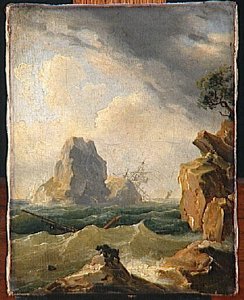
Beyond “Combat de la frégate française La Bayonnaise contre la frégate anglaise l’Embuscade 14 décembre 1798,” Crépin produced a substantial body of work, including "Le Havre vu de la mer," a captivating depiction of the port city bathed in atmospheric light; “Le Chien du naufrage” – a haunting image of a shipwrecked sailor clinging to a piece of driftwood; and numerous other scenes depicting naval battles, coastal landscapes, and maritime life. His paintings are now housed in prestigious collections such as the Musée National de la Marine in Paris and the Palace of Versailles.
Louis-Philippe Crépin’s contribution to French art is significant not only for his technical skill but also for his role in establishing marine painting as a legitimate genre within the official artistic establishment. He remains an important figure in the history of 19th-century French art, a testament to the power of observation, dramatic composition, and the enduring allure of the sea.
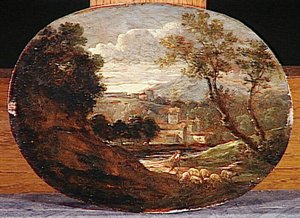
louis philippe crepin
1772 - 1851
Quick Facts
- Artistic Movement Or Style: Marine painting
- Artists Who Influenced This Artist: ['Joseph Vernet, Hubert Robert],\n "Artists or movements influenced by this artist": ["Romanticism"]\n}']
- Date Of Birth: 1772
- Date Of Death: 1851
- Full Name: Louis-Philippe Crépin
- Nationality: French
- Notable Artworks:
- Combat Naval Devant Boulogne
- Le Havre vu de la mer
- Le Chien du naufrage
- Place Of Birth: Paris, France
Related Articles

Giclée Prints: Archival Quality & Aesthetic Nuances for the Discerning Collector
Explore the world of giclée prints with ArtsDot. Learn about archival quality, aesthetic nuances & investment potential. Expert guidance for discerning art collectors seeking museum-quality reproductions and lasting value.
The Allure of the Horizon: A Comprehensive Exploration of Seascape Art Through History & Emotion
Explore the captivating world of seascape art! Discover its history, key artists & movements – from Dutch Masters to Impressionism. Expert insights for collectors and enthusiasts at ArtsDot.

The Enduring Legacy of Fine Art Prints: Technique, History & Aesthetic Impact
Explore the rich history & techniques of fine art prints. Discover investment potential, assess authenticity, and learn how to preserve your collection with expert guidance. Trusted insights for discerning collectors.

Echoes of Time: Exploring the Enduring Appeal & Historical Context of Vintage Art Prints
Explore the captivating world of vintage art prints! Discover their history, collecting tips & enduring appeal. Expert insights on chromolithography and building a legacy collection with ArtsDot.
The Enduring Legacy of Printmaking: Techniques, Themes & Artistic Innovation Across Centuries
Explore the rich history of printmaking with ArtsDot. Discover techniques from intaglio to lithography, learn about collecting valuable prints & find museum-quality reproductions. Expert insights for art enthusiasts and collectors.