 Preview
 Send
Send Share
Share
 Details

 Download
 Similars
 X-Ray
X-Ray Diaporama
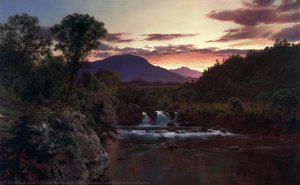
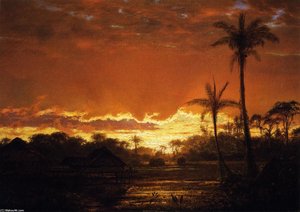
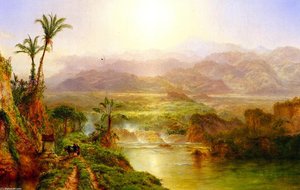
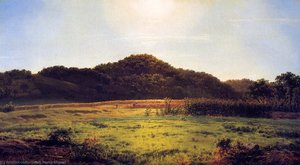
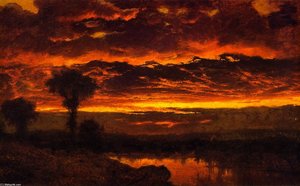
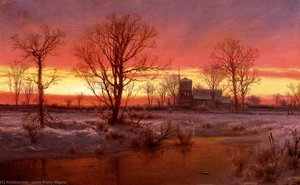
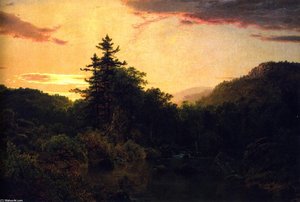
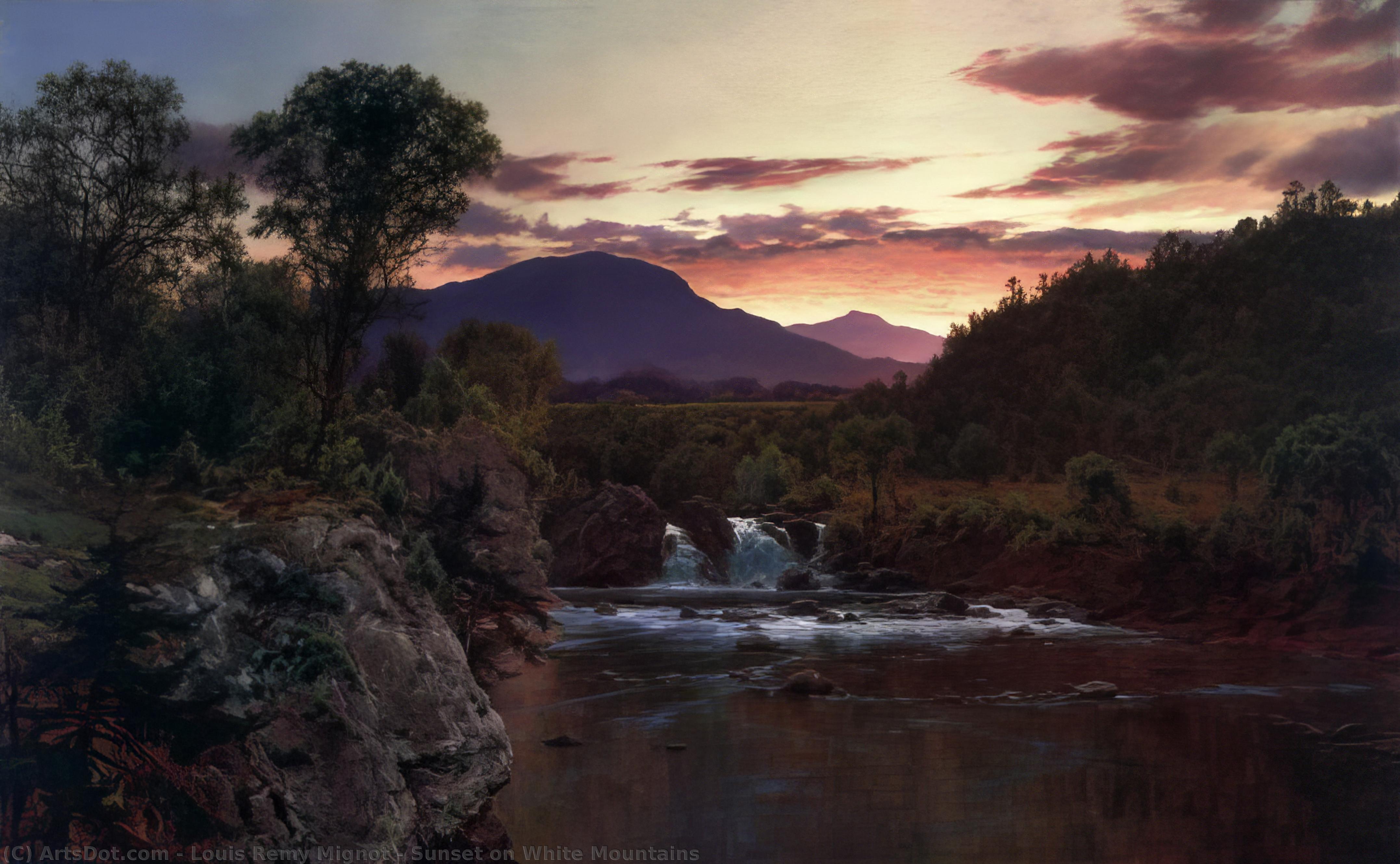
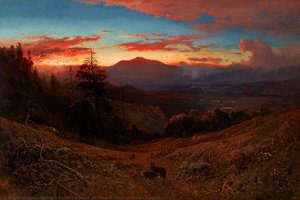
Sunset on White Mountains


 Read More
Hand Made Oil Reproduction
Hand-painted oil on canvas in your size and frame, made to order by our artists. ( Buy Print Buy Image)




































Pick from our preset sizes that match the artwork's original proportions.

You may enter your own dimensions to fit a specific frame or space. If your selected size does not match the original image's proportions, we will either crop the artwork or extend the painting with additional hand-painted elements. A digital mockup will be sent for your approval before production begins.
Please note that the on-screen preview does not reflect the actual cropping or extension. Only the mockup will accurately show the final composition.
While custom sizes are available, we recommend selecting a dimension from the predefined list to preserve the original proportions.
After order, ArtsDot.com team will email client for instructions and provide a mockup preview
Worldwide Delivery () in 3/4 weeks instead of standard 5 weeks. (16 August). No compromise on quality.

Free Worldwide Express Shipping

High-Quality Linen Canvas

Full Shipping Insurance

Customs Tax Refund Guarantee

True Color Matching Guarantee

60-Day Return Policy (Defects Only)

100% Money-Back Guarantee

Bulk Discount Offer
 Glass option is only available in size under 110 CM

Sunset on White Mountains
Reproduction Medium
Reproduction Size
-


Total Price
$ 263
Related Artworks
Artist Biography
The Ethereal Landscapes of Louis Rémy Mignot
In the vast, sweeping annals of nineteenth-century American art, certain names resonate with the thunderous grandeur of a mountain peak, while others whisper with the quiet intimacy of a forest glade. Louis Rémy Mignot (1831–1870) belongs to that second, more evocative category—a painter whose work captures the profound stillness and atmospheric mystery of the natural world. Born in South Carolina, Mignot emerged from the American South to find his artistic voice within the prestigious traditions of the Hudson River School. Though his life was tragically short, his canvases serve as luminous windows into a bygone era, where the boundaries between reality and Romantic idealism were beautifully blurred.
Mignot’s artistic identity was forged through a unique blend of American heritage and European refinement. While his roots lay in the Southern United States, his formative training took him to the heart of the art world: Paris. It was in the studios of France that he encountered the transformative influence of luminists such as Jean-Baptiste Camille Corot and the expressive, emotive brushwork of Eugène Delacroix. This exposure to French atmospheric perspective allowed Mignot to return to the Americas with a sophisticated technique, capable of rendering not just the physical landscape, but the very air that surrounds it. He mastered the art of subtle gradations and a luminous color palette, often utilizing deep blues and verdant greens to create a palpable sense of depth and moisture within his compositions.
A Mastery of Light and Atmosphere
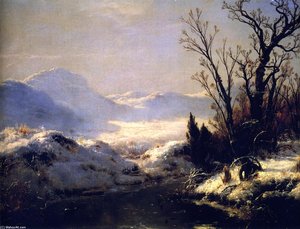
The essence of Mignot’s oeuvre lies in his ability to elevate the commonplace into the sublime. His work is characterized by a profound commitment to the tenets of the Hudson River School, yet he infused these landscapes with a personal, contemplative touch. In his celebrated 1855 work, "Solitude," the viewer is invited into a space of quiet introspection, where the landscape becomes a mirror for the human soul. Similarly, his 1856 masterpiece, "Snow Scene," demonstrates his technical prowess in capturing the weight and texture of winter; through the depiction of a tranquil, snow-dusted landscape featuring a solitary dog, he achieves a harmonious balance between stark realism and Romantic sentiment.
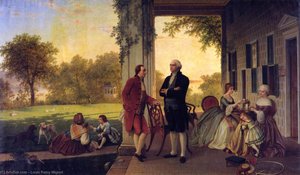
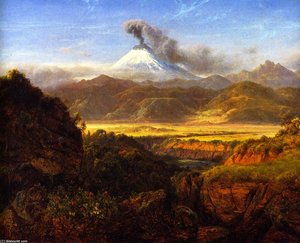
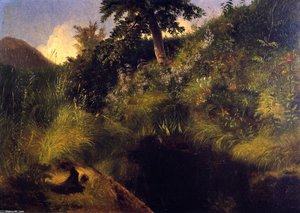
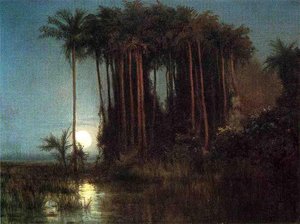
Beyond the quietude of forests and valleys, Mignot also demonstrated a remarkable versatility in handling historical and topographical subjects. His 1859 painting, "Washington and Lafayette at Mount Vernon," showcases a different facet of his talent—a Neoclassical precision used to honor American history. In this work, the meticulous detail serves to ground the legendary figures in a tangible, dignified reality. Whether he was capturing the sweeping vistas of New York, such as his view across the Valley of Pierstorn, or exploring more exotic, tropical themes reminiscent of his travels, Mignot remained a master of light, using it to breathe life into every leaf, shadow, and horizon line.
Legacy and Rediscovery
Though the mid-nineteenth century saw many artists rise to sudden fame, Mignot’s legacy underwent a period of quietude, as much of his work remained tucked away in private collections or overshadowed by more prolific contemporaries. However, the enduring power of his vision has led to a modern rediscovery. Today, art historians and enthusiasts alike look to Mignot not merely as a follower of the Hudson River School, but as a distinct voice capable of conveying the profound emotional resonance of nature. His ability to blend the meticulous detail of American realism with the atmospheric soul of French Romanticism ensures that his place in the tapestry of American art history is both secure and deeply moving.
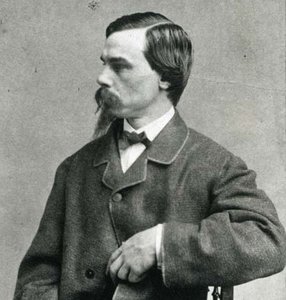
Louis Remy Mignot
1831 - 1870 , United States of America
Quick Facts
- Artistic Movement Or Style: Hudson River School
- Artists Or Movements Influenced By This Artist: ['Romantic Landscape']
- Artists Who Influenced This Artist: ['Frederic Church']
- Date Of Birth: February 3, 1831
- Date Of Death: September 22, 1870
- Full Name: Louis Rémy Mignot
- Nationality: American
- Notable Artworks:
- Snow Scene
- Washington and Lafayette at Mount Vernon
- Solitude
- Place Of Birth: South Carolina, United States
Related Articles
Hudson River School: 10 Masterpieces That Capture America's Wild Beauty | ArtsDot
Journey through America's breathtaking landscapes with our guide to the Top 10 Hudson River School masterpieces. Explore Thomas Cole, Frederic Church & more! Find museum-quality art reproductions and elevate your home decor at ArtsDot.com.

The Sublime Landscape: Exploring the Hudson River School Movement
Explore the captivating world of the Hudson River School! Discover the history, artists, and defining characteristics of this iconic American art movement. Learn about Romanticism's influence & find inspiration for your collection.

Robert Spencer: Luminism, Narrative & the American Landscape Tradition
Explore the captivating world of Luminism & the Hudson River School with our expert analysis. Discover the history, artists, and enduring beauty of 19th-century American landscape painting. Find museum-quality reproductions at ArtsDot.

Beyond the Horizon: 10 Landscape Masterpieces for Your Home Decor
Journey through 10 breathtaking landscape paintings by Monet, Van Gogh & more! Explore iconic artworks, artistic techniques & find inspiration for your home decor. Museum-quality reproductions at ArtsDot.com. Discover all masterpieces on ArtsDot.com

Echoes of Arcadia: Nostalgia & Transformation in Vintage Landscape Art
Explore the evocative world of vintage landscape art! Discover the history, artists & emotional power behind masterpieces from the Hudson River School & beyond. Expert insights for collectors & enthusiasts.