 Preview
 Send
Send Share
Share
 Details

 Download
 Similars
 X-Ray
X-Ray Diaporama
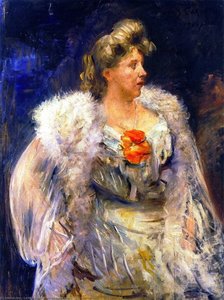
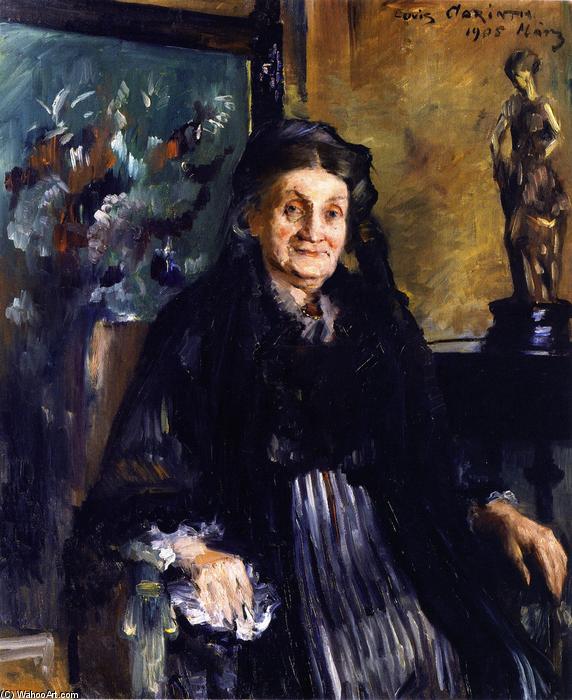
Frau Marie Moll
 Acrylic On Canvas
- WallArt
- Bridging Impressionism & Expressionism
 1905
1905- 19th Century
 Austrian Gallery Belvedere
 Read More
Hand Made Oil Reproduction
Hand-painted oil on canvas in your size and frame, made to order by our artists. ( Buy Print Buy Image)




P118B $10

P118H $10

P118W $10

P438Z $10

P508JH $12

P508YH $12

P805H $10

P805Z $10

P919BZ $10

P919G $10

P919XJ $10

P959ZH $10

P968JZ $12

W106C $8

W218G $10

W218JH $8

W218Y $10

W307PJ $10

W316G $10

W316PJ $8

W316Y $10

W398PJ $8

W4111J $10

W500HY $15

W500JH $15

W692G $12

W849H $8

W940BG $15

W953PJ $8




Pick from our preset sizes that match the artwork's original proportions.

You may enter your own dimensions to fit a specific frame or space. If your selected size does not match the original image's proportions, we will either crop the artwork or extend the painting with additional hand-painted elements. A digital mockup will be sent for your approval before production begins.
Please note that the on-screen preview does not reflect the actual cropping or extension. Only the mockup will accurately show the final composition.
While custom sizes are available, we recommend selecting a dimension from the predefined list to preserve the original proportions.
After order, ArtsDot.com team will email client for instructions and provide a mockup preview
Worldwide Delivery () in 3/4 weeks instead of standard 5 weeks. (16 August). No compromise on quality.

Free Worldwide Express Shipping

High-Quality Linen Canvas

Full Shipping Insurance

Customs Tax Refund Guarantee

True Color Matching Guarantee

60-Day Return Policy (Defects Only)

100% Money-Back Guarantee

Bulk Discount Offer
 Glass option is only available in size under 110 CM

Frau Marie Moll
Reproduction Medium
Reproduction Size
-


Total Price
$ 263
Artwork Description
Frau Marie Moll: A Portrait of Quiet Strength
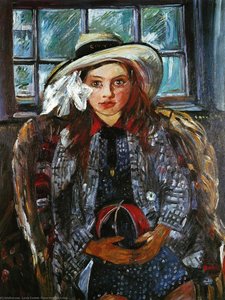
Lovis Corinth’s “Frau Marie Moll,” painted in 1905, isn't merely a portrait; it’s a carefully constructed tableau of domesticity and understated dignity. The work immediately draws the eye to its subject – a woman seated by a window, her gaze direct and contemplative. She is not posed dramatically or adorned with extravagant jewelry, yet she possesses an undeniable presence, radiating a quiet strength that speaks volumes about her life and character. Corinth, a master of capturing fleeting moments and emotional resonance, has rendered this ordinary scene into something profoundly moving.
The painting’s style firmly places it within the burgeoning Expressionist movement, though with a distinctly personal stamp. Corinth moved away from purely academic realism, embracing bolder colors, looser brushstrokes, and an emphasis on conveying inner feeling rather than simply replicating external appearances. Notice how he utilizes light – a warm, diffused glow emanating from the window behind her – to sculpt her face and create a sense of intimacy. The muted palette—primarily browns, grays, and subtle blues—contributes to the painting’s melancholic yet comforting atmosphere. It's a deliberate choice that avoids superficiality, inviting viewers to contemplate the complexities beneath the surface.
The Setting: A Window into Domestic Life
The setting itself is crucial to understanding the work’s meaning. The window isn’t just a backdrop; it’s an active participant in the scene. It frames her face, suggesting both confinement and connection – she's enclosed within her domestic sphere yet simultaneously linked to the world outside. A piano sits quietly in the background, hinting at a life filled with music and perhaps family gatherings. The vases scattered around the room—a simple bouquet of flowers—add a touch of beauty and warmth, reinforcing the theme of home and comfort. Corinth’s meticulous attention to detail – from the texture of the fabrics to the arrangement of objects – creates a believable and deeply evocative interior space.
The inclusion of two statues on either side of the scene adds an intriguing layer of symbolism. These aren't grand, imposing figures; they are small, almost unassuming sculptures, likely representing classical deities or mythological characters. Their presence suggests a connection to tradition, history, and perhaps even a sense of timelessness. Corinth’s placement of them subtly elevates the portrait beyond a simple likeness, transforming it into a meditation on the enduring values of family, faith, and artistic legacy.
Symbolism and Emotional Resonance
“Frau Marie Moll” is rich in symbolic meaning. The handkerchief clutched in her hands speaks to vulnerability and perhaps a recent emotional experience – a moment of sadness or reflection. Her direct gaze challenges the viewer, inviting us to share in her thoughts and feelings. Corinth masterfully captures a sense of quiet dignity and resilience—a woman who has weathered life’s storms with grace and composure. The painting isn't about grand gestures or dramatic displays; it’s about the subtle beauty of everyday moments and the profound strength found within ordinary lives.
Furthermore, considering Corinth’s own life – his struggles with illness, his complex relationships, and his evolving artistic style – adds another layer of depth to the work. “Frau Marie Moll” can be interpreted as a reflection of Corinth's own desire for stability and connection amidst personal turmoil. It’s a poignant reminder that even in moments of uncertainty, beauty and meaning can be found in the simplest of human experiences.
A Timeless Masterpiece
“Frau Marie Moll” remains a powerful testament to Lovis Corinth's artistic vision. Its enduring appeal lies not only in its technical brilliance but also in its ability to evoke profound emotions and invite contemplation. It’s a portrait that transcends the limitations of genre, offering a glimpse into the soul of a woman and a meditation on the complexities of human existence. Whether viewed as a historical document or a purely aesthetic experience, this painting continues to captivate and inspire viewers today.
Related Artworks
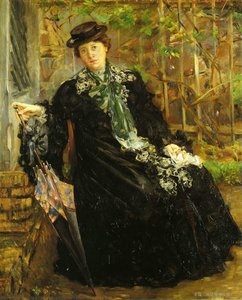
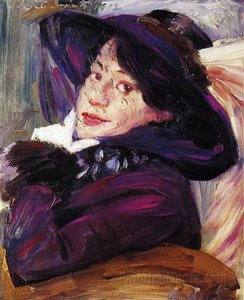
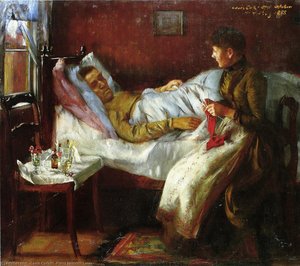
Artist Biography
A Life Forged in Paint: The World of Lovis Corinth
Lovis Corinth, born Franz Heinrich Louis on July 21, 1858, in the Prussian province of East Prussia, was a figure who embodied the tumultuous transition from the 19th to the early 20th-century art world. His journey wasn’t one of immediate acclaim but rather a gradual evolution fueled by relentless study, diverse influences, and ultimately, personal tragedy. Corinth's beginnings were rooted in the rural landscapes of his birthplace, Tapiau, where his father worked as a tanner. This early exposure to the physicality of labor and the raw beauty of nature would subtly permeate his later work, even amidst more sophisticated stylistic explorations. He initially pursued studies at the Academy of Königsberg in 1876, but quickly realized that academic tradition alone wouldn’t satisfy his artistic ambitions. A period of travel followed, taking him to Munich, Antwerp, and finally Paris – each city serving as a crucial stepping stone in his development. In Munich, he absorbed the meticulous realism championed by Ludwig von Löfftz, honing his observational skills and mastering technique. Antwerp introduced him to the dramatic Baroque intensity of Rubens, while Paris exposed him to the burgeoning Impressionist movement, though his initial response was one of cautious observation rather than immediate embrace.From Naturalism to a Synthesis of Styles
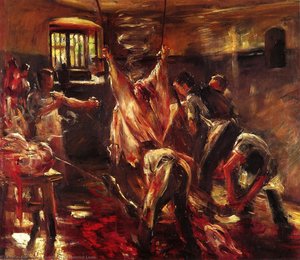
Corinth’s artistic development wasn't marked by swift revolutions but by a gradual assimilation and synthesis of diverse influences. His early work leaned heavily towards naturalism, reflecting the prevailing academic standards of the time. Paintings like “In the Slaughterhouse” (1878), with its unflinching depiction of animal carcasses, demonstrate this commitment to realistic representation, yet even here, a nascent emotional intensity begins to surface. The subject matter itself—gruesome and visceral—hints at a willingness to confront uncomfortable truths, a characteristic that would become increasingly prominent in his later work. His time spent studying the Old Masters, particularly Rubens, instilled in him a love of dynamic composition and expressive brushwork. However, it was his exposure to Impressionism – initially viewed with skepticism – that ultimately proved transformative. He didn’t simply adopt the broken color and fleeting light effects of Monet or Renoir; instead, he integrated these elements into his own unique vision, creating a style that blended impressionistic vibrancy with a distinctly German sensibility. This synthesis would eventually position him as a bridge between Impressionism and Expressionism, two movements that defined the artistic landscape of the early 20th century.A Master of Portraiture and Landscape
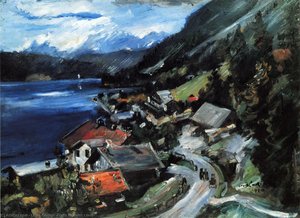
While Corinth explored various genres throughout his career – including biblical scenes and mythological subjects – he is perhaps best remembered for his portraits and landscapes. His portraiture wasn’t merely about capturing physical likeness; it was an attempt to penetrate the psychological depths of his sitters, revealing their inner lives through subtle gestures, expressive eyes, and carefully considered compositions. He possessed a remarkable ability to convey character and emotion with astonishing economy of means. Similarly, his landscapes weren't simply depictions of scenic views but rather emotional responses to nature. The Walchensee region in the Bavarian Alps became a particular source of inspiration, providing him with a wealth of motifs that he explored repeatedly throughout his later years. These paintings are characterized by their bold colors, dynamic brushwork, and a sense of raw energy that reflects Corinth’s own passionate engagement with the natural world. He wasn't interested in idyllic representations; instead, he sought to capture the untamed power and inherent drama of the landscape.Tragedy, Resilience, and Lasting Legacy
A pivotal moment in Corinth’s life – and arguably in his artistic development – was a stroke he suffered in December 1911. The paralysis it caused on his left side threatened to end his career altogether. However, with unwavering determination and the support of his wife, Charlotte Berend-Corinth, he relearned to paint, adapting to his physical limitations and developing an even more expressive style. This period marked a turning point in his work, as his paintings became increasingly bold, gestural, and emotionally charged. The experience of confronting mortality and physical vulnerability infused his art with a new sense of urgency and authenticity. He embraced a looser brushstroke and intensified color palette, anticipating many of the stylistic innovations that would define Expressionism. Corinth’s influence extended beyond his own painting; he was also a respected teacher and writer on art, publishing essays such as “On Learning to Paint” in 1908, offering insights into his artistic philosophy and technical approach. He served as president of the Berlin Secession from 1915 until his death in 1925, championing progressive artistic ideas and fostering a vibrant creative community. Lovis Corinth’s legacy lies not only in his remarkable body of work but also in his unwavering commitment to artistic integrity and his ability to transform personal tragedy into profound artistic expression. He remains a pivotal figure in the history of German art, a master who bridged two eras and left an indelible mark on generations of artists to come.Key Works & Their Significance
- In the Slaughterhouse (1878): A starkly realistic depiction of animal carcasses, showcasing Corinth’s early mastery of technique and his willingness to confront unsettling subjects.
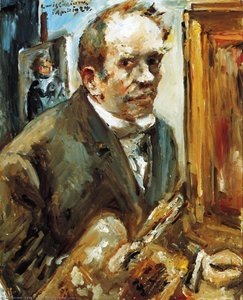
- Self-Portrait (various years): A series of self-portraits created annually on his birthday, offering a fascinating chronicle of the artist's evolving self-perception and artistic style. These works reveal a profound introspection and a fearless exploration of identity.
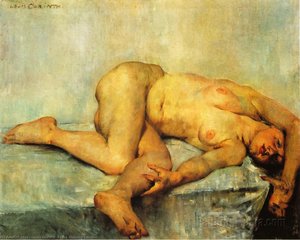
- Female Semi-Nude with Hat (1906): Demonstrates Corinth’s ability to blend classical motifs with impressionistic techniques, creating a sensuous and psychologically compelling portrait.
- Walchensee Series (various years): A collection of landscapes depicting the Walchensee region in Bavaria, characterized by their vibrant colors, dynamic brushwork, and emotional intensity. These paintings represent Corinth’s mature style at its most powerful and expressive.
- The Last Self-Portrait (1924): Painted shortly before his death, this work is a poignant testament to the artist's resilience and unwavering spirit in the face of physical adversity. It embodies the culmination of his artistic journey and serves as a powerful symbol of human endurance.
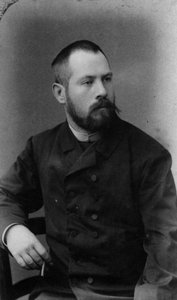
Lovis Corinth
1858 - 1925 , Netherlands
Quick Facts
- Artistic Movement Or Style: Impressionism & Expressionism
- Artists Or Movements Influenced By This Artist: ['Expressionism']
- Artists Who Influenced This Artist:
- Courbet
- Rubens
- Date Of Birth: July 21, 1858
- Date Of Death: July 17, 1925
- Full Name: Franz Heinrich Louis Corinth
- Nationality: German
- Notable Artworks:
- In the Slaughter House
- Self-Portrait
- Female Semi-Nude
- Place Of Birth: Tauwade, Netherlands
Related Articles

The Enduring Legacy of Oil on Canvas: Technique, History & Aesthetic Impact
Explore the rich history & techniques of oil painting – from Renaissance masters to Impressionism. Discover pigments, layering methods, and why this timeless medium endures. Expert insights for artists & art enthusiasts.
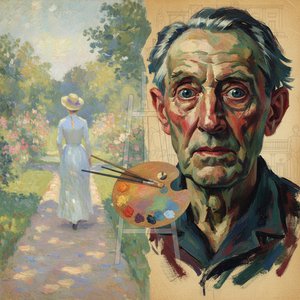
Lovis Corinth: Bridging Impressionism & Expressionism – A Study of Artistic Evolution
Explore the fascinating artistic journey of Lovis Corinth, a pivotal figure bridging Impressionism & Expressionism. Discover his evolution, key works, and lasting impact on modern art with ArtsDot.

Oil on Canvas: A Historical & Technical Exploration of a Timeless Artistic Medium
Explore the rich history & enduring techniques of oil painting on canvas. Discover the science behind its longevity, conservation practices, and contemporary relevance. Expert insights for art enthusiasts.

The Enduring Power of Painting: A Historical & Contemporary Exploration of Form and Emotion
Explore the rich history & enduring techniques of oil painting with ArtsDot. Discover masterpieces, learn about art collecting, and find authentic handmade reproductions crafted by skilled artists.

The Enduring Legacy of Oil on Canvas: Technique, History & Contemporary Practice
Explore the rich history & enduring techniques of oil painting on canvas. Discover the science behind its longevity, conservation practices, and contemporary relevance. Expert insights for art enthusiasts.