

 Preview
 Send
Send Share
Share
 Details

 Download
 Similars
 X-Ray
X-Ray Diaporama
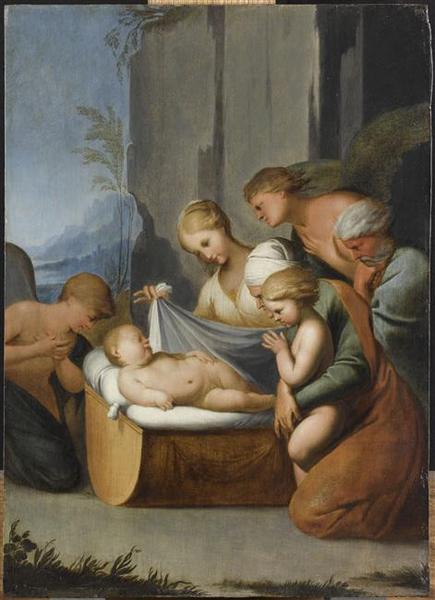
Le sommeil de l'enfant Jésus


 Read More
Purchase a high-resolution, enhanced digital image, far superior to the online preview.
Each file is meticulously prepared by our in-house specialists using advanced tools and expert manual retouching. We ensure every image has exceptional clarity, precise color accuracy, and fine detail.
The final file is delivered via email within 72 hours, optimized for immediate use in professional, editorial, and print environments. This is the same quality trusted by top-tier design studios, publishers, and galleries.
Digital Image
Download a high-resolution file for personal display, printing, and creative projects. ( Buy Print Buy Hand Made Painting)
Included in Every Digital Image Order
Expert Digital Delivery, Guaranteed
When you choose ArtsDot.com, you're not just getting an image - you're receiving a professionally enhanced digital artwork, crafted with precision and backed by a satisfaction guarantee. Here's everything that comes with your order, automatically:

Fast Email Delivery
Your high-resolution digital image file will be emailed to you within 72 hours of ordering - ready for immediate use.

AI-Enhanced Digital File
Your artwork is professionally optimized using advanced AI tools and manual editing, ensuring maximum detail, clarity, and color accuracy.

Free Lifetime Re-Delivery
Accidentally deleted or lost your file? No worries - we'll resend it to you anytime, free of charge.

No Import Fees - Ever
Enjoy your artwork instantly with zero customs, duties, or delivery fees - digital downloads are always tax-free.

Color Accuracy Guarantee
We ensure your digital image reflects the original colors as closely as possible using professional tools and color management.

60-Day Satisfaction Guarantee
If you're not satisfied with your digital image, we'll revise it or refund 100% within 60 days - no questions asked.

100% Money-Back Guarantee
Not satisfied? Get a full refund within 60 days of receiving your digital file - no questions asked.

Bulk Order Discounts
Buy 3 images, save 10% - Buy 5, save 15% - Buy 10+, save 20%. Great for creative projects, galleries, and agencies.
Collectible Description
A Serene Vision of Divine Innocence
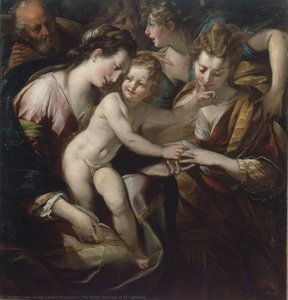
In the quietude of Lubin Baugin’s Le sommeil de l'enfant Jésus, the viewer is invited into a moment of profound stillness, where the weight of the world seems to dissolve into the soft shadows of a sacred night. This masterpiece captures the Christ child in a state of deep, undisturbed slumber, nestled within a simple wooden cradle. The composition is masterfully arranged in a gentle semi-circle, drawing the eye inward toward the central figure of the infant. Surrounding this focal point are figures—perhaps Mary and celestial guardians—whose presence radiates a sense of protective adoration. The atmosphere is one of overwhelming peace, a sanctuary of light and shadow that transcends the boundaries of the canvas to touch the very soul of the observer.
The painting serves as a breathtaking example of the French Baroque style, though it eschews the theatrical turbulence often associated with the era in favor of a more intimate, naturalistic grace. Baugin employs a palette dominated by warm, earthy tones—rich ochres, deep browns, and creamy highlights—that evoke a sense of timelessness and warmth. The lighting is particularly enchanting; rather than harsh, dramatic contrasts, we encounter a soft, diffused glow that seems to emanately from an unseen, divine source. This gentle illumination bathes the skin of the figures in delicate pinks and peaches, while the background fades into a hazy, pastoral landscape, creating a shallow depth of field that keeps our emotional focus firmly planted on the tender scene unfolding in the foreground.
Technique and the Art of Texture
To behold this work is to appreciate the meticulous hand of a master. Baugin’s technique involves a sophisticated layering of colors, allowing for subtle transitions that give the drapery its lifelike weight and the skin its luminous quality. There is a beautiful tactile contrast at play here: the smooth, porcelain-like rendering of the infant's flesh stands in poetic opposition to the rougher, more organic textures of the wooden cradle and the heavy folds of the surrounding fabrics. Every brushstroke serves the purpose of enhancing the realism of the scene, making the soft linens feel tangible and the wooden grain feel weathered by time.
The use of lines in this piece is remarkably fluid; there are no jarring or angular interruptions to the visual flow. Instead, organic shapes and sweeping, soft contours guide the viewer through a landscape of devotion. This lack of structural rigidity contributes significantly to the painting's overall sense of tranquility, making it an ideal centerpiece for those seeking to introduce a sense of calm and classical elegance into a sophisticated interior. For the collector or designer, this piece offers more than mere decoration; it provides a window into a moment of eternal peace.
Symbolism and Emotional Resonance
Beyond its technical brilliance, Le sommeil de l'enfant Jésus is steeped in profound symbolic meaning. The sleeping infant is the ultimate emblem of vulnerability and pure innocence, a symbol that resonates deeply across cultures and eras. The surrounding figures, positioned as sentinels of care, represent the themes of guardianship, faith, and the quiet strength found in devotion. The very act of sleep here becomes a metaphor for the divine rest before the unfolding of a monumental destiny.
For an art lover, this painting offers a meditative experience, inviting a pause in the frantic pace of modern life. For the interior designer, it provides a sophisticated anchor for a room, bringing with it a historical weight and a palette that complements both traditional and contemporary settings. Whether viewed as a religious icon or a triumph of 17th-century French naturalism, Baugin’s work remains a captivating testament to the power of art to evoke reverence, tenderness, and an enduring sense of wonder.
Related Artworks




Artist Biography
Lubin Baugin: A Paradox of French Still Life
Lubin Baugin, a name perhaps less familiar than many of his contemporaries, nevertheless represents a fascinating and quietly innovative figure in 17th-century French art. Born in Pithiviers, France, in 1612 to a prosperous family, Baugin’s life unfolded against the backdrop of a burgeoning artistic landscape, marked by both Renaissance revival and the emerging Baroque style. While he didn't leave behind a vast body of work – perhaps only around thirty paintings are definitively attributed to him – his contributions, particularly within the realm of still life painting, hold considerable significance, challenging conventional notions of artistic practice and offering a unique perspective on the period. His career spanned roughly five decades, from his entry into the St.-Germain-des-Prés guild in 1629 until his death in Paris in 1663, during which time he navigated the evolving tastes and demands of the French court and art market.Early Training and Artistic Development
The details surrounding Baugin’s early artistic training remain somewhat elusive. Unlike many artists of his era who could trace a clear lineage back to a renowned master, there's little documented evidence regarding his apprenticeship. It is believed he received instruction from 1622 to 1628, though the identity of his teacher remains unknown. This lack of formal documentation contributes to the enduring mystery surrounding Baugin’s artistic development and underscores the challenges faced by many artists during this period. Despite this uncertainty, his earliest surviving paintings – a series of meticulously rendered still lifes completed before he reached twenty – reveal a remarkable level of skill and control. These works demonstrate an early mastery of composition, color theory, and the depiction of textures, laying the groundwork for his later explorations of perspective and symbolism.The Paradoxical Style: Still Life vs. Religious Painting
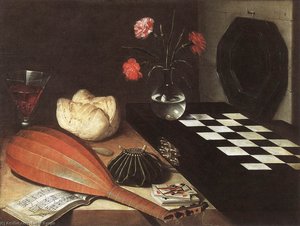
Perhaps the most compelling aspect of Baugin’s artistic legacy lies in the striking contrast between his still life paintings and his religious works. While many artists specialized in a single genre, Baugin seemingly possessed an extraordinary ability to seamlessly transition between these disparate styles. His still lifes, particularly the iconic “Five Senses” (also known as “Chessboard”), are characterized by their off-balance perspective, unconventional arrangements of objects, and a subtle sense of disorientation. Trevor Winkfield aptly describes this approach as “topographical alienation,” drawing parallels with the metaphysical art of Giorgio de Chirico – an influence that has been debated among scholars. These still lifes aren’t merely depictions of inanimate objects; they are carefully constructed visual puzzles designed to engage the viewer's intellect and challenge their perception of space. Conversely, Baugin’s religious paintings—primarily small devotional works featuring the Virgin and Child or scenes from the Holy Family—are imbued with a more traditional Baroque aesthetic. They are characterized by their elegance, grace, and adherence to established artistic conventions. Arnaud Brejon de Lavergnée famously noted this “great paradox” of Baugin's career: an artist who could simultaneously produce rigorously constructed still lifes governed by precise rules and decorative religious paintings. This duality raises intriguing questions about his artistic motivations and the influences that shaped his diverse oeuvre. The fact that his still lifes were signed while his religious works were not further complicates this enigma, suggesting a deliberate strategy on Baugin’s part to highlight the unique qualities of this particular genre.Italian Influence and Parisian Activity
Around 1632-33, Baugin traveled to Italy, settling in Rome for several years. This period undoubtedly served as a crucial formative experience, exposing him to the artistic currents of the Italian Renaissance and Baroque. The influence of masters like Raphael and Parmigianino is evident in his later religious paintings, particularly their refined compositions and elegant figures. Following his time in Rome, Baugin returned to France and worked primarily in Paris until his death in 1663. During this period, he continued to produce both still lifes and religious works, adapting his style to the evolving tastes of the Parisian art market.Legacy and Significance
Despite the relatively small number of surviving paintings attributed to Lubin Baugin, his work holds a significant place in the history of French art. His innovative approach to still life painting—particularly his use of off-balance perspective and unconventional arrangements—prefigured many developments in 18th-century art, influencing artists such as Jean-Siméon Chardin. Furthermore, Baugin’s career exemplifies the artistic fluidity and experimentation that characterized the period, challenging traditional notions of specialization and demonstrating the remarkable versatility of a single artist. His legacy continues to be debated and reinterpreted by scholars today, solidifying his position as a compelling and enigmatic figure in the rich tapestry of 17th-century French art.
Lubin Baugin
1612 - 1663 , France
Quick Facts
- Artistic Movement Or Style: Baroque (Still Life & Religious)
- Artists Or Movements Influenced By This Artist: ['Giorgio de Chirico']
- Artists Who Influenced This Artist:
- Raphael
- Parmigianino
- Date Of Birth: c. 1612, Pithiviers, France
- Date Of Death: 1663, Paris, France
- Full Name: Lubin Baugin
- Nationality: French
- Notable Artworks:
- Still life with Apricots
- Still life with Candlestick
- Still life with Chessboard
- Saint Jerome
- L'enfance de Jupiter
- Place Of Birth: Pithiviers, France

