 Preview
 Send
Send Share
Share
 Details

 Download
 Similars
 X-Ray
X-Ray Diaporama
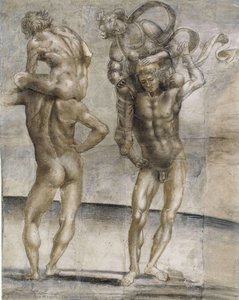
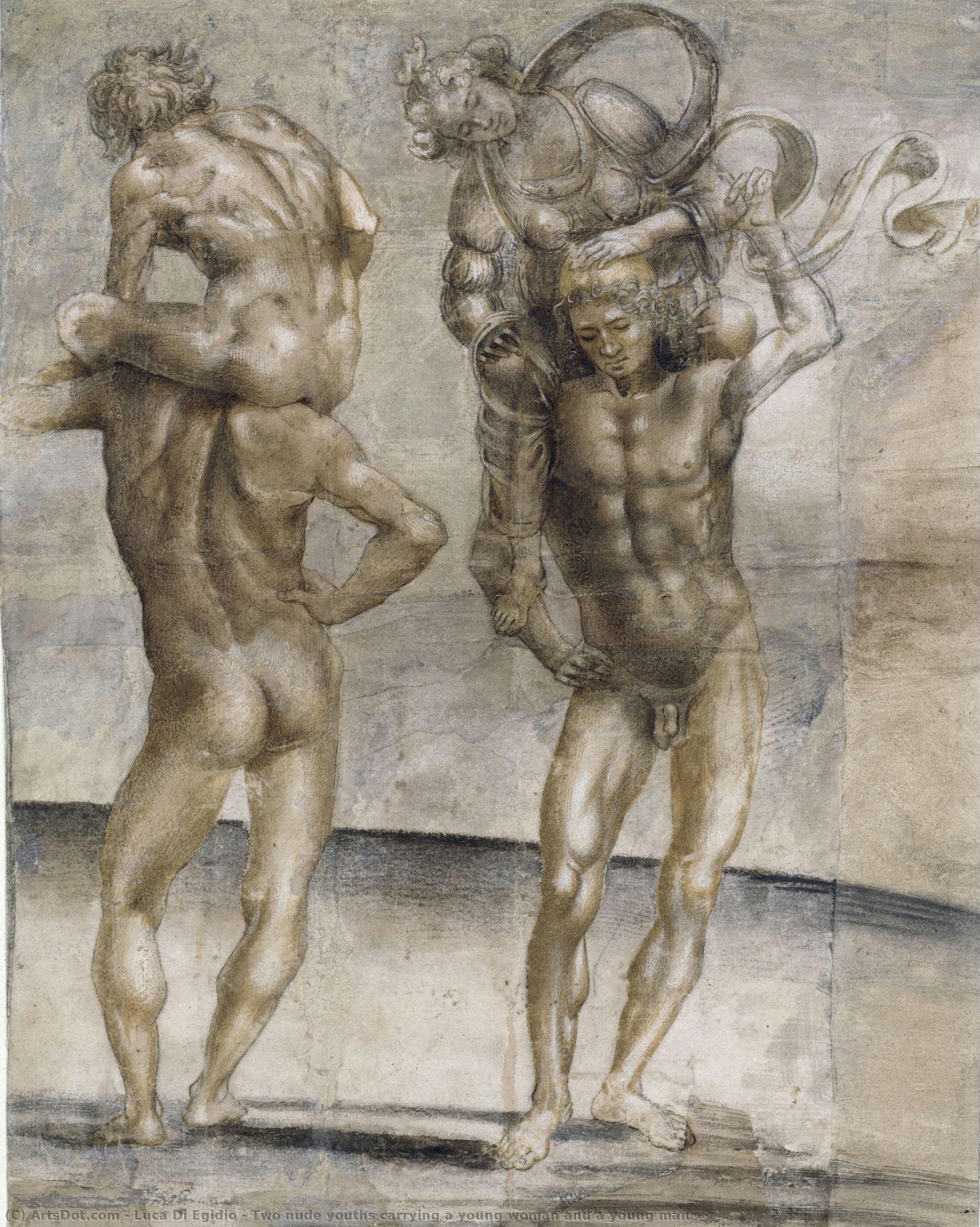
Two nude youths carrying a young woman and a young man
 Drawing
- WallArt
- Italian Renaissance
 Renaissance
 27.0 x 35.0 cm
 Kupferstichkabinett
 Read More
Giclée / Art Print
Museum-quality giclée or canvas print with fast production and flexible finish options. ( Buy Hand Made Painting Buy Image)




































Pick from our preset sizes that match the artwork's original proportions.

You may enter your own dimensions to fit a specific frame or space. If your selected size does not match the original image's proportions, we will either crop the artwork or extend the image with a mirrored or solid-fill edge. A digital mockup will be sent for your approval before production begins.
Please note that the on-screen preview does not reflect the actual cropping or extension. Only the mockup will accurately show the final composition.
While custom sizes are available, we recommend selecting a dimension from the predefined list to preserve the original proportions.
Worldwide Delivery () in 2 weeks instead of standard 4/5 weeks. (3 September)

Free Worldwide Express Shipping

High-Quality Linen Canvas

Full Shipping Insurance

Customs Tax Refund Guarantee

True Color Matching Guarantee

60-Day Return Policy (Defects Only)

100% Money-Back Guarantee

Bulk Discount Offer
 Glass option is only available in size under 110 CM

Two nude youths carrying a young woman and a young man
Giclée / Art Print
Reproduction Size
-


Total Price
$ 63
The Mastery of Form: A Renaissance Anatomical Triumph
In the delicate interplay of light and shadow, Luca Signorelli’s Two nude youths carrying a young woman and a young man emerges as a breathtaking testament to the Renaissance obsession with the human form. This extraordinary drawing, executed with the precision of a master draughtsman, transcends mere anatomical study to become a sculptural feat on paper. Through the masterful use of black chalk, subtly enhanced by white heightening and whispers of watercolor, the artist achieves a sense of three-dimensionality so profound that the figures seem to pulse with life, almost escaping the confines of their 27 x 35 cm frame. The way the light catches the musculature of the central youths creates a dramatic chiaroscuro effect, lending a weight and presence to the bodies that is nothing short of miraculous.
The composition itself is a complex dance of strength and balance. Two powerful male nudes, captured in exaggerated contrapposto poses, serve as the literal and metaphorical pillars of the work. Upon their shoulders, they bear the weight of two additional figures—a young woman with flowing hair and a young man—creating a pyramidal structure that speaks to themes of support, unity, and perhaps even the heavy burdens of mythic heroism. The sheer physical exertion required by the subjects is palpable, yet there is an underlying grace in their movement that suggests a choreographed, almost balletic, elegance. This tension between raw muscular power and refined artistic grace is what makes the piece so captivating for the modern eye.
A Window into the Renaissance Mind
To gaze upon this work is to step into the workshops of late fifteenth-century Florence, where artists like Luca di Egidio (Signorelli) were pushing the boundaries of naturalism. During this era, the study of the nude was not merely an aesthetic pursuit but a scientific one; it was a way to understand the divine proportions of creation. This drawing may serve as a demonstration of the artist's virtuosity, perhaps even presenting two different views of a single figure to showcase his ability to imagine the human body in full, three-dimensional rotation. The presence of an elderly observer in the periphery adds a layer of narrative depth, suggesting a moment of witness or perhaps a reflection on the passage of time and the fleeting nature of youth.
While the specific allegorical meaning of this grouping remains shrouded in mystery, its emotional resonance is undeniable. For the collector or the interior designer, this piece offers more than just historical significance; it provides a focal point of profound intellectual and aesthetic depth. Whether interpreted as a mythological scene of Herculean strength or a subtle study of human connection, the artwork radiates an aura of timelessness. A high-quality reproduction of this masterpiece brings with it the spirit of the Italian Renaissance, offering a sophisticated touch of classical beauty that can anchor a room with its commanding presence and intricate, soulful detail.
Related Artworks
Artist Biography
The Enigmatic Vision of Jean Fouquet: A Master of Northern Gothic
Jean Fouquet (c. 1470 – 1517), a figure shrouded in intriguing mystery, remains one of the most compelling and debated artists of the early Renaissance in France. Born likely in Paris, his origins are uncertain, adding to the aura of enigma that surrounds him. While contemporary accounts suggest he may have been a member of the Guild of St. Clothilde, definitive proof is elusive, fueling speculation about his training and influences. What *is* known is that Fouquet’s work represents a unique synthesis of Northern Gothic traditions – particularly those of the Limbourg Brothers and Van der Meer – with nascent Italianate elements, creating a style wholly his own. His career spanned roughly four decades, primarily centered around the service of wealthy patrons in Paris and surrounding regions, leaving behind a remarkably small but profoundly influential body of work. Fouquet’s artistic development is largely inferred from his paintings. Early works, such as the *Vision of Saint Catherine* (c. 1485-90), demonstrate a clear debt to the meticulous detail and vibrant colors characteristic of Flemish art. The scene unfolds with an almost theatrical quality, populated by richly dressed figures engaged in a mystical vision. The use of gold leaf is particularly striking, lending an opulent sheen to the composition. However, Fouquet quickly moved beyond mere imitation, injecting his own distinctive sensibility into his paintings. He began to introduce more dynamic compositions, heightened emotionalism, and a greater emphasis on narrative detail – elements that would become hallmarks of his style. The *Vision of Saint Catherine* is not simply a copy; it’s a reimagining, imbued with Fouquet's burgeoning artistic voice. A key element in understanding Fouquet’s work lies in the context of his patronage. He primarily painted for wealthy bourgeois families – notably the de Montigny and the de la Roche – who commissioned elaborate devotional panels and altarpieces intended to adorn their homes. These paintings were not merely religious icons; they served as statements of wealth, status, and piety. Fouquet skillfully catered to these patrons’ desires, creating visually sumptuous works that reflected their aspirations. His commissions often involved complex allegorical narratives, frequently incorporating elements of courtly love, moral instruction, and even subtle satire – a reflection of the intellectual currents circulating in Parisian society at the time. Fouquet's most celebrated work, the *Master of Saint Clothilde Passion* (c. 1503-1517), exemplifies his artistic maturity and innovative approach. This monumental panel depicts the Passion of Christ with an unprecedented level of realism and psychological depth. Unlike earlier depictions of the subject, Fouquet’s Christ is not idealized; he is a vulnerable, suffering figure, radiating palpable emotion. The figures surrounding him – Mary, John the Evangelist, and various witnesses – are rendered with remarkable attention to detail, capturing their individual personalities and reactions. The painting's scale and complexity were revolutionary for its time, demonstrating Fouquet’s mastery of composition, color, and technique. It is believed that this work was commissioned by a wealthy Parisian merchant, possibly Jean de Montigny, further solidifying the link between his art and the burgeoning mercantile class. Despite his undeniable talent and influence, Fouquet's career was tragically cut short. He died in 1517 at the relatively young age of forty-seven, leaving behind a legacy that has been both celebrated and misunderstood for centuries. For many years, his work was dismissed as mere imitation, overshadowed by the more established artists of the Italian Renaissance. However, in the 20th century, scholars began to recognize Fouquet’s originality and artistic genius, appreciating his unique synthesis of Northern Gothic and early Renaissance styles. Today, he is increasingly regarded as a pivotal figure in the transition from medieval to modern art, a master of visual storytelling who captured the spirit of his time with remarkable skill and sensitivity. His paintings continue to fascinate viewers with their intricate details, emotional intensity, and enduring mystery – a testament to the enigmatic vision of Jean Fouquet.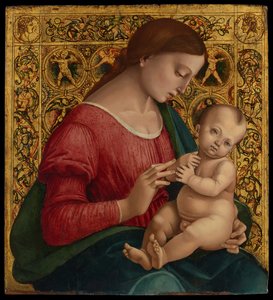
luca di egidio
1523 , Italy
Quick Facts
- Artistic Movement Or Style: World Goes Pop
- Date Of Death: 1523
- Notable Artworks:
- Evelyne Axell
- Joav BarEl
- Thomas Bayrle
Related Articles

Dark Masterpieces: 10 Iconic Paintings Dominated by Black Tones |
Explore 10 iconic paintings dominated by black tones, from Rembrandt’s chiaroscuro to Goya's dark expressions. Discover the stories behind these masterpieces & find museum-quality art reproductions for your home at .
The Eloquent Form: A Historical & Aesthetic Exploration of the Nude in Art
Explore the captivating history of the nude in art! From ancient Greece to modern masters, discover its evolving symbolism, techniques & enduring beauty. Expert insights for collectors and enthusiasts.
Frederick Bridgman: Anatomical Mastery & the Evolution of Figure Drawing Instruction
Explore the anatomical mastery of George B. Bridgman & his revolutionary figure drawing techniques. Discover how his methods transformed art instruction and continue to inspire artists today. Learn more at ArtsDot.
Leonardo da Vinci's Masterpieces: Explore 25 Iconic Artworks for Your Home | ArtsDot
Journey through Leonardo da Vinci's genius with our curated selection of 25 iconic artworks. Explore the stories behind Mona Lisa, The Last Supper & more Renaissance masterpieces. Find museum-quality art reproductions for your home at ArtsDot.com.
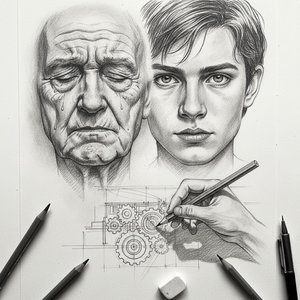
The Nuances of Graphite: Exploring Emotional Depth & Technical Mastery in Pencil Drawing
Explore the captivating world of graphite drawing! Discover its rich history, master essential techniques like chiaroscuro, and learn how artists evoke emotion through this timeless medium. Expert insights for art enthusiasts.