

 Preview
 Send
Send Share
Share
 Details

 Download
 Similars
 X-Ray
X-Ray Diaporama
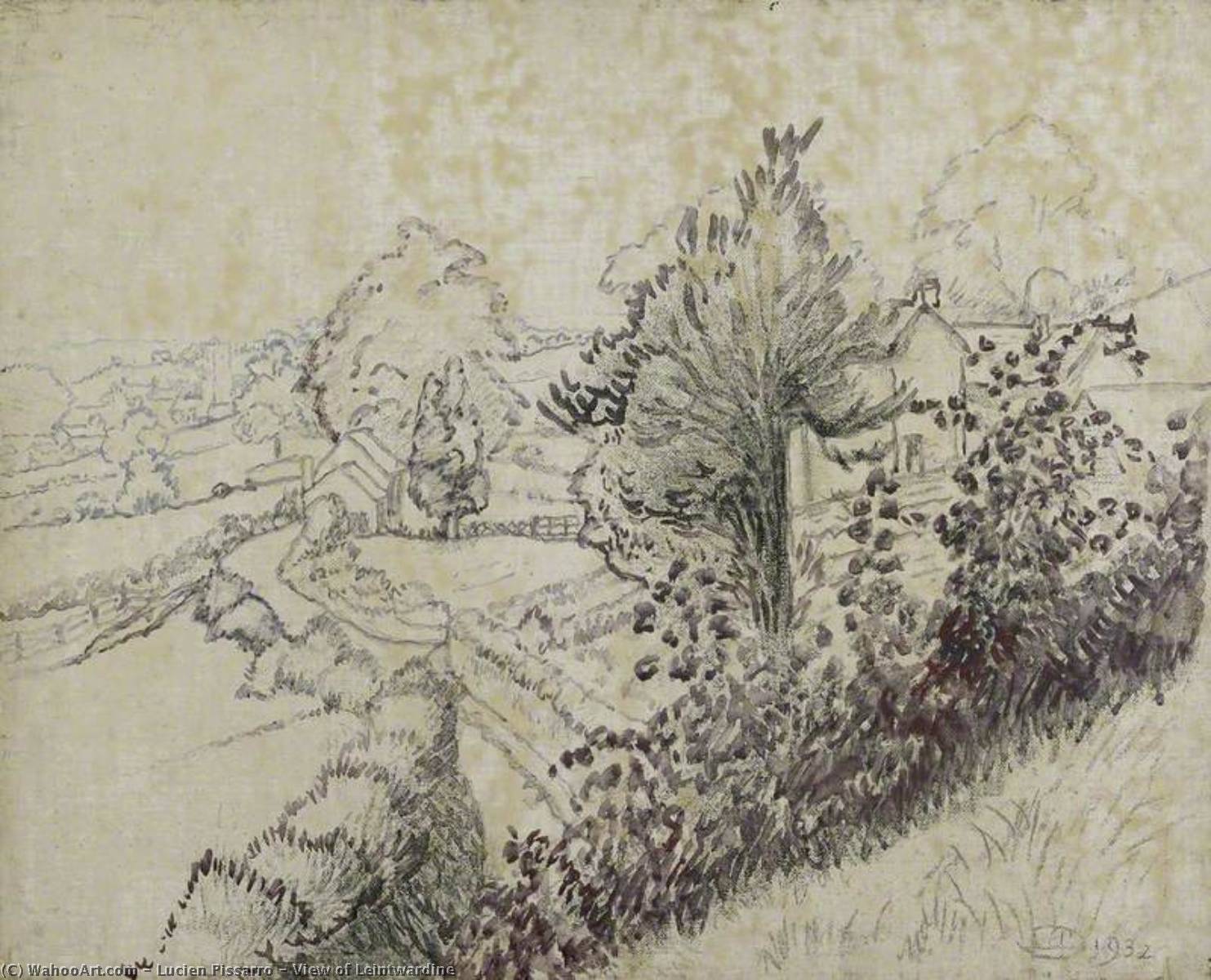
View of Leintwardine
 Acrylic On Canvas
- WallArt
- Impressionism
 1932
1932 33.0 x 41.0 cm
 The Ashmolean Museum of Art And Archaeology
 Read More
Purchase a high-resolution, enhanced digital image, far superior to the online preview.
Each file is meticulously prepared by our in-house specialists using advanced tools and expert manual retouching. We ensure every image has exceptional clarity, precise color accuracy, and fine detail.
The final file is delivered via email within 72 hours, optimized for immediate use in professional, editorial, and print environments. This is the same quality trusted by top-tier design studios, publishers, and galleries.
Digital Image
Download a high-resolution file for personal display, printing, and creative projects. ( Buy Print Buy Hand Made Painting)
Included in Every Digital Image Order
Expert Digital Delivery, Guaranteed
When you choose ArtsDot.com, you're not just getting an image - you're receiving a professionally enhanced digital artwork, crafted with precision and backed by a satisfaction guarantee. Here's everything that comes with your order, automatically:

Fast Email Delivery
Your high-resolution digital image file will be emailed to you within 72 hours of ordering - ready for immediate use.

AI-Enhanced Digital File
Your artwork is professionally optimized using advanced AI tools and manual editing, ensuring maximum detail, clarity, and color accuracy.

Free Lifetime Re-Delivery
Accidentally deleted or lost your file? No worries - we'll resend it to you anytime, free of charge.

No Import Fees - Ever
Enjoy your artwork instantly with zero customs, duties, or delivery fees - digital downloads are always tax-free.

Color Accuracy Guarantee
We ensure your digital image reflects the original colors as closely as possible using professional tools and color management.

60-Day Satisfaction Guarantee
If you're not satisfied with your digital image, we'll revise it or refund 100% within 60 days - no questions asked.

100% Money-Back Guarantee
Not satisfied? Get a full refund within 60 days of receiving your digital file - no questions asked.

Bulk Order Discounts
Buy 3 images, save 10% - Buy 5, save 15% - Buy 10+, save 20%. Great for creative projects, galleries, and agencies.
Collectible Description
A Tranquil Vista of Rural Provence: Lucien Pissarro’s “View of Leintwardine”
Lucien Pissarro's "View of Leintwardine," painted in 1932, stands as a testament to the enduring beauty of Impressionist landscape painting and a poignant reflection on the passage of time. Held at the Ashmolean Museum of Art and Archaeology in Oxford, this unassuming wash technique artwork—measuring 33 x 41 cm—captures not merely a picturesque scene but an atmosphere imbued with serenity and a deep appreciation for the natural world – qualities that define Pissarro’s artistic legacy and resonate powerfully with viewers today.The Impressionist Vision: Light and Atmosphere
Born Jacob Abraham Camille Pissarro in Saint-Thomas, Danish West Indies, in 1830, Lucien Pissarro emerged as a pivotal figure in the burgeoning Impressionist movement. Unlike many of his contemporaries who sought grand narratives or dramatic compositions, Pissarro consistently prioritized capturing fleeting moments of light and color—a characteristic that distinguishes his oeuvre from more formal artistic traditions. His father’s involvement in commerce instilled within him an observational acuity honed by daily life, informing his approach to painting with a meticulous attention to detail and a profound understanding of how sunlight transforms the landscape throughout the day. This dedication to capturing atmospheric conditions – particularly diffused light – aligns perfectly with the core tenets of Impressionism, championed by artists like Monet and Renoir.Technical Mastery: The Wash Technique
The artwork’s execution showcases Pissarro's masterful command of the wash technique—a method favored by Impressionists for its ability to achieve subtle tonal gradations and a luminous quality unattainable through heavier brushstrokes. Layers upon layers of diluted pigment are applied to the canvas, blending seamlessly together to create an ethereal effect that softens contours and enhances the overall sense of tranquility. The artist’s deliberate use of muted greens and earthy tones—primarily ochre and umber—further contributes to this harmonious palette, mirroring the colors found in the Provençal countryside depicted. This technique allows for a remarkable level of nuance, conveying not just what is seen but also how it feels – a palpable stillness that invites contemplation.A Slice of Rural Life: Composition and Symbolism
The composition itself speaks volumes about Pissarro’s artistic sensibilities. A winding path dominates the central foreground, drawing the viewer's eye towards a modest village nestled amongst rolling hills. The trees—dense with foliage rendered in shades of emerald and jade—represent not only botanical accuracy but also symbolize vitality and growth. More subtly, they evoke memories of past seasons and hint at cycles of renewal. The muted sky serves as an understated backdrop, reinforcing the painting’s contemplative mood and emphasizing its connection to the natural world. Such deliberate choices underscore Pissarro's belief that art should serve as a conduit for experiencing beauty and conveying emotion—a conviction evident throughout his extensive body of work.Emotional Resonance: Capturing Tranquility
Ultimately, “View of Leintwardine” succeeds in transporting the viewer to a place of profound peace. The soft luminescence of the wash technique, combined with the harmonious color palette and carefully considered composition, creates an immersive experience that captures the essence of rural Provence at its most idyllic. It’s a painting that invites reflection on the simple pleasures of life—the beauty of nature, the comfort of community—and serves as a timeless reminder of the enduring power of Impressionist art to evoke emotion and inspire wonder. Its quiet grandeur continues to captivate audiences today, cementing Pissarro's place among the most influential landscape painters of his era.Related Artworks

Artist Biography
Camille Pissarro: A Pioneer of Light and Life
Born Jacob Abraham Camille Pissarro on July 10, 1830, in Saint-Thomas, a Danish colony in the Caribbean, Pissarro’s artistic journey was one shaped by constant movement and a profound connection to the natural world. His early life, immersed in the vibrant colors and rhythms of island life – his father ran a general store – instilled within him an appreciation for observation and a sensitivity to light that would become hallmarks of his mature work. Unlike many artists who sought formal training early on, Pissarro’s artistic inclinations emerged later, spurred by a chance encounter with Fritz Melbye, a Danish painter, in 1850. This meeting ignited a passion within him, leading him to abandon his family's business and dedicate himself entirely to the pursuit of art.
Pissarro’s early years were spent primarily in Paris, a hub of artistic innovation during the mid-19th century. He initially struggled to find his footing, working as a copyist at the Louvre – a position that allowed him access to masterworks and invaluable study time – and supplementing his income with teaching drawing. It was through this period of apprenticeship that he began to develop his own style, influenced by the burgeoning Realist movement but quickly moving beyond its rigid constraints. He sought to capture not just the appearance of things, but also the *feeling* of being present in a particular place and time. This desire for immediacy would later define his approach to Impressionism.
The Hudson River School and Early Parisian Influences
Pissarro’s artistic development took a significant turn when he encountered the works of the Hudson River School painters, particularly Thomas Cole and Frederic Church. Their dramatic landscapes, imbued with Romantic ideals and a reverence for nature, profoundly impacted his vision. He was drawn to their ability to convey both the grandeur and the spiritual significance of the American wilderness. However, Pissarro’s artistic sensibilities were not simply imitative; he absorbed the School's techniques – particularly its use of atmospheric perspective and dramatic lighting – while simultaneously forging a distinct path.
Returning to Paris in 1855, Pissarro quickly became involved with the burgeoning Impressionist movement. He befriended Claude Monet, Pierre-Auguste Renoir, and Alfred Sisley, artists who were challenging the established conventions of the Salon system. Pissarro’s early Parisian works reflect this influence, characterized by loose brushstrokes, a focus on capturing fleeting moments of light, and an interest in depicting everyday life – scenes of market stalls, rural landscapes, and working-class communities. He was particularly interested in portraying the effects of weather and atmosphere, often painting en plein air (outdoors) to directly observe these phenomena.
The Impressionist Years: Experimentation and Collaboration
Pissarro’s involvement with the Impressionists extended beyond mere association; he played a crucial role in shaping their collective identity. He was one of the key organizers of the first eight Impressionist exhibitions in 1874, 1876, 1877, 1879, 1880, 1882, 1886 and 1889, providing a vital platform for these artists to showcase their work. During this period, Pissarro’s style underwent significant evolution. He experimented with various techniques – including pointillism, influenced by Georges Seurat and Paul Signac – seeking new ways to represent light and color. His paintings became increasingly vibrant and dynamic, capturing the energy of urban life and the beauty of the French countryside.
Notably, Pissarro’s relationship with Camille Pissarro (no relation) was a significant influence on his work during this time. They collaborated frequently, sharing ideas and techniques, and often painting the same subjects from slightly different perspectives. This collaborative spirit fostered innovation and helped to push the boundaries of Impressionist art.
Later Years and Legacy
As he aged, Pissarro’s style became more subdued and contemplative. He continued to paint prolifically throughout his long life, moving away from the bustling urban scenes of his youth to focus on quieter landscapes and portraits. His later works are characterized by a remarkable clarity of form and a deep sense of serenity. Despite facing periods of financial hardship and artistic uncertainty, Pissarro remained dedicated to his craft until his death in 1903 at the age of 73.
Camille Pissarro’s legacy is immense. He is considered one of the founding fathers of Impressionism, a pivotal figure in the development of modern art. His innovative use of color and light, his commitment to capturing the fleeting moments of everyday life, and his collaborative spirit have had a profound influence on generations of artists. His paintings continue to resonate with viewers today, offering a glimpse into the beauty and complexity of the world around us.
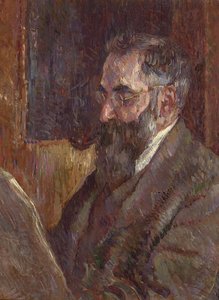
lucien pissarro
1830 - 1944
Quick Facts
- Artistic Movement Or Style: Impressionism, Pointillism
- Artists Or Movements Influenced By This Artist:
- Paul Cézanne
- Impressionists
- Artists Who Influenced This Artist:
- Fritz Melbye
- Düsseldorf School
- Date Of Birth: July 10, 1830
- Date Of Death: November 13, 1903
- Full Name: Camille Pissarro
- Nationality: Danish, French
- Notable Artworks:
- Boulevard Montmartre
- La Grenouillère
- The Magpie
- Red Roofs at Chatouville
- Place Of Birth: Saint Thomas, Denmark

