 Preview
 Send
Send Share
Share
 Details

 Download
 Similars
 X-Ray
X-Ray Diaporama
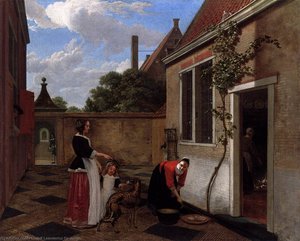
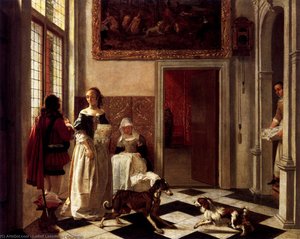
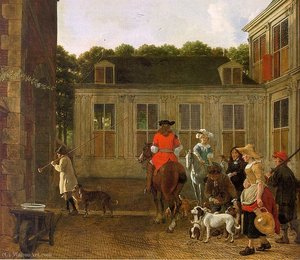
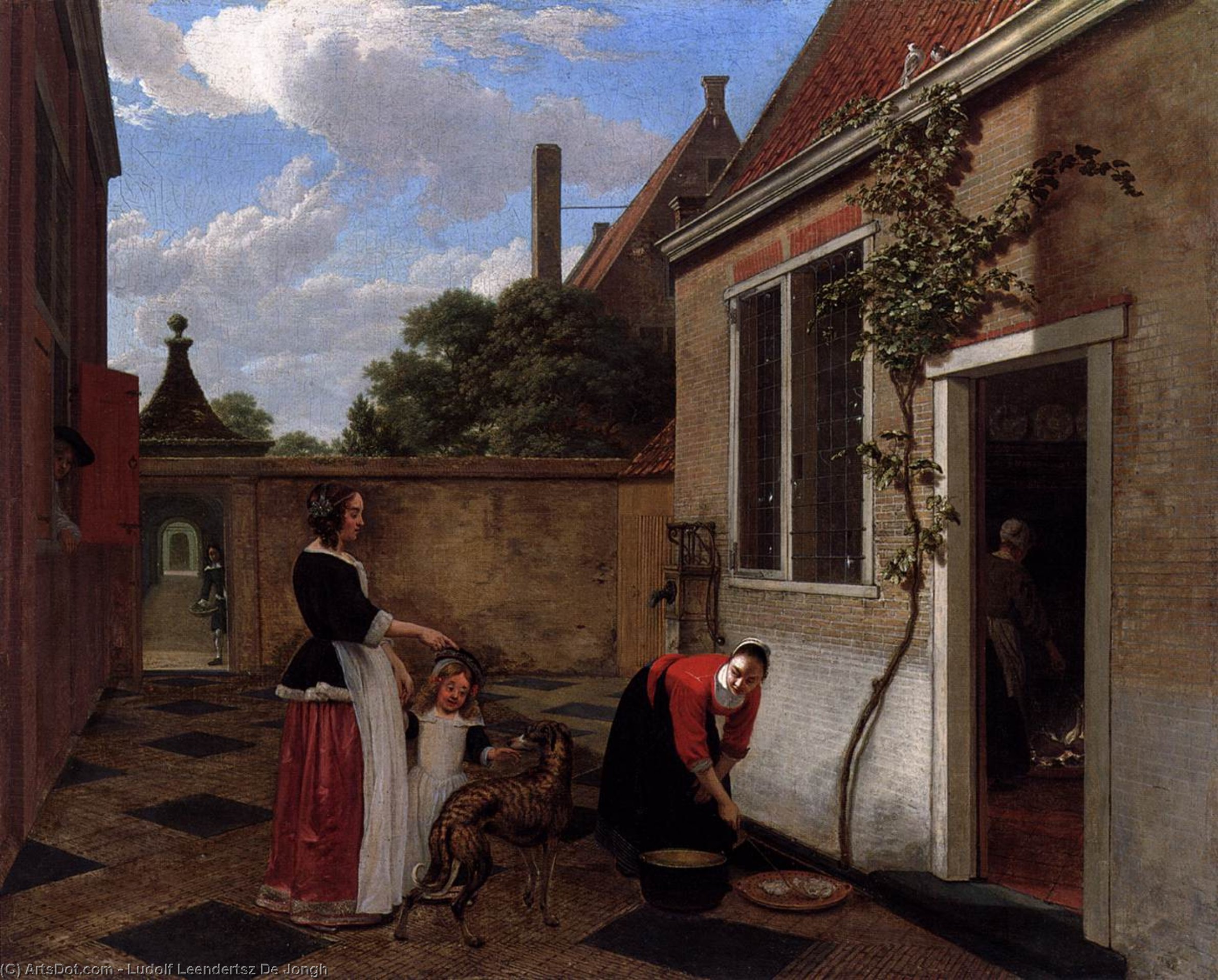
Scene in a Courtyard
 Oil On Canvas
- WallArt
- Dutch Golden Age
 1661
1661- Early Modern
 67.0 x 82.0 cm
 Metropolitan Museum of Art
 Read More
Hand Made Oil Reproduction
Hand-painted oil on canvas in your size and frame, made to order by our artists. ( Buy Print Buy Image)




P118B $10

P118H $10

P118W $10

P438Z $10

P508JH $12

P508YH $12

P805H $10

P805Z $10

P919BZ $10

P919G $10

P919XJ $10

P959ZH $10

P968JZ $12

W106C $8

W218G $10

W218JH $8

W218Y $10

W307PJ $10

W316G $10

W316PJ $8

W316Y $10

W398PJ $8

W4111J $10

W500HY $15

W500JH $15

W692G $12

W849H $8

W940BG $15

W953PJ $8




Pick from our preset sizes that match the artwork's original proportions.

You may enter your own dimensions to fit a specific frame or space. If your selected size does not match the original image's proportions, we will either crop the artwork or extend the painting with additional hand-painted elements. A digital mockup will be sent for your approval before production begins.
Please note that the on-screen preview does not reflect the actual cropping or extension. Only the mockup will accurately show the final composition.
While custom sizes are available, we recommend selecting a dimension from the predefined list to preserve the original proportions.
After order, ArtsDot.com team will email client for instructions and provide a mockup preview
Worldwide Delivery () in 3/4 weeks instead of standard 5 weeks. (16 August). No compromise on quality.

Free Worldwide Express Shipping

High-Quality Linen Canvas

Full Shipping Insurance

Customs Tax Refund Guarantee

True Color Matching Guarantee

60-Day Return Policy (Defects Only)

100% Money-Back Guarantee

Bulk Discount Offer
 Glass option is only available in size under 110 CM

Scene in a Courtyard
Reproduction Medium
Reproduction Size
-


Total Price
$ 263
Artwork Description
Ludolf Leendertsz de Jongh: A Caravaggio Echo in Rotterdam’s Golden Age
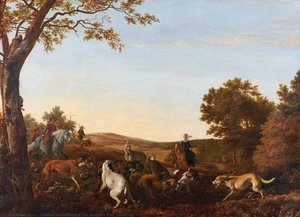
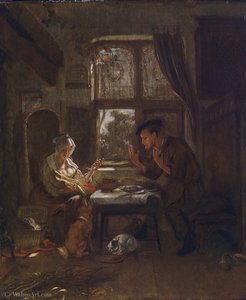
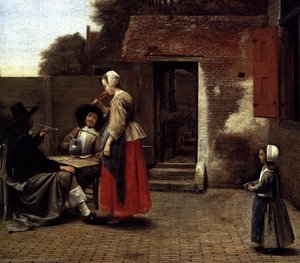
Ludolf Leendertsz. de Jongh (1616 – 1679) stands as a pivotal figure within the Dutch Golden Age, embodying the dramatic intensity and psychological depth characteristic of the era's finest painters. Born in Oostzaan, Netherlands—a location that would later become synonymous with artistic innovation—de Jongh’s journey from shoemaker’s son to celebrated artist reveals an extraordinary dedication to mastering his craft and forging a distinctive visual language. His formative years were shaped by the influence of his father's trade, yet it was a conscious decision to pursue art rather than carpentry that propelled him toward a remarkable artistic destiny. Early Influences & Training: De Jongh’s artistic education commenced under Cornelis Saftleven and Anthony Palamedes in Delft, establishing him firmly within the Utrecht School tradition—a movement deeply indebted to the revolutionary style of Caravaggio. This connection is palpable throughout his oeuvre; he absorbed Caravaggio's masterful use of chiaroscuro – dramatic contrasts between light and dark – transforming it into a cornerstone of his own artistic vocabulary. The Utrecht School’s preoccupation with capturing fleeting moments of emotion and psychological realism mirrored Caravaggio’s groundbreaking approach to portraying human experience, cementing de Jongh’s place as one of the era's foremost innovators. He honed his skills under Palamedes’ tutelage, absorbing not only technical proficiency but also a profound understanding of Baroque aesthetics. Notable Works & Style: De Jongh produced an impressive body of work encompassing portraits, genre scenes, hunting compositions, and landscapes—each infused with a palpable sense of drama and observation. His paintings are renowned for their meticulous detail and expressive handling of light, capturing the nuances of human emotion and conveying atmospheric conditions with remarkable accuracy. Consider “Scene in a Courtyard,” completed in 1661. The composition is dominated by a muted palette punctuated by vibrant highlights—a technique directly traceable to Caravaggio’s influence. Two women engage in conversation amidst a richly furnished interior, their postures conveying subtle gestures of intimacy and contemplation. A dog rests peacefully at the feet of one woman, reinforcing the scene's tranquil yet emotionally charged atmosphere. The artist skillfully employs chiaroscuro to sculpt forms and create depth, drawing viewers into the depicted space and eliciting empathy for the figures portrayed. Historical Context & Symbolism: De Jongh’s artistic output flourished during Rotterdam’s Golden Age—a period of unprecedented economic prosperity and cultural dynamism fueled by maritime trade and intellectual ferment. The Utrecht School's stylistic experimentation reflected broader societal shifts toward valuing individual expression and embracing dramatic visual narratives. “Hunting Party in the Courtyard of a Country House,” exemplifies this trend, depicting a stately hunting scene bathed in soft light. The figures are rendered with meticulous realism, capturing their movements and expressions with remarkable precision. Beyond mere representation, however, the painting speaks to themes of nobility, leisure, and mastery—values central to Baroque culture. The courtyard setting itself symbolizes order and refinement, mirroring the aspirations of the aristocratic patrons who commissioned de Jongh’s works. Emotional Impact & Legacy: De Jongh's paintings resonate with viewers today precisely because they capture the essence of human experience – vulnerability, contemplation, and fleeting moments of beauty. Like Caravaggio before him, he prioritized conveying emotion over mere decorative effect, creating images that linger in the mind long after viewing. His influence extended beyond his immediate contemporaries, shaping the artistic sensibilities of subsequent generations. Ludolf de Jongh’s enduring legacy resides not only in his technical brilliance but also in his ability to transform observation into profound artistic expression—a testament to the transformative power of art and its capacity to illuminate the human condition.- Artist: Ludolf Leendertsz. de Jongh
- Born Year: 1616
- Death Year: 1679
- Birth City: Oostzaan
- Birth Country: Netherlands
- Scene in a Courtyard: Explore this artwork on the Metropolitan Museum of Art’s website.
- Hunting party in the Courtyard of a Country House: Discover more about this painting on the WGA.
- Family scene in front of an open window: View this artwork on Google Arts & Culture.
- Ludolf de Jongh: Learn about Ludolf’s life and career on Wikipedia.
- Claude de Jongh: Explore Claude’s landscapes on Google Arts & Culture.
- Gustave Léonhard de Jonghe: Discover Gustave’s portraits on Google Arts & Culture.
- Ludolf de Jongh - Scene in a Courtyard: Access the Met’s detailed information about this painting.
- Scene in a Courtyard by JONGH, Ludolf de: View JONGH's Scene in a Courtyard on the Web Gallery of Art.
Related Artworks
Artist Biography
The Dramatic Legacy of Ludolf Leendertsz de Jongh
In the heart of the Dutch Golden Age, a period defined by unparalleled artistic flourishing and mercantile prosperity, the name Ludolf Leendertsz de Jongh resonates with the dramatic intensity of a master storyteller. Born in 1616 in Overschie, Netherlands, de Jongh’s ascent from the son of a shoemaker to a celebrated figure in Rotterdam’s vibrant artistic circle is a testament to an extraordinary dedication to his craft. His journey was not merely one of technical mastery but of profound stylistic evolution, as he navigated the complex influences of the Utrecht School and the revolutionary shadows of the Caravaggisti. Through his brush, the quiet landscapes and bustling scenes of the seventeenth century were imbued with a psychological depth that captured the very essence of the human experience.
The foundations of de Jongh’s artistry were laid in Delft, where he studied under the tutelage of Cornelis Saftleven and Anthony Palamedes. This early training deeply embedded him within a tradition that revered the dramatic use of light and shadow. The influence of Caravaggio is palpable throughout his oeuvre; de Jongh mastered the technique of chiaroscuro, using stark contrasts to pull figures from the darkness and lend them a visceral, tactile reality. This mastery allowed him to transform simple genre scenes into profound meditations on movement and emotion. His travels further expanded his horizons, most notably a transformative voyage to France in 1635 alongside Frans Bacon, an experience that undoubtedly broadened his intellectual and visual vocabulary before he eventually established his permanent studio in Rotterdam.
A Versatile Visionary of the Dutch Golden Age
De Jongh was far more than a specialist in a single niche; he was a versatile virtuoso whose repertoire spanned a breathtaking array of subjects. He was equally adept at capturing the rugged energy of a fox hunt, the architectural grandeur of cityscapes, and the serene stillness of landscapes. His ability to blend human activity with the natural world is perhaps most evident in his hunting scenes, where the frantic motion of hounds and horses is balanced by a meticulous attention to the surrounding woods and light. In these works, one can observe his skill as a staffage painter—a specialist capable of breathing life into larger compositions by adding precisely rendered figures that interact seamlessly with the environment.
Beyond the canvas, de Jongh’s life was deeply intertwined with the civic fabric of his time. He was not merely an observer of society but an active participant, serving as a merchant, an officer in the Rotterdam civil guard, and even as the schout (sheriff) of Hillegersberg. This multifaceted existence provided him with a unique vantage point from which to observe the social hierarchies and daily rhythms of Dutch life, which he then translated into his portraits and genre paintings. His influence was so significant that by the 1650s, he stood as the leading genre painter in Rotterdam, leaving an indelible mark on subsequent generations of artists, including the renowned Pieter de Hooch.
The enduring significance of Ludolf Leendertsz de Jongh lies in his ability to synthesize the dramatic tension of the Southern European tradition with the meticulous realism of the Dutch school. His works remain captivating windows into a bygone era, offering much more than mere documentation. They provide an emotional resonance that continues to stir the modern viewer, reminding us of a time when light and shadow were used not just to illuminate a scene, but to reveal the very soul of the subject.
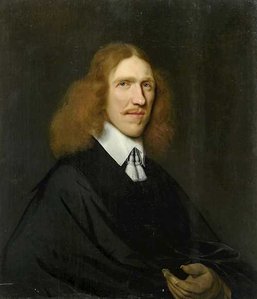
ludolf leendertsz de jongh
1616 - 1679 , Netherlands
Quick Facts
- Artistic Movement Or Style: Caravaggio-inspired
- Artists Or Movements Influenced By This Artist: ['Caravaggio']
- Artists Who Influenced This Artist:
- Jacob Duck
- Pieter de Hooch
- Date Of Birth: 1616 Oostzaan, Netherlands
- Date Of Death: 1679 Hillegersberg, Netherlands
- Full Name: Ludolf Leendertsz. de Jongh
- Nationality: Dutch
- Notable Artworks:
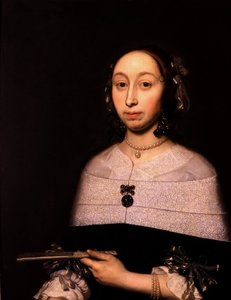
- Portrait of Aletta van Ravensberg
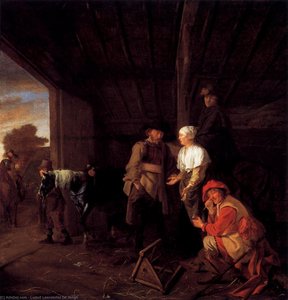
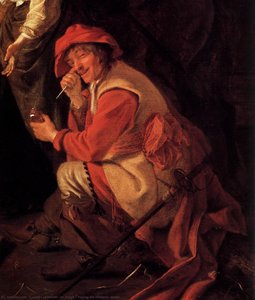
- Paying the Hostess
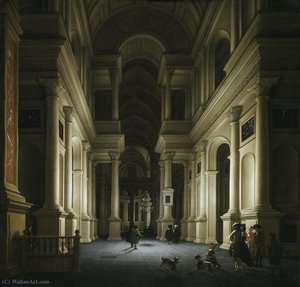
- Interior of a Church at Night
- Place Of Birth: Oostzaan
Related Articles

Dutch Masters: 10 Golden Age Paintings That Still Inspire |
Journey into the Dutch Golden Age! Explore 10 iconic paintings by Rembrandt, Vermeer & Hals. Discover the stories behind these Baroque masterpieces and find museum-quality art reproductions to elevate your home decor on .

Golden Age Reflections: Dutch Baroque Painting & Cultural Innovation
Explore the Dutch Golden Age of painting! Discover key artists like Vermeer & ter Borch, their innovative techniques, and the rich cultural context behind these Baroque masterpieces. Learn about collecting & appreciating this iconic art period.

Illuminating Innovation: Exploring the Dutch Golden Age of Painting
Explore the Dutch Golden Age of painting with ArtsDot. Discover Rembrandt, Vermeer & other Masters. Learn about key characteristics, iconic artworks, and lasting influence. Expert insights for collectors & enthusiasts.
Illuminating Realism: Exploring the Dutch Golden Age of Painting (1600-1700)
Explore the Dutch Golden Age of painting (1600-1700) with ArtsDot. Discover Rembrandt, Vermeer & other masters. Learn about techniques, history & find museum-quality reproductions.
Golden Light & Dutch Skies: Bringing the Magic of Dutch Golden Age Landscapes into Your Home
Transform your home with the breathtaking light of Dutch Golden Age landscapes. Discover how hand-painted oil reproductions of masterworks like Ruisdael and Vermeer bring timeless elegance, atmosphere, and soulful texture to modern interiors. Elevate your space with museum-quality art.