

 Preview
 Send
Send Share
Share
 Details

 Download
 Similars
 X-Ray
X-Ray Diaporama
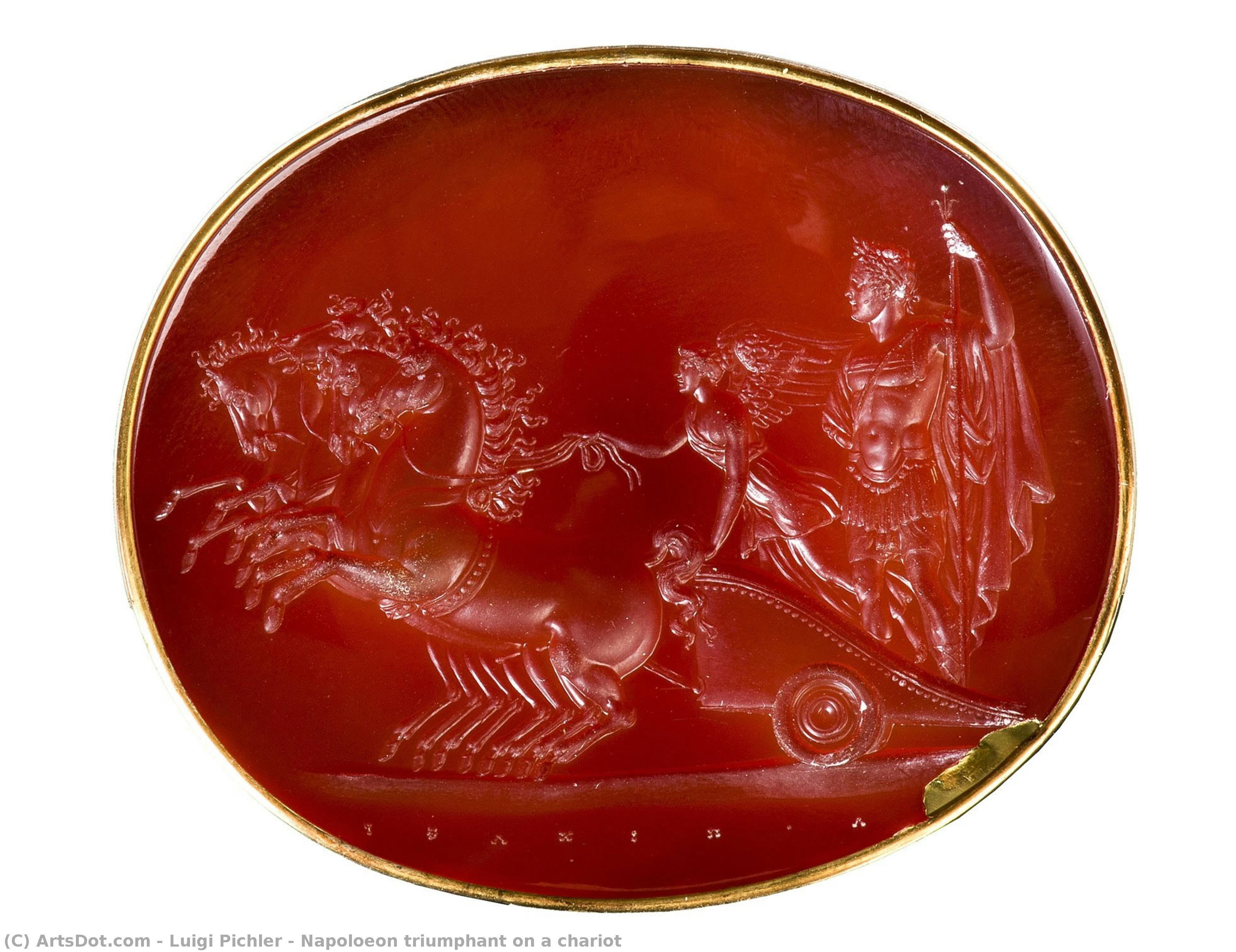
Napoloeon triumphant on a chariot


 Read More
Purchase a high-resolution, enhanced digital image, far superior to the online preview.
Each file is meticulously prepared by our in-house specialists using advanced tools and expert manual retouching. We ensure every image has exceptional clarity, precise color accuracy, and fine detail.
The final file is delivered via email within 72 hours, optimized for immediate use in professional, editorial, and print environments. This is the same quality trusted by top-tier design studios, publishers, and galleries.
Digital Image
Download a high-resolution file for personal display, printing, and creative projects. ( Buy Print Buy Hand Made Painting)
Included in Every Digital Image Order
Expert Digital Delivery, Guaranteed
When you choose ArtsDot.com, you're not just getting an image - you're receiving a professionally enhanced digital artwork, crafted with precision and backed by a satisfaction guarantee. Here's everything that comes with your order, automatically:

Fast Email Delivery
Your high-resolution digital image file will be emailed to you within 72 hours of ordering - ready for immediate use.

AI-Enhanced Digital File
Your artwork is professionally optimized using advanced AI tools and manual editing, ensuring maximum detail, clarity, and color accuracy.

Free Lifetime Re-Delivery
Accidentally deleted or lost your file? No worries - we'll resend it to you anytime, free of charge.

No Import Fees - Ever
Enjoy your artwork instantly with zero customs, duties, or delivery fees - digital downloads are always tax-free.

Color Accuracy Guarantee
We ensure your digital image reflects the original colors as closely as possible using professional tools and color management.

60-Day Satisfaction Guarantee
If you're not satisfied with your digital image, we'll revise it or refund 100% within 60 days - no questions asked.

100% Money-Back Guarantee
Not satisfied? Get a full refund within 60 days of receiving your digital file - no questions asked.

Bulk Order Discounts
Buy 3 images, save 10% - Buy 5, save 15% - Buy 10+, save 20%. Great for creative projects, galleries, and agencies.
Related Artworks




Artist Biography
Scipio Moorhead: An Enslaved Artist’s Silent Legacy
The story of Scipio Moorhead is a poignant and largely untold chapter in American art history—a testament to the creativity that can flourish even within the confines of oppression. Active primarily between 1773 and 1775, Moorhead was an enslaved African-American artist who created remarkably sophisticated drawings, capturing scenes of everyday life with a keen eye for detail and a subtle understanding of human emotion. Despite his undeniable talent, Moorhead’s work remained largely unknown for centuries, only recently brought to light through the insightful observations of Phillis Wheatley, one of America's first published Black female poets.
Born into slavery in Boston, Massachusetts, Scipio Moorhead’s early life remains shrouded in mystery. He was owned by Reverend John Moorhead and his wife, Sarah Parsons Moorhead, a woman who possessed artistic skills herself and served as his primary tutor. This unique circumstance—an enslaved person receiving formal art instruction—was extraordinary for the period. While the exact details of his training are scarce, it’s believed that Sarah Moorhead nurtured his talent, recognizing his exceptional ability to render images with precision and sensitivity. Contemporary accounts, documented in the *Boston News-Letter* on January 7, 1773, described him as “a negro of extraordinary genius,” a remarkable assertion considering the limited opportunities afforded to enslaved individuals at the time.
The most significant evidence of Moorhead’s artistic output comes from Wheatley's poem, "To S. M. a young African Painter, on seeing his Works," published in her 1773 collection of poems. Wheatley describes encountering Moorhead’s drawings and being deeply moved by their quality. She specifically mentions a portrait depicting a woman lost in thought—a scene rendered with an unprecedented level of realism and psychological depth for the time. This portrait, now widely considered to be Moorhead's masterpiece, is characterized by its intimate portrayal of the subject’s inner life, capturing not just her physical appearance but also her contemplative mood. The remarkable likeness prompted Wheatley to declare that it was “a picture of a woman, / Whose thoughts are deep, and whose spirit free.”
While no original works by Moorhead have survived, the poem’s detailed descriptions and Wheatley's own observations provide invaluable insights into his artistic style. Scholars now believe that Moorhead may also have contributed to the engraving of Wheatley’s portrait, a piece that became a symbol of Black achievement during the Enlightenment era. The significance of this attribution is profound: it represents one of the earliest documented instances of an African-American artist contributing significantly to a major work of art in America. The fact that his contribution was largely overlooked for so long underscores the systemic biases and prejudices that have historically marginalized Black artists.
The Context of 1773: An Artistic Landscape
1773 represents a pivotal year in European and American art, marked by significant developments across various artistic disciplines. In Europe, the Rococo style continued to flourish, exemplified by the works of Jean-Antoine Houdon, whose portraits captured the elegance and sophistication of the French court. Simultaneously, the Neoclassical movement, inspired by classical antiquity, was gaining momentum, championed by artists like Charles Willson Peale in America. The year also witnessed important paintings from figures such as John Singleton Copley, François-Hubert Drouais, and Joseph Wright of Derby, each contributing to the diverse artistic landscape of the era.
Within the American colonies, art was largely influenced by European trends but began to develop its own distinct character. Artists like Charles Willson Peale were actively engaged in documenting colonial life through portraits, landscapes, and scientific illustrations. The burgeoning interest in natural history and scientific observation fueled a desire for accurate representation, shaping the artistic practices of the time. The year 1773 also saw the emergence of new artistic awards and competitions, further stimulating creativity and professional development within the art world.
Influences and Artistic Style
Scipio Moorhead’s artistic style is remarkably sophisticated for an enslaved artist working in the mid-18th century. His drawings demonstrate a keen understanding of anatomy, perspective, and composition—skills that suggest a rigorous training and considerable talent. While his work lacks the flamboyant flourishes of Rococo or the idealized forms of Neoclassicism, it possesses a quiet dignity and emotional depth that sets it apart. Moorhead’s style is often described as “realist,” characterized by its attention to detail and its ability to capture the essence of his subjects.
It's believed that Moorhead was influenced by both European artistic traditions—particularly the work of Giovanni Paolo Panini, whose landscape paintings emphasized meticulous observation and architectural accuracy—and the emerging American artistic scene. His portrait of Phillis Wheatley, in particular, reflects a sophisticated understanding of portraiture techniques, incorporating elements of both European realism and a subtle sense of psychological insight.
Historical Significance and Legacy
Scipio Moorhead’s story is not merely an anecdote about a talented enslaved artist; it's a powerful reminder of the vast amount of artistic talent that has been systematically overlooked due to racial prejudice and social inequality. His work challenges conventional narratives of American art history, forcing us to confront the silenced voices and untold stories of African-American artists who have contributed significantly to our cultural heritage.
The recent rediscovery of Moorhead’s drawings through Wheatley's poem has sparked renewed interest in his life and work. Scholars are now actively researching his artistic output, seeking to uncover more evidence of his talent and influence. Scipio Moorhead’s legacy serves as an inspiration for artists and art historians alike—a testament to the enduring power of creativity to transcend adversity and a call for greater recognition and appreciation of Black artistic contributions.
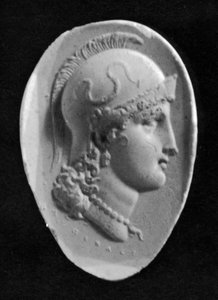
luigi pichler
1773 - 1854 , Italy
Quick Facts
- Artists Or Movements Influenced By This Artist: ['Phillis Wheatley']
- Artists Who Influenced This Artist: ['John Singleton Copley']
- Date Of Birth: c. 1773
- Full Name: Scipio Moorhead
- Nationality: African-American
- Notable Artworks: ['Portrait of Phillis Wheatley']
- Place Of Birth: Boston, Massachusetts

