 Preview
 Send
Send Share
Share
 Details

 Download
 Similars
 X-Ray
X-Ray Diaporama
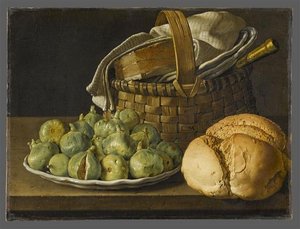
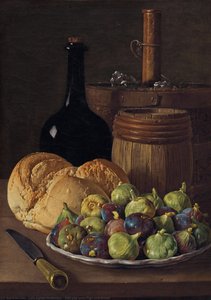
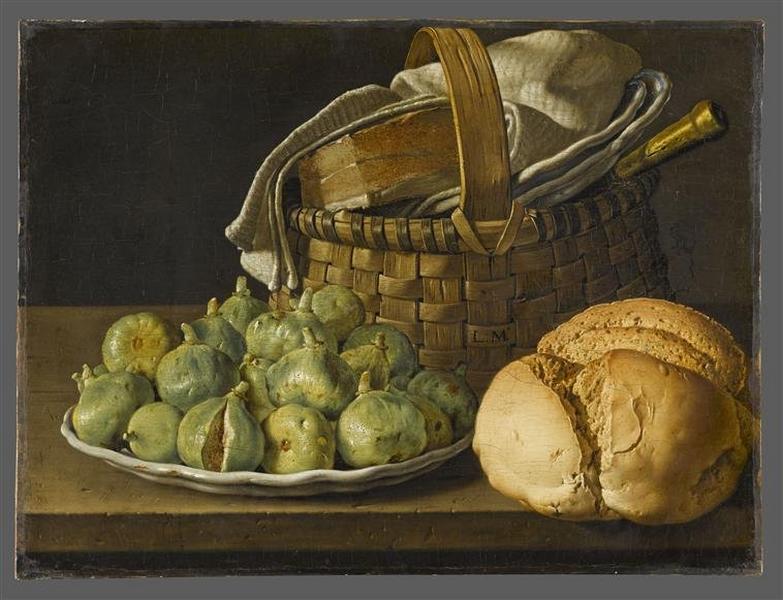
Nature morte aux figues


 Read More
Giclée / Art Print
Museum-quality giclée or canvas print with fast production and flexible finish options. ( Buy Hand Made Painting Buy Image)




P118B $10

P118H $10

P118W $10

P438Z $10

P508JH $12

P508YH $12

P805H $10

P805Z $10

P919BZ $10

P919G $10

P919XJ $10

P959ZH $10

P968JZ $12

W106C $8

W218G $10

W218JH $8

W218Y $10

W307PJ $10

W316G $10

W316PJ $8

W316Y $10

W398PJ $8

W4111J $10

W500HY $15

W500JH $15

W692G $12

W849H $8

W940BG $15

W953PJ $8




Pick from our preset sizes that match the artwork's original proportions.

You may enter your own dimensions to fit a specific frame or space. If your selected size does not match the original image's proportions, we will either crop the artwork or extend the image with a mirrored or solid-fill edge. A digital mockup will be sent for your approval before production begins.
Please note that the on-screen preview does not reflect the actual cropping or extension. Only the mockup will accurately show the final composition.
While custom sizes are available, we recommend selecting a dimension from the predefined list to preserve the original proportions.
Worldwide Delivery () in 2 weeks instead of standard 4/5 weeks. (17 August)

Free Worldwide Express Shipping

High-Quality Linen Canvas

Full Shipping Insurance

Customs Tax Refund Guarantee

True Color Matching Guarantee

60-Day Return Policy (Defects Only)

100% Money-Back Guarantee

Bulk Discount Offer
 Glass option is only available in size under 110 CM

Nature morte aux figues
Giclée / Art Print
Reproduction Size
-


Total Price
$ 63
Collectible Description
Luis Egidio Meléndez: A Masterpiece of Still Life
Luis Egidio Meléndez (1716–1780) stands as the undisputed titan of Spanish still life painting during the Enlightenment, a figure whose meticulous observation and unparalleled skill transformed commonplace objects into profound meditations on beauty and mortality. While overshadowed by contemporaries like José María Sertor and Giovanni Battista Piranesi, Meléndez’s legacy resides in his singular ability to capture the essence of domestic tranquility and celebrate the subtle grandeur inherent in everyday life—a feat brilliantly realized in “Nature morte aux figues,” a painting that continues to captivate viewers centuries later.
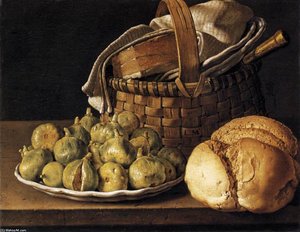
- Overall Impression: The artwork presents a serene tableau depicting a basket brimming with figs alongside a loaf of bread upon a wooden table. Its stylistic hallmarks align perfectly with the prevailing aesthetic sensibilities of 18th-century European art, characterized by realism and an unwavering dedication to detail.
- Composition & Perspective: Employing a triangular arrangement—the basket dominating the upper left corner—the composition achieves visual equilibrium while simultaneously guiding the eye across the canvas. The careful positioning of the plate overflowing with figs balances the bread’s presence on the right, establishing a harmonious visual rhythm. Shallow perspective enhances depth and brings the objects into intimate proximity with the viewer.
- Color Palette & Lighting: Dominated by earthy hues—greens, browns, creams—the color palette exudes warmth and authenticity. Subtle tonal variations contribute to atmospheric depth, illuminated by light emanating from the upper left, casting delicate shadows that sculpt form and amplify realism.
- Technique & Texture: Executed in oil on canvas with painstaking precision, Meléndez’s technique prioritizes layering paint to achieve subtle gradations of color and texture. Brushstrokes are virtually imperceptible, resulting in a flawlessly polished surface that faithfully reproduces the tactile qualities of each element—the rough crust of the bread, the velvety skin of the figs, and the supple folds of linen cloth.
- Symbolism & Emotional Resonance: Beyond its visual splendor, “Nature morte aux figues” speaks to themes of abundance and nourishment, reflecting the cultural preoccupation with pastoral ideals during Meléndez’s era. The painting evokes a palpable sense of peace and domestic contentment—a timeless reminder of beauty found in simplicity and an exquisite testament to the artist's mastery.
This remarkable artwork resides within the Musée du Louvre’s collection, where it continues to inspire admiration for its masterful execution and enduring artistic merit. Its reproduction offers a window into the opulent aesthetic world of the Enlightenment and allows collectors and interior designers alike to appreciate the profound beauty captured by Luis Egidio Meléndez.
Related Artworks

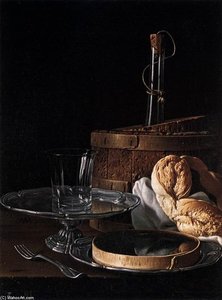
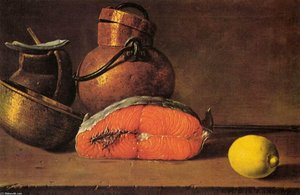
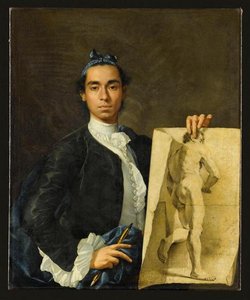
Artist Biography
A Life Immersed in Stillness: The World of Luis Egidio Meléndez
Born into an artistic lineage in Naples in 1716, Luis Egidio Meléndez de Rivera Durazo y Santo Padre emerged as a pivotal figure in 18th-century Spanish painting. His father, Francisco Meléndez, was a miniaturist who had journeyed from Oviedo to Madrid and then on to Italy seeking artistic advancement, while his uncle Miguel Jacinto also practiced portraiture within the Spanish court. This familial immersion in art provided young Luis with an early foundation, though his life would unfold as a complex interplay of royal connections, academic setbacks, and ultimately, a profound dedication to the seemingly humble genre of still life. The family’s return to Madrid when Meléndez was just one year old placed him within the orbit of courtly patronage, initially through his father's appointment as the king’s miniaturist in 1725. This early exposure instilled not only technical skill but also an understanding of the expectations and demands of royal portraiture—a world he would later navigate with both ambition and frustration.From Royal Aspirations to Independent Vision
Meléndez’s formative years were marked by a desire for recognition within the established artistic hierarchy. He spent several years copying portraits under the tutelage of Louis Michel van Loo, the French royal painter, gaining valuable experience but remaining largely confined to replication rather than independent creation. His ambition extended beyond this supporting role; he aspired to become a court painter in his own right. The inauguration of the Real Academia de Bellas Artes de San Fernando in 1744 offered a potential pathway, and Meléndez was among its first students, demonstrating exceptional drawing skills. However, a contentious dispute involving his father’s outspoken criticism of the academy's director led to both Francisco’s dismissal and Luis’s expulsion in 1748—a significant setback that forced him to seek opportunities elsewhere. A period in Italy followed, where he created paintings for Charles III of Spain (then King of Naples), before returning to Madrid in 1753 to assist his father with restoration work at the Alcázar palace. It was after 1760 that Meléndez truly began to forge his own path, increasingly specializing in still life painting—a genre that offered a degree of artistic freedom and independence from the constraints of royal commissions and academic approval.Mastering the Everyday: A New Aesthetic
Meléndez’s dedication to still life was not merely a pragmatic choice but a deliberate exploration of artistic possibilities. He built upon the austere tradition established by 17th-century Spanish masters like Juan Sánchez Cotán and Francisco de Zurbarán, renowned for their dramatic use of light and shadow and meticulous depiction of form. However, Meléndez infused this heritage with his own distinctive sensibility. Unlike his predecessors who often presented objects against dark backgrounds, he brought his subjects closer to the viewer, employing a lower vantage point that encouraged direct observation and a sense of intimacy. This approach resonated with the burgeoning spirit of the Enlightenment and its emphasis on empirical study and scientific inquiry—a subtle but significant shift in aesthetic perspective. Between 1759 and 1772, he created at least 44 still lifes for the private museum of natural history belonging to the Prince of Asturias (later King Charles IV), now housed in the Museo del Prado, solidifying his reputation as a master of the genre. These works are characterized by their realism, attention to detail, and subtle use of light and shadow, transforming humble kitchen fare into objects of artistic significance.A Legacy of Realism and Quiet Dignity
Despite his talent and dedication, Meléndez lived in relative poverty for much of his life, famously lamenting in a letter to the king that he possessed only his pencils. He died indigent in Madrid in 1780, largely unrecognized during his lifetime. It was only posthumously that his work gained widespread acclaim as the pinnacle of Spanish still-life painting during the 18th century. His influence can be seen in his ability to elevate everyday objects—fruits, vegetables, earthenware, glass—to a level of artistic dignity and beauty. He wasn’t merely replicating what he saw; he was interpreting it through a lens of meticulous observation and subtle artistry. His compositions are not simply arrangements of objects but carefully constructed studies of light, texture, and form.Historical Significance
Luis Egidio Meléndez’s historical significance lies in his masterful realism, his embrace of Enlightenment ideals, and his contribution to Spanish artistic heritage. He is celebrated for:- Master of Realism: His unparalleled ability to depict everyday objects with astonishing accuracy and detail.
- Enlightenment Influence: The lower vantage point and focus on direct observation in his work reflect the Enlightenment's emphasis on empirical study and scientific inquiry.
- Spanish Artistic Heritage: He built upon the traditions of Spanish still-life masters while forging his own distinctive style, leaving a lasting legacy in Spanish art history.
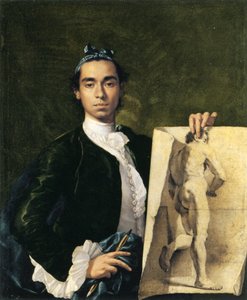
Luis Egidio Meléndez
1716 - 1780 , Italy
Quick Facts
- Artistic Movement Or Style: Still life painting
- Artists Who Influenced This Artist:
- Juan Sánchez Cotán
- Francisco de Zurbarán
- Date Of Birth: 1716
- Date Of Death: 1780
- Full Name: Luis Egidio Meléndez de Rivera Durazo
- Nationality: Spanish
- Notable Artworks:
- Nature morte aux figues
- Still-Life with Fruit and a Jar
- Place Of Birth: Naples, Italy
Related Articles

The Golden Age Reforged: Dramatic Realism & Religious Zeal in Spanish Baroque Art
Explore the dramatic world of Spanish Baroque art! Discover masters like Zurbarán & the powerful influence of religious zeal on painting techniques – a guide for collectors and enthusiasts.

The Dramatic Flourish: Exploring the Baroque Movement's Enduring Legacy in Art History
Explore the dramatic world of Baroque art! Discover iconic artists like Caravaggio & Rubens, defining techniques, and its lasting impact on art history. Expert insights for collectors & enthusiasts at ArtsDot.

Baroque Masterpieces: 10 Paintings That Defined an Era |
Journey through the drama & grandeur of Baroque art! Explore 10 masterpieces by Caravaggio, Rembrandt, Rubens & more. Discover stunning oil paintings, rich colors & timeless stories. Find museum-quality reproductions at .

Baroque Drama: Bringing Opulence & Emotion into Contemporary Interiors
Explore the opulent world of Baroque interior design! Discover key elements, modern applications & how to bring dramatic elegance into your home with 's authentic reproductions.
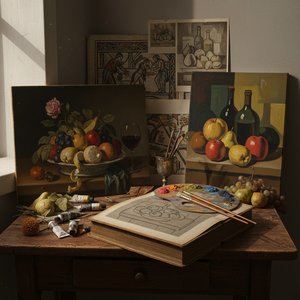
Silent Narratives: Exploring the Enduring Appeal of Still Life Painting Across Centuries
Explore the rich history of still life painting with ArtsDot. Discover Dutch Masters, decode vanitas symbolism & learn about collecting timeless art. Expert insights and museum-quality reproductions.