 Preview
 Send
Send Share
Share
 Details

 Download
 Similars
 X-Ray
X-Ray Diaporama
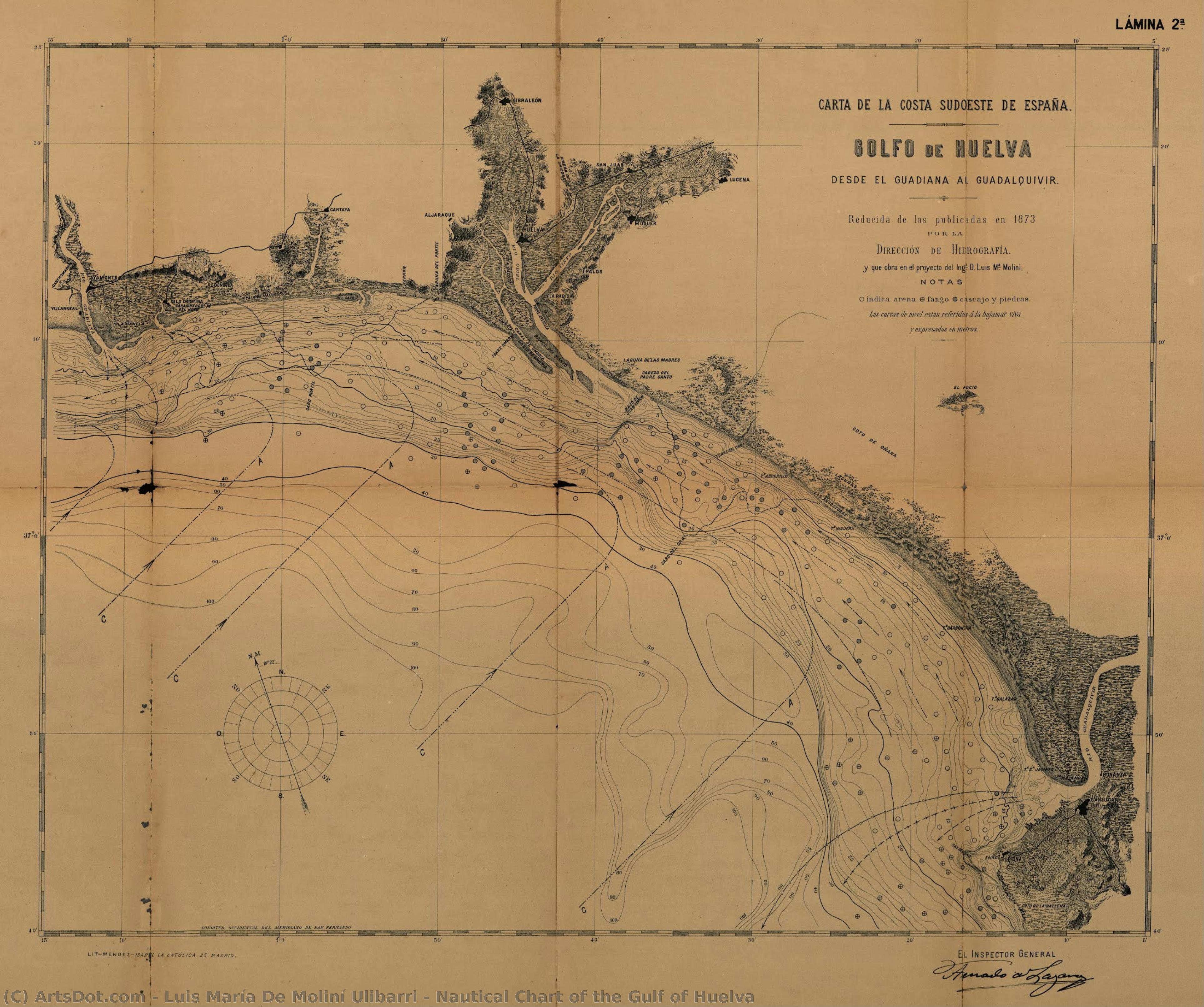
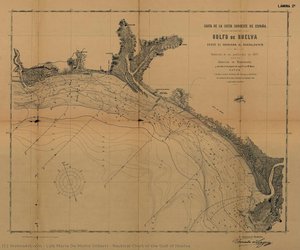
Nautical Chart of the Gulf of Huelva
 Acrylic On Canvas
- WallArt
- Impressionistic Detail
 1873
1873 70.0 x 100.0 cm
 Andalusian Archives
 Read More
Giclée / Art Print
Museum-quality giclée or canvas print with fast production and flexible finish options. ( Buy Hand Made Painting Buy Image)




P118B $10

P118H $10

P118W $10

P438Z $10

P508JH $12

P508YH $12

P805H $10

P805Z $10

P919BZ $10

P919G $10

P919XJ $10

P959ZH $10

P968JZ $12

W106C $8

W218G $10

W218JH $8

W218Y $10

W307PJ $10

W316G $10

W316PJ $8

W316Y $10

W398PJ $8

W4111J $10

W500HY $15

W500JH $15

W692G $12

W849H $8

W940BG $15

W953PJ $8




Pick from our preset sizes that match the artwork's original proportions.

You may enter your own dimensions to fit a specific frame or space. If your selected size does not match the original image's proportions, we will either crop the artwork or extend the image with a mirrored or solid-fill edge. A digital mockup will be sent for your approval before production begins.
Please note that the on-screen preview does not reflect the actual cropping or extension. Only the mockup will accurately show the final composition.
While custom sizes are available, we recommend selecting a dimension from the predefined list to preserve the original proportions.
Worldwide Delivery () in 2 weeks instead of standard 4/5 weeks. (3 September)

Free Worldwide Express Shipping

High-Quality Linen Canvas

Full Shipping Insurance

Customs Tax Refund Guarantee

True Color Matching Guarantee

60-Day Return Policy (Defects Only)

100% Money-Back Guarantee

Bulk Discount Offer
 Glass option is only available in size under 110 CM

Nautical Chart of the Gulf of Huelva
Giclée / Art Print
Reproduction Size
-


Total Price
$ 63
A Window into Coastal Navigation: Luis María Moliní’s Nautical Chart of the Gulf of Huelva
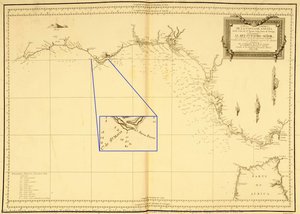
Gustave Caillebotte, a Parisian Impressionist, possessed an extraordinary ability to capture the essence of modern life—a fascination that propelled him beyond mere landscape painting and firmly established his place within art history. Born in Requena, Spain, in 1848, Moliní’s formative years instilled in him a meticulous observation of detail, a characteristic that would become central to his artistic practice. Unlike many artists of his era preoccupied with grand vistas or monumental narratives, Moliní chose instead to portray the quiet dramas unfolding within urban environments—a deliberate decision that speaks volumes about his artistic sensibilities and offers a poignant reflection on the human condition. His early collaboration with Édouard Manet proved pivotal, introducing him to Manet’s groundbreaking approach to painting: rejecting academic conventions in favor of capturing fleeting moments of light and color. This influence is palpable throughout Moliní's oeuvre, particularly evident in his masterful rendering of textures and surfaces—a technique honed through years of dedicated study and experimentation. The resulting paintings aren’t flamboyant displays intended to dazzle the eye; rather, they invite viewers into intimate spaces where everyday life unfolds with understated grace.- Subject Matter: The artwork depicts a detailed nautical chart illustrating the Gulf of Huelva, Spain. It meticulously charts coastlines, waterways, and prominent landmarks—a testament to Moliní’s commitment to accuracy and realism.
- Style: Embracing Impressionistic principles, Moliní prioritizes capturing atmospheric conditions and subtle tonal variations over precise representation. The muted palette contributes to a sense of tranquility and invites contemplation.
- Technique: Executed in oil paint on canvas, Moliní employs layering techniques—a hallmark of Impressionism—to build up depth and luminosity. Careful brushstrokes convey texture and movement, mirroring the dynamism of maritime activity.
- Recommended Use: Ideal for interior design projects aiming to evoke a sense of calm sophistication, particularly in spaces overlooking the sea or inspired by maritime themes.
- Collectors’ Note: This reproduction captures the essence of Moliní's artistic legacy—a testament to his dedication to observation and his ability to transform scientific data into evocative visual art.
Explore a stunning high-quality reproduction of Luis María Moliní’s Nautical Chart of the Gulf of Huelva at ArtsDot.com.
Related Artworks

Artist Biography
Gustave Caillebotte: A Parisian Impressionist Capturing Urban Life
Gustave Caillebotte (1848-1894) stands as a pivotal, yet often overlooked, figure in the transition from Impressionism to Post-Impressionism. Born into a bourgeois family in Paris, his early life was marked by a quiet, observant nature – a characteristic that profoundly shaped his artistic vision. Unlike many of his contemporaries who sought grand landscapes or historical subjects, Caillebotte’s focus remained firmly rooted in the everyday realities of Parisian urban life. His paintings aren't flamboyant displays of color and light; instead, they offer intimate glimpses into the lives of ordinary people within the bustling metropolis, revealing a subtle yet powerful commentary on modern society.
Caillebotte’s artistic journey began with a close friendship and mentorship under Édouard Manet. This association proved crucial, exposing him to Manet's revolutionary approach to painting – rejecting academic conventions in favor of capturing fleeting moments and portraying subjects with a directness previously unseen. Initially, Caillebotte experimented with Impressionistic techniques, mirroring Manet’s use of loose brushstrokes and an emphasis on light and atmosphere. However, he quickly developed his own distinct style, characterized by meticulous detail, precise compositions, and a keen eye for capturing the nuances of urban space. He was particularly interested in depicting architectural details – the ironwork of balconies, the reflections in windows, and the geometry of streets – with remarkable accuracy.
Early Influences and Artistic Development
Caillebotte’s artistic development wasn't solely shaped by Manet. He also drew inspiration from Japanese woodblock prints (Ukiyo-e), which he meticulously studied, incorporating their flattened perspective, bold outlines, and vibrant colors into his work. This influence is particularly evident in paintings like “Paris Street; Rainy Day” (1877), where the composition echoes the dynamic arrangements of Ukiyo-e prints. Furthermore, Caillebotte’s meticulous attention to detail and his interest in architectural precision can be traced back to his early exposure to the École des Beaux-Arts, where he studied classical techniques alongside contemporary artistic trends.
A significant turning point in Caillebotte's career was his decision to document the construction of the Gare d’Orsay railway station. This project provided him with unparalleled access to a rapidly changing urban landscape and allowed him to experiment with capturing movement and spatial relationships. These studies culminated in works like “The Railway Station” (1876), which showcases his ability to render complex architectural forms with remarkable clarity and precision. He wasn’t simply recording the building; he was analyzing its impact on the surrounding environment and the lives of those who used it.
Key Works and Recurring Themes
Caillebotte's oeuvre is marked by a consistent focus on urban scenes, particularly those depicting Parisian life. “Paris Street; Rainy Day” (1877) remains his most celebrated work, offering a remarkably detailed and atmospheric portrayal of a rainy afternoon in the city. The painting’s composition—a carefully arranged series of figures navigating a crowded street—captures both the energy and the anonymity of urban existence. Other notable works include “At the Musée” (1879), which depicts a group of bourgeois women examining a sculpture, and "The Beanpole" (1870), an early example of his interest in capturing fleeting moments of everyday life.
Beyond simply depicting scenes, Caillebotte explored recurring themes within his work. He frequently portrayed the isolation and alienation experienced by individuals within the vastness of the city. His figures are often shown alone, lost in thought or absorbed in their own activities, reflecting a sense of detachment from one another. He also subtly critiqued the social inequalities of Parisian society, portraying the contrast between the wealthy elite and the working class with a quiet but perceptive eye.
Legacy and Influence
Despite his significant contributions to Impressionism, Caillebotte’s work was often overshadowed by that of his more flamboyant contemporaries. However, in recent decades, his meticulous observation, precise compositions, and subtle social commentary have earned him greater recognition as a key figure in the development of modern art. His influence can be seen in the works of later artists who explored urban themes and experimented with new approaches to composition and perspective.
Caillebotte’s legacy extends beyond his individual paintings. He demonstrated the potential for Impressionism to serve as a vehicle for social observation and critical reflection, paving the way for subsequent generations of artists who sought to capture the complexities of modern life. His dedication to detail and his ability to render the nuances of urban space continue to inspire artists today.
Further Resources
- Wikipedia: Gustave Caillebotte - Wikipedia: https://en.wikipedia.org/wiki/Gustave_Caillebotte
luis maría de moliní ulibarri
1848 - , Spain
Quick Facts
- Artistic Movement Or Style:
- Post-Impressionism
- Symbolism
- Synthetism
- Artists Or Movements Influenced By This Artist:
- Nabis
- Fauvism
- Artists Who Influenced This Artist:
- Cézanne
- van Gogh
- Date Of Birth: June 7, 1848
- Date Of Death: May 8, 1903
- Full Name: Paul Gauguin
- Nationality: French
- Notable Artworks:
- Vision of the Sermon
- Where Do We Come From?
- Iahona and Teha
- Place Of Birth: Paris, France
Related Articles
25 Klimt Masterpieces: A Journey Through Iconic Art & Decor
Delve into the world of Gustav Klimt with our top 25 masterpieces! Explore his iconic paintings – 'The Kiss,' 'Portrait of Adele,' and more. Discover museum-quality reproductions & curated decor ideas. Explore the full collection online at ArtsDot.com.
Gustave Caillebotte: Bridging Realism & Modernity in Parisian Life
Explore the life & art of Gustave Caillebotte, a pivotal figure bridging Realism & Impressionism. Discover his iconic Parisian scenes and lasting legacy with ArtsDot.
19th Century Masterpieces: 10 Paintings That Defined an Era | ArtsDot
Journey through 19th century art with ArtsDot! Explore 10 iconic paintings – from Monet & Renoir to Courbet – and discover the stories behind Romanticism, Realism & Impressionism. Find museum-quality reproductions for your home decor. Explore the full collection online!

Impressionism's Masterpieces: 10 Paintings That Defined a Movement | ArtsDot
Journey through Impressionism's heart with 10 iconic paintings by Monet, Renoir & Degas. Explore light, color & the stories behind these masterpieces. Find museum-quality art reproductions and elevate your home decor on ArtsDot.com.
Gustave Loiseau: Capturing the Ephemeral Light of French Landscapes
Explore the captivating landscapes of Gustave Loiseau, a key Post-Impressionist painter. Discover his unique 'en treillis' technique and artistic legacy with our comprehensive guide.