 Preview
 Send
Send Share
Share
 Details

 Download
 Similars
 X-Ray
X-Ray Diaporama
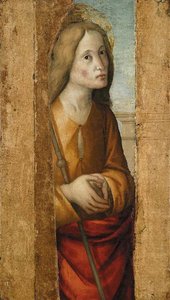
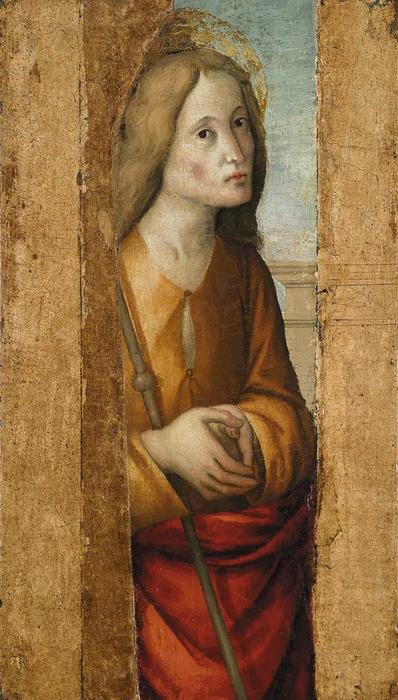
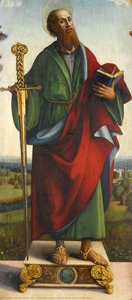
Figure of a Saint
 48.0 x 27.0 cm
 Read More
Hand Made Oil Reproduction
Hand-painted oil on canvas in your size and frame, made to order by our artists. ( Buy Print Buy Image)




































Pick from our preset sizes that match the artwork's original proportions.

You may enter your own dimensions to fit a specific frame or space. If your selected size does not match the original image's proportions, we will either crop the artwork or extend the painting with additional hand-painted elements. A digital mockup will be sent for your approval before production begins.
Please note that the on-screen preview does not reflect the actual cropping or extension. Only the mockup will accurately show the final composition.
While custom sizes are available, we recommend selecting a dimension from the predefined list to preserve the original proportions.
After order, ArtsDot.com team will email client for instructions and provide a mockup preview
Worldwide Delivery () in 3/4 weeks instead of standard 5 weeks. (17 August). No compromise on quality.

Free Worldwide Express Shipping

High-Quality Linen Canvas

Full Shipping Insurance

Customs Tax Refund Guarantee

True Color Matching Guarantee

60-Day Return Policy (Defects Only)

100% Money-Back Guarantee

Bulk Discount Offer
 Glass option is only available in size under 110 CM

Figure of a Saint
Reproduction Medium
Reproduction Size
-


Total Price
$ 263
Related Artworks
Artist Biography
Macrino d'Alba: A Pioneer of Piedmontese Renaissance Painting
Macrino d’Alba (c. 1462 – 1515) stands as a pivotal figure in the artistic landscape of Piedmont during the Italian Renaissance, largely recognized for his contribution to altarpiece painting and portraiture. Though biographical details remain scarce—primarily attributed works offer the most substantial insight into his oeuvre—scholarly research suggests he was born Gian Giacomo de’ Alladio in Albano Laziale, Lazio, Italy. His artistic journey unfolded primarily within the humanist circles of Turin and Milan, where he absorbed influences from both late Gothic traditions and emerging Renaissance ideals.- Early Life & Training: Precise information regarding Alba's formative years is elusive. However, evidence indicates he received training in Rome under Piero della Francesca and Andrea Mantegna—artists who championed geometric precision and idealized beauty—principles that would profoundly shape his artistic style.
- Milanese Period (1490-1500): Alba’s association with Ludovico Sforza's court in Milan proved formative. He collaborated on ambitious decorative projects, notably the Sala Bianca frescoes at Palazzo Ducale, demonstrating mastery of perspective and incorporating classical motifs alongside Byzantine iconography. This period cemented his reputation as a skilled innovator.
- Return to Turin & Patronage: Alba returned to Turin around 1500, securing commissions from influential noble families like Savoy. His Turin altarpieces—particularly those adorning churches in Piazza Castello and San Lorenzo Maggiore—are considered masterpieces of Piedmontese Renaissance art. These works exemplify his meticulous technique and profound understanding of religious symbolism.
Stylistic Characteristics & Artistic Technique
Alba’s artistic style is characterized by a harmonious blend of Gothic and Renaissance elements. He skillfully employed linear perspective, achieving remarkable realism in depictions of architectural spaces and figures—a hallmark of the Florentine Renaissance. However, he retained stylistic features reminiscent of late Gothic art, notably intricate drapery folds and expressive facial expressions. His meticulous brushwork and masterful use of color contribute to the luminous quality of his paintings.- Color Palette: Alba favored a rich palette dominated by blues, reds, and golds—colors frequently employed in religious iconography during this era. He achieved subtle tonal gradations through layering thin glazes of pigment, enhancing depth and luminosity.
- Composition & Iconography: Alba’s compositions are balanced and harmonious, reflecting the humanist emphasis on proportion and order. His depictions of saints—particularly those featuring St. Francis Xavier and St. Benedict—are imbued with symbolic meaning, conveying spiritual devotion and moral virtue.
Notable Works & Legacy
Alba’s artistic legacy resides primarily in his altarpieces and portraits—primarily attributed to him—which continue to inspire admiration for their beauty and technical excellence. Among his most celebrated achievements are:- The Altarpiece of San Lorenzo Maggiore (Turin): This monumental fresco cycle showcases Alba's mastery of perspective and color, depicting scenes from the life of St. Benedict and St. Francis Xavier with unparalleled detail.
- Saint Francis Xavier (Milan): A captivating portrait capturing Saint Francis Xavier’s serene countenance and contemplative gaze—a testament to Alba’s ability to convey psychological depth through visual representation.
macrino d' alba
1462 - 1515 , Italy
Quick Facts
- Artistic Movement Or Style: Late Gothic & Early Renaissance
- Artists Or Movements Influenced By This Artist: ['Andrea Mantegna']
- Artists Who Influenced This Artist: ['Giovanni Battista Tiepolo']
- Date Of Birth: 1462
- Date Of Death: 1515
- Full Name: Gian Giacomo de' Alladio
- Nationality: Italian
- Notable Artworks: ['Saint John the Baptist']
- Place Of Birth: Albano, Italy