 Preview
 Send
Send Share
Share
 Details

 Download
 Similars
 X-Ray
X-Ray Diaporama
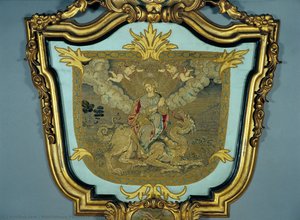
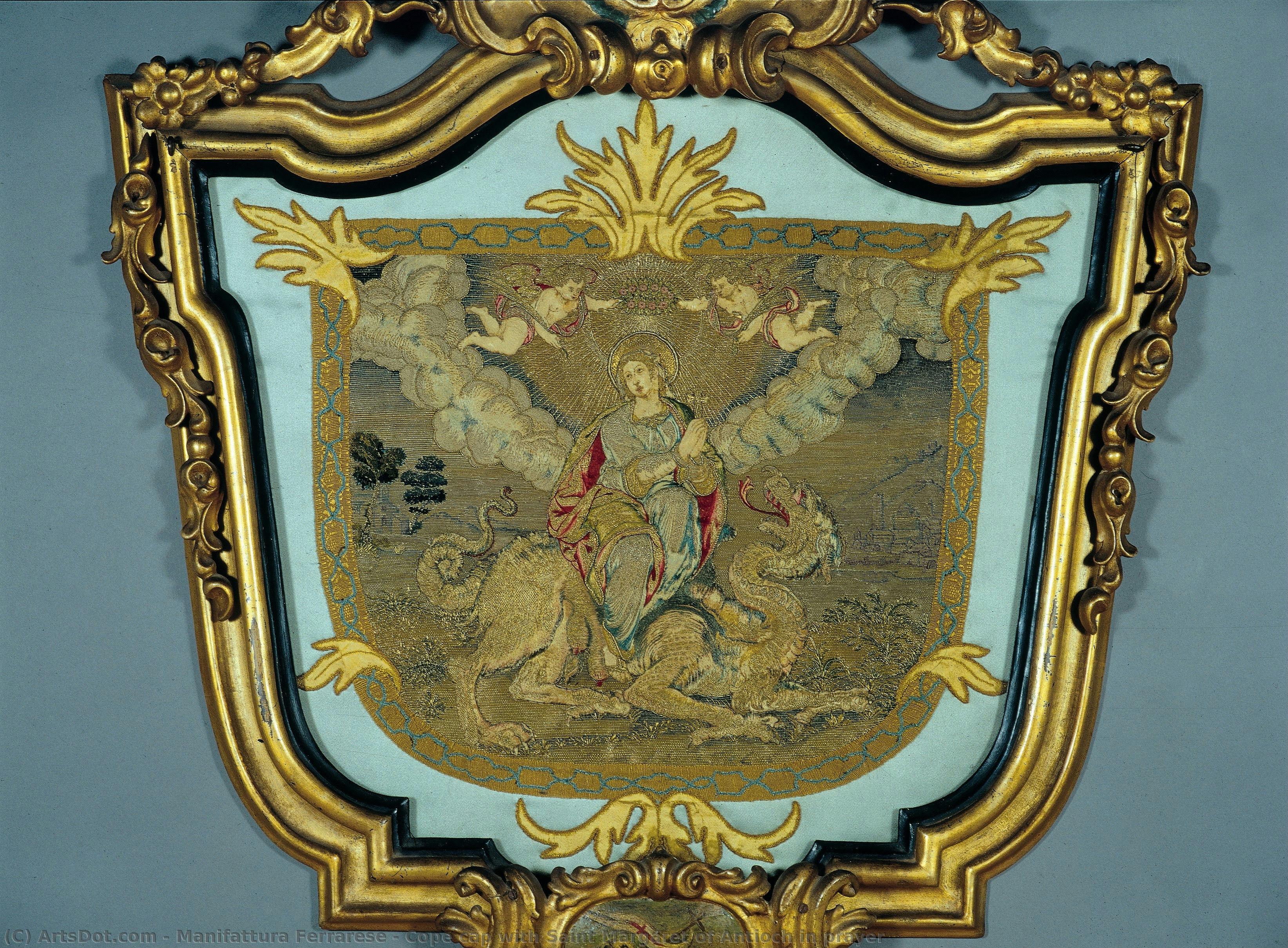
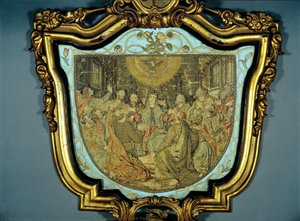
Cope cap with Saint Margaret of Antioch in prayer
 Baroque
 90.0 x 72.0 cm
 Cathedral Museum of Ferrara
 Read More
Giclée / Art Print
Museum-quality giclée or canvas print with fast production and flexible finish options. ( Buy Hand Made Painting Buy Image)




































Pick from our preset sizes that match the artwork's original proportions.

You may enter your own dimensions to fit a specific frame or space. If your selected size does not match the original image's proportions, we will either crop the artwork or extend the image with a mirrored or solid-fill edge. A digital mockup will be sent for your approval before production begins.
Please note that the on-screen preview does not reflect the actual cropping or extension. Only the mockup will accurately show the final composition.
While custom sizes are available, we recommend selecting a dimension from the predefined list to preserve the original proportions.
Worldwide Delivery () in 2 weeks instead of standard 4/5 weeks. (4 September)

Free Worldwide Express Shipping

High-Quality Linen Canvas

Full Shipping Insurance

Customs Tax Refund Guarantee

True Color Matching Guarantee

60-Day Return Policy (Defects Only)

100% Money-Back Guarantee

Bulk Discount Offer
 Glass option is only available in size under 110 CM

Cope cap with Saint Margaret of Antioch in prayer
Giclée / Art Print
Reproduction Size
-


Total Price
$ 63
Related Artworks



Artist Biography
The Legacy of Manifattura Ferrarese: A Tapestry of Italian Excellence
To trace the lineage of Manifattura Ferrarese is to embark on a journey through the very soul of Italian craftsmanship, where the boundaries between fine art and luxury textile production dissolve into a singular pursuit of perfection. While the name evokes the prestigious traditions of the Ferrara School—a movement defined by the pioneering spirit of masters like Cosmé Tura—the identity of Manifattura Ferrarese represents something even more enduring: a continuous, centuries-old dialogue between historical grandeur and modern elegance. Rooted in the fertile artistic soil of Italy, this institution has long been synonymous with an uncompromising dedication to disegno, the mastery of line and form that once defined the Renaissance masters.
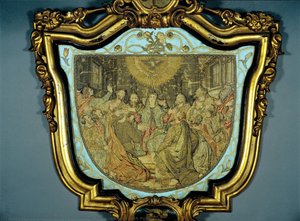
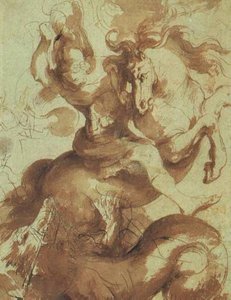
The origins of this excellence are inextricably linked to the cultural renaissance of Ferrara, a period where the patronage of figures such as Federico III Gonzaga fostered an environment of unparalleled experimentation. In this era, the workshop was not merely a place of production but a sanctuary for narrative depth. The artisans of the Ferraren tradition specialized in translating profound theological and mythological themes onto the most delicate surfaces. Whether it was the spiritual intensity found in a Cope cap with Pentecost or the heroic drama of Saint George and the Dragon, the work emerged from a deep understanding of human emotion and divine symbolism, rendered through the meticulous interlacing of silk and wool.
A Symphony of Thread and Technique
What distinguishes Manifattura Ferrarese from the broader landscape of textile history is its refusal to prioritize quantity over the sanctity of quality. The workshop’s development was marked by a rigorous adherence to the highest standards of Italian artistry, treating every thread as if it were a brushstroke on a canvas. This approach allowed for the creation of works that possess a unique textural depth, where the play of light across gilded embroidery and rich pigments creates a sense of living history. The technique is characterized by:
- Anatomical Precision: A continuation of the Renaissance focus on realistic form, even when translated into woven patterns.
- Narrative Complexity: The ability to weave intricate biblical and mythological stories that invite contemplative study.
- Material Mastery: The sophisticated use of premium silk, wool, and metallic threads to achieve a multidimensional visual effect.
As the centuries progressed, the workshop’s influence expanded far beyond the borders of Ferrara. The ability to marry historical reverence with contemporary luxury allowed Manifattura Ferrarese to remain relevant in an ever-changing fashion landscape. This evolution saw the factory transitioning from a producer of sacred vestments and tapestries to a collaborator with the world's most prestigious luxury houses, including Louis Vuitton and visionary designers like Kris Van Assche. Such collaborations demonstrate that the core tenets of the Ferrarese tradition—meticulous detail, structural integrity, and aesthetic innovation—are timeless.
Historical Significance and Modern Resonance
The historical significance of Manifattura Ferrarese lies in its role as a bridge between eras. It serves as a living archive of Italian heritage, preserving the techniques of the Quattrocento while adapting them to the demands of modern haute couture. In an age of mass production, the factory stands as a bastion of slow, intentional craftsmanship. To encounter a piece from this lineage is to experience a fragment of the past; it is to feel the weight of history in the drape of a fabric and to see the echoes of Renaissance masters in the intricate patterns of a modern textile.
Today, the legacy continues to inspire, proving that true artistry is not bound by time. The enduring strength of Manifattura Ferrarese resides in its ability to evoke emotion through texture and color, ensuring that the spirit of the Ferrara School remains vibrant, tactile, and profoundly beautiful for generations to come.
manifattura ferrarese
Italy
Quick Facts
- Artistic Movement Or Style: Ferrara School
- Artists Or Movements Influenced By This Artist: ['Renaissance']
- Artists Who Influenced This Artist: ['Alessandro Filipepi']
- Date Of Birth: 1430
- Date Of Death: 1495
- Full Name: Cosmé Tura
- Nationality: Italian
- Notable Artworks: ['Saint George slaying a dragon']
- Place Of Birth: Ferrara
Related Articles

Georges Braque's Masterpieces: 25 Paintings That Defined Cubism & Modern Art | ArtsDot
Explore 25 iconic Georges Braque paintings that revolutionized Cubism & modern art. Discover the stories behind his masterpieces, from Fauvism to Analytical Cubism. Find museum-quality reproductions & elevate your home decor with ArtsDot.com.

Georges Seurat's Masterpieces: 25 Paintings That Defined Pointillism | ArtsDot
Explore 25 iconic Georges Seurat paintings & discover the brilliance of Pointillism. From 'La Grande Jatte' to his harbor scenes, delve into art history with ArtsDot.com. Find museum-quality reproductions for your home decor. Explore the full collection online!

The Dramatic Flourish: Exploring the Baroque Movement's Enduring Legacy in Art History
Explore the dramatic world of Baroque art! Discover iconic artists like Caravaggio & Rubens, defining techniques, and its lasting impact on art history. Expert insights for collectors & enthusiasts at ArtsDot.

The Golden Age Reforged: Dramatic Realism & Religious Zeal in Spanish Baroque Art
Explore the dramatic world of Spanish Baroque art! Discover masters like Zurbarán & the powerful influence of religious zeal on painting techniques – a guide for collectors and enthusiasts.

Baroque Masterpieces: 10 Paintings That Defined an Era |
Journey through the drama & grandeur of Baroque art! Explore 10 masterpieces by Caravaggio, Rembrandt, Rubens & more. Discover stunning oil paintings, rich colors & timeless stories. Find museum-quality reproductions at .