 Preview
 Send
Send Share
Share
 Details

 Download
 Similars
 X-Ray
X-Ray Diaporama
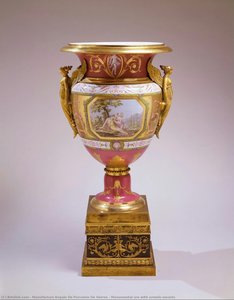
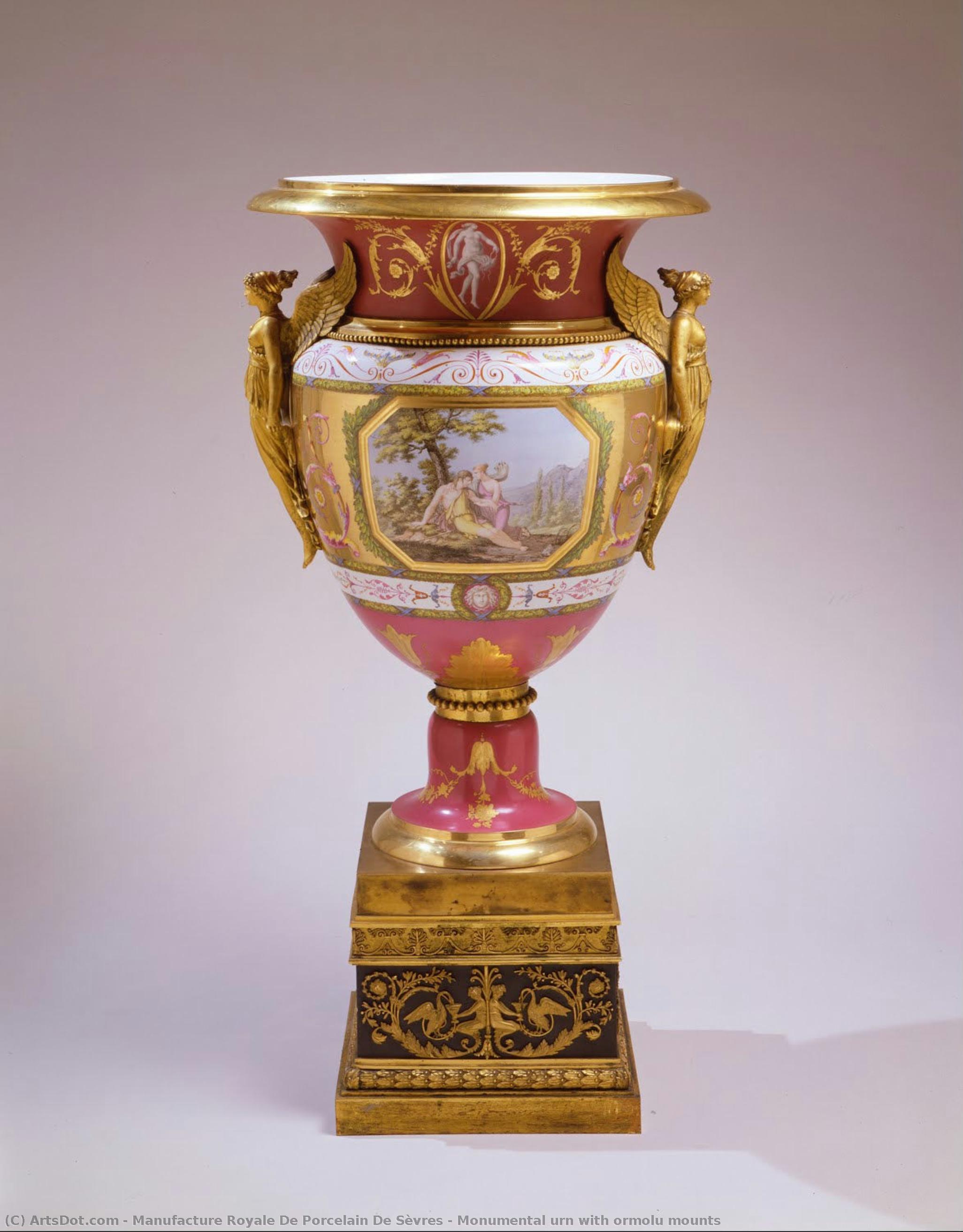
Monumental urn with ormolu mounts

 Read More
Giclée / Art Print
Museum-quality giclée or canvas print with fast production and flexible finish options. ( Buy Hand Made Painting Buy Image)




































Pick from our preset sizes that match the artwork's original proportions.

You may enter your own dimensions to fit a specific frame or space. If your selected size does not match the original image's proportions, we will either crop the artwork or extend the image with a mirrored or solid-fill edge. A digital mockup will be sent for your approval before production begins.
Please note that the on-screen preview does not reflect the actual cropping or extension. Only the mockup will accurately show the final composition.
While custom sizes are available, we recommend selecting a dimension from the predefined list to preserve the original proportions.
Worldwide Delivery () in 2 weeks instead of standard 4/5 weeks. (25 August)

Free Worldwide Express Shipping

High-Quality Linen Canvas

Full Shipping Insurance

Customs Tax Refund Guarantee

True Color Matching Guarantee

60-Day Return Policy (Defects Only)

100% Money-Back Guarantee

Bulk Discount Offer
 Glass option is only available in size under 110 CM

Monumental urn with ormolu mounts
Giclée / Art Print
Reproduction Size
-


Total Price
$ 63
Related Artworks









Artist Biography
The Legacy of Royal Porcelain: Manufacture Royale de Sèvres
The story of the Manufacture Royale de Sèvres is inextricably linked to the opulence and artistic ambition of 18th-century France, a period defined by Louis XV’s pursuit of refined beauty and Marie Antoinette's patronage of the arts. While not a single artist in the traditional sense, the *Manufacture* represents a collective genius – a workshop where innovation in ceramic technology met with unparalleled decorative skill. Its origins trace back to 1740, when Vincent Mariette established a soft-paste porcelain factory near Sèvres, just outside Paris. However, it was under the direction of Robert Du Paquier that the enterprise truly began its ascent, attracting skilled artisans and chemists dedicated to unlocking the secrets of hard-paste porcelain, then dominated by the East.From Imitation to Innovation: Early Years & Royal Patronage
Initially, the factory focused on emulating the coveted Chinese porcelain imported into Europe. These early pieces, though beautifully painted, were largely imitative. The turning point came with the acquisition of secret formulas and techniques from exiled Jesuit fathers who had worked in China. This knowledge allowed Sèvres to develop its own distinctive soft-paste porcelain – renowned for its delicate translucence and vibrant colors. In 1756, Louis XV took direct control of the factory, renaming it the *Manufacture Royale de Sèvres*. This royal patronage was transformative. The King provided not only financial support but also a constant stream of commissions, demanding increasingly elaborate designs and pushing the boundaries of ceramic artistry. Jean-Baptiste Pillement, a master flower painter, became a key figure during this period, his rococo style defining much of the factory’s early aesthetic. The focus shifted from mere imitation to original creations, incorporating motifs inspired by nature, mythology, and the latest trends in painting and sculpture.Technological Breakthroughs & Artistic Flourishing
The latter half of the 18th century witnessed a series of remarkable technological advancements at Sèvres. The development of *bleu celeste* – an intensely vibrant cobalt blue – became a signature color, highly prized for its depth and luminosity. Equally significant was the invention of *rose pompadour*, a delicate pink hue achieved through meticulous control of firing temperatures and enamel composition. These colors, along with others like *vert céladon* and *jaune jonquille*, were applied to an astonishing range of forms: vases, pots-pourris, ewers, cups, saucers, and elaborate sculptural pieces. The factory also pioneered new techniques in gilding, employing intricate designs inspired by the work of goldsmiths. Artists like François Boucher and Jean-Honoré Fragonard contributed designs for painted decorations, further elevating the status of Sèvres porcelain as a symbol of aristocratic taste. The *crayons bleus* service commissioned by Madame de Pompadour exemplifies this period – each piece uniquely decorated with scenes inspired by her country estate.The Revolution & Beyond: Adapting to Changing Times
The French Revolution brought upheaval to the Manufacture Royale. Royal commissions ceased, and the factory faced an uncertain future. However, it managed to survive by adapting its production to meet the demands of a new clientele. Simpler designs became more prevalent, reflecting the changing aesthetic sensibilities of the era. During the Napoleonic period, Sèvres continued to flourish, producing elaborate services for the Emperor and his court. The factory’s reputation extended beyond France, with pieces sought after by collectors across Europe and America. Throughout the 19th and 20th centuries, Sèvres remained a center of ceramic innovation, experimenting with new forms and techniques while upholding its tradition of exquisite craftsmanship. Today, the Manufacture Royale de Sèvres continues to produce porcelain, honoring its rich history and legacy as one of the world’s most prestigious ceramic workshops.Historical Significance & Enduring Influence
The *Manufacture Royale de Sèvres* holds a unique place in the history of art and design. It wasn't simply a factory producing luxury goods; it was a crucible of artistic collaboration, technological innovation, and royal patronage. The pieces created at Sèvres defined the aesthetic of the Rococo and Neoclassical periods, influencing ceramic production across Europe and beyond. The factory’s commitment to quality and craftsmanship set a new standard for porcelain artistry, inspiring generations of artists and artisans. Its influence can be seen in the collections of major museums worldwide, and its pieces continue to command high prices at auction. More than just objects of beauty, Sèvres porcelain represents a pivotal moment in French history – a testament to the power of art to reflect and shape cultural values.- The development of soft-paste porcelain techniques.
- Pioneering new enamel colors like *bleu celeste* and *rose pompadour*.
- Establishing a model for royal patronage of the arts.
- Influencing ceramic design across Europe.
Quick Facts
- Artistic Movement Or Style: Porcelain Manufacturing
- Date Of Death: Living
- Full Name: Manufacture Royale De Porcelain De Sèvres