 Preview
 Send
Send Share
Share
 Details

 Download
 Similars
 X-Ray
X-Ray Diaporama
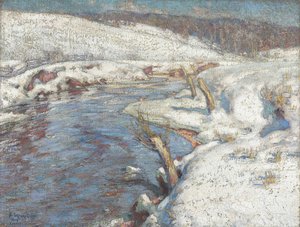
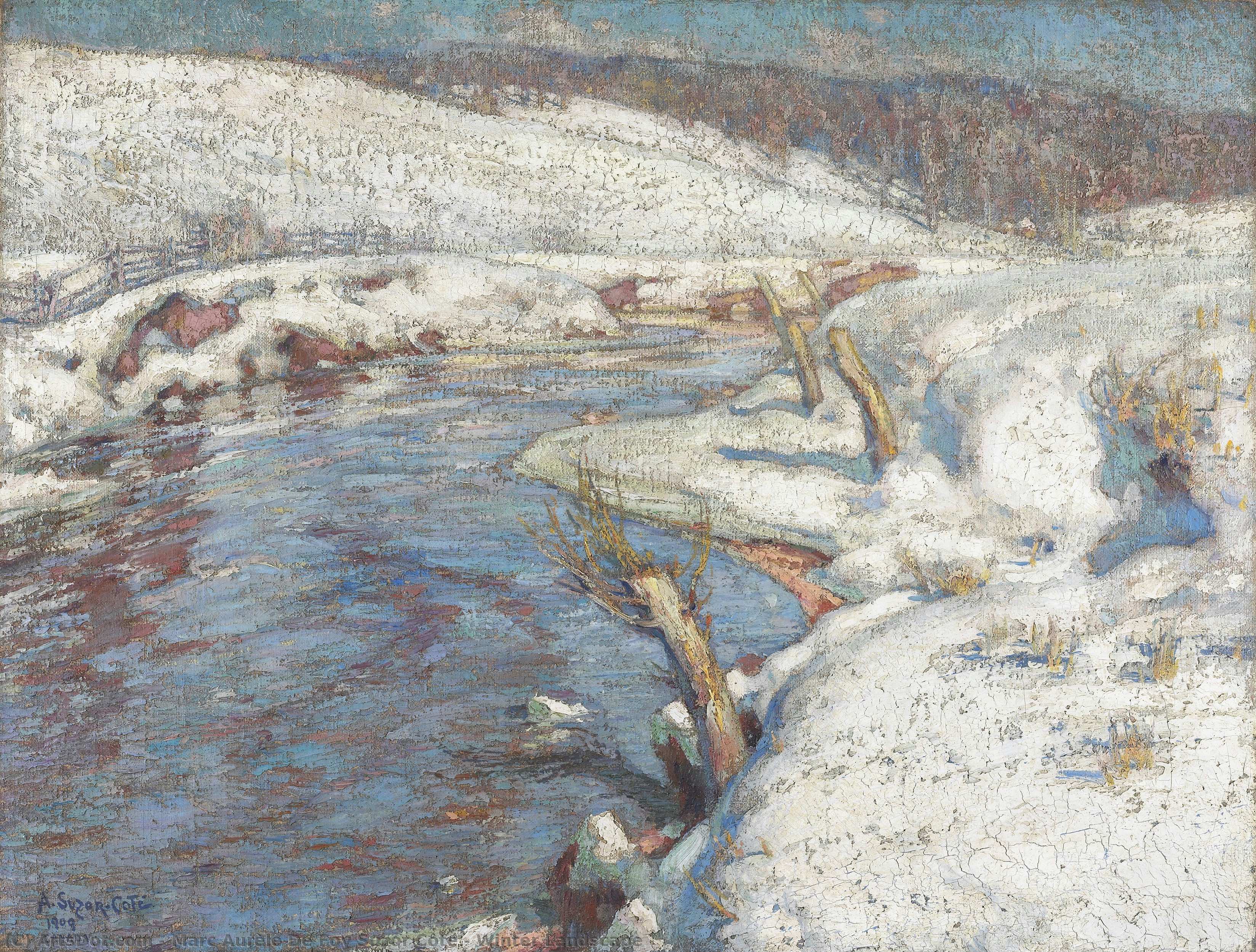
Winter Landscape
 Oil On Canvas
- WallArt
- Impressionism
 1909
1909 72.0 x 94.0 cm
 National Gallery of Canada
 Read More
Hand Made Oil Reproduction
Hand-painted oil on canvas in your size and frame, made to order by our artists. ( Buy Print Buy Image)




P118B $10

P118H $10

P118W $10

P438Z $10

P508JH $12

P508YH $12

P805H $10

P805Z $10

P919BZ $10

P919G $10

P919XJ $10

P959ZH $10

P968JZ $12

W106C $8

W218G $10

W218JH $8

W218Y $10

W307PJ $10

W316G $10

W316PJ $8

W316Y $10

W398PJ $8

W4111J $10

W500HY $15

W500JH $15

W692G $12

W849H $8

W940BG $15

W953PJ $8




Pick from our preset sizes that match the artwork's original proportions.

You may enter your own dimensions to fit a specific frame or space. If your selected size does not match the original image's proportions, we will either crop the artwork or extend the painting with additional hand-painted elements. A digital mockup will be sent for your approval before production begins.
Please note that the on-screen preview does not reflect the actual cropping or extension. Only the mockup will accurately show the final composition.
While custom sizes are available, we recommend selecting a dimension from the predefined list to preserve the original proportions.
After order, ArtsDot.com team will email client for instructions and provide a mockup preview
Worldwide Delivery () in 3/4 weeks instead of standard 5 weeks. (22 August). No compromise on quality.

Free Worldwide Express Shipping

High-Quality Linen Canvas

Full Shipping Insurance

Customs Tax Refund Guarantee

True Color Matching Guarantee

60-Day Return Policy (Defects Only)

100% Money-Back Guarantee

Bulk Discount Offer
 Glass option is only available in size under 110 CM

Winter Landscape
Reproduction Medium
Reproduction Size
-


Total Price
$ 263
Artwork Description
A Winter's Embrace: Exploring "Winter Landscape" by Marc-Aurèle de Foy Suzor-Coté
- The Artist’s Vision: “Winter Landscape,” painted in 1909 by Marc-Aurèle de Foy Suzor-Coté, offers a poignant glimpse into the Canadian winter – a scene imbued with both the stark beauty of nature and a profound sense of solitude. Born Hypolite Wilfrid Marcaurèle Côté in Bathurst, Canada, in 1869, Suzor-Coté dedicated his life to capturing the essence of his homeland, evolving from academic influences towards a distinctly Impressionistic style that prioritized atmosphere and emotion over rigid representation.
- Impressionistic Technique: The artwork’s power lies in its masterful execution of Impressionism. Noticeable brushstrokes create a textured surface, inviting the viewer to step into the scene. Thick impasto – particularly evident in the snowbanks – lends a remarkable three-dimensional quality, suggesting the biting cold and the weight of the falling snow. This technique wasn't simply about depicting what was seen; it was about conveying how light and atmosphere transformed the landscape.
A Symphony of Cool Tones
- Color Palette: The dominant cool tones – blues, grays, and whites – immediately evoke a sense of winter’s chill and stillness. This deliberate choice isn't merely aesthetic; it reinforces the painting’s symbolic weight, representing resilience and quietude in the face of nature’s harshness. The diffused lighting, characteristic of an overcast day, further enhances this feeling of tranquility and isolation.
- Compositional Elements: Horizontal lines – mirroring the river, snowbanks, and horizon – create a sense of stability and expanse, while vertical elements like trees introduce a subtle dynamism. The flattened perspective, typical of Impressionism, prioritizes capturing the overall atmosphere over precise spatial accuracy, drawing attention to the emotional impact of the scene.
Historical Context & Symbolism
- Canadian Identity: Painted in 1909, “Winter Landscape” reflects a pivotal moment in Canadian art history – the burgeoning movement towards artistic nationalism. Suzor-Coté’s work aligns with this trend, seeking to define and celebrate Canada's unique identity through its landscapes. His recognition as a ‘painter national par excellence’ underscores his significance within this context.
- Symbolic Resonance: Beyond its aesthetic qualities, the painting carries symbolic weight. The winter landscape itself represents resilience – the ability of nature to endure harsh conditions – and quietude – a sense of peace and contemplation amidst the vastness of the natural world. The frozen river could symbolize stagnation or the need for renewal.
Details & Specifications
Artwork Details:- Title: Winter Landscape
- Artist: Marc-Aurèle de Foy Suzor-Coté
- Date: 1909
- Size: 72 x 94 cm
- Medium: Oil on Canvas
- Interior Designers seeking to evoke a sense of serenity and winter’s beauty.
- Art Collectors interested in Impressionistic Canadian art.
- Those drawn to landscapes that capture the essence of nature's quiet power.
Related Artworks
Artist Biography
A Life Immersed in Light and Legacy
Marc-Aurèle de Foy Suzor-Coté, a name resonant within the annals of Canadian art history, stands as a pivotal figure who bridged the gap between academic tradition and the burgeoning currents of French Impressionism and Post-Impressionism. Born Hypolite Wilfrid Marcaurèle Côté on April 6th, 1869, in Arthabaska, Quebec – now Victoriaville – his journey was one of artistic exploration, a dedication to capturing both the beauty of the Canadian landscape and the spirit of its history. Suzor-Coté wasn’t merely a painter and sculptor; he was a chronicler of a nation finding its voice, a ‘painter national par excellence,’ as proclaimed by *La Presse* in 1929. His life, spanning until January 29th, 1937, when he passed away in Daytona Beach, Florida, was a testament to the power of artistic vision and unwavering commitment.From Rural Beginnings to Parisian Studios
Suzor-Coté’s artistic inclinations were nurtured from his earliest years within an artistically inclined family. His initial exposure came through assisting local artist Joseph-Thomas Rousseau with decorative painting projects for churches, a formative experience that instilled in him a foundational understanding of technique and composition. However, his talents weren't confined to the visual arts; he demonstrated a remarkable aptitude for music, pursuing studies at the Conservatory of Music in Paris in 1890. This period reveals a versatile spirit, one capable of excelling in multiple creative disciplines. It was ultimately painting that claimed his devotion, leading him to immerse himself in formal artistic training within the vibrant Parisian art scene of the 1890s. He attended the prestigious École des Beaux-Arts under the tutelage of Léon Bonnat and further honed his skills at the Julian and Colarossi Academies. These institutions provided a rigorous grounding in classical techniques, shaping his early academic works – approximately one hundred pieces produced during this period. Notably, “Le Grand Nu,” featuring a model who was also a friend of Auguste Rodin, exemplifies this phase, showcasing his mastery of form and anatomy. During his time in Paris, he found inspiration in the sculptures of Swedish artist Carl Milles, particularly those depicting indigenous peoples, an influence that would subtly manifest in some of his later sculptural creations.Embracing Impressionism and a Canadian Identity
Around 1906, Suzor-Coté underwent a significant artistic shift, embracing the principles of Impressionism. This transformation was characterized by a loosening of brushwork, an exploration of vibrant color palettes, and a focus on capturing fleeting moments of light and atmosphere. His travels through Brittany during this time proved particularly influential, imbuing his canvases with a sense of luminosity and atmospheric depth. In 1908, he returned to Quebec, establishing studios in both Montreal and Arthabaska, determined to translate his newfound artistic sensibilities onto the Canadian landscape. He developed a distinctive style that seamlessly blended Impressionistic techniques with a uniquely Canadian sensibility – a way of seeing and representing the land that was distinctly his own. Beyond landscapes, Suzor-Coté embarked on ambitious historical paintings, most famously “Jacques Cartier rencontre les Indiens à Stadaconé en 1535” (Jacques Cartier Meets the Indians at Stadacona in 1535). This monumental work, initially met with resistance from the Canadian government, now resides proudly within the Musée national des beaux-arts du Québec, a testament to its enduring artistic and historical significance. Later in his career, he revisited themes explored during his academic training, creating nudes that he affectionately termed “primitives,” revealing a continuous dialogue between his past and present artistic explorations.Recognition and Enduring Influence
Suzor-Coté’s contributions to Canadian art were widely recognized throughout his lifetime. His election as a member of the Royal Canadian Academy of Arts in 1914 solidified his position within the national artistic community, while numerous exhibitions showcased his evolving body of work. A major retrospective organized by the Quebec government in 1929 celebrated his achievements, and another significant exhibition followed in 2002, presenting over 140 of his works to a new generation of admirers. His painting “Return from the Harvest Field” (1903) further cemented his national importance when it was featured on Canadian postage stamps issued in 1969. He is often referred to as the "chanteur (singer) of the epopee of New France" and a historian of Canada, reflecting his dedication to portraying Canadian history and identity through his art. Suzor-Coté’s legacy extends beyond individual paintings; he played a crucial role in establishing a distinctly Canadian artistic voice, moving beyond European influences while embracing modern techniques like Impressionism. His prolific output – an estimated 1500 works throughout his career – demonstrates remarkable productivity and versatility. Even after suffering a stroke in 1927 that limited his physical capabilities, he continued to champion his work until his death, leaving behind a rich artistic inheritance that continues to inspire and captivate audiences today.A Lasting Impression
Marc-Aurèle de Foy Suzor-Coté’s impact on Canadian art is undeniable. He wasn't simply an artist who painted beautiful pictures; he was a cultural force, a storyteller who used his brush to weave narratives of Canada’s past and present. His ability to synthesize European artistic movements with the unique character of the Canadian landscape created a style that was both modern and deeply rooted in national identity. His works remain powerful reminders of a pivotal moment in Canadian art history, a time when artists were striving to define what it meant to be uniquely Canadian through their creative expression. Suzor-Coté’s legacy continues to resonate today, inspiring generations of artists and reminding us of the enduring power of art to capture the spirit of a nation.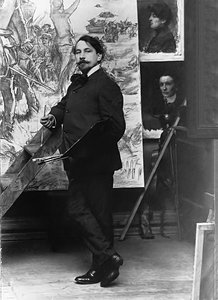
Marc-Aurèle de Foy Suzor-Coté
1869 - 1937 , Canada
Quick Facts
- Artistic Movement Or Style: Impressionism, Post-Impressionism
- Artists Or Movements Influenced By This Artist: Canadian Art
- Artists Who Influenced This Artist:
- Léon Bonnat
- Carl Milles
- Date Of Birth: April 6, 1869
- Date Of Death: January 29, 1937
- Full Name: Hypolite Wilfrid Marcaurèle Côté
- Nationality: Canadian (French-Canadian)
- Notable Artworks:
- Jacques Cartier meets the Indians...
- Hazy Morning, Lombardy Poplars
- Winter Landscape
- End of Winter, Gosselin River
- Place Of Birth: Bathurst, Canada
Related Articles
Impressionist Landscapes: 10 Masterpieces for Your Home | ArtsDot
Journey through 10 iconic Impressionist landscapes by Monet, Renoir & Degas. Explore the history, techniques & emotions behind these masterpieces. Find museum-quality reproductions for your home at ArtsDot.com – where art comes to life! Discover all masterpieces on ArtsDot.com

Impressionistic Landscapes: 10 Masterpieces That Changed Art & Decor
Journey into the heart of Impressionism! Explore 10 masterpieces by Monet, Renoir & Degas that revolutionized landscape art. Discover their stories, techniques & find museum-quality reproductions to elevate your home decor on ArtsDot.com.
George Agnew Reid: A Canadian Impressionist's Pursuit of Light, Colour, and National Identity
Explore the life & work of George Agnew Reid, a pivotal figure in Canadian Impressionism. Discover his genre paintings, mural commissions, and lasting influence on art education & national identity. A comprehensive guide for collectors & enthusiasts.

Evocations of Place: A Historical Journey Through Landscape Art
Explore the rich history of landscape art with ArtsDot. Discover renowned artists, movements like Impressionism & Romanticism, and expert guidance for collecting timeless pieces. Find your perfect serene escape today!

Romantic Landscapes: 10 Masterpieces for Your Home | ArtsDot
Journey through 10 Romantic landscape masterpieces by Friedrich, Turner & Cole. Explore emotional art, sublime nature scenes & iconic 19th-century paintings. Find museum-quality reproductions for your home at ArtsDot.com – discover the full collection online!