 Preview
 Send
Send Share
Share
 Details

 Download
 Similars
 X-Ray
X-Ray Diaporama
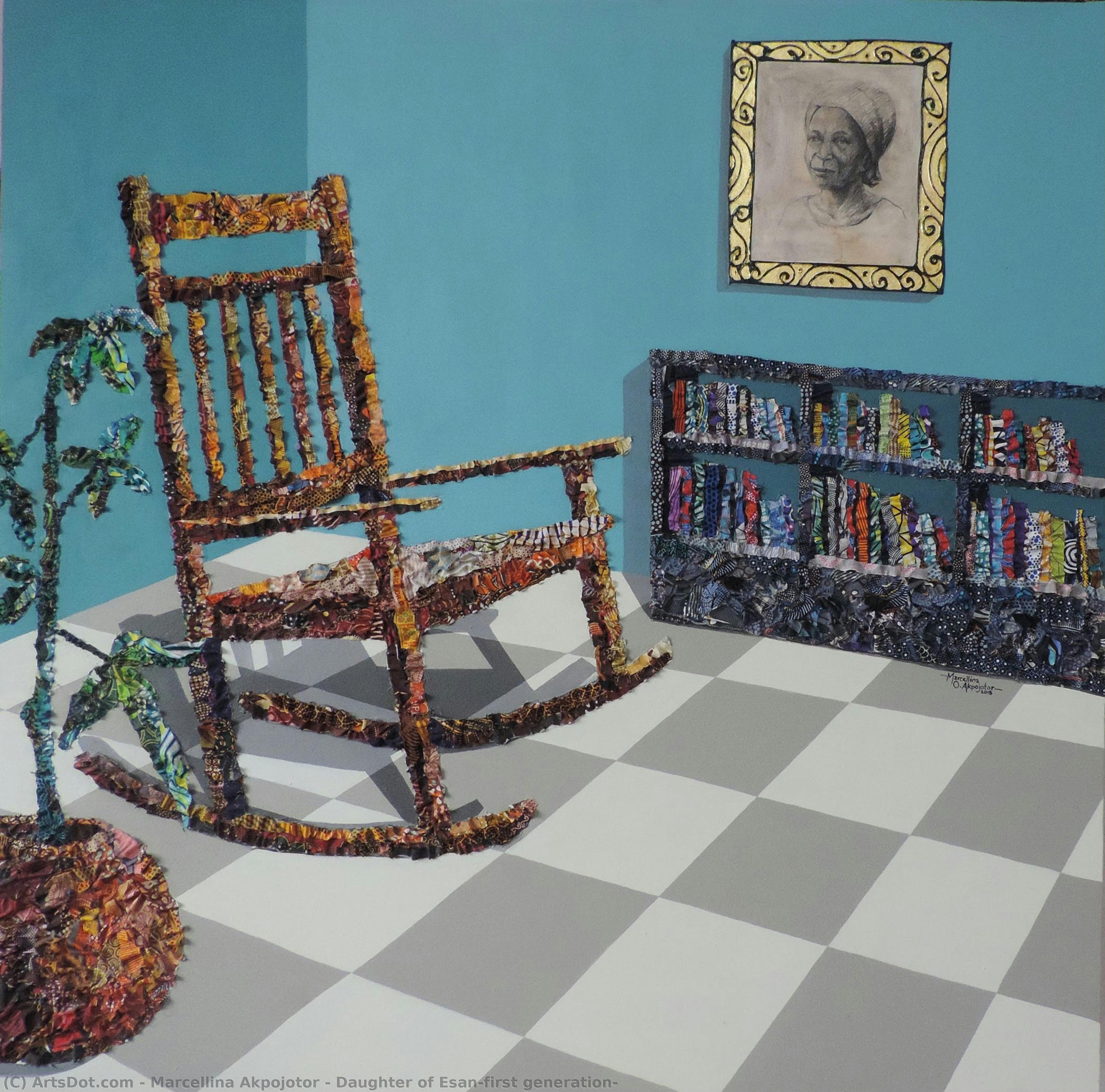
Daughter of Esan(first generation)


 Read More
Giclée / Art Print
Museum-quality giclée or canvas print with fast production and flexible finish options. ( Buy Hand Made Painting Buy Image)




P118B $10

P118H $10

P118W $10

P438Z $10

P508JH $12

P508YH $12

P805H $10

P805Z $10

P919BZ $10

P919G $10

P919XJ $10

P959ZH $10

P968JZ $12

W106C $8

W218G $10

W218JH $8

W218Y $10

W307PJ $10

W316G $10

W316PJ $8

W316Y $10

W398PJ $8

W4111J $10

W500HY $15

W500JH $15

W692G $12

W849H $8

W940BG $15

W953PJ $8




Pick from our preset sizes that match the artwork's original proportions.

You may enter your own dimensions to fit a specific frame or space. If your selected size does not match the original image's proportions, we will either crop the artwork or extend the image with a mirrored or solid-fill edge. A digital mockup will be sent for your approval before production begins.
Please note that the on-screen preview does not reflect the actual cropping or extension. Only the mockup will accurately show the final composition.
While custom sizes are available, we recommend selecting a dimension from the predefined list to preserve the original proportions.
Worldwide Delivery () in 2 weeks instead of standard 4/5 weeks. (24 August)

Free Worldwide Express Shipping

High-Quality Linen Canvas

Full Shipping Insurance

Customs Tax Refund Guarantee

True Color Matching Guarantee

60-Day Return Policy (Defects Only)

100% Money-Back Guarantee

Bulk Discount Offer
 Glass option is only available in size under 110 CM

Daughter of Esan(first generation)
Giclée / Art Print
Reproduction Size
-


Total Price
$ 63
Collectible Description
A Sanctuary of Stillness: The Soul of Daughter of Esan
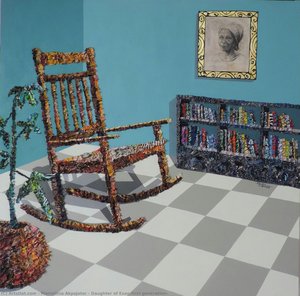
In the quiet corners of contemporary Nigerian art, few works capture the intimate intersection of domesticity and memory as poignantly as Marcellina Akpojotor’s Daughter of Esan (first generation). At first glance, the viewer is invited into a serene, sun-drenched interior, where a singular, uniquely crafted chair serves as the silent protagonist of the scene. This is not merely a depiction of furniture; it is an exploration of a sanctuary. The chair, a masterful blend of organic textures, fabric, and paper, anchors the composition, acting as a vessel for contemplation. Surrounded by the scattered remnants of intellectual pursuit—books resting on shelves and surfaces—the room breathes with the quiet energy of a space dedicated to study, reflection, and the slow passage of time.
The atmosphere is one of profound warmth, achieved through Akpojotor’s ability to manipulate light and texture. A solitary potted plant introduces a vital pulse of greenery, bridging the gap between the structured indoor environment and the living world outside. This subtle touch of nature enhances the painting's inviting quality, making the room feel less like a static image and more like a lived-in memory. For the collector or interior designer, this piece offers more than just visual beauty; it provides an emotional anchor, a sense of "home" that can transform a modern living space into a place of deep psychological comfort.
The Weaver of Identity: Technique and Cultural Resonance
To understand the depth of Daughter of Esan, one must look toward the artist’s unique lineage. Born in Lagos, Akpojotor carries the meticulous discipline of her father—a master draughtsman and calligrapher—into every brushstroke. Her technique is a sophisticated dialogue between painting and collage, a method that allows her to layer meaning much like the historical layers of West African identity. While this specific work focuses on a domestic interior, the underlying DNA of her practice—the use of texture and the interplay of materials—hints at her broader exploration of Ankara fabric and the politics of cultural heritage.
The composition functions as a visual poem about lineage and the "first generation." The title itself suggests a foundational moment, an ancestral beginning that informs the peace found within this room. Every element, from the way the light hits the paper elements of the chair to the deliberate placement of the books, speaks to a legacy of learning and the preservation of self. For those seeking to adorn their collections with works that possess both technical rigor and narrative depth, Akpojotor’s work stands as a testament to the power of blending traditional craftsmanship with contemporary emotional landscapes.
An Invitation to Contemplation
For the discerning art lover, this painting serves as a window into a private world. It is a piece that rewards repeated viewing, revealing new nuances in its textures and shadows each time. The emotional impact is one of restorative calm, making it an ideal centerpiece for spaces designed for relaxation or intellectual engagement, such as libraries, studies, or sophisticated lounge areas. As a high-quality reproduction, this artwork brings the soulful, textured essence of Akpojotor’s Nigerian heritage into any global interior, offering a timeless connection to the beauty of stillness and the enduring strength of cultural roots.
Related Artworks

Artist Biography
Marcellina Akpojotor: Weaving Memory and Identity Through Ankara
Born in the vibrant metropolis of Lagos, Nigeria, in 1989, Marcellina Akpojotor’s artistic journey is deeply rooted in her familial heritage and a profound engagement with Nigerian culture. Her early life was shaped by an apprenticeship under her father, a skilled draughtsman, designer, and calligrapher – experiences that instilled within her a meticulous eye for detail, a respect for traditional techniques, and a deep appreciation for the power of visual communication. This formative period laid the groundwork for her distinctive approach to art, one characterized by a compelling blend of collage and painting, often utilizing the iconic and culturally significant fabric known as Ankara.
Akpojotor’s artistic practice is fundamentally intertwined with the politics and symbolism of Ankara cloth. Originating in Europe but widely adopted and adapted across West Africa, particularly Nigeria, Ankara has evolved into a potent symbol of identity, community, and memory. It's more than just fabric; it represents social status, familial connections, celebrations, and historical narratives. Akpojotor’s work deliberately investigates this layered meaning, sourcing discarded pieces from local tailors – a practice that transforms waste materials into valuable artistic resources and simultaneously supports the livelihoods of her community.
Exploring Femininity, Identity, and Family History
At the heart of Akpojotor's oeuvre lies a powerful exploration of femininity, personal identity, and familial history. Her pieces are not simply decorative; they’re layered narratives that grapple with complex themes of womanhood in contemporary Nigeria. Drawing inspiration from her mother’s stories and the legacy of generations past, she seeks to capture the resilience, strength, and interconnectedness of women within her family and community. The recurring motif of the matriarchal figure—often depicted adorned in Ankara fabric—represents a lineage of wisdom, guidance, and enduring spirit.
Akpojotor’s process is deeply tactile and intuitive. She begins with sketches, meticulously planning the composition before layering collage elements – fragments of Ankara cloth, paper, charcoal, and other found materials – onto the canvas. This deliberate construction creates richly textured surfaces that invite close examination, revealing a complex interplay of patterns, colors, and narratives. The act of physically manipulating the fabric becomes an integral part of her creative process, allowing her to connect with the material’s history and imbue it with new meaning.
A Rising Star in Contemporary African Art
Marcellina Akpojotor's artistic trajectory has been marked by a series of significant exhibitions and accolades that have firmly established her as a rising star within the contemporary African art scene. Her debut solo exhibition, “She Was Not Dreaming,” held at Rele Gallery in Lagos in 2018, garnered critical acclaim for its evocative exploration of generational memory and female empowerment. Subsequent exhibitions, including "Daughters of Esan: The Alpha Generation" (2021) at Rele Gallery Los Angeles, further solidified her reputation as a compelling voice within the Nigerian art community.
Her work has been featured in prestigious group shows such as “Flower Show” (2023), “Narrative as Reality: Constructing an Identity” (2023) at the Martin Museum of Art, Texas; "Orita Meta" (2021) at Rele Gallery Los Angeles; “BLACK VOICES: Friend of My Mind” (2020) at Ross Sutton Gallery in New York; and “Sisters: The Art of Nigerian Women” (2018) at Carnegie Gallery, Ohio. She has also participated in prominent international art fairs including Art Basel Miami Beach (2021), FNB Art Joburg (2019), Art Dubai (2020), and the LA Art Show (2020).
The Politics of Ankara: A Cultural Signifier
Akpojotor’s deliberate use of Ankara fabric is not merely aesthetic; it's a conscious engagement with its complex cultural significance. She recognizes the fabric as more than just material—it functions as a repository of memory, a symbol of community solidarity, and a powerful tool for storytelling. By repurposing discarded pieces from local tailors, she challenges notions of wastefulness while simultaneously honoring the traditions and craftsmanship associated with Ankara production.
As evidenced in her work "The Radical Fabrics of Marcellina Akpojotor" (The London Magazine), Akpojotor’s process is deeply rooted in community engagement. She actively seeks out collaborations, recognizing that the fabric itself carries within it the stories and experiences of countless individuals. Her art becomes a platform for amplifying these voices and preserving cultural heritage for future generations.
Looking Ahead
Marcellina Akpojotor’s artistic vision is firmly rooted in her Nigerian identity while simultaneously embracing a global perspective. Her continued exploration of femininity, memory, and the transformative power of materials promises to yield even more compelling and resonant works in the years to come. Her commitment to sustainable practices—utilizing discarded Ankara fabric—further underscores her dedication to both artistic innovation and social responsibility, cementing her position as a vital voice within contemporary African art.
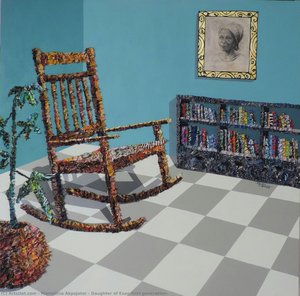
Marcellina Akpojotor
1989 - , Nigeria
Quick Facts
- Artistic Movement Or Style: Collage & Painting
- Artists Or Movements Influenced By This Artist: ['Contemporary African Art']
- Artists Who Influenced This Artist: ['Father']
- Date Of Birth: 1989
- Full Name: Marcellina Akpojotor
- Nationality: Nigerian
- Notable Artworks:
- Daughter of Esan
- She Was Not Dreaming
- Daughters of Esan
- Place Of Birth: Lagos, Nigeria
Related Articles
Harmonizing Contrasts: Integrating Abstract Art into Classic Interiors for Timeless Modernity
Elevate your classic home with abstract art! Discover expert tips for seamlessly blending modern pieces into timeless interiors. Find the perfect artwork & design advice at ArtsDot.
Harmonizing History & Hue: A Guide to Matching Art Styles with Interior Architecture for Balanced Décor
Elevate your interior design with our expert guide to harmonizing art styles & architecture. Discover timeless pieces, color palettes, & custom artwork solutions for balanced, luxury spaces. Expert advice included!

Beyond Ephemeral Trends: Cultivating Enduring Interior Aesthetics Through Renaissance Reverie, Impressionist Light, and Pop Art Vibrancy
Discover enduring interior aesthetics inspired by Renaissance artistry, Impressionist light & Pop Art vibrancy. Expert guidance for creating timeless, luxury homes. Explore art curation & design principles.
The Resonance of Place: Contextual Art Design for Harmonious Interior Spaces
Discover how expert art curation transforms interiors into harmonious spaces. Elevate your home with personalized selections & the guidance of a dedicated art concierge at ArtsDot.com.
Art & Emotion: Curating Interior Spaces Through Vibe and Mood
Discover how to curate interior spaces that nurture your wellbeing. Explore the psychology of color, experiential design & art's emotional impact. offers bespoke solutions for a home that truly resonates with you.