 Preview
 Send
Send Share
Share
 Details

 Download
 Similars
 X-Ray
X-Ray Diaporama
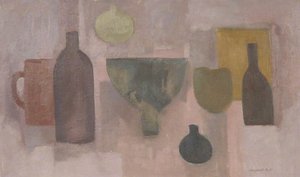
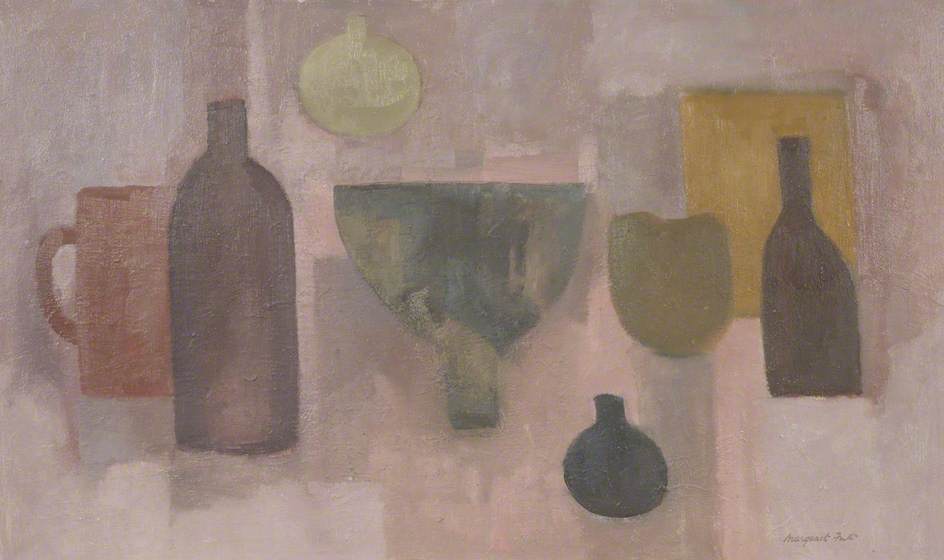
Still Life Pots and Bottles
 British Modernism
 38.0 x 65.0 cm
 Abbot Hall Art Gallery
 Read More
Giclée / Art Print
Museum-quality giclée or canvas print with fast production and flexible finish options. ( Buy Hand Made Painting Buy Image)




P118B $10

P118H $10

P118W $10

P438Z $10

P508JH $12

P508YH $12

P805H $10

P805Z $10

P919BZ $10

P919G $10

P919XJ $10

P959ZH $10

P968JZ $12

W106C $8

W218G $10

W218JH $8

W218Y $10

W307PJ $10

W316G $10

W316PJ $8

W316Y $10

W398PJ $8

W4111J $10

W500HY $15

W500JH $15

W692G $12

W849H $8

W940BG $15

W953PJ $8




Pick from our preset sizes that match the artwork's original proportions.

You may enter your own dimensions to fit a specific frame or space. If your selected size does not match the original image's proportions, we will either crop the artwork or extend the image with a mirrored or solid-fill edge. A digital mockup will be sent for your approval before production begins.
Please note that the on-screen preview does not reflect the actual cropping or extension. Only the mockup will accurately show the final composition.
While custom sizes are available, we recommend selecting a dimension from the predefined list to preserve the original proportions.
Worldwide Delivery () in 2 weeks instead of standard 4/5 weeks. (26 August)

Free Worldwide Express Shipping

High-Quality Linen Canvas

Full Shipping Insurance

Customs Tax Refund Guarantee

True Color Matching Guarantee

60-Day Return Policy (Defects Only)

100% Money-Back Guarantee

Bulk Discount Offer
 Glass option is only available in size under 110 CM

Still Life Pots and Bottles
Giclée / Art Print
Reproduction Size
-


Total Price
$ 63
Related Artworks
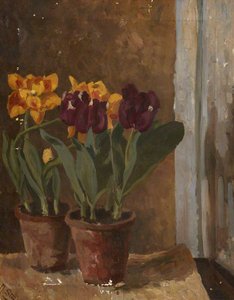
Artist Biography
A Whisper of Watercolour and the Soul of the Scottish Landscape
Margaret Firth (1898–1991) was an artist who found her greatest expression not in the clamor of metropolitan galleries, but in the quiet, evocative corners of the British landscape. While her name may not have commanded the international headlines of her contemporaries, her work possesses an enduring, intimate power that speaks to the very essence of light and atmosphere. To look upon a Firth painting is to step into a moment of profound stillness, where the delicate interplay of watercolour and subject matter captures the fleeting spirit of the natural world.
Born in Bradford in 1898, Margaret’s early life was marked by a resilience that would later define her artistic temperament. The loss of her mother at the tender age of eight thrust her into a role of responsibility far beyond her years, as she helped care for her ailing mother and her father, Edwin Firth, a prominent textile manufacturer. This early encounter with fragility and the necessity of tending to beauty likely informed the tenderness found in her later works. Growing up in a household where gardening was a passion and art was woven into the fabric of daily life—thanks to her mother’s artistic background—Margaret developed an early, keen eye for the intricate details of flora and the subtle textures of the natural world.
The Formative Years and Artistic Lineage
Her formal education at the Bradford School of Art provided the technical foundation upon which her poetic vision was built. Studying under masters such as Fred Stead and Harry Butler, she absorbed the rigorous principles of composition and technique that characterized the School of Art movement. However, Firth’s true education occurred through her deep connection to the land. While many artists of her era sought the prestige of London’s vibrant art scene, Margaret remained tethered to the landscapes of Scotland, particularly the rugged and breathtaking regions of Dumfries and Galloway.
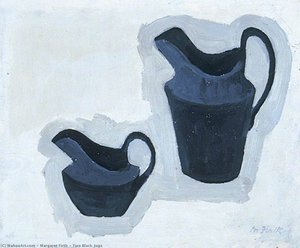
This devotion to her surroundings allowed her to develop a signature style that blended impressionistic fluidity with a botanical precision. Her work often reflects a deep appreciation for the textures of British life—the soft bloom of heather-clad moors, the dramatic sweep of the coastline, and the quiet intimacy of a garden. In her still lifes, such as Still Life Pots and Bottles, one sees a mastery of light that transforms simple objects into vessels of contemplation. Her ability to use a muted palette to evoke mood rather than mere representation marks her as a true painter of feeling.
Legacy of Light and Emotion
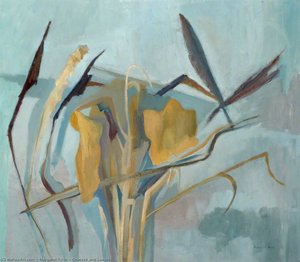
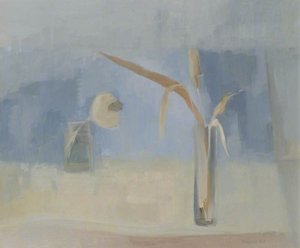
The significance of Margaret Firth’s oeuvre lies in its ability to bridge the gap between the observational and the emotional. She did not merely document the landscape; she translated its soul onto paper and canvas. Her paintings, ranging from the serene Two Glasses to the expressive Grasses and Leaves, serve as a poignant window into the early 20th-century British aesthetic—a period where the boundaries between realism and impressionism were beautifully blurred.
Throughout her long life, which spanned nearly a century, Firth’s art remained a testament to the beauty found in the understated. Her legacy is found in the way her brushstrokes continue to capture the ephemeral:
- The mastery of atmosphere: Using watercolour to mimic the shifting mists and light of the Scottish hills.
- Botanical intimacy: A lifelong dedication to studying the delicate structures of plants and flowers.
- Emotional resonance: Creating works that offer a sense of peace, reflecting her own journey of resilience and quiet strength.
margaret firth
1898 - 1991
Quick Facts
- Artistic Movement Or Style: Watercolor landscapes
- Artists Or Movements Influenced By This Artist: ['British watercolorists']
- Artists Who Influenced This Artist:
- Fred Stead
- Harry Butler
- Date Of Birth: 1898
- Date Of Death: 1991
- Full Name: Margaret Firth
- Nationality: British
- Notable Artworks:
- Tulips
- Coastal Scenes
- Floral Studies
- Place Of Birth: Bradford, England
Related Articles
From Initial Sketch to Enduring Legacy: A Comprehensive Exploration of the Oil Painting Reproduction Process
Discover the art of museum-quality oil painting reproduction. Explore our expert process, skilled artists & authentic replicas. Elevate your home with timeless beauty – handcrafted and customized to your vision.
The Enduring Legacy of Hand-Painted Oil Paintings: Aesthetic Value, Longevity & Emotional Resonance
Explore the enduring legacy of hand-painted oil paintings. Discover the aesthetic value, material longevity & emotional resonance that sets original art—and expertly crafted reproductions—apart. Invest in timeless beauty.
Reproducing Artistry: A Guide to Oil, Canvas & Paper Reproduction Mediums
Explore the world of art reproduction! Learn about oil, canvas & paper options with our expert guide. Discover museum-quality reproductions for your home or collection.
From Classical Still Life to Contemporary Abstraction: Elevating Villa Entertaining Spaces Through Artful Reproduction
Explore the history of still life painting & discover how artful reproductions elevate villa entertaining spaces. Expert guidance, museum-quality prints & custom artwork at ArtsDot.com.

Turn Your Digital Art Into Hand‑Painted Oil Masterpieces—Earn Big on Every Sale and Build an Enduring Legacy
Transform your NFT collection into hand‑painted oil masterpieces with ArtsDot’s expert artisans. Enjoy museum‑grade quality, free worldwide shipping, and a 100% satisfaction guarantee—turn digital art into a lasting legacy that earns you real value.