 Preview
 Send
Send Share
Share
 Details

 Download
 Similars
 X-Ray
X-Ray Diaporama
Untitled (contigo….)


 Read More
Hand Made Oil Reproduction
Hand-painted oil on canvas in your size and frame, made to order by our artists. ( Buy Print Buy Image)




P118B $10

P118H $10

P118W $10

P438Z $10

P508JH $12

P508YH $12

P805H $10

P805Z $10

P919BZ $10

P919G $10

P919XJ $10

P959ZH $10

P968JZ $12

W106C $8

W218G $10

W218JH $8

W218Y $10

W307PJ $10

W316G $10

W316PJ $8

W316Y $10

W398PJ $8

W4111J $10

W500HY $15

W500JH $15

W692G $12

W849H $8

W940BG $15

W953PJ $8




Pick from our preset sizes that match the artwork's original proportions.

You may enter your own dimensions to fit a specific frame or space. If your selected size does not match the original image's proportions, we will either crop the artwork or extend the painting with additional hand-painted elements. A digital mockup will be sent for your approval before production begins.
Please note that the on-screen preview does not reflect the actual cropping or extension. Only the mockup will accurately show the final composition.
While custom sizes are available, we recommend selecting a dimension from the predefined list to preserve the original proportions.
After order, ArtsDot.com team will email client for instructions and provide a mockup preview
Worldwide Delivery () in 3/4 weeks instead of standard 5 weeks. (17 August). No compromise on quality.

Free Worldwide Express Shipping

High-Quality Linen Canvas

Full Shipping Insurance

Customs Tax Refund Guarantee

True Color Matching Guarantee

60-Day Return Policy (Defects Only)

100% Money-Back Guarantee

Bulk Discount Offer
 Glass option is only available in size under 110 CM

Untitled (contigo….)
Reproduction Medium
Reproduction Size
-


Total Price
$ 263
Artwork Description
Related Artworks
Artist Biography
María Teresa Burga Ruiz (1935-2021): A Pioneer of Peruvian Conceptual and Media Art
- Born: Iquitos, Peru, 1935
- Died: Lima, Peru, 2021
María Teresa Burga Ruiz, also known as Teresa Burga, was a groundbreaking Peruvian artist whose work spanned multimedia and conceptual art forms. Born in the Amazonian city of Iquitos, her artistic journey led her to become a pivotal figure in Peruvian art history, recognized for her pioneering contributions to media art, technology-based art, and installation art – fields that were nascent in Peru during her active years.
Early Life and Artistic Development
- Burga's early life in Iquitos likely influenced her later exploration of identity and social structures within Peruvian society.
- She began experimenting with various media, moving beyond traditional artistic boundaries to incorporate technology and conceptual frameworks into her practice.
- The late 1960s and 1970s marked a crucial period in Burga's development as an artist. It was during this time that she produced some of her most significant works, establishing her reputation as a visionary innovator.
Key Works and Artistic Style
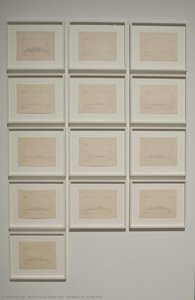
- Untitled, 14, 15.04.1974: Perhaps Burga's most celebrated work, this series of monochrome drawings exemplifies her minimalist aesthetic and conceptual approach. The stark imagery invites contemplation on time, process, and the nature of representation. View Artwork
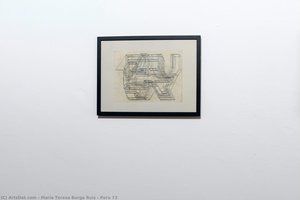
- Peru 73: This abstract ink drawing showcases Burga's exploration of geometric forms and layered structures, reflecting a broader engagement with the social and political landscape of Peru in 1973. View Artwork
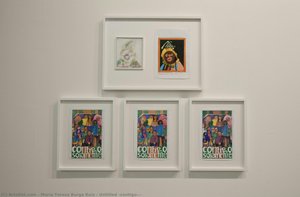
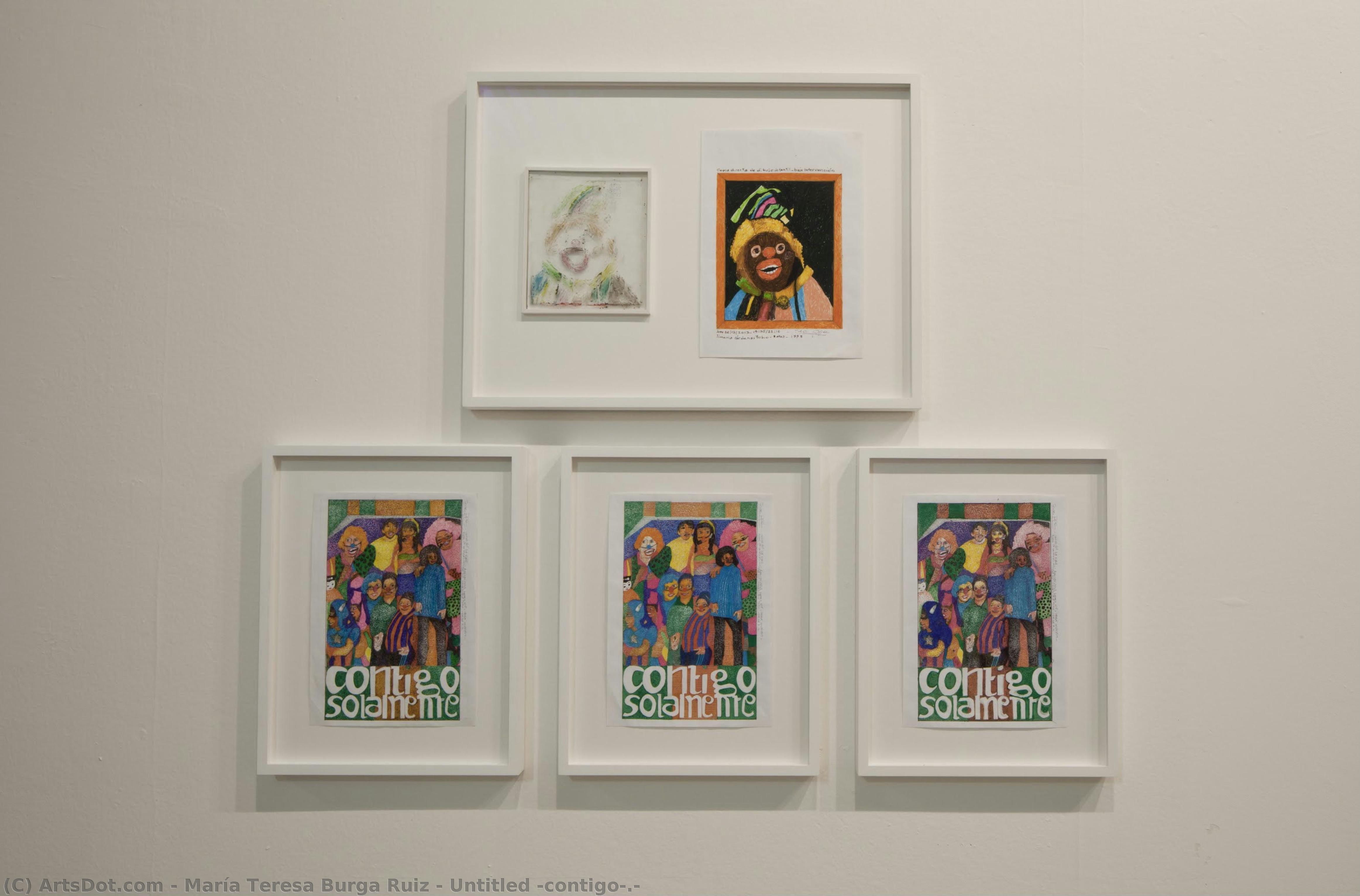
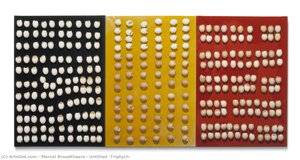
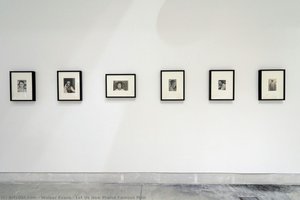
- Untitled (contigo….): Demonstrates her versatility across different mediums. View Artwork
- Her artistic style is characterized by a reduction to essential forms, often employing monochrome palettes and repetitive patterns. This minimalist approach serves as a vehicle for exploring complex conceptual ideas.
Influences and Historical Significance
- Burga's work was influenced by the broader international trends in Conceptual Art and Minimalism that emerged in the 1960s and 70s.
- She is considered a precursor to media art and installation art in Peru, paving the way for subsequent generations of artists who embraced new technologies and expanded the boundaries of artistic expression.
- Her exploration of identity, feminism, and social structures within Peruvian society positions her as a significant contributor to Latin American feminist art.
- Burga's legacy lies in her ability to synthesize conceptual rigor with innovative use of media, creating works that are both aesthetically compelling and intellectually stimulating.
Legacy and Recognition
- María Teresa Burga’s work has gained increasing recognition posthumously, solidifying her place as a pivotal figure in Peruvian art history.
- She is now celebrated for her pioneering spirit and her contribution to the development of contemporary art practices in Peru.
- Her influence can be seen in the work of younger Peruvian artists who continue to explore themes of identity, technology, and social change.
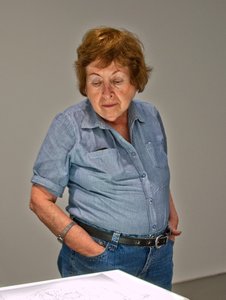
María Teresa Burga Ruiz
1935 - 2021 , Peru
Quick Facts
- Artistic Movement Or Style: Conceptual Art, Media Art
- Date Of Birth: 1935
- Date Of Death: 2021
- Full Name: María Teresa Burga Ruiz
- Nationality: Peruvian
- Notable Artworks:
- Untitled, 14, 15.04.1974
- Peru 73
- Untitled (contigo….)
- Place Of Birth (City And Country): Iquitos, Peru
Related Articles

Grant Wood & American Regionalism: Identity, Myth & the Rural Landscape
Explore the world of Grant Wood & American Regionalism with ArtsDot. Discover the symbolism behind 'American Gothic', recurring themes, and the movement's lasting impact on art history. High-quality reproductions available.
American Realism's Defining Works: 10 Masterpieces for Your Home
Explore 10 defining American Realism masterpieces – Hopper, Homer & more. Discover the stories behind these iconic paintings and bring timeless art to your home with ArtsDot's museum-quality reproductions. Explore the full collection online.
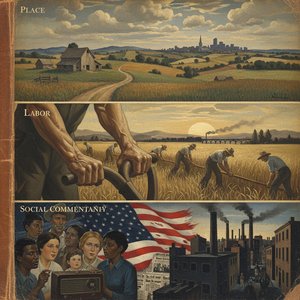
American Regionalism: A Crucible of Identity – Exploring Themes of Place, Labor & Social Commentary
Explore American Regionalism's powerful depiction of the American heartland during the Great Depression. Discover Grant Wood, Thomas Hart Benton & more. Expert analysis & high-quality art reproductions at ArtsDot.
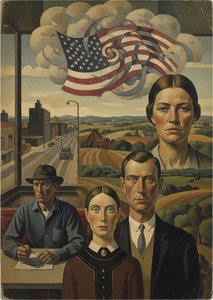
Echoes of Place: Regionalism & American Identity in Interwar Art
Explore the rise of American Regionalism in interwar art! Discover Grant Wood, Thomas Hart Benton & the movement's impact on American identity. Expert analysis & historical context.

Beyond Representation: Conceptual Art & the Enduring Legacy of Ideas
Explore the profound impact of Conceptual Art with ArtsDot. Discover its history, key artists like Duchamp & Kosuth, and learn how to collect this influential movement. Expert insights for discerning art collectors.