

 Preview
 Send
Send Share
Share
 Details

 Download
 Similars
 X-Ray
X-Ray Diaporama
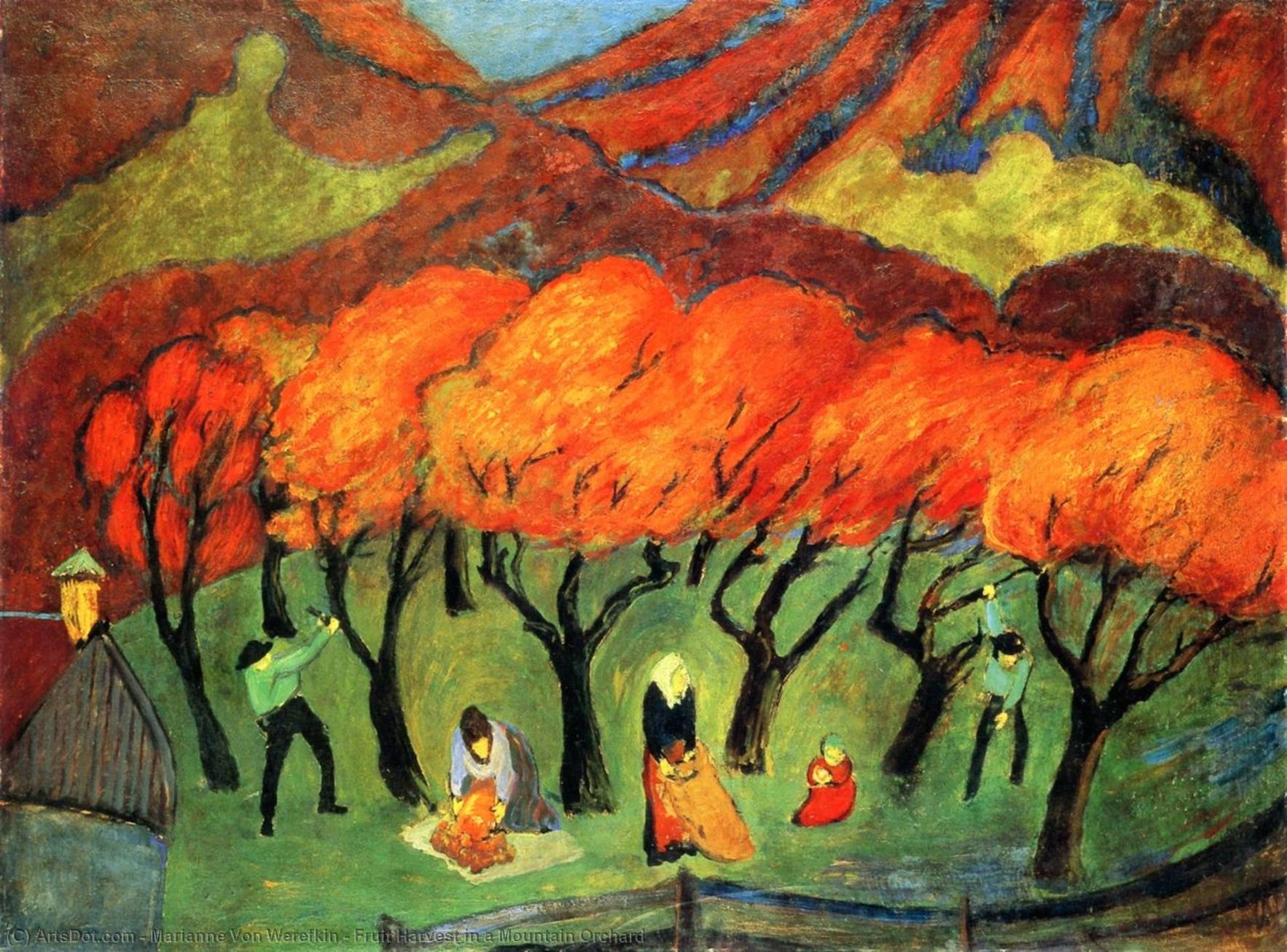
Fruit Harvest in a Mountain Orchard


 Read More
Purchase a high-resolution, enhanced digital image, far superior to the online preview.
Each file is meticulously prepared by our in-house specialists using advanced tools and expert manual retouching. We ensure every image has exceptional clarity, precise color accuracy, and fine detail.
The final file is delivered via email within 72 hours, optimized for immediate use in professional, editorial, and print environments. This is the same quality trusted by top-tier design studios, publishers, and galleries.
Digital Image
Download a high-resolution file for personal display, printing, and creative projects. ( Buy Print Buy Hand Made Painting)
Included in Every Digital Image Order
Expert Digital Delivery, Guaranteed
When you choose ArtsDot.com, you're not just getting an image - you're receiving a professionally enhanced digital artwork, crafted with precision and backed by a satisfaction guarantee. Here's everything that comes with your order, automatically:

Fast Email Delivery
Your high-resolution digital image file will be emailed to you within 72 hours of ordering - ready for immediate use.

AI-Enhanced Digital File
Your artwork is professionally optimized using advanced AI tools and manual editing, ensuring maximum detail, clarity, and color accuracy.

Free Lifetime Re-Delivery
Accidentally deleted or lost your file? No worries - we'll resend it to you anytime, free of charge.

No Import Fees - Ever
Enjoy your artwork instantly with zero customs, duties, or delivery fees - digital downloads are always tax-free.

Color Accuracy Guarantee
We ensure your digital image reflects the original colors as closely as possible using professional tools and color management.

60-Day Satisfaction Guarantee
If you're not satisfied with your digital image, we'll revise it or refund 100% within 60 days - no questions asked.

100% Money-Back Guarantee
Not satisfied? Get a full refund within 60 days of receiving your digital file - no questions asked.

Bulk Order Discounts
Buy 3 images, save 10% - Buy 5, save 15% - Buy 10+, save 20%. Great for creative projects, galleries, and agencies.
Collectible Description
Marianne von Werefkin: Fruit Harvest in a Mountain Orchard – A Pioneer of Expressionism
Marianne von Werefkin (1860-1938) stands as an undeniable cornerstone of Expressionist art, her legacy cemented by canvases brimming with vibrant color and imbued with profound emotional resonance. Born Marianna Wladimirowna Werewkina in Tula, Russia, she embarked on a remarkable artistic journey marked by unwavering dedication to her craft and shaped irrevocably by the seismic shifts occurring within European society during her lifetime.
Werefkin’s formative years were steeped in familial tradition – her father, General Vladimir Werefkin, commanded respect as a military leader, while her mother, Yelizaveta Daragan, possessed an innate artistic sensibility herself. From the outset, young Marianna demonstrated an exceptional aptitude for visual representation, commencing her artistic pursuits at fourteen following a debilitating illness. These initial explorations transcended mere depiction; they were expressions of inner visions—a foreshadowing of the deeply personal and emotive core that would dominate her subsequent oeuvre.
Formal training under Ilya Repin in Saint Petersburg solidified Werefkin’s grounding in Realism, exposing her to the influential artistic currents of the Peredvizhniki (“wandering painters”). This connection fostered a collaborative spirit and propelled her toward experimentation with bolder stylistic choices. Notably, Repin recognized Werefkin's prodigious talent early on, securing her place amongst Russia’s most celebrated artists.
The Expressionist Impulse: Color and Emotion
Werefkin swiftly transitioned from Realistic representation to the expressive language of Expressionism, mirroring the broader artistic movement that sought to convey subjective experience rather than objective observation. Influenced by artists like Edvard Munch and Wassily Kandinsky, Werefkin embraced a palette saturated with intense hues—reds, oranges, and yellows—creating canvases that pulsated with palpable emotion.
Her technique favored thick impasto brushstrokes, layering pigment onto the panel to achieve textural depth and conveying a sense of immediacy. This deliberate manipulation of materiality served not merely as aesthetic embellishment but as an integral component of her artistic intent: to capture the raw essence of feeling and to communicate its transformative power.
A Landscape Steeped in Symbolism
“Fruit Harvest in a Mountain Orchard” exemplifies Werefkin’s masterful ability to infuse landscapes with symbolic significance. The depiction of a bustling orchard scene—characterized by abundant fruit trees laden with crimson leaves—is more than just a visual record; it embodies themes of fecundity, renewal, and the cyclical rhythms of nature.
The artist's careful attention to detail—the positioning of figures amidst the foliage, the expressive rendering of faces—further amplifies the painting’s emotional impact. Werefkin skillfully utilizes color and composition to evoke a mood of serene contemplation mingled with palpable energy, reflecting the vitality of rural life and hinting at deeper spiritual considerations.
Legacy and Influence
Marianne von Werefkin's contribution to Expressionist art remains profound. Her unwavering commitment to artistic exploration, coupled with her distinctive stylistic vision, established her as a pivotal figure in shaping the trajectory of modern painting. Artists like Alexej von Jawlensky recognized Werefkin’s pioneering spirit and embraced her expressive approach—a testament to her enduring influence on subsequent generations of artists.
Related Artworks
Artist Biography
A Pioneer of Expressionism: The Life and Art of Marianne von Werefkin
Marianne von Werefkin, born Marianna Wladimirowna Werewkina in Tula, Russia, in 1860, stands as a pivotal yet often overlooked figure in the genesis of Expressionism. Her journey was one of relentless artistic exploration, personal sacrifice, and unwavering dedication to her craft, unfolding against the backdrop of immense social and political change. Born into a family steeped in military tradition – her father, General Vladimir Werefkin, and her mother, Yelizaveta Daragan, an amateur painter herself – young Marianna displayed an early inclination towards art, beginning to paint at the age of fourteen following a period of illness. These initial works were not mere depictions of the visible world but rather visualizations of inner visions, hinting at the deeply personal and emotive core that would define her later artistic output. Formal training followed, most notably under the tutelage of Ilya Repin in St. Petersburg, where her talent was immediately recognized. Repin’s influence instilled within her a foundation in Russian Realism, a style she initially embraced, focusing on portraiture and scenes from contemporary life.From Realism to Radical Innovation
A dramatic turning point arrived in 1888 with a hunting accident that severely damaged Werefkin’s right hand. Forced to adapt and paint with her left, this physical challenge inadvertently propelled her towards new artistic horizons. While undergoing medical treatment in Germany, she encountered the burgeoning avant-garde movements of Western Europe, sparking a shift away from the constraints of Realism. This period marked the beginning of a profound stylistic evolution, as Werefkin began to explore Symbolist and ultimately Expressionist modes of expression. The influence of artists like Paul Gauguin and Louis Anquetin, with their emphasis on flattened forms and bold color, became increasingly apparent in her work. Simultaneously, she found resonance in the emotionally charged paintings of Edvard Munch, whose explorations of anxiety and alienation mirrored her own burgeoning artistic concerns. It was in Munich that Werefkin truly came into her own, becoming a central figure in a vibrant circle of artists including Wassily Kandinsky, Alexej von Jawlensky, Gabriele Münter, and Franz Marc – individuals who would collectively shape the landscape of early Expressionism. In 1909, she co-founded the Neue Künstlervereinigung München (NKVM), a group that served as a crucial precursor to the more famous Blue Rider collective.Themes of Humanity and Inner Worlds
Werefkin’s artistic vision was characterized by an intense focus on the human condition, particularly the experiences of women. Her paintings often depict figures – frequently female – set within evocative landscapes, imbued with a sense of psychological depth and emotional resonance. Social commentary frequently underpinned her work, reflecting her keen awareness of societal inequalities and injustices. However, her explorations extended beyond the purely social; Werefkin was deeply interested in spirituality and the search for meaning in a rapidly changing world. This is evident in works like “Fantastic Night,” where dreamlike imagery and dramatic composition create an atmosphere of mystery and introspection. Her later style, developed during her years in Ascona, Switzerland (where she settled after the outbreak of World War I), became increasingly bold and simplified, characterized by vibrant colors and flattened forms. Even as financial difficulties plagued her final years, she continued to paint prolifically, producing striking landscapes and even venturing into poster design. Beyond her painting, Werefkin was a prolific writer, leaving behind a significant body of work in the form of “Letters to an Unknown Man,” offering invaluable insights into her artistic philosophy and personal struggles.A Lasting Legacy: Recognition and Influence
For many years, Marianne von Werefkin’s contributions were overshadowed by those of her male contemporaries. Her complex relationship with Alexej von Jawlensky – marked by both artistic collaboration and personal hardship – often relegated her to the role of a supporting figure in his narrative. However, in recent decades, there has been a growing recognition of her unique artistic voice and pivotal role in the development of Expressionism. She was not merely an associate of Kandinsky and Jawlensky; she was a driving force behind the movement’s intellectual and aesthetic innovations, a pioneering theorist who fostered artistic exchange through her influential salon in Munich. Her bold use of color, expressive brushwork, and unflinching exploration of human emotion have resonated with subsequent generations of artists exploring abstraction and emotional intensity. Werefkin's legacy extends beyond her paintings; she stands as an inspiring example of a woman artist who overcame significant obstacles to pursue her creative vision, paving the way for future generations of female painters to claim their rightful place in art history. Her work continues to captivate and challenge viewers, reminding us of the power of art to illuminate the complexities of the human experience.Key Works
- Self-Portrait in a Sailor's Blouse (1893): An early example showcasing her realist skills and strong personality.
- Fantastic Night (circa 1906-1907): A tempera painting that blends reality with fantasy, demonstrating her move towards Expressionism.
- The Living and the Dead (1915): Reflects themes of mortality and spirituality during a turbulent period.
- Meeting (1916): A work that exemplifies her simplified forms and vibrant color palette.
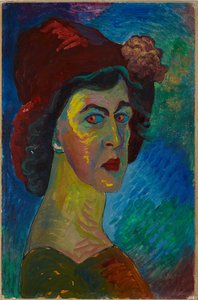
Marianne von Werefkin
1860 - 1938 , Russia
Quick Facts
- Artistic Movement Or Style: Expressionism, Symbolism
- Artists Or Movements Influenced By This Artist:
- Wassily Kandinsky
- Alexej von Jawlensky
- Early Expressionism
- Artists Who Influenced This Artist:
- Ilya Repin
- Paul Gauguin
- Edvard Munch
- Date Of Birth: September 10, 1860
- Date Of Death: February 6, 1938
- Full Name: Marianne von Werefkin
- Nationality: Russian-German-Swiss
- Notable Artworks:
- Self-Portrait in a Sailor's Blouse
- Fantastic Night
- The Living and the Dead
- Meeting
- Place Of Birth: Tula, Russia

