 Preview
 Send
Send Share
Share
 Details

 Download
 Similars
 X-Ray
X-Ray Diaporama
North African Landscape
 Oil
Oil- WallArt
- Orientalism
 19th Century
 122.0 x 51.0 cm
 Museo Carmen Thyssen Málaga
 Read More
Hand Made Oil Reproduction
Hand-painted oil on canvas in your size and frame, made to order by our artists. ( Buy Print Buy Image)




P118B $10

P118H $10

P118W $10

P438Z $10

P508JH $12

P508YH $12

P805H $10

P805Z $10

P919BZ $10

P919G $10

P919XJ $10

P959ZH $10

P968JZ $12

W106C $8

W218G $10

W218JH $8

W218Y $10

W307PJ $10

W316G $10

W316PJ $8

W316Y $10

W398PJ $8

W4111J $10

W500HY $15

W500JH $15

W692G $12

W849H $8

W940BG $15

W953PJ $8




Pick from our preset sizes that match the artwork's original proportions.

You may enter your own dimensions to fit a specific frame or space. If your selected size does not match the original image's proportions, we will either crop the artwork or extend the painting with additional hand-painted elements. A digital mockup will be sent for your approval before production begins.
Please note that the on-screen preview does not reflect the actual cropping or extension. Only the mockup will accurately show the final composition.
While custom sizes are available, we recommend selecting a dimension from the predefined list to preserve the original proportions.
After order, ArtsDot.com team will email client for instructions and provide a mockup preview
Worldwide Delivery () in 3/4 weeks instead of standard 5 weeks. (27 August). No compromise on quality.

Free Worldwide Express Shipping

High-Quality Linen Canvas

Full Shipping Insurance

Customs Tax Refund Guarantee

True Color Matching Guarantee

60-Day Return Policy (Defects Only)

100% Money-Back Guarantee

Bulk Discount Offer
 Glass option is only available in size under 110 CM

North African Landscape
Reproduction Medium
Reproduction Size
-


Total Price
$ 263
A Serene Encounter with the Desert Sands
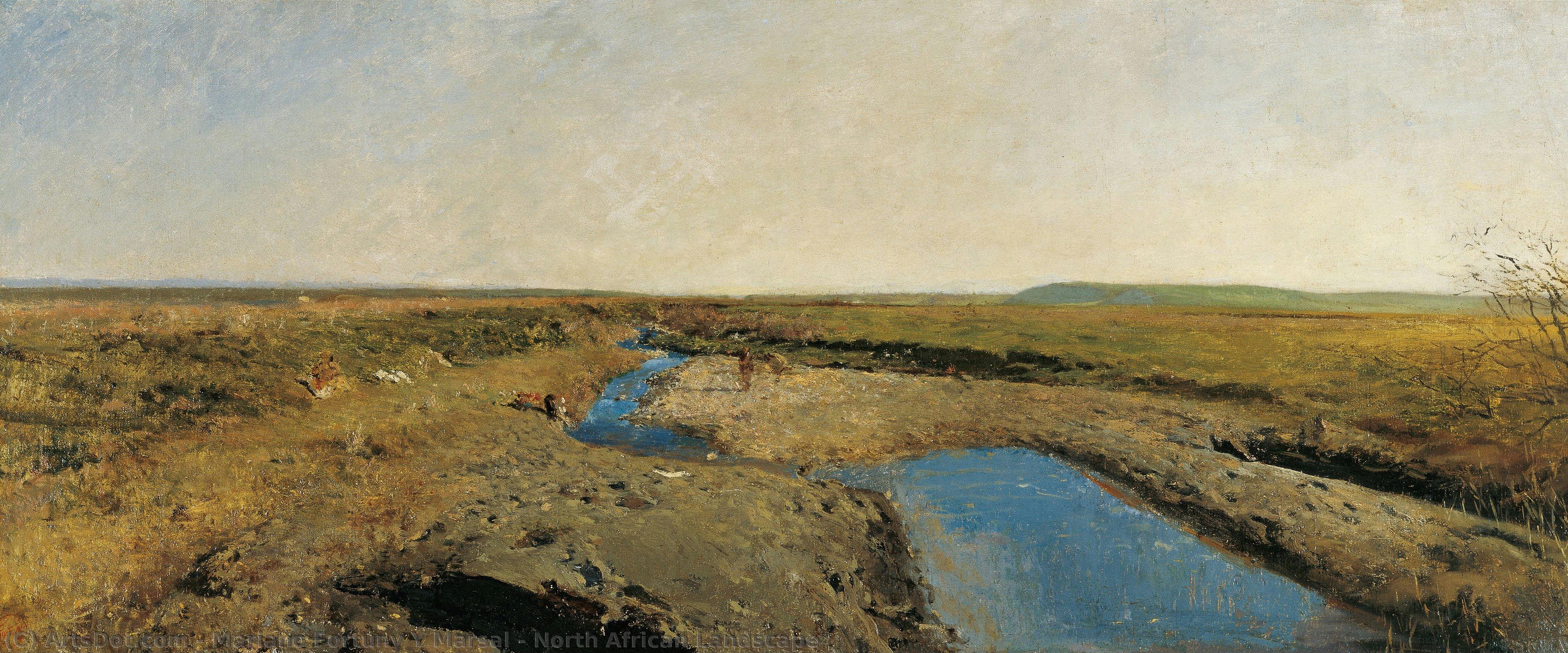
In the evocative masterpiece North African Landscape, Mariano Fortuny y Marsal invites the viewer into a world where time seems to suspend itself amidst the shifting dunes and sun-drenched terrain. The painting captures a breathtaking moment of tranquility, depicting a river that carves its way through a rugged, desert expanse. A rocky pathway serves as a visual guide, leading the eye toward the shimmering water's edge, where life and nature converge in a delicate dance. This is not merely a depiction of geography, but an atmospheric exploration of light and stillness, where the heat of the desert is balanced by the cooling presence of the flowing stream.
The composition is masterfully populated with subtle human elements that breathe life into the vast landscape. Figures are scattered throughout the scene, some gathered near the water in quiet contemplation, while others appear as small, integrated parts of the wider environment. The inclusion of two horses—one positioned near the left periphery and another toward the center—adds a sense of narrative movement and pastoral grace to the work. These elements suggest a momentary pause in a journey, evoking the timeless rhythm of life in North Africa, where the landscape dictates the pace of existence.
The Mastery of Light and Orientalist Spirit
As an artist deeply influenced by his Spanish heritage and his travels through Europe and beyond, Fortuny employs a technique that celebrates the interplay of light and texture. The painting reflects the hallmarks of the Orientalist movement, characterized by a fascination with the exotic landscapes and cultures of North Africa and the Near East. Through delicate brushwork, Fortuny captures the granular quality of the sand and the reflective surface of the river, creating a tactile experience for the observer. His ability to manipulate light allows the sun to appear as if it is warming the very canvas, casting soft shadows that define the rocky outcrops and the contours of the terrain.
For the discerning collector or interior designer, this piece offers more than just visual beauty; it provides a window into a romanticized era of exploration. The emotional impact of the work lies in its profound sense of peace. It is a painting that commands attention through its subtlety rather than through grandiosity, making it an ideal centerpiece for spaces designed for reflection and calm. Whether placed in a sophisticated gallery setting or as a focal point in a luxurious living space, North African Landscape brings an air of worldly elegance and historical depth, serving as a timeless tribute to the enduring allure of the desert.
Related Artworks
Artist Biography
A Tapestry of Genius: The Life and Legacy of Mariano Fortuny
The story of Mariano Fortuny y Marsal is one of profound artistic convergence, where the boundaries between fine art, textile design, and scientific invention dissolve into a single, luminous vision. Born into an illustrious lineage of Spanish painters, Fortuny was destined to inherit a world saturated with color and texture. As the son of the genre painter Mariano Fortunes y Marsal, his early years were steeped in the rich aesthetics of the 19th century. His childhood was not merely spent observing art, but living within it; surrounded by his parents' vast collections of antique metalwork, armor, and exotic fabrics, he developed an early, tactile relationship with the materials that would later define his career. This sensory upbringing, moving from the warmth of Granada to the cosmopolitan elegance of Paris, instilled in him a lifelong fascination with the way light interacts with surface and substance.
While history often remembers the name Fortuny through the lens of high fashion, the artist's true essence lay in his polymathic nature. He was a creator who refused to be confined by a single medium. His development as an artist was fueled by a restless curiosity that saw him mastering painting, photography, sculpting, and even architectural design. The influence of his father’s Orientalist sensibilities and the grandeur of European history provided a foundation upon which he built a revolutionary approach to design. In Paris, the epicenter of the art world, Fortuny began to bridge the gap between the ancient and the modern, using his deep knowledge of historical textiles to create something entirely new. His work was not merely about clothing; it was about the creation of an atmosphere, a concept that would later find its most profound expression in his theatrical innovations.
The Alchemy of Light and Fabric
One of Fortuny's most enduring achievements lies in his ability to manipulate light and texture to evoke emotion and mystery. His mastery of textile design, most notably the creation of the iconic Delphos gown, revolutionized the way garments interacted with the human form. These pleated masterpieces were more than just fashion; they were sculptural triumphs that utilized complex pleating techniques to mimic the fluidity of water and the grace of classical antiquity. This period of his work reflected a deep connection to the past, drawing inspiration from Greek drapery and Renaissance elegance, yet presenting it through a lens of modern sophistication.
Beyond the tactile beauty of silk and velvet, Fortuny was a pioneer of light. His inventive spirit led him to patent numerous technologies, including groundbreaking advancements in theatrical stage lighting. He understood that light is the fundamental element of all visual art—it defines shape, creates depth, and dictates mood. By inventing new ways to diffuse and direct light, he transformed the stage into a living canvas, influencing generations of scenographers and designers. His ability to blend the scientific with the aesthetic allowed him to treat a theater stage or a piece of fabric with the same meticulous attention to detail as a fine oil painting.
A Lasting Impression on the Modern World
The historical significance of Mariano Fortuny y Marsal extends far beyond the borders of the art galleries and fashion houses of his time. His influence can be traced through the works of literary giants like Marcel Proust, who found inspiration in the evocative textures of Fortuny's creations, to the modern era of multidisciplinary design. He remains a symbol of the "total artist"—one whose vision encompasses every aspect of the aesthetic experience, from the weight of a fabric to the glow of a spotlight.
As we reflect on his life, several key pillars of his legacy emerge:
- The Fusion of Disciplines: His unique ability to merge painting, textile design, and invention into a cohesive artistic language.
- Textile Innovation: The creation of revolutionary garments that redefined the relationship between clothing and the body.
- Mastery of Light: His scientific contributions to stage lighting that forever changed the landscape of theatrical production.
- Cultural Synthesis: A design philosophy that seamlessly blended Spanish heritage, Italian elegance, and Orientalist mystery.
Though his life was relatively short, ending in Venice, the impact of his creative explosion continues to resonate. Fortuny did not just create objects; he created worlds. His legacy is a testament to the power of curiosity and the enduring beauty of an artist who saw no distinction between the science of invention and the soul of art.
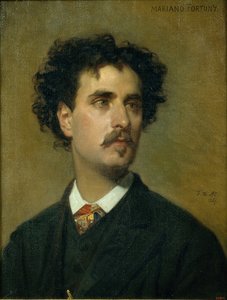
Mariano Fortuny y Marsal
1838 - 1874
Quick Facts
- Artistic Movement Or Style: Orientalist Painting
- Artists Or Movements Influenced By This Artist: ['Marcel Proust']
- Artists Who Influenced This Artist:
- Francisco Goya
- Eugène Delacroix
- Date Of Birth: May 11, 1838
- Date Of Death: November 21, 1949
- Full Name: Mariano Fortuny y Marsal
- Nationality: Spanish
- Notable Artworks:
- The Battle of Tetuan
- Queen Marie Christine Inspecting the Troops
- Place Of Birth: Reus, Catalonia, Spain
Related Articles

John Constable's Masterpieces: Explore 25 Iconic Landscapes for Your Home
Journey through John Constable's 25 most celebrated landscapes. Explore Romanticism, Dedham Vale & his masterful use of light in iconic paintings like 'Hay Wain'. Find museum-quality art reproductions and elevate your home decor on ArtsDot.com.

Romantic Landscapes: 10 Masterpieces for Your Home | ArtsDot
Journey through 10 Romantic landscape masterpieces by Friedrich, Turner & Cole. Explore emotional art, sublime nature scenes & iconic 19th-century paintings. Find museum-quality reproductions for your home at ArtsDot.com – discover the full collection online!
Hudson River School: 10 Masterpieces That Capture America's Wild Beauty | ArtsDot
Journey through America's breathtaking landscapes with our guide to the Top 10 Hudson River School masterpieces. Explore Thomas Cole, Frederic Church & more! Find museum-quality art reproductions and elevate your home decor at ArtsDot.com.
Serene Visions: Exploring Themes of Tranquility in Art History & Contemporary Practice
Explore the history of serene landscape art & discover artists who evoke tranquility. Find the perfect calming artwork for your home with expert guidance from ArtsDot.

Evocations of Place: A Historical Journey Through Landscape Art
Explore the rich history of landscape art with ArtsDot. Discover renowned artists, movements like Impressionism & Romanticism, and expert guidance for collecting timeless pieces. Find your perfect serene escape today!