 Preview
 Send
Send Share
Share
 Details

 Download
 Similars
 X-Ray
X-Ray Diaporama
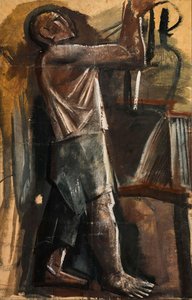
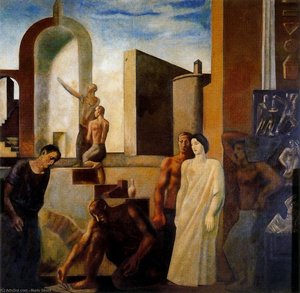
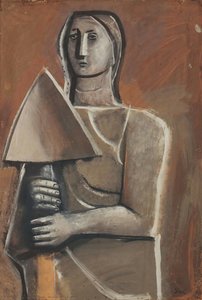
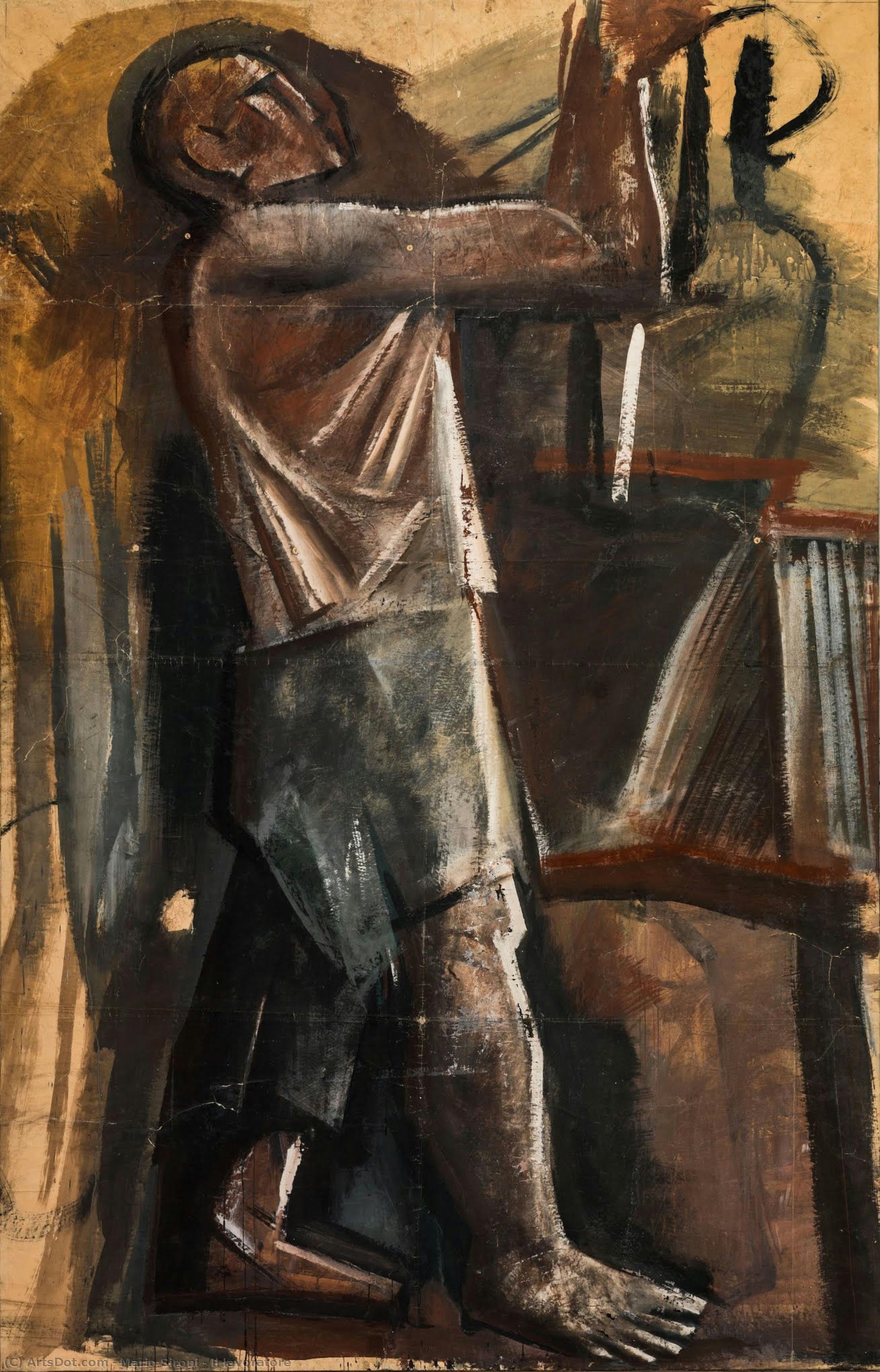
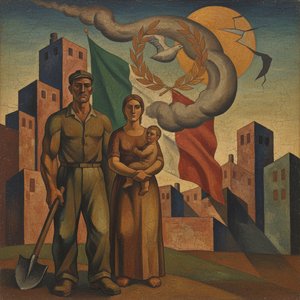
Il lavoratore
 Acrylic On Canvas
- WallArt
- Novecento Italiano
 202.0 x 325.0 cm
 Ministero degli Affari Esteri e della Cooperazione Internazionale. Collezione Farnesina
 Read More
Hand Made Oil Reproduction
Hand-painted oil on canvas in your size and frame, made to order by our artists. ( Buy Print Buy Image)




P118B $10

P118H $10

P118W $10

P438Z $10

P508JH $12

P508YH $12

P805H $10

P805Z $10

P919BZ $10

P919G $10

P919XJ $10

P959ZH $10

P968JZ $12

W106C $8

W218G $10

W218JH $8

W218Y $10

W307PJ $10

W316G $10

W316PJ $8

W316Y $10

W398PJ $8

W4111J $10

W500HY $15

W500JH $15

W692G $12

W849H $8

W940BG $15

W953PJ $8




Pick from our preset sizes that match the artwork's original proportions.

You may enter your own dimensions to fit a specific frame or space. If your selected size does not match the original image's proportions, we will either crop the artwork or extend the painting with additional hand-painted elements. A digital mockup will be sent for your approval before production begins.
Please note that the on-screen preview does not reflect the actual cropping or extension. Only the mockup will accurately show the final composition.
While custom sizes are available, we recommend selecting a dimension from the predefined list to preserve the original proportions.
After order, ArtsDot.com team will email client for instructions and provide a mockup preview
Worldwide Delivery () in 3/4 weeks instead of standard 5 weeks. (18 August). No compromise on quality.

Free Worldwide Express Shipping

High-Quality Linen Canvas

Full Shipping Insurance

Customs Tax Refund Guarantee

True Color Matching Guarantee

60-Day Return Policy (Defects Only)

100% Money-Back Guarantee

Bulk Discount Offer
 Glass option is only available in size under 110 CM

Il lavoratore
Reproduction Medium
Reproduction Size
-


Total Price
$ 263
Artwork Description
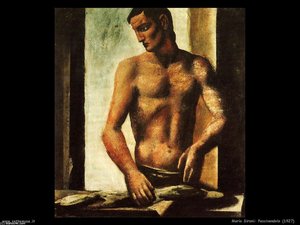
Il Lavoratore: A Study in Labor and Italian Identity
“Il Lavoratore,” Mario Sironi’s monumental preparatory study for the Corporative Italy mosaic commissioned for the Milan Triennial of 1936, stands as a testament to both the artist's stylistic evolution and his engagement with the socio-political landscape of Fascist Italy. More than just an image of manual labor—a deliberate nod to Mussolini’s vision of the Italian citizen—the painting embodies a profound exploration of solitude, vulnerability, and the enduring quest for meaning amidst industrial progress.Stylistic Roots: Divisionism and Futurism's Passing
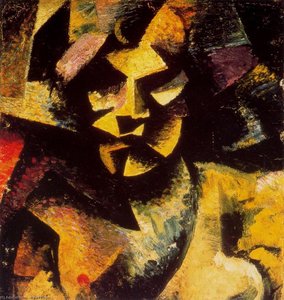
Sironi’s artistic journey began with an immersion in Divisionism, where he meticulously layered translucent colors to achieve luminous effects – evident in early works like “The Student.” However, recognizing the limitations of this technique, he swiftly abandoned its preoccupation with fleeting impressions. A brief foray into Futurism around 1914 showcased his willingness to experiment with dynamism and speed, albeit a fascination that quickly dissipated after the trauma of World War I. This pivotal experience instilled in him a contemplative spirit, shaping his subsequent artistic endeavors.The Geometric Soul: Form and Symbolism
Following WWI, Sironi developed a distinctive style characterized by massive, immobile forms rendered in geometric shapes—a stylistic hallmark that would define his oeuvre. Influenced by figures like Giorgio de Chirico and Carlo Carrà, he embraced the metaphysical painting movement’s exploration of psychological depth and symbolic representation. The composition itself is striking: a solitary figure dominates the vertical space, seated or kneeling with arms outstretched – an gesture simultaneously humble and defiant. This posture speaks to the artist's preoccupation with existential questions and reflects the pervasive sense of isolation that permeated the era.Color Palette and Technique: Ochre, Gold, and Impasto
The painting’s color palette is predominantly dark—deep browns and blacks punctuated by splashes of ochre and gold—creating a dramatic interplay of light and shadow. These hues contribute to an atmosphere of solemn contemplation and underscore the figure's sculptural presence. Sironi employed oil paint on canvas with a thick impasto technique, applying pigment liberally to create textured surfaces that convey palpable physicality. This deliberate materiality serves not only to depict form but also to imbue the artwork with emotional resonance—a visual embodiment of resilience amidst adversity.Historical Context and Fascist Ideology
“Il Lavoratore” is inextricably linked to the socio-political climate of Fascist Italy, where Sironi’s artistic vision aligned with Mussolini's concept of the citizen as a participant in collective endeavor. The artist’s clothing—a fusion of toga and working dress—symbolizes this dual role: supreme judge and builder of a new nation. Ultimately, Sironi’s masterpiece transcends mere representation; it invites viewers to contemplate the complexities of human experience within the framework of historical circumstance – a timeless meditation on labor, identity, and the enduring pursuit of spiritual fulfillment.Related Artworks
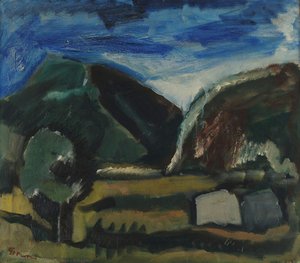
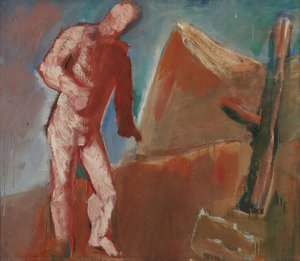
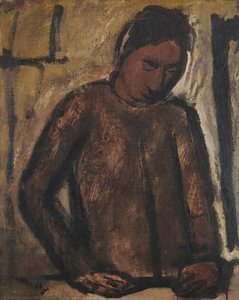
Artist Biography
Mario Sironi: A Life in Modern Italian Art
Early Life and Education
- Born May 12, 1885, in Sassari, Sardinia, Italy.
- His father was an engineer, and his maternal grandfather, Ignazio Villa, was a respected architect and sculptor – providing early artistic exposure.
- Initially studied engineering at the University of Rome but abandoned it in 1903 following a nervous breakdown. This marked a turning point towards art.
- Began formal artistic training at the Scuola Libera del Nudo of the Accademia di Belle Arti di Roma, where he met his first significant teacher, Giacomo Balla.
Artistic Development and Influences
- Early work was heavily influenced by Divisionism, a technique emphasizing separated colors to create luminosity – exemplified in works like “The Student.”
- Briefly experimented with Futurism around 1914, exhibiting at the Galleria Sprovieri in Rome. However, he quickly moved beyond its focus on speed and dynamism.
- A pivotal shift occurred after WWI, developing a style characterized by massive, immobile forms and geometric shapes. This was influenced by his wartime experiences and a growing sense of isolation.
- Key influences included Giacomo Balla (early training), Giorgio de Chirico & Carlo Carrà (metaphysical painting’s impact on form), and elements of Neoclassicism and Primitivist Classicism.
The Novecento Italiano and Mature Style
- In 1922, Sironi became a founding member of the Novecento Italiano movement – a return to order in post-war European art, emphasizing clarity and tradition.
- His mature style is marked by:
- Emphasis on geometric shapes and simplified forms.
- A deliberately ungainly aesthetic in later works.
- Themes of solitude, alienation, and the human condition.
- Exploration of industrial landscapes and working-class life.
- Notable works from this period include “Venere” (1921-1923) and “Solitudine” (“Solitude,” 1925).
Political Affiliations and Later Life
- Sironi was a supporter of Benito Mussolini and contributed extensively to Fascist publications with over 1700 cartoons.
- He believed in the integration of art and architecture, seeking to create monumental works for public spaces – reflecting the ideals of the Fascist regime.
- Following WWII, his association with Fascism led to a decline in his popularity and critical acclaim.
- He largely withdrew from public life, continuing to paint in relative isolation until his death.
Major Achievements and Historical Significance
- Sironi’s work represents a significant contribution to Italian Modernism, bridging the gap between Futurism and later artistic developments.
- His exploration of themes like solitude and alienation resonated with the anxieties of the 20th century.
- Despite the controversies surrounding his political affiliations, his art has been featured in major exhibitions internationally, including at the Centre Georges Pompidou (1981) and the Royal Academy, London (1989).
- Died August 13, 1961, in Milan.
- His legacy lies in his unique stylistic synthesis and his powerful depictions of the human condition within a rapidly changing world.
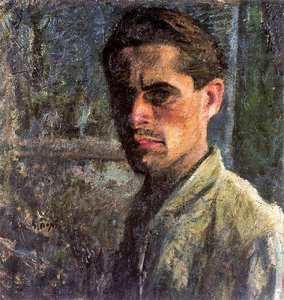
Mario Sironi
1885 - 1961 , Italy
Quick Facts
- Birth Date: 1885-05-12
- Birth Place: Sassari, Italy
- Death Date: 1961-08-13
- Influenced By: ['Giacomo Balla']
- Movement:
- Futurism
- Novecento Italiano
- Modernism
- Name: Mario Sironi
- Nationality: Italian
- Notable Works:
- La Lampada (1919)
- Venere (1921-1923)
- Solitudine (1925)
Related Articles
Mario Sironi: A Poetic of Modern Italian Identity Through Symbolism & Social Commentary
Explore the profound works of Mario Sironi, a key figure in Italian Modernism. Discover his evolution from Futurism to Metaphysical painting and his powerful social commentary. Learn about his legacy at ArtsDot.
Meaningful Art Gifts for Corporate Clients |
Find meaningful art gifts for corporate clients! Explore 10 iconic paintings – Van Gogh, Monet & more – and their inspiring stories. Museum-quality reproductions at . Discover the perfect executive gift today!

Elevating Corporate Events Through Artful Gifting: A Concierge Service for Personalized Artwork Selection and Delivery
Elevate your corporate events with personalized artwork! Our art concierge service offers curated collections & bespoke commissions for lasting impressions. Expert guidance, secure delivery & legal compliance guaranteed.

Beyond Branding: Leveraging Art for Strategic Corporate Relationships & Stakeholder Engagement
Elevate corporate relationships with strategic art gifting. Discover how personalized artwork builds brand loyalty, fosters stakeholder engagement & delivers measurable ROI. Expert guidance and seamless procurement.

Beyond Gifts: Personalized Art for Lasting Corporate Appreciation
Elevate corporate appreciation with personalized art from . Discover bespoke commissions, branded solutions & museum-quality reproductions for lasting impact. Expert consultation & seamless delivery.