

 Preview
 Send
Send Share
Share
 Details

 Download
 Similars
 X-Ray
X-Ray Diaporama
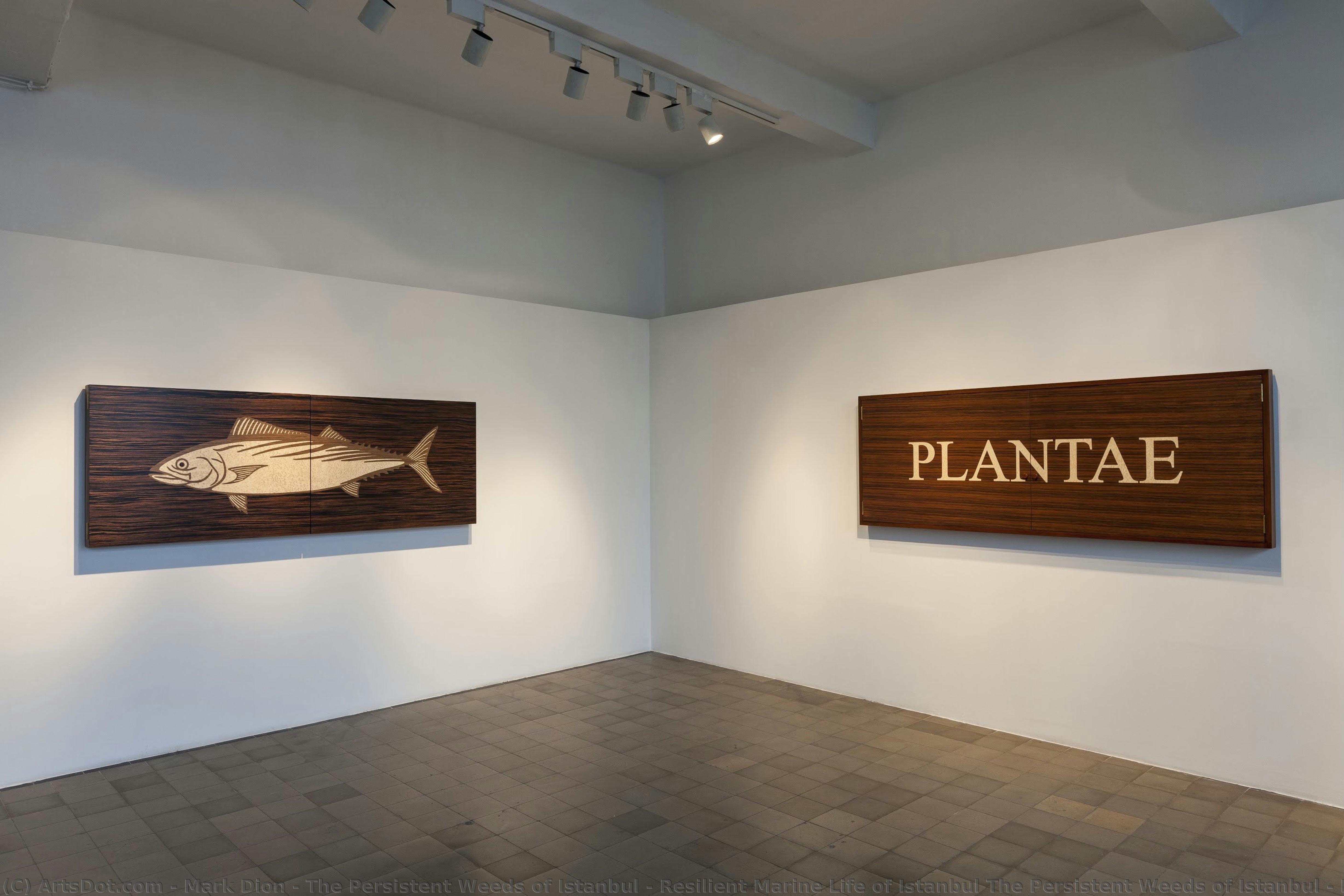
The Persistent Weeds of Istanbul / Resilient Marine Life of Istanbul The Persistent Weeds of Istanbul / Resilient Marine Life of Istanbul
 2017
2017 425.0 x 75.0 cm
 15th Istanbul Biennial
 Read More
Purchase a high-resolution, enhanced digital image, far superior to the online preview.
Each file is meticulously prepared by our in-house specialists using advanced tools and expert manual retouching. We ensure every image has exceptional clarity, precise color accuracy, and fine detail.
The final file is delivered via email within 72 hours, optimized for immediate use in professional, editorial, and print environments. This is the same quality trusted by top-tier design studios, publishers, and galleries.
Digital Image
Download a high-resolution file for personal display, printing, and creative projects. ( Buy Print Buy Hand Made Painting)
Included in Every Digital Image Order
Expert Digital Delivery, Guaranteed
When you choose ArtsDot.com, you're not just getting an image - you're receiving a professionally enhanced digital artwork, crafted with precision and backed by a satisfaction guarantee. Here's everything that comes with your order, automatically:

Fast Email Delivery
Your high-resolution digital image file will be emailed to you within 72 hours of ordering - ready for immediate use.

AI-Enhanced Digital File
Your artwork is professionally optimized using advanced AI tools and manual editing, ensuring maximum detail, clarity, and color accuracy.

Free Lifetime Re-Delivery
Accidentally deleted or lost your file? No worries - we'll resend it to you anytime, free of charge.

No Import Fees - Ever
Enjoy your artwork instantly with zero customs, duties, or delivery fees - digital downloads are always tax-free.

Color Accuracy Guarantee
We ensure your digital image reflects the original colors as closely as possible using professional tools and color management.

60-Day Satisfaction Guarantee
If you're not satisfied with your digital image, we'll revise it or refund 100% within 60 days - no questions asked.

100% Money-Back Guarantee
Not satisfied? Get a full refund within 60 days of receiving your digital file - no questions asked.

Bulk Order Discounts
Buy 3 images, save 10% - Buy 5, save 15% - Buy 10+, save 20%. Great for creative projects, galleries, and agencies.
Collectible Description
Related Artworks







Artist Biography
Mark Dion: Deconstructing Knowledge, Challenging Perception
Born in New Bedford, Massachusetts, in 1961, Mark Dion’s artistic journey began amidst the echoes of a once-thriving whaling port and the remnants of its industrial past. This formative environment profoundly shaped his approach to art – a deliberate interrogation of established institutions, dominant ideologies, and the construction of knowledge itself. From an early age, Dion exhibited a keen interest in both history and science, fueled by explorations of local museums like the New Bedford Whaling Museum, which sparked a fascination with collecting, ordering, and presenting objects in ways that revealed underlying power structures.
Dion’s formal education at the University of Hartford School of Art provided him with a crucial foundation. He honed his skills while simultaneously working as an art conservator, an experience that instilled within him a deep appreciation for the materiality of objects and their historical context. This period also exposed him to the often-invisible labor involved in preserving cultural heritage, informing his later critique of how knowledge is curated and presented.
His studies at the Whitney Museum of American Art under influential figures like Joseph Kosuth and Hans Haacke further solidified his conceptual approach. These mentors encouraged a willingness to challenge conventional artistic practices and explore the intersection of art, science, and social commentary. Dion’s work began to coalesce around the idea that seemingly objective scientific endeavors are rarely neutral; they are always shaped by specific agendas, social contexts, and power dynamics.
The Scientific Presentation: A Method of Disruption
At the core of Mark Dion's practice lies a distinctive method – the deployment of what he terms “scientific presentations.” This isn’t simply mimicry; it’s a deliberate strategy to expose the inherent biases and constructed nature of knowledge systems. He meticulously replicates the visual language and organizational structures of museums, scientific institutions, and archival practices, but subverts their intended function. Dion often employs wunderkammen-like arrangements – elaborate displays of seemingly disparate objects – to reveal hidden connections and challenge viewers’ assumptions about order and meaning.
His installations frequently incorporate elements of archaeology, ethnography, and natural history, drawing parallels between the ways in which these disciplines collect, classify, and exhibit specimens. However, Dion consistently disrupts this process, highlighting the subjective choices involved in selection, arrangement, and interpretation. He questions the authority of scientific discourse by demonstrating how pseudo-science, social agendas, and ideology can infiltrate even the most ostensibly objective fields.
Notable Works: Excavating Institutional Power
Dion’s career has produced a body of work that is both intellectually rigorous and visually arresting. “Neukom Vivarium,” a permanent outdoor installation at the Olympic Sculpture Park in Seattle, stands as a prime example of his approach. This complex structure, resembling a miniature museum or research facility, explores the relationship between science, commerce, and environmental politics. It’s a layered commentary on the commodification of knowledge and the construction of narratives about nature.
Other significant projects include “The Persistent Weeds of Istanbul/Resilient Marine Life of Istanbul,” which examines the complex interplay between human intervention and ecological change; “Mark Dion: The Academy of Things,” a collaborative installation with students in Dresden, Germany, that critically investigates the role of institutions in shaping knowledge production; and his ongoing series of "Tate Thames Digs," archaeological investigations along the banks of the River Thames that reveal layers of history and social activity.
Environmental Politics and Institutional Critique
Dion’s work is deeply rooted in environmental politics, but not in a straightforwardly activist way. Instead, he meticulously traces the historical roots of ecological concerns within the construction of knowledge about nature. He reveals how scientific narratives have been used to justify exploitation, control, and ultimately, environmental degradation. His installations often expose the ways in which seemingly neutral scientific practices are implicated in broader social and political agendas.
By questioning the objectivity of the scientific voice, Dion compels viewers to critically examine the assumptions underlying our understanding of the natural world. He demonstrates that knowledge is always situated within a specific context – shaped by power relations, cultural values, and historical circumstances. His work serves as a potent reminder that environmental action requires not only ecological awareness but also a deep engagement with the social and political forces that drive environmental problems.
Legacy and Influence
Mark Dion’s influence extends far beyond the realm of conceptual art. His meticulous approach to research, his willingness to engage with diverse disciplines, and his sharp critique of institutional power have resonated with artists, scholars, and activists alike. He has demonstrated that art can be a powerful tool for exposing hidden agendas, challenging dominant narratives, and fostering critical reflection on the complex relationship between knowledge, culture, and the environment. Dion’s work continues to provoke dialogue and inspire new approaches to artistic practice, solidifying his position as a significant figure in contemporary art.
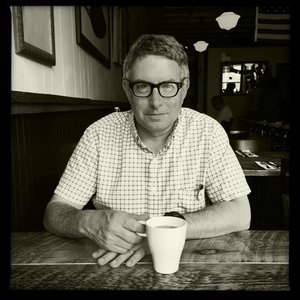
Mark Dion
1961 - , United States of America
Quick Facts
- Artistic Movement Or Style: Conceptual art, installation art
- Artists Or Movements Influenced By This Artist:
- Conceptual art
- Environmental art
- Artists Who Influenced This Artist:
- Joseph Kosuth
- Hans Haacke
- Barbara Kruger
- Date Of Birth: August 28, 1961
- Full Name: Mark Dion
- Nationality: American
- Notable Artworks:
- The Persistent Weeds of Istanbul
- Neukom Vivarium
- Polar Bear and Toucans
- Place Of Birth: New Bedford, USA

