 Preview
 Send
Send Share
Share
 Details

 Download
 Similars
 X-Ray
X-Ray Diaporama
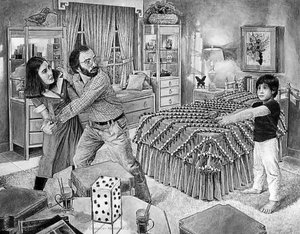
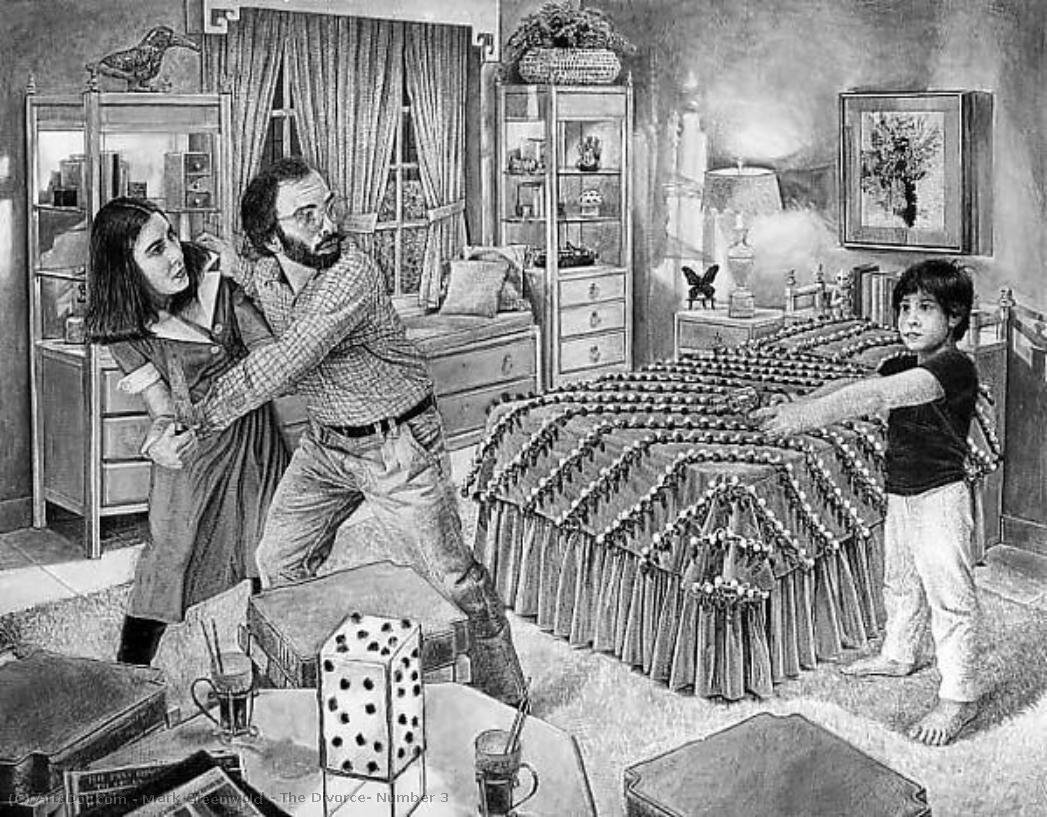
The Divorce, Number 3
 Contemporary Realism
 1983
1983 28.0 x 36.0 cm
 Read More
Giclée / Art Print
Museum-quality giclée or canvas print with fast production and flexible finish options. ( Buy Hand Made Painting Buy Image)




































Pick from our preset sizes that match the artwork's original proportions.

You may enter your own dimensions to fit a specific frame or space. If your selected size does not match the original image's proportions, we will either crop the artwork or extend the image with a mirrored or solid-fill edge. A digital mockup will be sent for your approval before production begins.
Please note that the on-screen preview does not reflect the actual cropping or extension. Only the mockup will accurately show the final composition.
While custom sizes are available, we recommend selecting a dimension from the predefined list to preserve the original proportions.
Worldwide Delivery () in 2 weeks instead of standard 4/5 weeks. (31 August)

Free Worldwide Express Shipping

High-Quality Linen Canvas

Full Shipping Insurance

Customs Tax Refund Guarantee

True Color Matching Guarantee

60-Day Return Policy (Defects Only)

100% Money-Back Guarantee

Bulk Discount Offer
 Glass option is only available in size under 110 CM

The Divorce, Number 3
Giclée / Art Print
Reproduction Size
-


Total Price
$ 63
Related Artworks

Artist Biography
A Life Subtly Charged: The World of Mark Greenwold
Born in Cleveland, Ohio, in 1942, Mark Greenwold emerged as a quietly compelling figure in the American art landscape—an artist whose work defies easy categorization. His paintings aren’t immediately accessible; they don't shout for attention but rather invite prolonged contemplation, rewarding viewers with layers of psychological complexity and technical mastery. Greenwold’s early life offered little indication of his future path. He initially considered law, drawn to the argumentative nature of the profession, yet a nascent artistic impulse—a need to visually articulate inner turmoil—led him to study at the Cleveland Institute of Art and later at Indiana University. This shift wasn't merely a change in discipline but a fundamental reorientation toward a medium capable of expressing what words could not. He began exhibiting in New York in the late 1970s, establishing a presence that, while never prolific, has been consistently marked by profound depth and originality.The Laborious Path to Interiority
Greenwold’s artistic process is legendary for its painstaking detail and deliberate slowness. He doesn't approach painting as a spontaneous act but as an almost archaeological excavation of feeling. Working under magnification with the tiniest of brushes, he builds up surfaces stroke by stroke, meticulously layering color and form to create images that are both hyperrealistic and subtly unsettling. This laborious technique isn’t simply about achieving technical perfection; it's integral to the emotional weight of his work. Each brushstroke becomes a testament to the artist’s engagement with the subject matter—often figures in psychologically charged domestic interiors. He frequently employs preparatory photographs and drawings, yet the final paintings transcend mere representation, becoming something altogether more complex. The result is what one critic termed “delirious realism,” where every element, however realistic, is composed of thousands upon thousands of beautiful abstractions. This dedication to detail isn’t about replicating reality but about constructing a carefully calibrated emotional space.Influences and Artistic Lineage
While Greenwold came of age during the ascendance of Minimalism and Conceptual Art, his work remained steadfastly rooted in figuration. He occupies a unique position—somewhere between Surrealism and Photo Realism—drawing inspiration from diverse sources. The influence of Max Beckmann is evident in his early explorations of portraiture, while the psychological depth of Edward Hopper resonates in his depictions of isolated figures within confined spaces. However, Greenwold’s artistic lineage extends beyond painting; he cites Andrei Tarkovsky, William Blake, and Bob Dylan as key influences—figures who share a commitment to exploring the complexities of human experience with uncompromising honesty. He doesn't seek to emulate these artists directly but rather absorbs their spirit—their willingness to confront difficult truths and challenge conventional narratives.Themes of Isolation, Complexity, and “Emotional Cubism”
Greenwold’s paintings are often described as haunting, unsettling, even disturbing. They depict couples and individuals in moments of familial and social complexity—situations that rarely find representation in art. He doesn't shy away from difficult subject matter, exploring themes of isolation, alienation, and the darker aspects of human relationships. His work is characterized by a deliberate ambiguity; he presents “fictions,” not literal depictions of events but rather explorations of what might have happened—leaving room for multiple interpretations. This refusal to offer easy answers is central to his artistic vision. More recently, Greenwold has described his approach as an “emotional cubism”—a blurring and fragmenting of space and form that reflects the fractured nature of modern experience. He seeks to capture not just what things look like but how they *feel*, creating paintings that resonate with a visceral intensity.Recognition and Lasting Impact
Despite maintaining a relatively low profile, Mark Greenwold has garnered significant recognition within the art world. His 1995 mid-career retrospective at the Colby College Museum of Art—a remarkably concise exhibition featuring only twenty-seven works—underscored the depth and consistency of his oeuvre. His paintings are held in major museum collections across the United States, including The Metropolitan Museum of Art, the Whitney Museum of American Art, and the Hirshhorn Museum. He has received numerous awards, including a Lifetime Achievement Award from the Francis J. Greenburger Foundation. While he’s had only ten solo exhibitions since 1979, each presentation is considered an event—a rare opportunity to experience the profound emotional power of his work. Greenwold's lasting impact lies in his unwavering commitment to exploring the complexities of human experience with uncompromising honesty and technical brilliance. He reminds us that art isn’t about providing easy answers but about asking difficult questions—and inviting viewers to confront their own inner worlds.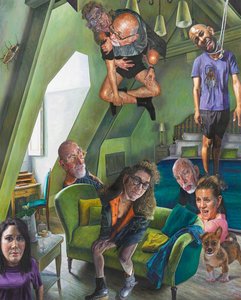
mark greenwold
1942 - , United States of America
Quick Facts
- Artistic Movement Or Style: Surreal Realism
- Artists Who Influenced This Artist: ['Max Beckmann']
- Date Of Birth: 1942
- Full Name: Mark Greenwold
- Nationality: American
- Place Of Birth: Cleveland, USA
Related Articles
The Alchemy of Graphite: An Expert Guide to Mastering Detail and Depth in Pencil Sketching
Unlock the secrets of graphite sketching with our expert guide for art students. Learn to master pencil grades, create realistic depth, and capture intricate textures through professional techniques designed to elevate your observational drawing skills.

The Nuances of Graphite: Exploring Emotional Depth & Technical Mastery in Pencil Drawing
Explore the captivating world of graphite drawing! Discover its rich history, master essential techniques like chiaroscuro, and learn how artists evoke emotion through this timeless medium. Expert insights for art enthusiasts.
Mark Rothko's Masterpieces: 25 Paintings That Define Abstract Expressionism | ArtsDot
Explore 25 iconic Mark Rothko paintings that define Abstract Expressionism. Discover the stories, colors & emotions behind these masterpieces. Find museum-quality art reproductions and curated decor ideas at ArtsDot.com.

The Enduring Power of Line: Exploring Themes & Techniques in Drawing Across Art History
Explore the rich history of drawing! Discover key techniques like linear perspective & iconic artists from the Renaissance to modern times. Enhance your art appreciation with ArtsDot.

The Interior Gaze: Exploring Representations of Domestic Space in Art History
Explore the fascinating history of domestic interiors in art! From Dutch Masters to Impressionism, discover how artists captured home life & social meaning. Expert analysis and insights at ArtsDot.