 Preview
 Send
Send Share
Share
 Details

 Download
 Similars
 X-Ray
X-Ray Diaporama
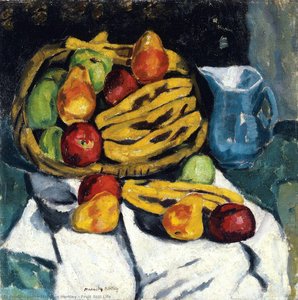
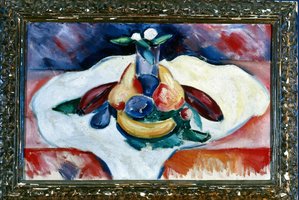
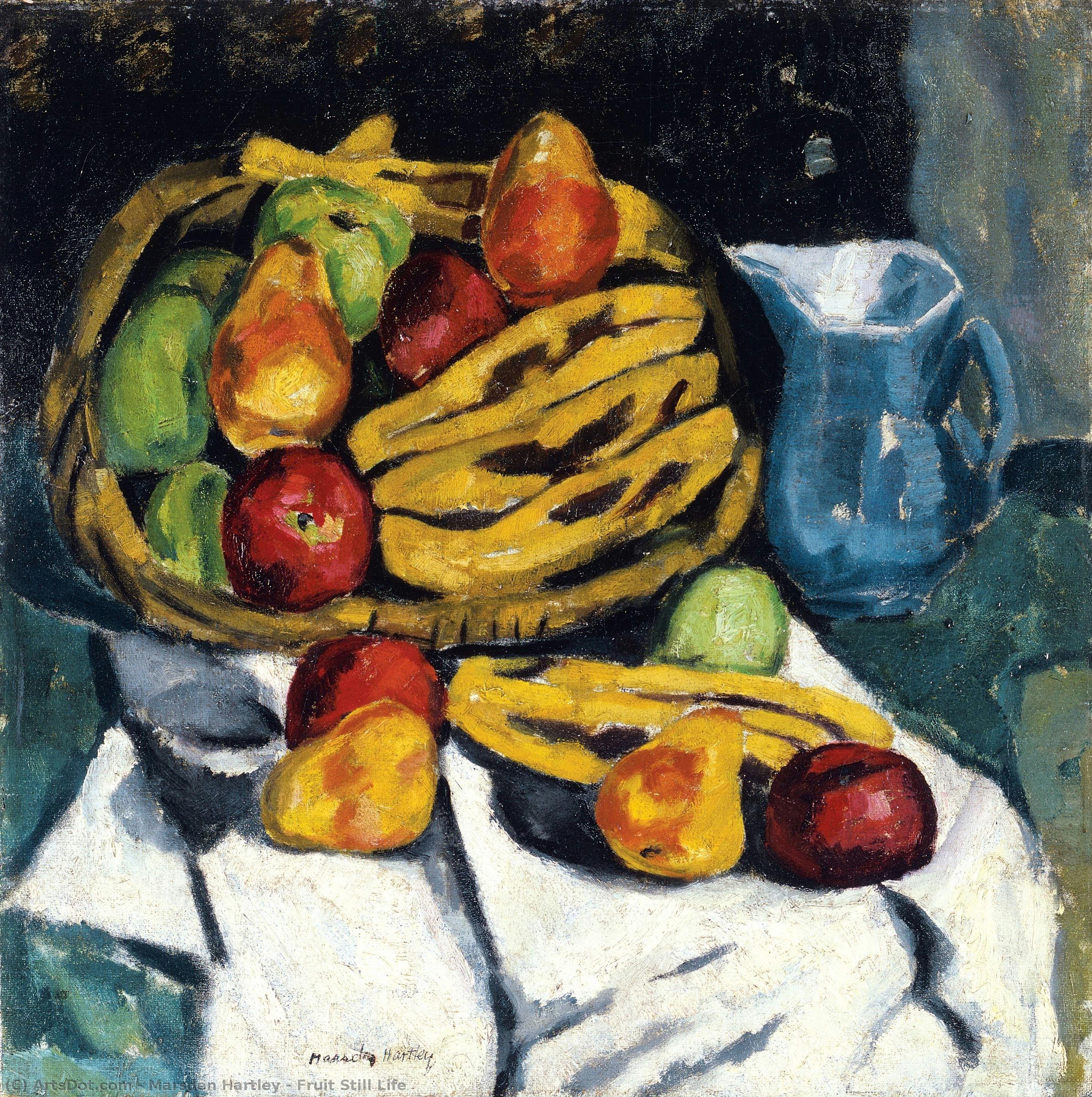
Fruit Still Life


 Read More
Hand Made Oil Reproduction
Hand-painted oil on canvas in your size and frame, made to order by our artists. ( Buy Print Buy Image)




P118B $10

P118H $10

P118W $10

P438Z $10

P508JH $12

P508YH $12

P805H $10

P805Z $10

P919BZ $10

P919G $10

P919XJ $10

P959ZH $10

P968JZ $12

W106C $8

W218G $10

W218JH $8

W218Y $10

W307PJ $10

W316G $10

W316PJ $8

W316Y $10

W398PJ $8

W4111J $10

W500HY $15

W500JH $15

W692G $12

W849H $8

W940BG $15

W953PJ $8




Pick from our preset sizes that match the artwork's original proportions.

You may enter your own dimensions to fit a specific frame or space. If your selected size does not match the original image's proportions, we will either crop the artwork or extend the painting with additional hand-painted elements. A digital mockup will be sent for your approval before production begins.
Please note that the on-screen preview does not reflect the actual cropping or extension. Only the mockup will accurately show the final composition.
While custom sizes are available, we recommend selecting a dimension from the predefined list to preserve the original proportions.
After order, ArtsDot.com team will email client for instructions and provide a mockup preview
Worldwide Delivery () in 3/4 weeks instead of standard 5 weeks. (17 August). No compromise on quality.

Free Worldwide Express Shipping

High-Quality Linen Canvas

Full Shipping Insurance

Customs Tax Refund Guarantee

True Color Matching Guarantee

60-Day Return Policy (Defects Only)

100% Money-Back Guarantee

Bulk Discount Offer
 Glass option is only available in size under 110 CM

Fruit Still Life
Reproduction Medium
Reproduction Size
-


Total Price
$ 263
Artwork Description
Marsden Hartley’s Fruit Still Life: A Study in Quiet Intensity
Marsden Hartley's “Fruit Still Life,” painted in 1912, stands as a testament to the burgeoning Expressionist movement and Hartley’s profound engagement with its core tenets. This deceptively simple composition—a basket overflowing with apples, pears, bananas, and oranges resting upon a tabletop—is far more than just an arrangement of produce; it's a carefully considered meditation on form, color, and emotion.
Hartley’s stylistic influences are readily apparent. Cézanne’s geometric explorations of volume and space permeate the canvas, particularly in the way Hartley renders the contours of the fruit basket and individual apples. Matisse’s bold use of color—primarily muted yellows and oranges—adds vibrancy to the scene while simultaneously conveying a sense of understated elegance. However, Hartley transcends mere stylistic imitation; he imbues his work with an inner resonance that speaks directly to the anxieties and uncertainties of the era.
Technically, Hartley employed pastel on paper, a medium favored by artists seeking textural richness and tonal subtlety. The artist meticulously layered pigments—often applying them in thin washes—to achieve a luminous surface quality that captures the interplay of light and shadow. This technique is particularly effective in depicting the translucence of the pears and the subtle variations in color within the fruit itself. Close observation reveals delicate nuances of hue, demonstrating Hartley’s dedication to capturing the essence of his subject matter.
Painted shortly before Hartley's momentous journey to Europe—a pivotal moment shaping his artistic trajectory—the still life reflects a preoccupation with themes of solitude and contemplation. The solitary basket, bathed in diffused light, evokes a feeling of quiet introspection, mirroring Hartley’s own internal struggles as he wrestled with questions of faith and identity.
Beyond its formal qualities, “Fruit Still Life” carries symbolic weight. Fruit has long been associated with fertility, abundance, and the passage of time—themes that resonate powerfully within Hartley's oeuvre. The arrangement itself suggests a deliberate effort to confront mortality without resorting to grand gestures; instead, Hartley presents a serene tableau that invites viewers to contemplate beauty amidst decay.
This artwork continues to captivate audiences today due to its masterful execution and evocative emotional impact. Its understated palette, combined with Hartley’s meticulous attention to detail, creates an image of remarkable stillness—a visual embodiment of the artist's quest for spiritual truth. Reproductions offer a chance to appreciate Hartley’s genius and immerse oneself in the contemplative atmosphere he so skillfully crafted.
Related Artworks
Artist Biography
A Spiritual Quest in Paint: The Life and Art of Marsden Hartley
Marsden Hartley, born Edmund Hartley in Lewiston, Maine, on January 4, 1877, was a restless spirit drawn to the profound possibilities within art. His early life was marked by a sense of displacement and loss; orphaned young and sent to work in a shoe factory, he carried with him an enduring awareness of loneliness that would deeply inform his artistic vision. This period instilled in him a quiet intensity, a searching quality that permeated his canvases throughout his career. The move to Cleveland with his family offered a turning point, providing access to formal art training at the Cleveland School of Art and eventually leading him to New York City, where he studied under William Merritt Chase at the New York School of Art and later attended the National Academy of Design. However, it wasn’t merely technical skill that Hartley sought; he yearned for a deeper connection, a spiritual resonance within his work. This quest was fueled by an admiration for the evocative symbolism of Albert Pinkham Ryder and the transcendentalist philosophies of Walt Whitman, Ralph Waldo Emerson, and Henry David Thoreau – writers who championed individualism and the inherent divinity of nature.From Maine Landscapes to European Modernism
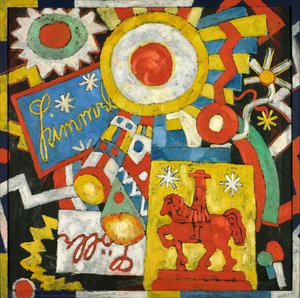
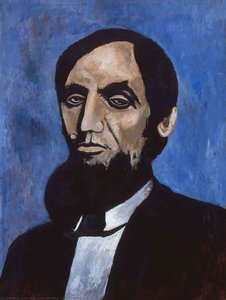
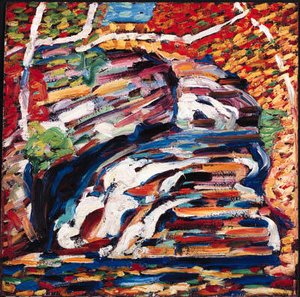
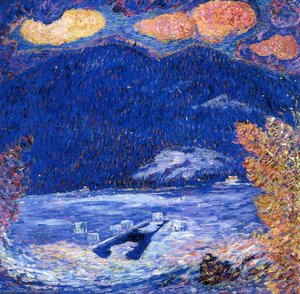
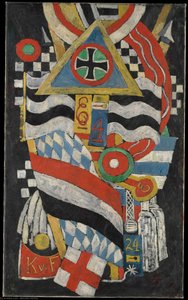
Hartley’s artistic journey began with landscapes rooted in his native New England. Early works like The Ice Hole (1908) demonstrate a move towards abstraction, hinting at the mature style that would define him. These paintings weren't simply depictions of place; they were attempts to capture an emotional and spiritual essence, a sense of the sublime within the natural world. A pivotal moment arrived with his first trip to Europe in 1912, funded by Alfred Stieglitz. Immersing himself in the vibrant art scenes of Paris and Berlin, Hartley encountered Cubism and other avant-garde movements that profoundly impacted his approach. He found kinship with artists like Wassily Kandinsky and Franz Marc, members of the Blue Rider group, who shared his belief in the power of abstraction to convey inner truths. This exposure led to a period of experimentation, resulting in bold compositions characterized by fragmented forms and intense color palettes. His Portrait of a German Officer (1914), painted during this time, is a striking example of how he synthesized European modernism with his own unique sensibility, creating an image that is both formally innovative and emotionally charged. The experience of war-torn Europe also deeply affected him; the loss of a close friend, Karl von Freyburg, inspired a series of powerful portraits imbued with grief and longing.A Return to American Roots: Regionalism and Beyond
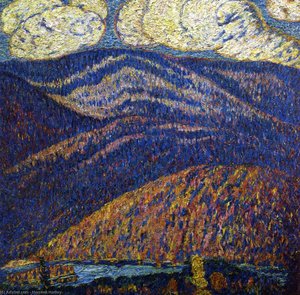
Following his return to the United States in 1916, Hartley continued to explore diverse artistic avenues, moving between New Mexico, where he was captivated by Native American art and culture, and back east. However, a growing sense of national identity began to emerge in his work during the late 1930s. He famously declared his intention to become “the painter of Maine,” aligning himself with the Regionalism movement that celebrated distinctly American subjects and styles. This period saw a renewed focus on the rugged beauty of the Maine coastline, depicted in paintings like Mt. Katahdin (Maine), Autumn -2 (1939–40). Yet, Hartley’s regionalism was never simply representational; he infused his landscapes with a deeply personal symbolism and an expressive use of color that transcended mere documentation. He wasn't merely painting what he saw but conveying how it *felt* to be in those places, to experience the weight of history and the power of nature.Legacy and Historical Significance
Marsden Hartley’s contribution to American art lies not only in his distinctive style—a compelling blend of abstraction, symbolism, and emotional intensity—but also in his unwavering commitment to artistic independence. He resisted easy categorization, constantly evolving and challenging conventional norms throughout his career. His work paved the way for future generations of abstract expressionists and other modernist painters who sought to express their inner worlds through non-representational forms. Hartley’s influence can be seen in the works of artists like Georgia O'Keeffe and Arthur Dove, who also explored the spiritual dimensions of American landscapes. He remains a pivotal figure in the development of American modernism, an artist whose paintings continue to resonate with their profound emotional depth and enduring sense of mystery. His life, marked by both hardship and artistic triumph, serves as a testament to the power of vision and the transformative potential of art.- Key Influences: Albert Pinkham Ryder, Walt Whitman, Ralph Waldo Emerson, Henry David Thoreau, Wassily Kandinsky, Franz Marc.
- Major Movements: American Modernism, Regionalism, Abstract Expressionism (precursor).
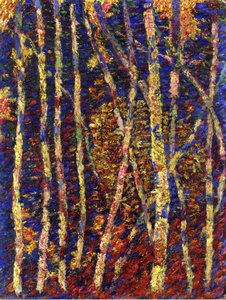
- Notable Works: The Ice Hole, Autumn Color, Portrait of a German Officer, Mt. Katahdin (Maine), Autumn -2.
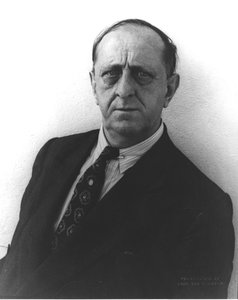
Marsden Hartley
1877 - 1943 , United States of America
Quick Facts
- Artistic Movement Or Style: American Modernism
- Artists Who Influenced This Artist:
- Albert Pinkham Ryder
- Walt Whitman
- Date Of Birth: January 4, 1877
- Date Of Death: September 2, 1943
- Full Name: Marsden Hartley
- Nationality: American
- Notable Artworks:
- The Ice Hole
- Autumn Color
- Mt. Katahdin
- Place Of Birth: Lewiston, USA
Related Articles

Cézanne's Masterpieces: 25 Iconic Artworks to Transform Your Space
Journey through 25 iconic artworks by Paul Cézanne – a master of Impressionism and Post-Impressionism. Explore his landscapes, still lifes, and the stories behind these timeless masterpieces. Discover museum-quality reproductions & curated decor at ArtsDot.com.

Henri Matisse's Masterpieces: Explore 25 Iconic Paintings & Art Decor Ideas
Journey through Henri Matisse's 25 most iconic paintings! Explore Fauvism, vibrant colors & the stories behind masterpieces like 'The Dance'. Find museum-quality art reproductions and curated decor ideas to elevate your space. Discover all masterpieces on ArtsDot.com.
The Bountiful Still Life: Symbolism & Artistic Representation of Fruit Across Art History
Explore the rich history of still life painting & the symbolism of fruit across art movements. Discover masterpieces from Caravaggio to Cézanne with ArtsDot – expert guidance & museum-quality reproductions.
Fauvism's Boldest Visions: 10 Masterpieces That Revolutionized Modern Art | ArtsDot
Explore 10 Fauvist masterpieces by Matisse, Derain & Vlaminck that ignited Modern Art! Discover bold colors, expressionist landscapes & the history of this revolutionary movement. Find museum-quality prints at ArtsDot.com.
The Subtleties of Pastel: A Comprehensive Exploration of Technique, History & Emotional Resonance
Explore the captivating world of pastel art! Discover its rich history, Impressionistic masters like Degas, emotional power & unique techniques. Find museum-quality reproductions at ArtsDot.