 Preview
 Send
Send Share
Share
 Details

 Download
 Similars
 X-Ray
X-Ray Diaporama
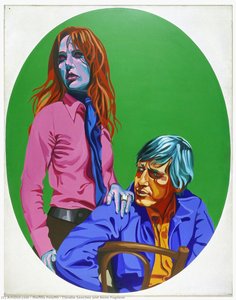
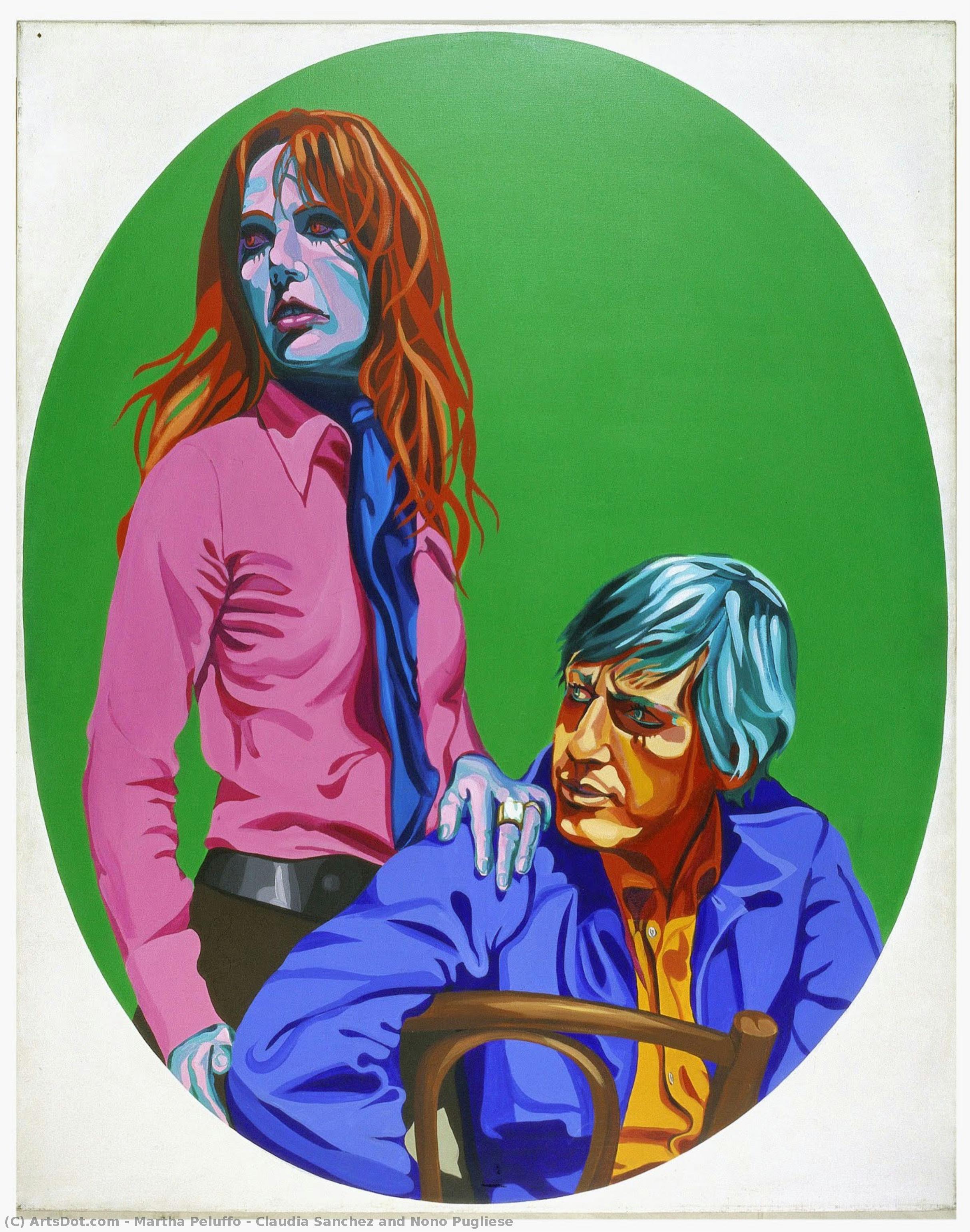
Claudia Sanchez and Nono Pugliese
 Painting
- Contemporary Realism
 1969
1969 161.0 x 131.0 cm
 Buenos Aires Museum of Modern Art
 Read More
Giclée / Art Print
Museum-quality giclée or canvas print with fast production and flexible finish options. ( Buy Hand Made Painting Buy Image)




P118B $10

P118H $10

P118W $10

P438Z $10

P508JH $12

P508YH $12

P805H $10

P805Z $10

P919BZ $10

P919G $10

P919XJ $10

P959ZH $10

P968JZ $12

W106C $8

W218G $10

W218JH $8

W218Y $10

W307PJ $10

W316G $10

W316PJ $8

W316Y $10

W398PJ $8

W4111J $10

W500HY $15

W500JH $15

W692G $12

W849H $8

W940BG $15

W953PJ $8




Pick from our preset sizes that match the artwork's original proportions.

You may enter your own dimensions to fit a specific frame or space. If your selected size does not match the original image's proportions, we will either crop the artwork or extend the image with a mirrored or solid-fill edge. A digital mockup will be sent for your approval before production begins.
Please note that the on-screen preview does not reflect the actual cropping or extension. Only the mockup will accurately show the final composition.
While custom sizes are available, we recommend selecting a dimension from the predefined list to preserve the original proportions.
Worldwide Delivery () in 2 weeks instead of standard 4/5 weeks. (23 August)

Free Worldwide Express Shipping

High-Quality Linen Canvas

Full Shipping Insurance

Customs Tax Refund Guarantee

True Color Matching Guarantee

60-Day Return Policy (Defects Only)

100% Money-Back Guarantee

Bulk Discount Offer
 Glass option is only available in size under 110 CM

Claudia Sanchez and Nono Pugliese
Giclée / Art Print
Reproduction Size
-


Total Price
$ 63
Collectible Description
An Intimate Vignette of Connection
Martha Peluffo’s Claudia Sanchez and Nono Pugliese, painted in 1969, immediately draws the viewer into a moment suspended in time—a tableau vivant of quiet companionship. The scene is richly composed around two figures seated in comfortable chairs, suggesting an afternoon spent in thoughtful conversation or shared repose. It is not merely a depiction of people; it is an immersion into the delicate architecture of human connection. Peluffo captures the subtle interplay between the man on the left and the woman on the right, their proximity speaking volumes about intimacy without needing overt gesture. The inclusion of multiple chairs throughout the composition—one near the center, another anchoring the bottom left, and a third framing the right edge—serves to build out the space, giving the viewer an almost tangible sense of the room's cozy atmosphere.
Mastery in Atmosphere and Technique
The painting’s technique speaks to Peluffo’s skilled handling of light and shadow. While the specific medium lends itself to a certain softness, the overall effect is one of lived-in warmth. The artist manages to imbue the static arrangement with palpable energy; you can almost hear the murmur of their conversation. This masterful control over atmosphere elevates the piece beyond simple portraiture. For those considering a reproduction for an interior space, this work promises not just decoration, but a focal point imbued with narrative depth. It suggests a sophisticated sensibility, perfect for a drawing-room or a gallery setting where contemplation is encouraged.
Echoes of Mid-Century Gathering
Dating from 1969, Claudia Sanchez and Nono Pugliese sits at the cusp of cultural shifts. The style reflects a post-war European sensibility that valued humanism and interpersonal connection amidst rapid societal change. While the artist’s biography hints at her Argentine roots and Buenos Aires origins, this piece resonates with a universal feeling—the enduring comfort found in shared company. It captures that golden age feeling of gathering, where conversation was the primary art form.
Symbolism of Shared Space
The chairs themselves become symbolic elements within the narrative. They are not just furniture; they are anchors defining personal space while simultaneously facilitating closeness. The arrangement suggests a balance between individual presence and collective experience. The way light seems to fall across the subjects, highlighting their engagement with one another, speaks to the enduring human need for witness and understanding. Owning this piece is acquiring a visual meditation on companionship—a reminder of the quiet power found in simply being together.
Related Artworks

Artist Biography
Frank Auerbach: A Life Painted in Thick Emotion
Born in Berlin in 1931, Frank Auerbach’s life was profoundly shaped by the tumultuous events of the early 20th century. His Jewish heritage and the looming threat of Nazi Germany forced his family to flee to England when he was just a boy, an experience that would indelibly inform his artistic vision. Raised in a progressive boarding school in Kent – Bunce Court, a place steeped in intellectual curiosity – Auerbach’s early years were marked by a quiet intensity, a sensitivity honed amidst the upheaval of displacement. This formative period laid the groundwork for a career dedicated to exploring the depths of human emotion through intensely layered and deeply personal paintings.
Auerbach's artistic journey began at St Martin’s School of Art in London, where he found mentorship under David Bomberg, a pivotal figure who encouraged him to develop his own distinct style. He later studied at the Royal College of Art, but it was during these years that he established crucial relationships with fellow artists like Leon Kossoff, forging a bond built on mutual respect and shared artistic concerns. These friendships would prove invaluable throughout his career, offering support and intellectual stimulation.
Auerbach’s work is immediately recognizable for its distinctive technique – thick, impastoed layers of paint applied with a palette knife, creating surfaces that seem to pulsate with energy. He rarely used brushes, preferring instead the direct application of pigment, building up textures and colors in a manner that borders on sculptural. His subjects are primarily drawn from his immediate surroundings: portraits of his wife Julia, Juliet Yardley Mills (J.Y.M.), and Stella West ('E.O.W.'), all models who became central figures in his life and work. These weren’t idealized representations; instead, Auerbach sought to capture the essence of these individuals – their vulnerability, their quiet strength, their inner lives – through a raw and unvarnished approach.
Initially met with criticism for what some perceived as an overly simplistic or even “sculptural” quality to his paintings, Auerbach’s work gradually gained recognition. Critics like David Sylvester championed his unique vision, arguing that despite the apparent accumulation of paint, his images were profoundly ‘painterly,’ conveying a psychological depth rarely found in traditional portraiture. The influence of artists like Turner, whose use of light and atmosphere Auerbach deeply admired, is evident in the way he captures fleeting moments and imbues his canvases with an almost luminous quality.
The School of London and Emotional Intensity
Auerbach’s work belongs to a group often referred to as the “School of London,” a collective of artists working primarily in post-war Britain who developed a distinctive, emotionally charged style. This movement, centered around figures like Kossoff, Francis Bacon, and George Dyer, rejected the formal conventions of academic painting and embraced a more direct and subjective approach to representation. Auerbach’s paintings are particularly notable for their intense emotionality – a sense of vulnerability, loneliness, and quiet contemplation that resonates deeply with viewers.
His early work, influenced by Bomberg's emphasis on tonal values and simplified forms, gradually evolved into the richly textured surfaces and expressive brushwork that would become his signature. He deliberately avoided precise detail, prioritizing instead the conveyance of feeling through color, texture, and gesture. The use of dark, muted tones – browns, greys, and blues – creates a sense of intimacy and melancholy, while flashes of brighter colors suggest moments of hope or revelation.
The recurring presence of his models—Julia, J.Y.M., and Stella—is crucial to understanding Auerbach’s work. These relationships were not merely artistic collaborations; they represented deep personal connections, providing a source of emotional sustenance and mutual support. The paintings are, in essence, intimate portraits – windows into the lives and inner worlds of these individuals.
Technique and Materials: A Process of Accumulation
Auerbach’s technique is arguably as important as his subject matter. He rarely used brushes, preferring instead to apply paint directly to the canvas with a palette knife or other tools. This method allowed him to build up layers of pigment in a way that created a remarkably tactile and three-dimensional surface. The thick impasto – the raised ridges of paint – not only adds visual interest but also creates a sense of immediacy, as if the painting is still in the process of being made.
He worked directly from life, often sketching his subjects on location before returning to the studio to begin the painting. His process was characterized by a deliberate and painstaking accumulation of layers – building up color, texture, and form gradually over time. This slow, methodical approach reflects Auerbach’s deep engagement with his subject matter and his desire to capture its essence with unwavering intensity.
The choice of materials also played a significant role in his work. He favored oil paints for their rich colors and ability to hold thick layers of pigment. He often mixed his own pigments, experimenting with different combinations to achieve the desired effects. The physicality of the paint – its weight, texture, and responsiveness – was an integral part of his artistic process.
Legacy and Recognition
Despite initial skepticism, Frank Auerbach’s work gradually gained widespread recognition throughout the latter half of the 20th century. He enjoyed several solo exhibitions at prestigious galleries like Beaux-Arts and Marlborough, and his paintings were included in major group shows such as the Venice Biennale in 1986. His retrospective at the Hayward Gallery in 1978 cemented his place as one of Britain’s most important post-war painters.
Auerbach's influence extends beyond his own artistic output. He inspired a generation of artists who were drawn to his raw emotionality and unconventional technique. His work continues to be studied and admired for its honesty, vulnerability, and profound sense of human connection. Frank Auerbach died in 1979, leaving behind a body of work that remains both intensely personal and universally resonant.
His paintings are held in major collections worldwide, including the Tate Collection and the British Museum, ensuring that his unique vision will continue to be appreciated for generations to come.
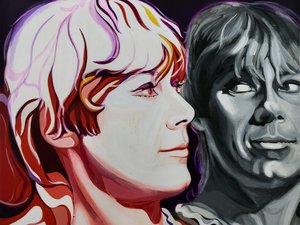
martha peluffo
1931 - 1979 , Argentina
Quick Facts
- Artistic Movement Or Style: Op art
- Artists Or Movements Influenced By This Artist: ['Pointillism']
- Artists Who Influenced This Artist: ['Jackson Pollock']
- Date Of Birth: 24 April 1931
- Full Name: Bridget Louise Riley
- Nationality: English
- Notable Artworks:
- Praemium Imperiale
- Cornwall paintings
Related Articles

The Enduring Legacy of Oil on Canvas: Technique, History & Aesthetic Impact
Explore the rich history & techniques of oil painting – from Renaissance masters to Impressionism. Discover pigments, layering methods, and why this timeless medium endures. Expert insights for artists & art enthusiasts.
Fernand Léger's Masterpieces: 25 Iconic Paintings & The Machine Age Aesthetic | ArtsDot
Explore 25 iconic Fernand Léger paintings that defined the Machine Age & Cubism. Discover the stories behind his bold colors, geometric forms & avant-garde style. Find museum-quality art reproductions on ArtsDot.com.

Oil on Canvas: A Historical & Technical Exploration of a Timeless Artistic Medium
Explore the rich history & enduring techniques of oil painting on canvas. Discover the science behind its longevity, conservation practices, and contemporary relevance. Expert insights for art enthusiasts.

The Enduring Power of Painting: A Historical & Contemporary Exploration of Form and Emotion
Explore the rich history & enduring techniques of oil painting with ArtsDot. Discover masterpieces, learn about art collecting, and find authentic handmade reproductions crafted by skilled artists.
Oil on Board Masters: 10 Paintings That Redefined Art | ArtsDot
Explore 10 legendary 'Oil on Board' masterpieces by Van Gogh, Monet & more! Discover art history, iconic styles like Impressionism, and find museum-quality reproductions to elevate your home decor. Explore the full collection online at ArtsDot.com.