 Preview
 Send
Send Share
Share
 Details

 Download
 Similars
 X-Ray
X-Ray Diaporama
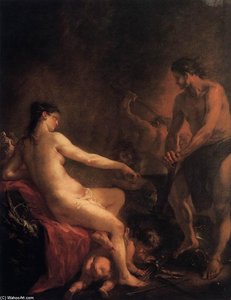
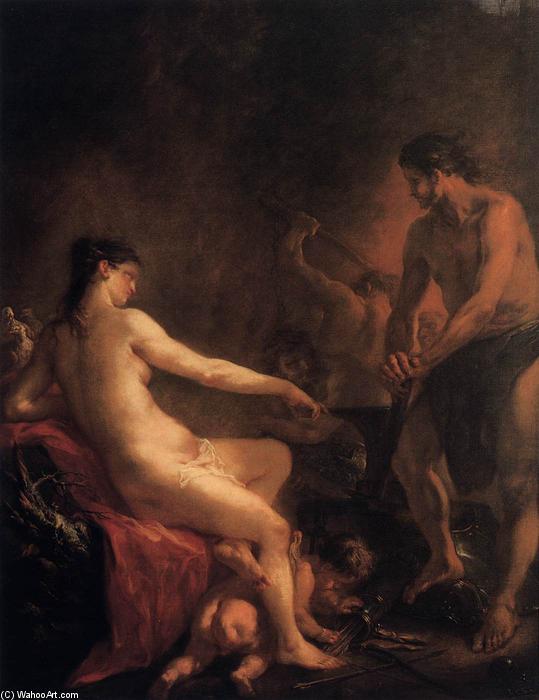
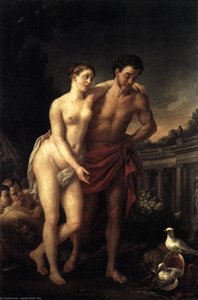
Venus and Cupid in Vulcan's Forge
 1768
1768 152.0 x 115.0 cm
 Austrian Gallery Belvedere
 Read More
Hand Made Oil Reproduction
Hand-painted oil on canvas in your size and frame, made to order by our artists. ( Buy Print Buy Image)




































Pick from our preset sizes that match the artwork's original proportions.

You may enter your own dimensions to fit a specific frame or space. If your selected size does not match the original image's proportions, we will either crop the artwork or extend the painting with additional hand-painted elements. A digital mockup will be sent for your approval before production begins.
Please note that the on-screen preview does not reflect the actual cropping or extension. Only the mockup will accurately show the final composition.
While custom sizes are available, we recommend selecting a dimension from the predefined list to preserve the original proportions.
After order, ArtsDot.com team will email client for instructions and provide a mockup preview
Worldwide Delivery () in 3/4 weeks instead of standard 5 weeks. (17 August). No compromise on quality.

Free Worldwide Express Shipping

High-Quality Linen Canvas

Full Shipping Insurance

Customs Tax Refund Guarantee

True Color Matching Guarantee

60-Day Return Policy (Defects Only)

100% Money-Back Guarantee

Bulk Discount Offer
 Glass option is only available in size under 110 CM

Venus and Cupid in Vulcan's Forge
Reproduction Medium
Reproduction Size
-


Total Price
$ 263
Related Artworks
Artist Biography
The Visionary of the Austrian Baroque
In the heart of Lower Austria, amidst the rolling landscapes of Grafenwörth, a talent was born that would eventually illuminate the altars of Europe. Martin Johann Schmidt, often affectionately remembered as Kremser Schmidt, emerged in 1718 not merely as a painter, but as a profound storyteller of the divine. As the son of a sculptor, Johannes Schmidt, his early life was steeped in the tactile beauty of form and substance, yet he would transcend the physical weight of stone to master the ethereal lightness of light and color. Unlike many of his contemporaries who climbed the rigid hierarchies of formal academies through strict apprenticeship, Schmidt’s ascent was fueled by an undeniable, raw brilliance that commanded attention across the continent.
His journey into the upper echelons of the art world reached a definitive milestone in 1768 when he was admitted to the prestigious Imperial Academy in Vienna. This achievement was no mere formality; it was a recognition of a singular vision that stood alongside the giants of his era, such as Franz Anton Maulbertsch and Daniel Gran. Schmidt possessed a rare ability to bridge the gap between the high-minded complexity of the Baroque and the emotional accessibility required for private devotion. His works were not merely decorations for the elite; they were windows into the spiritual realm, designed to captivate the hearts of both the pious aristocrat and the humble parishioner.
A Tapestry of Devotion and Myth
The breadth of Schmidt’s oeuvre is nothing short of monumental. His career was defined by an astonishing output of large-scale altar paintings that transformed ecclesiastical spaces into theaters of light. While his primary mission remained the creation of devotional imagery, his artistic evolution revealed a fascinating duality. During the period following 1780, one can observe a captivating shift where mythological themes began to intertwine with biblical narratives. This expansion of subject matter allowed him to explore the human condition through the lens of classical antiquity, even as he remained anchored to his spiritual roots.
The technical mastery behind these works lies in his unique approach to color and atmosphere. His palette was famously vibrant, utilizing a lively spectrum that breathed life into sacred figures. This brilliance was often tempered by a sophisticated use of shadow, a technique that suggests a deep, perhaps even subconscious, connection to the masters of the North. Through his brush, the heavy drama of the Baroque era began to soften, hinting at a more luminous, emotive style that would resonate through the centuries.
Influences and the Legacy of Light
While Schmidt was firmly rooted in the Viennese Baroque tradition under the early guidance of Gottlieb Starmayr, his aesthetic soul was shaped by much broader horizons. There is a palpable sense of the Mediterranean in his work, likely born from an intimate encounter with the art of Northern Italy. This infusion of Italianate warmth provided the necessary counterpoint to the more structured Germanic traditions, allowing him to develop a style that felt both grounded and transcendent.
Perhaps the most intriguing aspect of his technical development is the shadow of Rembrandt that lingers within his draughtsmanship. In his meticulous etchings, one finds a profound mastery of chiaroscuro—the dramatic interplay of light and dark. This attention to tonal value and detail reveals an artist who understood that true emotion is often found in the transition from shadow to glow. It is this very quality—this precursor to the atmospheric sensitivity seen in later movements—that leads many historians to view Schmidt as a bridge between the heavy drama of the 18th century and the burgeoning light-focused sensibilities of the eras to follow.
When Martin Johann Schmidt passed away in 1801 in Stein/Danube, he left behind a legacy that far outlasted his lifetime. His life’s work remains a testament to the power of an independent spirit:
- A Master of Emotion: Creating art that spoke directly to the spiritual needs of all social classes.
- Technical Innovation: Blending the dramatic chiaroscuro of Rembrandt with the vibrant colors of the Italian Baroque.
- Historical Significance: Serving as a pivotal figure who transitioned the heavy Baroque style toward a more luminous, proto-Impressionistic sensibility.
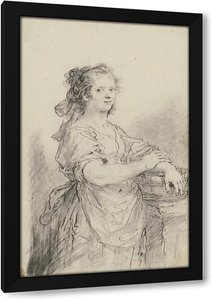
Martin Johann Schmidt
1718 - 1801 , Austria
Quick Facts
- Artistic Movement Or Style: Baroque/Rococo
- Artists Or Movements Influenced By This Artist: ['Impressionism']
- Artists Who Influenced This Artist: ['Rembrandt']
- Date Of Birth: 25 September 1718
- Date Of Death: 28 June 1801
- Full Name: Martin Johann Schmidt
- Nationality: Austrian
- Notable Artworks:
- Saint Elizabeth Distributing Alms
- Venus and Cupid in Vulcan's Forge
- Place Of Birth: Grafenwörth, Austria