 Preview
 Send
Send Share
Share
 Details

 Download
 Similars
 X-Ray
X-Ray Diaporama
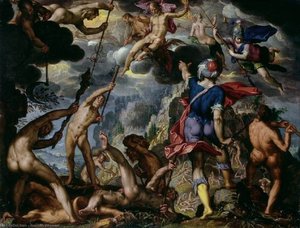
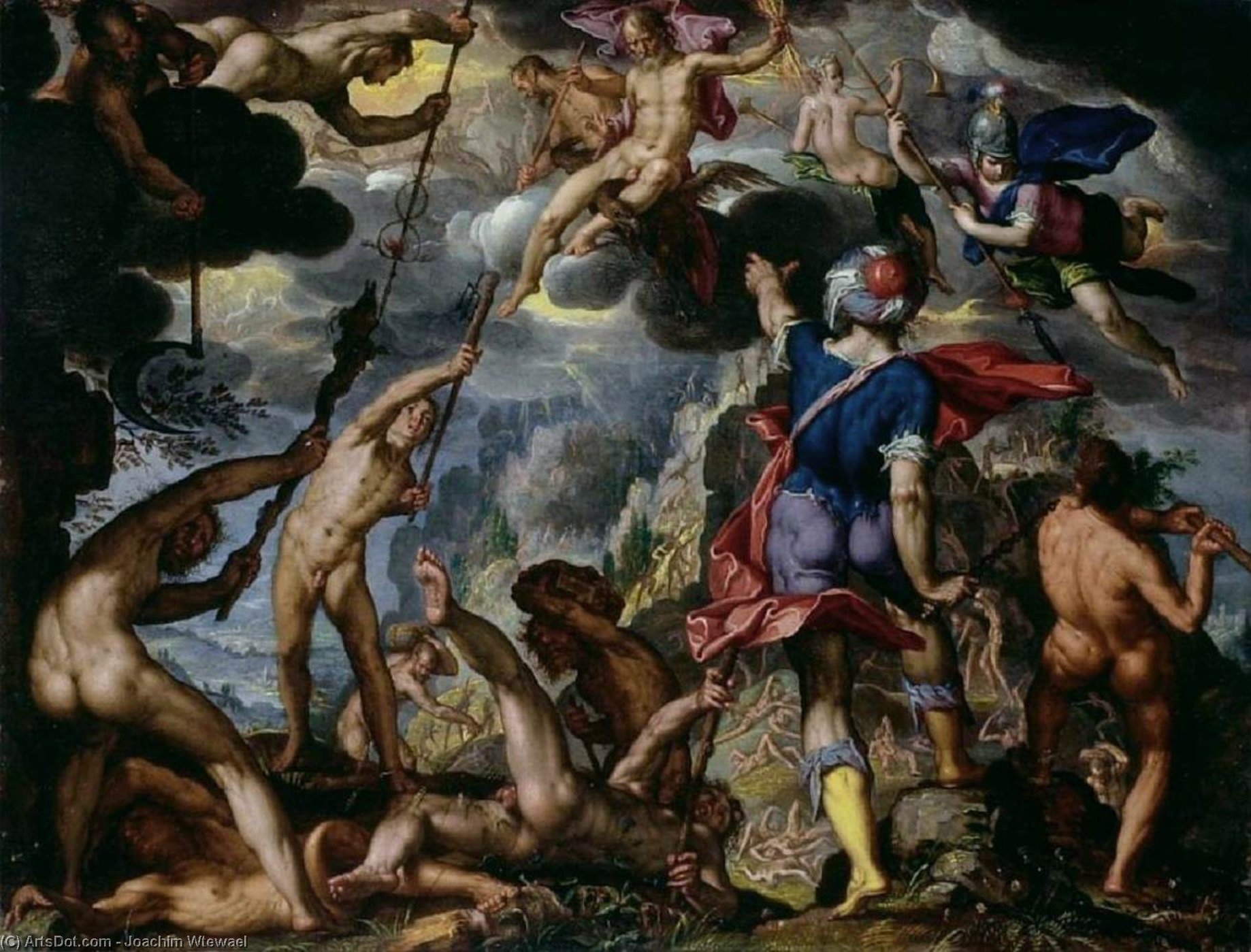
The Battle Between the Gods and the Titans
 Oil On Canvas
- WallArt
- Mannerism
 1600
1600 16.0 x 20.0 cm
 Art Institute of Chicago
 Read More
Hand Made Oil Reproduction
Hand-painted oil on canvas in your size and frame, made to order by our artists. ( Buy Print Buy Image)




P118B $10

P118H $10

P118W $10

P438Z $10

P508JH $12

P508YH $12

P805H $10

P805Z $10

P919BZ $10

P919G $10

P919XJ $10

P959ZH $10

P968JZ $12

W106C $8

W218G $10

W218JH $8

W218Y $10

W307PJ $10

W316G $10

W316PJ $8

W316Y $10

W398PJ $8

W4111J $10

W500HY $15

W500JH $15

W692G $12

W849H $8

W940BG $15

W953PJ $8




Pick from our preset sizes that match the artwork's original proportions.

You may enter your own dimensions to fit a specific frame or space. If your selected size does not match the original image's proportions, we will either crop the artwork or extend the painting with additional hand-painted elements. A digital mockup will be sent for your approval before production begins.
Please note that the on-screen preview does not reflect the actual cropping or extension. Only the mockup will accurately show the final composition.
While custom sizes are available, we recommend selecting a dimension from the predefined list to preserve the original proportions.
After order, ArtsDot.com team will email client for instructions and provide a mockup preview
Worldwide Delivery () in 3/4 weeks instead of standard 5 weeks. (22 August). No compromise on quality.

Free Worldwide Express Shipping

High-Quality Linen Canvas

Full Shipping Insurance

Customs Tax Refund Guarantee

True Color Matching Guarantee

60-Day Return Policy (Defects Only)

100% Money-Back Guarantee

Bulk Discount Offer
 Glass option is only available in size under 110 CM

The Battle Between the Gods and the Titans
Reproduction Medium
Reproduction Size
-


Total Price
$ 263
Artwork Description
The Battle Between the Gods and the Titans: A Vision of Cosmic Conflict
Joachim Anthonisz Wtewael’s “The Battle Between the Gods and the Titans” is not merely a depiction of mythological combat; it's an immersive experience, a carefully constructed tableau of power, chaos, and divine drama. Painted around 1608, this remarkable work transcends its subject matter to become a profound meditation on order emerging from turmoil, a testament to Wtewael’s mastery of light, form, and the evocative potential of classical iconography. Measuring a modest 16 x 20 cm, the painting's intimate scale belies the epic scope of the scene it portrays – a miniature world brimming with colossal figures locked in an eternal struggle. The copper support, a favored medium for Wtewael, lends the image a remarkable luminosity and depth, capturing the subtle nuances of light and shadow with astonishing precision. It’s a testament to his skill that such monumental action feels contained within this relatively small frame.A Symphony of Form and Light: Wtewael's Mannerist Style
Wtewael was a staunch defender of the Mannerist style, a movement characterized by its deliberate artificiality, elongated figures, and complex compositions. Unlike the burgeoning naturalism of the early 17th century, Wtewael deliberately resisted imitation, prioritizing elegance, refinement, and an almost jewel-like quality to his work. This is vividly apparent in “The Battle.” The figures are not rendered with photographic realism; instead, they possess a sculpted grace, their bodies elongated and posed in dramatic, often exaggerated positions. Notice the heroic musculature of Zeus hurling his thunderbolts, the determined stance of Neptune wielding his trident, or the regal bearing of Minerva, her helmet gleaming as she directs her spear. Wtewael’s use of light is equally masterful – a carefully orchestrated interplay of highlights and shadows that draws the eye to key elements within the composition while simultaneously creating an atmosphere of intense drama. The background clouds swirl with ethereal luminescence, suggesting both the fury of the battle and the vastness of the cosmos.Mythological Narrative: Titans Versus Olympians
The painting vividly recounts a pivotal moment in Greek mythology – the Titanomachy, the ten-year war between the older generation of gods (the Titans) and the younger Olympian deities led by Zeus. The scene captures the apex of this conflict, showcasing the clash of titans on a grand scale. The Titans, represented as formidable, armored figures, are depicted in a state of desperate resistance, while the Olympians – Zeus, Hera, Poseidon, Demeter, Hades, and Hestia – emerge victorious, wielding their divine attributes with devastating force. The inclusion of angels adds a layer of celestial intervention, suggesting a broader cosmic struggle between good and evil, order and chaos. The composition itself is carefully balanced, reflecting the underlying themes of conflict and resolution. The Titans are largely relegated to the background, while the Olympians dominate the foreground, symbolizing their triumph over the old guard.Symbolism and Emotional Resonance: A Vision of Order
Beyond its narrative content, “The Battle Between the Gods and the Titans” is rich in symbolic meaning. The titans represent the forces of chaos, tradition, and the past, while the Olympians embody order, progress, and the future. The painting’s overall mood is one of intense drama and emotional turmoil, yet it also conveys a sense of hope – the promise of a new era under Zeus's rule. The use of polished surfaces and vibrant colors creates an almost hypnotic effect, drawing the viewer into the heart of the conflict. It’s not simply a battle scene; it’s a visual representation of the struggle between opposing forces, a reminder that even in the midst of chaos, order can ultimately prevail. The painting's small size invites intimate contemplation, encouraging viewers to consider the timeless themes of power, destiny, and the cyclical nature of history.A Timeless Masterpiece: Reproduction Possibilities
Reproductions of “The Battle Between the Gods and the Titans” offer a remarkable opportunity to bring this extraordinary artwork into any setting. Whether displayed in a grand hall or a cozy study, its dramatic composition and exquisite detail will undoubtedly captivate viewers. The painting’s rich color palette and dynamic energy translate beautifully to high-quality prints on canvas or paper, allowing you to experience the full impact of Wtewael's vision. Consider pairing this artwork with complementary interior design elements – perhaps incorporating shades of gold, blue, and crimson to evoke the painting’s vibrant hues.Related Artworks



Artist Biography
The Enduring Polish of a Mannerist Master
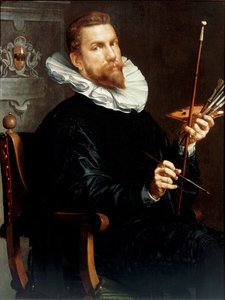
Joachim Anthonisz Wtewael, a name whispered among connoisseurs of the Dutch Golden Age, remains a captivating figure whose art defies easy categorization. Born in 1566 and passing away in 1638, his life was as multifaceted as his canvases. While his artistic genius shone brightly, it is equally notable that he was also a successful flax merchant and an active town councillor of Utrecht. This dual existence—the meticulous artisan alongside the pillar of civic society—suggests a man whose life demanded both worldly acumen and profound creative focus. Wtewael’s signature style, however, possessed a remarkable consistency; it remained largely untouched by the sweeping naturalistic currents that were reshaping art across Europe during his lifetime.
A Journey Through Style and Influence
Wtewael's early training rooted him deeply in the sophisticated vocabulary of late 16th-century Haarlem Mannerism. His initial professional life saw him working as a glassmaker and engraver within his father’s workshop, an apprenticeship that undoubtedly honed his hand for intricate detail. A pivotal period arrived when he embarked on travels through Italy and France starting in 1586. These sojourns were crucial, exposing him to the rich artistic currents of the Second School of Fontainebleau. Yet, despite these influences, Wtewael possessed a unique internal compass. His work is characterized by figures that are masterfully drawn, possessing an almost porcelain-like polish, often arranged in poses that feel wonderfully capricious and dramatically charged.
Thematic Depth: Myth Meets Devotion
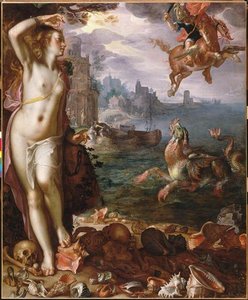
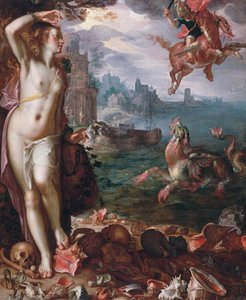
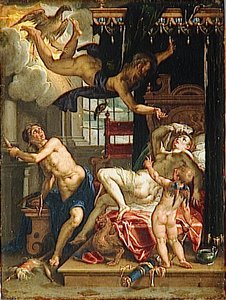
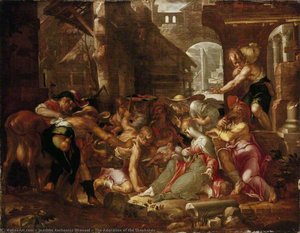
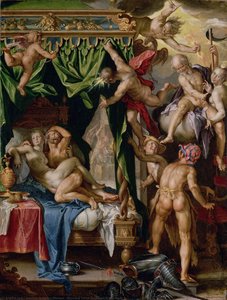
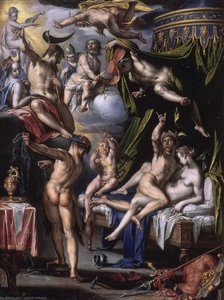
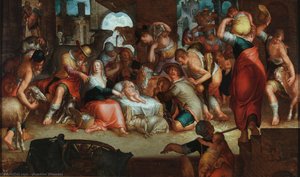
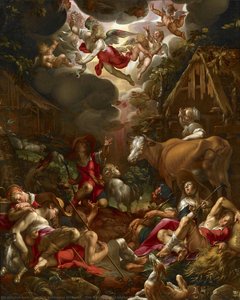
The body of his surviving work—comprising around one hundred paintings, alongside numerous drawings and stained glass designs—reveals a fascinating thematic duality. He was equally at home depicting profound religious narratives as he was celebrating the lush drama of classical mythology. Consider works such as Adoration of the Shepherds juxtaposed with Venus and Mars Surprised by Vulcan. These pieces showcase his remarkable ability to weave together conventional sacred subjects with pagan lore, often imbuing both realms with a palpable, sometimes strong erotic undercurrent that draws the viewer into its narrative embrace. His attention to detail is breathtaking; in works like Perseus and Andromeda, housed notably at the Mauritshuis museum in Utrecht, one can trace his unparalleled skill.
Historical Significance and Legacy
What makes Wtewael’s contribution so significant is precisely that resistance to change. While naturalism beckoned artists toward greater realism, Wtewael held fast to a polished, idealized aesthetic, creating a body of work that feels both historically situated and eternally vibrant. His cabinet paintings, executed on copper plates, are particularly distinctive and numerous, offering intimate glimpses into his artistic process. Though the final decade of his life saw him retreat from painting—a period possibly marked by personal sorrow following the passing of his wife—the impact of his vision endures. He gifted art history a style that remains both highly polished and wonderfully unpredictable.
joachim anthonisz wtewael
1566 - 1638
Quick Facts
- Artistic Movement Or Style: Mannerism
- Artists Who Influenced This Artist: ['Second school of Fontainebleau']
- Date Of Birth: 1566
- Date Of Death: 1638
- Full Name: Joachim Anthonisz Wtewael
- Nationality: Dutch
- Notable Artworks:
- Adoration of the Shepherds
- Venus and Mars surprised by Vulcan
Related Articles
Echoes of Olympus: Mythological Narratives in Western Art Through the Ages
Explore the captivating history of mythological narratives in Western art! From ancient Greece to modern masterpieces, discover iconic artworks & symbolism. Expert analysis and high-quality reproductions at ArtsDot.

Titan Buff Tones: 10 Masterpieces for a Warm & Sophisticated Home |
Explore 10 iconic paintings bathed in 'Titan Buff' – from Rembrandt to Rubens. Discover the stories, techniques & warm tones that define these masterpieces. Find museum-quality art reproductions for your home at .
Mannerism: Bridging Renaissance Harmony & Baroque Drama – A Study of Style & Affectation
Explore the fascinating world of Mannerism! Discover its key characteristics, pioneering artists like Pontormo & Bronzino, and its pivotal role in bridging Renaissance harmony to Baroque drama. A comprehensive guide for art enthusiasts.
Hans von Aachen: Mannerism's Courtly Visionary & Imperial Portraiture
Explore the captivating world of Hans von Aachen, a leading Mannerist painter renowned for his exquisite imperial portraits & mythological scenes. Discover his legacy and influence on 16th-century European art.
Mannerism's Masters: 10 Artworks That Redefined Renaissance Style | ArtsDot
Explore 10 defining Mannerism masterpieces – from Pontormo to El Greco. Discover the stories behind these Renaissance paintings, their unique style & symbolism. Find museum-quality art reproductions at ArtsDot.com and elevate your home decor.