 Preview
 Send
Send Share
Share
 Details

 Download
 Similars
 X-Ray
X-Ray Diaporama
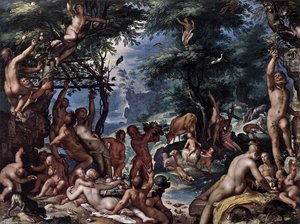
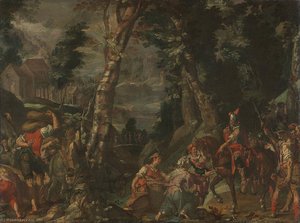
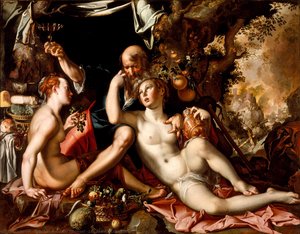
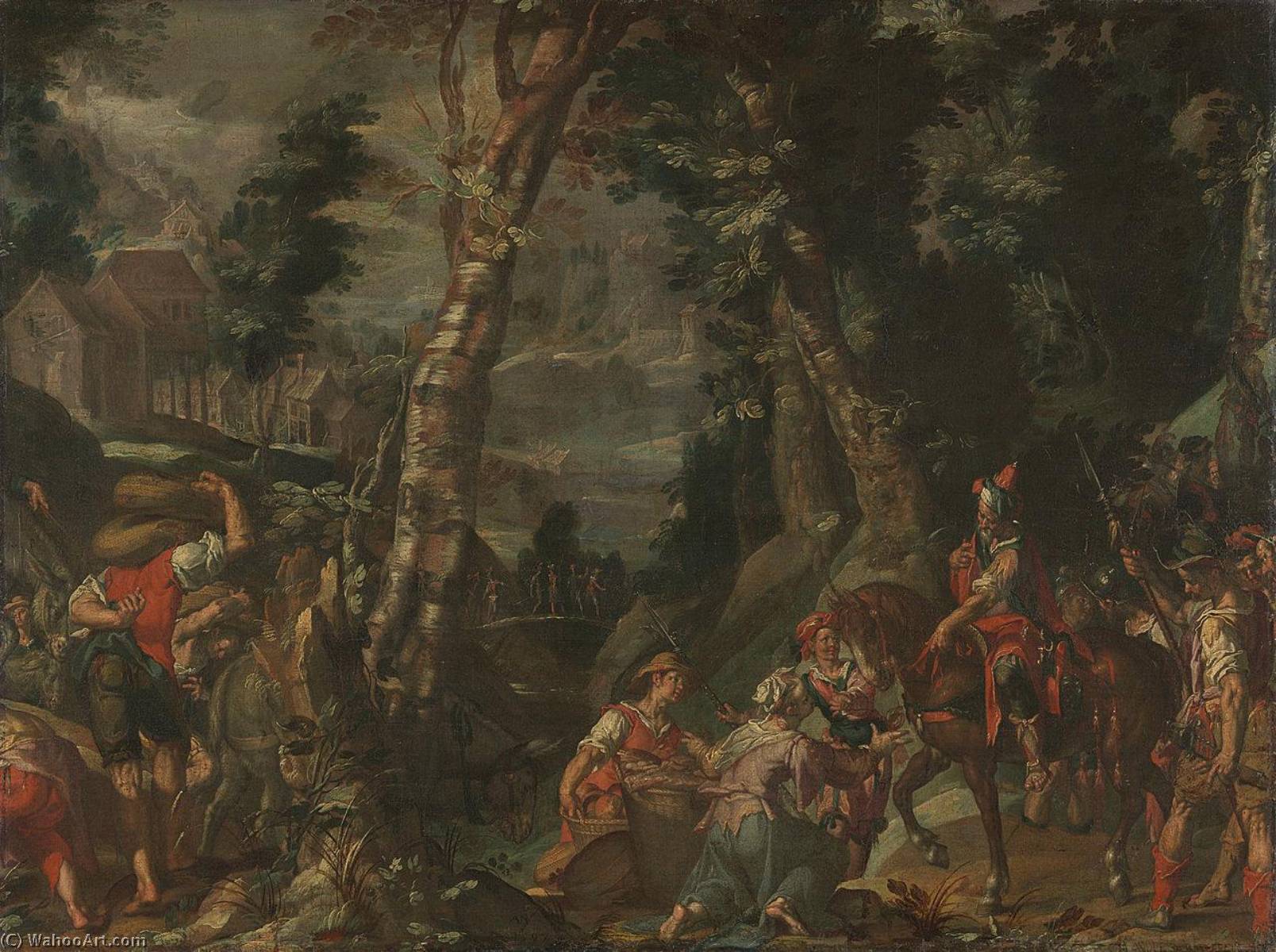
The Meeting of David and Abigail


 Read More
Hand Made Oil Reproduction
Hand-painted oil on canvas in your size and frame, made to order by our artists. ( Buy Print Buy Image)




P118B $10

P118H $10

P118W $10

P438Z $10

P508JH $12

P508YH $12

P805H $10

P805Z $10

P919BZ $10

P919G $10

P919XJ $10

P959ZH $10

P968JZ $12

W106C $8

W218G $10

W218JH $8

W218Y $10

W307PJ $10

W316G $10

W316PJ $8

W316Y $10

W398PJ $8

W4111J $10

W500HY $15

W500JH $15

W692G $12

W849H $8

W940BG $15

W953PJ $8




Pick from our preset sizes that match the artwork's original proportions.

You may enter your own dimensions to fit a specific frame or space. If your selected size does not match the original image's proportions, we will either crop the artwork or extend the painting with additional hand-painted elements. A digital mockup will be sent for your approval before production begins.
Please note that the on-screen preview does not reflect the actual cropping or extension. Only the mockup will accurately show the final composition.
While custom sizes are available, we recommend selecting a dimension from the predefined list to preserve the original proportions.
After order, ArtsDot.com team will email client for instructions and provide a mockup preview
Worldwide Delivery () in 3/4 weeks instead of standard 5 weeks. (28 August). No compromise on quality.

Free Worldwide Express Shipping

High-Quality Linen Canvas

Full Shipping Insurance

Customs Tax Refund Guarantee

True Color Matching Guarantee

60-Day Return Policy (Defects Only)

100% Money-Back Guarantee

Bulk Discount Offer
 Glass option is only available in size under 110 CM

The Meeting of David and Abigail
Reproduction Medium
Reproduction Size
-


Total Price
$ 263
The Meeting of David and Abigail: A Masterpiece of Mannerist Elegance
Joachim Antonisz Wtewael’s “The Meeting of David and Abigail,” painted in 1597, stands as a testament to the artistic fervor of the Dutch Renaissance and its embrace of Mannerism. Housed within the Rijksmuseum Amsterdam, this monumental canvas transcends mere depiction; it embodies an intricate tapestry of biblical narrative interwoven with masterful technique and profound symbolic resonance. Examining Wtewael’s work offers a glimpse into the intellectual currents shaping European art during this pivotal period.A Scene from Scripture Brought to Life
The painting recounts the poignant encounter between King David and Abigail, recounted in Judges 4:16-20. David, weary from battle and consumed by righteous indignation over Nabal’s refusal to offer hospitality and provisions to his army, seeks counsel from Abigail, whose unwavering loyalty and generosity represent a beacon of virtue amidst moral ambiguity. The composition captures this pivotal moment with breathtaking precision—David, regal in armor, stands poised to deliver judgment upon Nabal's folly, while Abigail presents him with baskets overflowing with figs and olives, symbolizing repentance and divine grace.Technical Brilliance: Mannerist Precision
Wtewael’s artistic prowess is immediately evident in his meticulous attention to detail and the execution of his style—a hallmark of Mannerism. He employs a technique characterized by polished surfaces, flattened perspectives, and exaggerated poses, rejecting the naturalistic ideals prevalent in earlier Renaissance art. The artist skillfully utilizes oil paint on canvas, layering translucent glazes to achieve luminous colors and creating an illusion of depth through subtle shading. Notice particularly the exquisitely rendered drapery—flowing folds cascade across figures, conveying movement and emotion with remarkable subtlety. The artist’s masterful manipulation of light and shadow contributes significantly to the painting's dramatic impact.Symbolism: Faith, Repentance, and Divine Providence
Beyond its visual splendor, “The Meeting of David and Abigail” is rich in symbolic significance. The figs and olives offered by Abigail represent repentance—a gesture of humility and acknowledgment of wrongdoing—and symbolize the bounty of God’s mercy. The posture of David embodies righteous indignation tempered with contemplation, reflecting the complexities inherent in moral judgment. Furthermore, the landscape backdrop serves as a visual metaphor for divine providence—the overarching force guiding human affairs toward righteousness. Wtewael's deliberate choices elevate the painting beyond a simple retelling of scripture into an exploration of spiritual themes.Emotional Resonance: A Moment of Grace Amidst Conflict
The painting’s enduring appeal lies in its ability to evoke profound emotional responses. The faces of David and Abigail convey palpable emotion—David’s gaze is solemn, reflecting his inner turmoil, while Abigail’s expression radiates compassion and unwavering faith. Wtewael captures the essence of this dramatic confrontation with remarkable sensitivity, conveying not only the narrative drama but also the underlying spiritual significance. “The Meeting of David and Abigail” continues to inspire viewers today, reminding us of the transformative power of repentance and the enduring promise of divine grace—a timeless masterpiece that exemplifies the pinnacle of Mannerist artistic achievement.Related Artworks


Artist Biography
The Enduring Polish of a Mannerist Master
Joachim Anthonisz Wtewael, a name whispered among connoisseurs of the Dutch Golden Age, remains a captivating figure whose art defies easy categorization. Born in 1566 and passing away in 1638, his life was as multifaceted as his canvases. While his artistic genius shone brightly, it is equally notable that he was also a successful flax merchant and an active town councillor of Utrecht. This dual existence—the meticulous artisan alongside the pillar of civic society—suggests a man whose life demanded both worldly acumen and profound creative focus. Wtewael’s signature style, however, possessed a remarkable consistency; it remained largely untouched by the sweeping naturalistic currents that were reshaping art across Europe during his lifetime.
A Journey Through Style and Influence
Wtewael's early training rooted him deeply in the sophisticated vocabulary of late 16th-century Haarlem Mannerism. His initial professional life saw him working as a glassmaker and engraver within his father’s workshop, an apprenticeship that undoubtedly honed his hand for intricate detail. A pivotal period arrived when he embarked on travels through Italy and France starting in 1586. These sojourns were crucial, exposing him to the rich artistic currents of the Second School of Fontainebleau. Yet, despite these influences, Wtewael possessed a unique internal compass. His work is characterized by figures that are masterfully drawn, possessing an almost porcelain-like polish, often arranged in poses that feel wonderfully capricious and dramatically charged.
Thematic Depth: Myth Meets Devotion
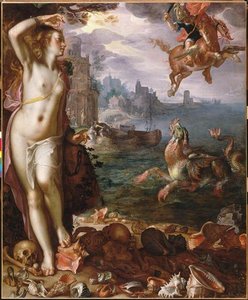
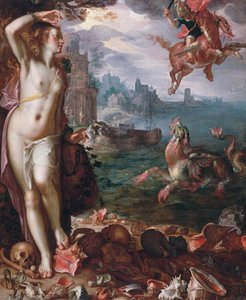
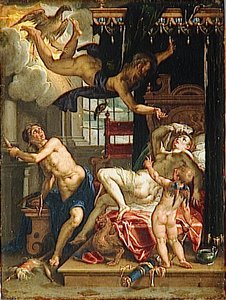
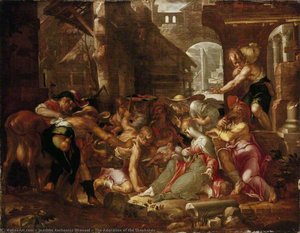
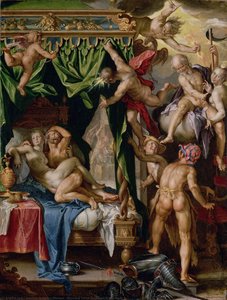
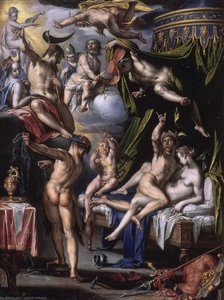
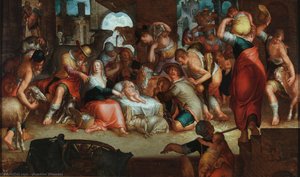
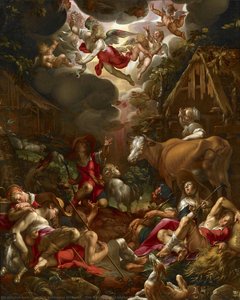
The body of his surviving work—comprising around one hundred paintings, alongside numerous drawings and stained glass designs—reveals a fascinating thematic duality. He was equally at home depicting profound religious narratives as he was celebrating the lush drama of classical mythology. Consider works such as Adoration of the Shepherds juxtaposed with Venus and Mars Surprised by Vulcan. These pieces showcase his remarkable ability to weave together conventional sacred subjects with pagan lore, often imbuing both realms with a palpable, sometimes strong erotic undercurrent that draws the viewer into its narrative embrace. His attention to detail is breathtaking; in works like Perseus and Andromeda, housed notably at the Mauritshuis museum in Utrecht, one can trace his unparalleled skill.
Historical Significance and Legacy
What makes Wtewael’s contribution so significant is precisely that resistance to change. While naturalism beckoned artists toward greater realism, Wtewael held fast to a polished, idealized aesthetic, creating a body of work that feels both historically situated and eternally vibrant. His cabinet paintings, executed on copper plates, are particularly distinctive and numerous, offering intimate glimpses into his artistic process. Though the final decade of his life saw him retreat from painting—a period possibly marked by personal sorrow following the passing of his wife—the impact of his vision endures. He gifted art history a style that remains both highly polished and wonderfully unpredictable.
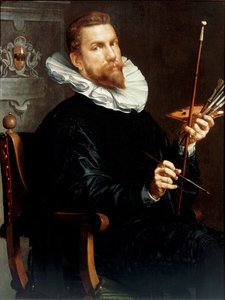
joachim anthonisz wtewael
1566 - 1638
Quick Facts
- Artistic Movement Or Style: Mannerism
- Artists Who Influenced This Artist: ['Second school of Fontainebleau']
- Date Of Birth: 1566
- Date Of Death: 1638
- Full Name: Joachim Anthonisz Wtewael
- Nationality: Dutch
- Notable Artworks:
- Adoration of the Shepherds
- Venus and Mars surprised by Vulcan
Related Articles

The Enduring Legacy of Oil on Canvas: Technique, History & Aesthetic Impact
Explore the rich history & techniques of oil painting – from Renaissance masters to Impressionism. Discover pigments, layering methods, and why this timeless medium endures. Expert insights for artists & art enthusiasts.

Oil on Canvas: A Historical & Technical Exploration of a Timeless Artistic Medium
Explore the rich history & enduring techniques of oil painting on canvas. Discover the science behind its longevity, conservation practices, and contemporary relevance. Expert insights for art enthusiasts.

The Enduring Legacy of Oil on Canvas: Technique, History & Contemporary Practice
Explore the rich history & enduring techniques of oil painting on canvas. Discover the science behind its longevity, conservation practices, and contemporary relevance. Expert insights for art enthusiasts.
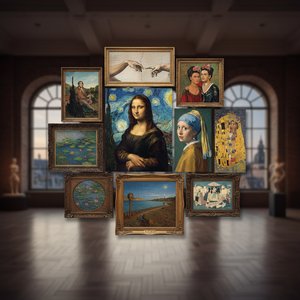
Oil on Canvas Masters: 10 Paintings That Redefined Art History |
Journey through art history with our guide to 10 legendary oil on canvas masterpieces! Explore iconic works by Van Gogh, Monet & Rembrandt. Find museum-quality reproductions and elevate your home decor at . Discover all masterpieces online.

The Enduring Power of Painting: A Historical & Contemporary Exploration of Form and Emotion
Explore the rich history & enduring techniques of oil painting with ArtsDot. Discover masterpieces, learn about art collecting, and find authentic handmade reproductions crafted by skilled artists.