 Preview
 Send
Send Share
Share
 Details

 Download
 Similars
 X-Ray
X-Ray Diaporama
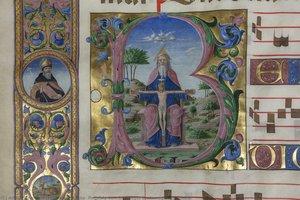
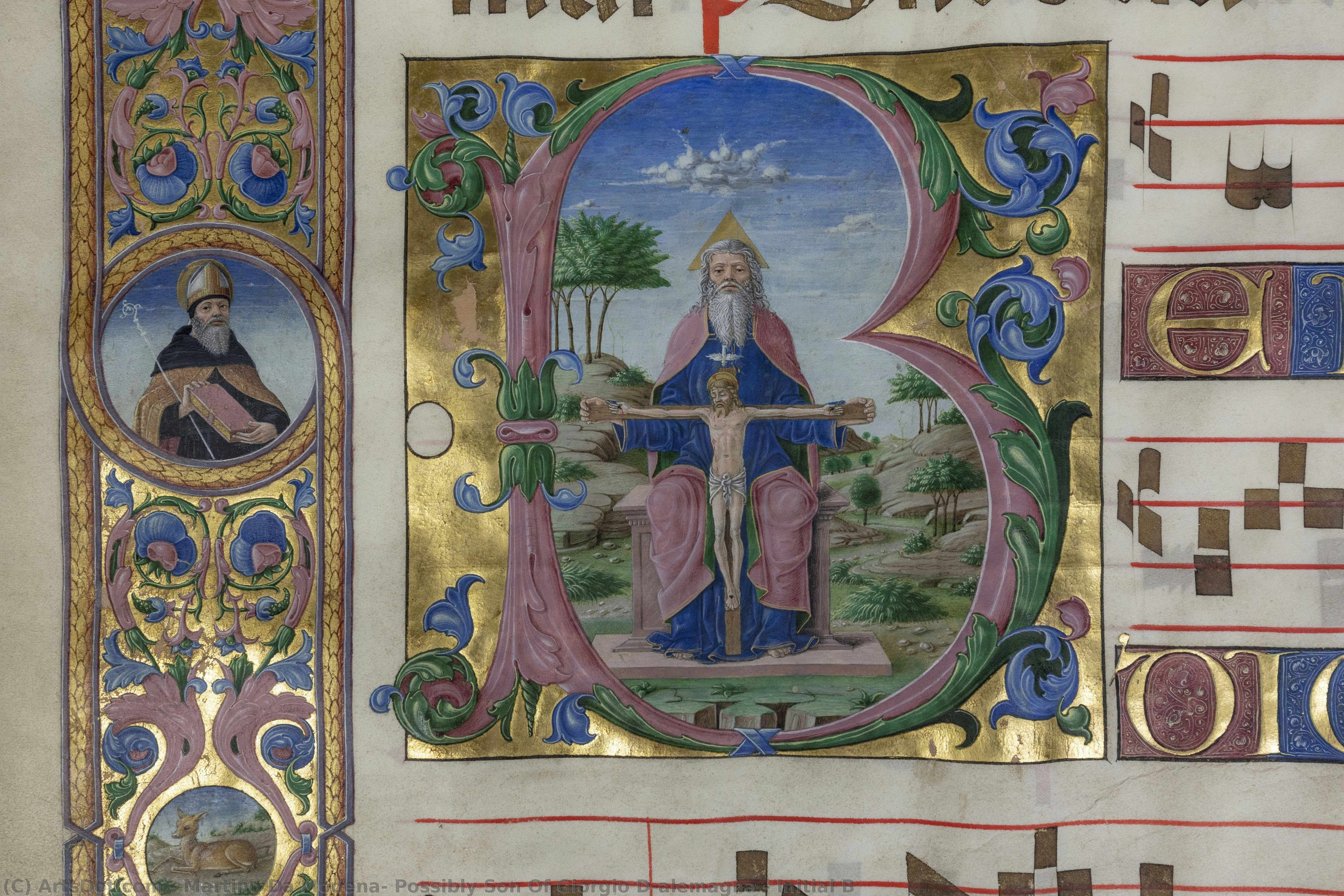
Initial B
 79.0 x 55.0 cm
 Cathedral Museum of Ferrara
 Read More
Hand Made Oil Reproduction
Hand-painted oil on canvas in your size and frame, made to order by our artists. ( Buy Print Buy Image)




































Pick from our preset sizes that match the artwork's original proportions.

You may enter your own dimensions to fit a specific frame or space. If your selected size does not match the original image's proportions, we will either crop the artwork or extend the painting with additional hand-painted elements. A digital mockup will be sent for your approval before production begins.
Please note that the on-screen preview does not reflect the actual cropping or extension. Only the mockup will accurately show the final composition.
While custom sizes are available, we recommend selecting a dimension from the predefined list to preserve the original proportions.
After order, ArtsDot.com team will email client for instructions and provide a mockup preview
Worldwide Delivery () in 3/4 weeks instead of standard 5 weeks. (24 August). No compromise on quality.

Free Worldwide Express Shipping

High-Quality Linen Canvas

Full Shipping Insurance

Customs Tax Refund Guarantee

True Color Matching Guarantee

60-Day Return Policy (Defects Only)

100% Money-Back Guarantee

Bulk Discount Offer
 Glass option is only available in size under 110 CM

Initial B
Reproduction Medium
Reproduction Size
-


Total Price
$ 263
Related Artworks








Artist Biography
A Florentine Echo in Emilia: The Life of Martino da Modena
The history of Renaissance illumination is often written in the delicate strokes of anonymous masters, yet the name Martino da Modena emerges from the shadows of the fifteenth century as a figure of profound artistry and technical brilliance. Active primarily between 1470 and 1489, Martino’s life was a tapestry woven from the diverse artistic threads of Northern Europe and the Italian peninsula. While much of his personal biography remains shrouded in the fragmentary archives of the era, scholarly consensus points to a fascinating lineage; he is widely believed to be the son of Giorgio d’Ale magna, a German artist who brought the meticulous traditions of the North to the vibrant centers of Modena and Ferrara. This heritage bestowed upon Martino a unique stylistic duality, blending the precision of Germanic craftsmanship with the burgeoning humanism of the Italian Renaissance.
The formative years of Martino’s career were marked by a transformative period in Venice around 1470. It was here, amidst the salt air and the grandeur of the Venetian Republic, that he encountered the revolutionary spirit of Andrea Mantegna. The monumental impact of Mantegna’s frescoes at Santa Maria della Consolazione acted as a catalyst for Martino, infusing his miniature work with a new sense of structural depth, classical perspective, and dramatic narrative power. During this time, Martino became a sought-after hand for the lavish decoration of manuscripts destined for Venice's most prestigious patrons. These early commissions were more than mere tasks; they were essential laboratories where he mastered the art of visual storytelling, learning to breathe life into gold leaf and pigment through meticulous detail.
Mastery of Light and Liturgy
As Martino transitioned from his Venetian apprenticeship back to the Emilia-Romagna region, his work took on a more profound spiritual and collaborative dimension. One of the most significant milestones in his career was his partnership with his father, Giorgio. Together, they undertook the ambitious task of decorating two psalters for the Modena Cathedral between 1473 and 1476. This collaboration was a true marriage of skill, combining their shared expertise in pigment preparation, intricate gilding, and the delicate application of miniature painting. The resulting liturgical books were triumphs of the era, characterized by:
- Vibrant Chromaticism: A palette that utilized rich, saturated pigments to evoke the divine splendor of biblical narratives.
- Intricate Gilding: The masterful use of gold leaf to create a sense of celestial light within the margins of the text.
- Narrative Precision: Detailed depictions of sacred scenes that guided the reader through complex theological themes with clarity and grace.
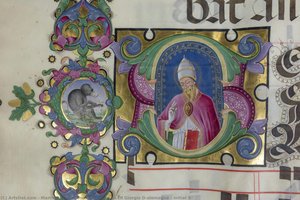
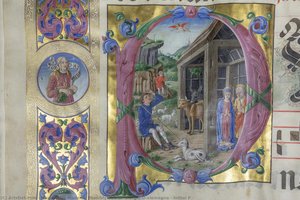
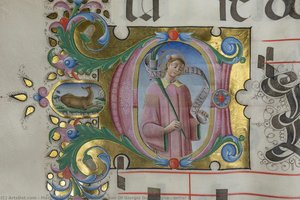
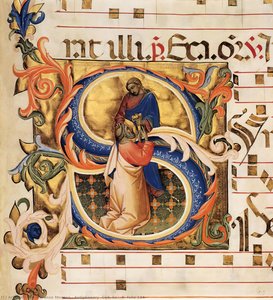
Beyond these liturgical masterpieces, Martino’s individual contributions—such as his celebrated Initial P, Initial S, and Initial B—demonstrate a singular ability to transform a single letter into a window onto another world. In these works, the boundaries between calligraphy and painting dissolve. He utilized the architecture of the alphabet to frame landscapes and figures, creating miniature stages where biblical characters interact with an environment that feels both intimate and epic. His ability to integrate complex iconography within the tight constraints of illuminated initials remains a testament to his technical virtuosity and his deep understanding of the intellectual currents flowing through the Renaissance workshops.
Legacy of the Illuminated Page
The historical significance of Martino da Modena lies in his role as a bridge between traditions. He was an artist who could navigate the rigorous, detail-oriented demands of Northern European illumination while embracing the spatial innovations and classical revival of the Italian masters. Though his active years were relatively brief, ending around 1489, the echoes of his work persisted through the enduring beauty of the manuscripts he touched. His legacy is found not only in the surviving gold-flecked pages of the Modena psalters but in the very evolution of the illuminated manuscript as a medium capable of expressing the highest aspirations of Renaissance thought and devotion.
Quick Facts
- Artistic Movement Or Style: Renaissance Art
- Artists Or Movements Influenced By This Artist: ['Venetian Painting']
- Artists Who Influenced This Artist: ['Andrea Mantegna']
- Date Of Death: 1489
- Full Name: Martino da Modena, possibly son of Giorgio d'Ale magna
- Nationality: Italian
- Notable Artworks:
- Initial P
- Initial S
- Place Of Birth: Modena, Italy