 Preview
 Send
Send Share
Share
 Details

 Download
 Similars
 X-Ray
X-Ray Diaporama
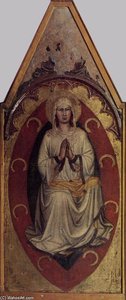
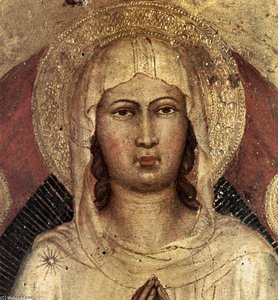
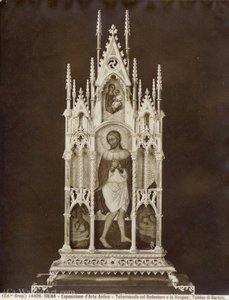
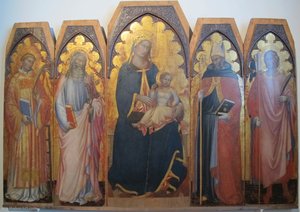
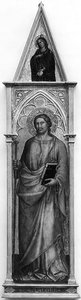
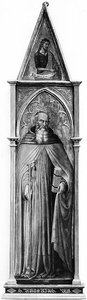
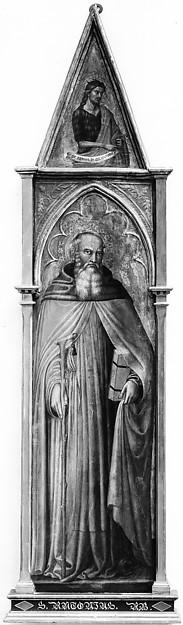
Saint Anthony Abbot (with Saint John the Baptist)
 32.0 x 23.0 cm
 Read More
Hand Made Oil Reproduction
Hand-painted oil on canvas in your size and frame, made to order by our artists. ( Buy Print Buy Image)




































Pick from our preset sizes that match the artwork's original proportions.

You may enter your own dimensions to fit a specific frame or space. If your selected size does not match the original image's proportions, we will either crop the artwork or extend the painting with additional hand-painted elements. A digital mockup will be sent for your approval before production begins.
Please note that the on-screen preview does not reflect the actual cropping or extension. Only the mockup will accurately show the final composition.
While custom sizes are available, we recommend selecting a dimension from the predefined list to preserve the original proportions.
After order, ArtsDot.com team will email client for instructions and provide a mockup preview
Worldwide Delivery () in 3/4 weeks instead of standard 5 weeks. (29 August). No compromise on quality.

Free Worldwide Express Shipping

High-Quality Linen Canvas

Full Shipping Insurance

Customs Tax Refund Guarantee

True Color Matching Guarantee

60-Day Return Policy (Defects Only)

100% Money-Back Guarantee

Bulk Discount Offer
 Glass option is only available in size under 110 CM

Saint Anthony Abbot (with Saint John the Baptist)
Reproduction Medium
Reproduction Size
-


Total Price
$ 288
Related Artworks




Artist Biography
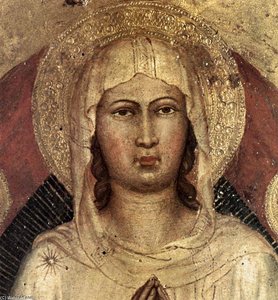
The Last Maestro of Siena: The Life and Legacy of Martino di Bartolomeo
In the twilight of the Trecento and the luminous dawn of the Quattrocento, a period of profound cultural metamorphosis swept through the Italian peninsula. At the heart of this transition stood Martino di Bartolomeo di Biagio, an artist whose brush captured the very essence of a changing era. Often revered as the last great master of the Sienese Trecento, Martino acted as a vital bridge between the decorative, rhythmic elegance of the medieval tradition and the burgeoning humanism of the early Renaissance. His life, though shrouded in the soft mists of historical uncertainty, reflects the vibrant energy of Siena—a city that was simultaneously clinging to its storied past and reaching toward a new, more perspectival future.
The foundations of Martino’s artistry were laid within the prestigious workshops of his homeland. While scholars debate his exact origins, much evidence points to his formative years being spent under the tutored guidance of Taddeo di Bartolo. From this master, Martino inherited a meticulous devotion to detail and an ability to imbue sacred subjects with a palpable, expressive dynamism. This early training was not merely about technique; it was an immersion into a visual language of spiritual intensity. As he matured, his style began to absorb the burgeoning influences of Florentine painting, particularly the more structured and spatial approaches that were beginning to redefine the Tuscan landscape.
Martino’s career was marked by a remarkable geographical and stylistic fluidity. In his youth, his presence was felt far beyond the walls of Siena; his collaborations with artists like Giovanni di Pietro da Napoli in Pisa allowed him to engage with a broader Mediterranean aesthetic. The fresco cycles he contributed to in places such as Cascina serve as enduring testaments to his burgeoning talent, showcasing an artist capable of commanding large-scale narratives with both grace and vigor. This period of wandering and experimentation was crucial, as it allowed him to weave together the delicate, lyrical traditions of Siena with the more robust, structural innovations emerging from neighboring Florence.
A Master of Sacred Narratives and Civic Grandeur
Upon his permanent return to Siena in 1405, Martino entered his most prolific and influential phase. He became a preferred hand for the city's most prestigious institutions, tasked with decorating the very soul of Sienese life: the Duomo and the Palazzo Pubblico. Within the hallowed halls of the cathedral, his monumental frescoes depicting Gospel scenes breathed life into the stone, utilizing a sophisticated mastery of color theory and an emerging sense of perspective to guide the faithful through divine mysteries. These works were not merely decorations; they were theological windows designed to inspire awe and contemplation.
However, Martino’s genius was not confined solely to the ecclesiastical realm. His appointment to decorate the Palazzo Pubblico—the seat of civic power—demonstrates his role as a chronicler of Sienese identity. In these secular commissions, he utilized allegorical narratives to reflect the city's highest civic ideals, blending the sacred with the political. His ability to navigate these two worlds—the heavenly and the earthly—is what defines his unique position in art history. Whether working on an intricate triptych or a sweeping fresco, his hand was characterized by:
- Meticulous Craftsmanship: A profound attention to the fine details of drapery, facial expressions, and ornamental borders.
- Narrative Depth: The ability to compose complex scenes that tell a story through gesture and symbolic placement.
- Stylistic Synthesis: The seamless integration of Sienese lyricism with the structural advancements of the early Renaissance.
As we look back upon the works of Martino di Bartolomeo, we see more than just beautiful objects; we see the pulse of a transition. He was an artist who understood that to move forward, one must carry the beauty of tradition into the light of new discovery. His legacy remains etched in the frescoes and altarpieces of Tuscany, reminding us of a time when art was the primary language of both the soul and the state.
Quick Facts
- Artistic Movement Or Style: Trecento
- Artists Or Movements Influenced By This Artist: ['Renaissance Paintings']
- Artists Who Influenced This Artist: ['Taddeo di Bartolo']
- Date Of Death: 1434
- Full Name: Martino di Bartolomeo di Biagio
- Nationality: Italian
- Notable Artworks:
- Assumption of the Virgin
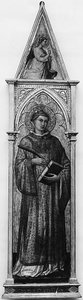
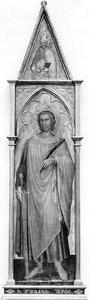
- Saint Stephen (with the Angel of the Annunciation)
- Place Of Birth: Siena