 Preview
 Send
Send Share
Share
 Details

 Download
 Similars
 X-Ray
X-Ray Diaporama
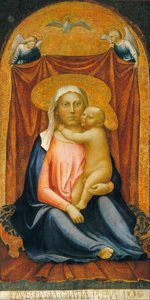
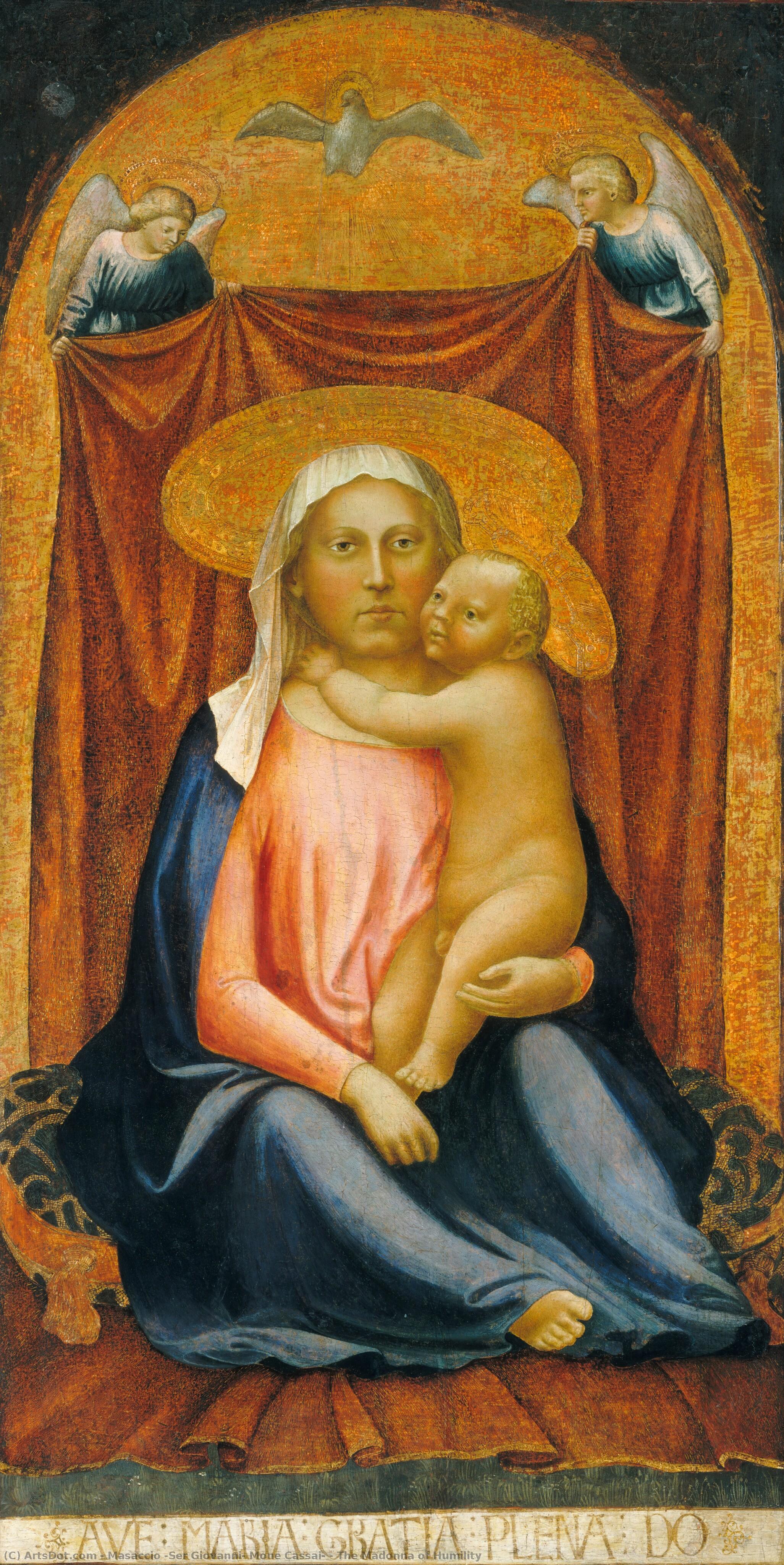
The Madonna of Humility
 Tempera On Panel
- WallArt
- Early Renaissance
 1424
1424- Renaissance
 106.0 x 54.0 cm
 Read More
Hand Made Oil Reproduction
Hand-painted oil on canvas in your size and frame, made to order by our artists. ( Buy Print Buy Image)




P118B $10

P118H $10

P118W $10

P438Z $10

P508JH $12

P508YH $12

P805H $10

P805Z $10

P919BZ $10

P919G $10

P919XJ $10

P959ZH $10

P968JZ $12

W106C $8

W218G $10

W218JH $8

W218Y $10

W307PJ $10

W316G $10

W316PJ $8

W316Y $10

W398PJ $8

W4111J $10

W500HY $15

W500JH $15

W692G $12

W849H $8

W940BG $15

W953PJ $8




Pick from our preset sizes that match the artwork's original proportions.

You may enter your own dimensions to fit a specific frame or space. If your selected size does not match the original image's proportions, we will either crop the artwork or extend the painting with additional hand-painted elements. A digital mockup will be sent for your approval before production begins.
Please note that the on-screen preview does not reflect the actual cropping or extension. Only the mockup will accurately show the final composition.
While custom sizes are available, we recommend selecting a dimension from the predefined list to preserve the original proportions.
After order, ArtsDot.com team will email client for instructions and provide a mockup preview
Worldwide Delivery () in 3/4 weeks instead of standard 5 weeks. (1 September). No compromise on quality.

Free Worldwide Express Shipping

High-Quality Linen Canvas

Full Shipping Insurance

Customs Tax Refund Guarantee

True Color Matching Guarantee

60-Day Return Policy (Defects Only)

100% Money-Back Guarantee

Bulk Discount Offer
 Glass option is only available in size under 110 CM

The Madonna of Humility
Reproduction Medium
Reproduction Size
-


Total Price
$ 263
A Vision of Tenderness: The Dawn of Renaissance Realism
In the quiet, profound stillness of Masaccio’s The Madonna of Humility, we encounter one of the most moving snapshots of the Early Italian Renaissance. Created around 1424, this masterpiece transcends mere religious iconography to offer a window into a moment of raw, maternal intimacy. The scene is set not upon a celestial throne, but on the earth itself, where the Virgin Mary sits upon a blue patterned cushion. This choice of setting—the Madonna of Humility motif—was revolutionary for its time, stripping away the distant, regal stiffness of Gothic traditions to present a Mother and Child that feel tangibly human, grounded, and accessible.
The composition is a masterclass in early Renaissance innovation. As we gaze upon the painting, we see a woman with skin possessing a delicate, almost ethereal gold cast, softened by the gentle flush of pink on her cheeks. She is draped in a rich blue cloak and a white hood that frames a face of serene contemplation. In her arms, she cradles a pudgy, nude infant whose presence brings a startling sense of life to the panel. The child’s movement—reaching up toward his mother’s neck while looking away into the distance—creates a dynamic tension, a flicker of vitality that contrasts beautifully with the solemnity of the surrounding figures.
Light, Shadow, and the Architecture of Emotion
Masaccio, often remembered as the pioneer of chiaroscuro, utilizes light not merely to illuminate, but to sculpt. Through the masterful use of strong contrasts between light and dark, he grants the figures a three-dimensional weight that was unprecedented in the early 15th century. The way the light catches the folds of the brick-red curtain and the soft curves of the Christ child’s body creates a sense of volume and physical presence. This technique invites the viewer to step into the space, making the divine feel remarkably near.
The symbolic language of the piece is woven seamlessly into its visual fabric. Above the central figures, a haloed dove floats at the top center, representing the Holy Spirit, while two angels flank the scene, their blue robes echoing the Madonna's cloak and holding up the heavy red drapery. The gold background, shaped into a celestial arch, serves to sanctify the earthly scene below. Even the Latin inscription at the base—“AVE: MARIA: GRATIA: PLena: DO”—acts as a liturgical chant, grounding the visual beauty in the sacred tradition of the Annunciation.
An Eternal Inspiration for the Modern Collector
For the discerning art lover or interior designer, a high-quality reproduction of this work offers more than just decoration; it provides an emotional anchor for a room. The palette—a sophisticated harmony of deep blues, warm reds, and soft pinks—possesses a timeless elegance that complements both classical and contemporary settings. Whether placed in a sun-drenched library or a quiet study, the painting radiates a sense of peace and historical depth.
Owning a piece that captures Masaccio’s revolutionary spirit allows one to surround themselves with the very origins of Western naturalism. It is an invitation to contemplate the intersection of the human and the divine, making it a profound choice for those who seek art that speaks to the soul as much as it delights the eye. This work remains a testament to the power of simplicity, reminding us that true greatness often lies in the most humble of gestures.
Related Artworks
Artist Biography
Masaccio (1401-1428): The Dawn of Renaissance Realism
Tommaso di Ser Giovanni di Simone, better known as Masaccio (meaning "clumsy Tom"), was a pivotal figure in the Early Italian Renaissance. Born on December 21, 1401, in San Giovanni Valdarno, Italy, and dying tragically young in 1428, his brief career revolutionized painting with groundbreaking realism, perspective, and chiaroscuro (the use of strong contrasts between light and dark). Despite his short life, Masaccio’s impact on subsequent generations of artists was profound, establishing a new standard for naturalism and influencing the course of Western art.
Early Life and Training
- Origins: Born to Giovanni di Simone Cassai, a notary, and Jacopa di Martinozzo. His family name, Cassai, derived from his paternal grandfather's trade as a cabinet maker.
- Early Years: Orphaned at age five when his father died, he had a brother, Giovanni (Lo Scheggia), who also became a painter.
- Apprenticeship: The details of Masaccio’s artistic training remain largely unknown, which is unusual for Renaissance artists. It's believed he likely apprenticed around the age of 12, but no definitive master has been identified. This lack of documented training adds to the mystery surrounding his rapid development and innovative techniques.
- Guild Membership: He joined the painters’ guild (Arte de’ Medici e Speziali) in Florence on January 7, 1422, signifying his emergence as an independent master artist.
Artistic Development and Major Works
- Early Influences: Initially influenced by Giotto di Bondone, a predecessor known for his naturalism, Masaccio quickly surpassed him in his understanding of perspective and anatomy. He also drew inspiration from the architectural innovations of Filippo Brunelleschi, particularly Brunelleschi’s rediscovery of linear perspective.
- Key Innovations: Masaccio pioneered several groundbreaking techniques:
- Linear Perspective: Employed vanishing points and mathematical precision to create a convincing illusion of depth on a two-dimensional surface.
- Chiaroscuro: Masterfully used light and shadow to model forms, creating a sense of volume and realism previously unseen in painting.
- Naturalism: Depicted figures with anatomical accuracy and emotional expressiveness, moving away from the stylized representations of earlier periods.
- Significant Works:
- San Giovenale Triptych (c. 1422): An early work demonstrating his developing skill in perspective and naturalistic representation.
- Madonna and Child with St. Anne (c. 1423-1425): A collaboration with Masolino, showcasing Masaccio’s emerging realism alongside Masolino's more traditional style.
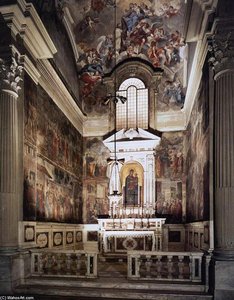
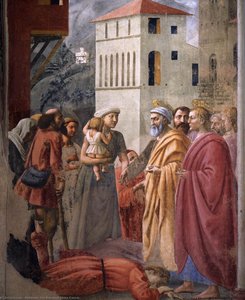
- Brancacci Chapel Frescoes (c. 1425-1428): His most celebrated and influential works, located in the Church of Santa Maria del Carmine in Florence. These frescoes, including "The Tribute Money," "Expulsion from Paradise," and "St. Peter Baptizing the Neophytes," are considered masterpieces of Early Renaissance art.
Historical Significance and Legacy
Masaccio’s impact on the course of Western art is immeasurable, despite his tragically short career. His innovations in perspective, chiaroscuro, and naturalism fundamentally altered how artists depicted the world. He effectively bridged the gap between Medieval artistic conventions and the emerging ideals of the Renaissance.
- Influence on Subsequent Artists: Masaccio’s work profoundly influenced generations of painters, including Donatello, Leonardo da Vinci, Michelangelo, and Raphael. They studied his frescoes intently, adopting and adapting his techniques to their own styles.
- Foundation for the High Renaissance: His emphasis on realism and human emotion laid the groundwork for the artistic achievements of the High Renaissance.
- Vasari's Account: The biographer Giorgio Vasari recognized Masaccio’s genius, praising him as "the best painter of his generation" and highlighting his ability to imitate nature with unparalleled skill.
- A Tragic Loss: His death at the young age of 26 was mourned by contemporaries like Filippo Brunelleschi, who lamented the loss of such a remarkable talent.
Conclusion
Masaccio’s legacy endures as one of the most important and influential artists in history. He stands as a pivotal figure in the transition from Medieval to Renaissance art, forever changing the way we perceive and represent the world through painting. His brief but brilliant career serves as a testament to the power of innovation and the enduring impact of artistic genius.
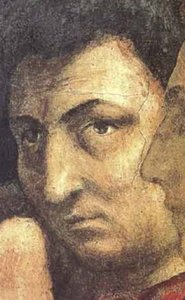
Masaccio
1401 - 1429 , Italy
Quick Facts
- Artistic Movement Or Style: Early Renaissance
- Artists Or Movements Influenced By This Artist: ['Later Renaissance painters']
- Artists Who Influenced This Artist:
- Giotto
- Filippo Brunelleschi
- Donatello
- Date Of Birth: December 21, 1401
- Date Of Death: Summer 1428
- Full Name: Masaccio (Ser Giovanni, Mone Cassai)
- Nationality: Italian
- Notable Artworks:
- The Trinity
- Brancacci Chapel frescoes
- Holy Trinity
- Tribute Money
- Place Of Birth: San Giovanni Valdarno, Italy
Related Articles
Slate Blue Masterpieces: 10 Iconic Paintings & Timeless Home Decor Ideas
Immerse yourself in the captivating world of slate blue! Explore 10 iconic paintings by Monet, Van Gogh & Renoir. Discover their stories, techniques & find museum-quality art reproductions for your home at .
The Allure of Azure: Exploring the Symbolic & Aesthetic Depths of Blue in Art History
Explore the rich history of blue in art! Discover its symbolism, from ancient pigments to modern masterpieces by Kandinsky & Seurat. Uncover the psychological impact and cultural meanings behind this captivating hue.
Azure Visions: Exploring Representations of the Blue Dress in Western Art History
Explore the rich history of the blue dress in Western art! Discover its symbolism, from Renaissance masterpieces to modern interpretations by artists like Martin & Schiele. Uncover cultural meanings and artistic techniques.
Raphael's Masterpieces: 25 Iconic Paintings & Renaissance Art for Your Home
Explore 25 breathtaking Raphael paintings! Journey through the Italian Renaissance with masterpieces like 'School of Athens' & iconic Madonnas. Find museum-quality art reproductions and elevate your home decor on ArtsDot.com.
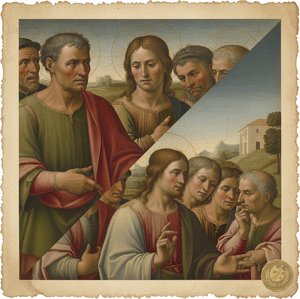
Masaccio: Revolutionizing Renaissance Painting Through Innovation & Emotional Realism
Explore the revolutionary art of Masaccio, the first great Italian Renaissance painter. Discover his groundbreaking techniques in perspective, realism & emotional depth – a pivotal figure shaping Western art history.